
Buying a used car in the UK without checking its mileage history is a gamble that costs buyers approximately £800 million every year. A quick vehicle check mileage report can reveal whether the car mileage on the dashboard matches what official records say, helping you avoid clocked vehicles and overpaying for a car that has covered far more miles than advertised.
Key Takeaways
You can run a free mileage check on any UK registered vehicle using its registration number and the official MOT mileage history, which shows odometer readings recorded at each annual test.
Comparing MOT mileage data over time helps detect odometer fraud, mileage clocking, and other mileage issues such as sudden drops or implausible readings.
Advanced mileage check data from trade, leasing, and servicing sources can fill gaps before the first MOT at three years old, when no official mileage records exist.
A full car history check covering finance, write-off status, stolen markers, and mileage data gives UK drivers the strongest protection when buying a used car.
Around 6.47% of checked vehicles had mileage discrepancies, and over 3 million UK vehicles have reduced mileage, making a vehicle check essential before any purchase.
What Is a Vehicle Mileage Check?
A vehicle mileage check is a report that shows all recorded odometer readings for a UK vehicle over time, letting you verify whether the mileage shown on the dashboard is genuine.
The core of any UK mileage check is MOT mileage from the DVSA database. Government and official databases are the most accessible way to verify vehicle mileage, and mileage data is sourced directly from the DVSA's MOT database. This is backed by basic DVLA data covering registration, keeper history, and vehicle specifications.
More complete mileage check data often includes private-sector sources such as service history entries, leasing returns, auction records, and dealer inspection readings. These additional data points help build a fuller picture of the vehicle's mileage beyond what MOT records alone can show.
A vehicle check mileage report helps confirm whether the current odometer reading is correct mileage or has been reduced. Most tools only need the registration number to start. No V5C or sign up required for a basic free check.
How to Check a UK Vehicle’s Mileage by Registration
Checking a car's mileage history takes just a few minutes. Here is the process:
Enter your reg into an online mileage check or car history check tool. Simply enter the registration number of the UK vehicle you want to investigate.
Review the instant report. The tool pulls mot mileage history from DVSA, showing dates, test centres, and odometer readings for each MOT since the first test.
Compare year-on-year readings. Confirm that the recorded mileage always increases at a realistic rate. For most privately used cars, 8,000 to 12,000 miles per year is typical.
Upgrade if needed. A paid report can reveal additional mileage check data between MOTs, such as servicing, leasing returns, and trade inspections.
Save or print the report. When viewing a car in person, cross-referencing the dashboard odometer with official records can verify mileage accuracy. Bring the report with you.
Always compare the mileage readings on the report with the current dashboard figure before agreeing to anything.
Understanding MOT Mileage and Official Records
MOT mileage is the backbone of mileage verification for most UK vehicles. Official MOT history records show mileage recorded at each annual test, creating a timestamped trail that sellers cannot alter.
Here is what you need to know about the system:
Every MOT test in England, Scotland, and Wales since 2005 records an odometer reading, stored in the DVSA database and displayed as part of mot history.
MOT testers must legally record odometer readings at every test. These readings are timestamped and tied to the vehicle's registration, making them one of the most reliable datasets available to private buyers.
Northern Ireland mot mileage data is available from 2017 onwards, so vehicles tested before that date may have limited digital records.
The full mot history creates a chronological mileage timeline. You can compare it against invoices, service records, and dashboard readings to confirm consistency.
The absence of mot mileage data usually means the vehicle is under three years old, newly imported, on SORN, or has not yet had a UK MOT. It does not mean the car has low mileage.
MOT Mileage Coverage | Start Date |
|---|---|
England, Scotland, Wales | 2005 |
Northern Ireland | 2017 |
Vehicles under 3 years old | No MOT required yet |
Spotting Mileage Issues and Odometer Fraud
Mileage clocking is a common fraud affecting 1 in 16 used cars in the UK. Separately, 1 in 18 cars in the UK have altered mileage, and 6.47% of checked vehicles had mileage discrepancies when checked against official data. Over 3 million UK vehicles have reduced mileage, making this a widespread problem.
Common signs of mileage issues include:
Sudden drops in recorded miles between MOT tests (a later test shows fewer miles than an earlier one)
Unusually low mileage between consecutive MOTs, such as only 500 miles over an entire year on a daily driver
Missing years in the mot records or resets after plate changes
General wear and tear that indicates higher usage than shown by the odometer, for example heavily worn pedals, steering wheel, or seat bolsters on a car claiming 30,000 miles
How to detect odometer fraud:
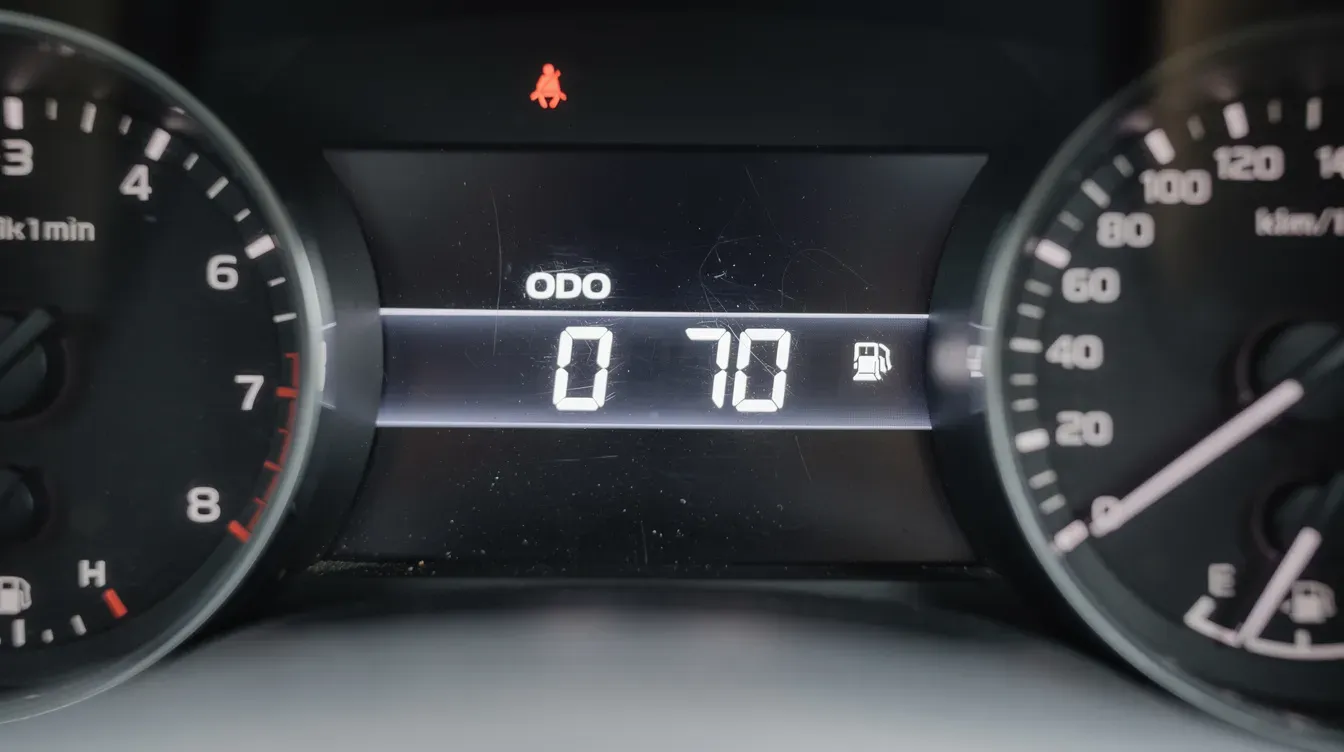
Plot each mot mileage reading against its test date. A backward step is a major red flag. Signs of odometer tampering include discrepancies between dashboard mileage and ECU mileage, since the Engine Control Unit usually stores the true, unmodified mileage.
Mileage clocking often occurs just before resale or after a PCP or lease agreement to avoid excess mileage penalties. Not every discrepancy is deliberate fraud; some result from MOT tester data entry errors or legitimate instrument cluster replacements. However, any unexplained mileage anomaly should be treated as a major red flag and investigated with extra documentation before purchase.
Buyers of clocked vehicles overpay by an average of around 48.8%, making this one of the costliest traps in the used car market.
When MOT Mileage Data Is Missing or Limited
Several situations can leave a vehicle with no or limited mileage history in official mot records.
Common cases include:
Vehicles under three years old (mileage data may be unavailable for vehicles under three years old because no MOT is required)
Brand-new 2025 or 2026 registrations that have not yet reached their first MOT
Fresh imports with mileage recorded under foreign systems
Long-term SORN vehicles that have not been tested
Lack of mot data does not mean the car has low mileage. It simply means no official tests have been recorded yet. For these vehicles:
Request a full service history, stamped booklets, digital dealer records, and invoices showing mileage at each visit.
Cross-check dealer service history against any available independent mileage data from history check tools.
Verify that advertised mileage (for example, 38,000 miles in June 2026) matches both the odometer and any dated repair or service bills.
Why a Full Vehicle Check Matters Beyond Mileage
Mileage is only one part of a wider car history check that UK buyers should run before buying. A comprehensive vehicle history report should cover:
Outstanding finance agreements
Write-off status (Categories A, B, S, N)
Stolen markers on the police national computer
Import or export records
Plate changes and registration history
Approximately 1 in 3 used UK vehicles can have hidden issues such as finance, accident write-off, or significant mileage anomalies in trade datasets. Mileage fraud costs UK buyers approximately £800 million annually, and combining mot mileage records with accident and insurance data gives a better picture of how hard the vehicle has been used.
Run a full check before leaving a deposit or signing finance. Discovering outstanding finance after purchase can lead to repossession, leaving you out of pocket entirely.
Some premium checks include a data guarantee, covering buyers for thousands of pounds if proven errors in the report lead to financial loss. A lower price on a listing should never override the need for a proper vehicle history check.

How Reliable Is Mileage Check Data in 2026?
DVSA mot mileage is legally recorded, timestamped, and among the most robust official datasets available to private buyers. MOT testers must legally record odometer readings at tests, and these records form the foundation of any mileage check.
Trade and private-sector data sources strengthen this further. Over 180 million trade data points enhance mileage accuracy, drawing from garages, leasing firms, dealers, and insurers. These sources help fill gaps before the first MOT and between annual tests.
No mileage system is perfect. Occasional data entry errors or missing records can occur, especially on older vehicles and imports. The most reliable approach is to compare multiple sources:
Data Source | What It Shows |
|---|---|
MOT history | Official odometer readings at each test |
Service records | Mileage at each service visit |
Trade / leasing data | Readings from dealers, auctions, lease returns |
Dashboard odometer | Current reading on the vehicle |
ECU diagnostics | Stored mileage in electronic control modules |
In 2026, electronic odometer storage across ECUs means tampering can sometimes be detected with specialist diagnostics. OBD2 scanners can read mileage from different control modules, revealing inconsistencies between the cluster and the ECU. This is usually beyond home buyers and best left to professional inspections, but it adds an extra layer of protection for higher-value purchases.
What to Do If You Find a Mileage Discrepancy
When mileage anomalies appear in a vehicle check, take these steps:
Re-check mot history directly on the official UK government service to rule out display glitches in third-party tools. Look at the car's mot history carefully, comparing mot status, test dates, and mileage readings.
Contact the test centre. If the wrong mileage is on a recent MOT, you should report incorrect mileage to the MOT centre within 28 days to request a correction.
Escalate to DVSA. After 28 days, issues must be raised with DVSA, supported by evidence such as previous MOTs and service records. Gather evidence including stamped service booklets, invoices, and photographs.
Ask the seller for documentation. Request written explanations and receipts for any cluster replacements, ECU swaps, or other work that could explain the discrepancy.
Walk away if necessary. If the seller cannot convincingly explain inconsistent mileage records or refuses to share supporting documents, this is a major red flag. The informed decision is to walk away and keep looking.
A clocked car is never a bargain, no matter how attractive the price looks.
Mileage Check FAQs
Is a free MOT mileage check enough when buying a used car?
A free mileage check is a strong starting point because it shows official odometer readings recorded at each mot test. For many everyday purchases, this free check of the vehicle's mot history is sufficient to spot obvious clocking or mileage tampered vehicles.
However, for higher-value cars or complex histories with multiple owners, UK buyers should also run a paid car history check. This reveals outstanding finance, write-offs, theft markers, and extra mileage data from trade sources. Using both mot history and an independent mileage report is recommended for cars registered before 2019 that may have had several keepers and more miles on the clock.
What is considered “high mileage” for a UK vehicle in 2026?
Many UK cars average 8,000 to 12,000 miles per year. A 2020-registered car in 2026 with 60,000 to 70,000 miles would be typical. For motorway-heavy diesels, 120,000 miles can be perfectly reasonable if supported by consistent service records and mot mileage records.
"High mileage" is relative. Condition, service history, and consistent mileage history matter more than the absolute number. A well-maintained car with more miles can be a better buy than a neglected one claiming fewer miles.
Can a seller legally adjust the mileage on a car in the UK?
Adjusting mileage is legal if disclosed when selling. For example, replacing an instrument cluster or ECU may result in a different odometer reading, and this is lawful provided the change is documented and declared to any future buyer.
It becomes criminal fraud under the Consumer Protection from Unfair Trading Regulations 2008 and the Fraud Act 2006 if a seller knowingly misrepresents the vehicle's mileage or fails to declare that it has been mileage tampered. Penalties can include fines and imprisonment. Buyers should insist on written confirmation if the mileage has ever been adjusted, and keep copies of all vehicle check mileage reports.
How often should I run a mileage check on a car I already own?
Run a full vehicle check when buying, selling, or transferring the car, and whenever significant paperwork changes occur such as a plate change. Most owners of everyday UK vehicles do not need monthly checks, but annual verification around MOT time helps spot recording errors early.
Fleet operators and high-mileage business users may choose more regular checks as part of compliance and record-keeping policies.
Does a complete service history guarantee the mileage is genuine?
A full, verifiable service history strongly supports genuine mileage but is not an absolute guarantee on its own. Always check that service mileage entries line up with the car's mileage history from mot records, invoices, and the current odometer reading.
Be cautious if service stamps appear out of sequence, are handwritten without garage details, or are clustered suspiciously close to the sale date. Cross-referencing multiple data sources remains the most reliable way to confirm the true mileage of any UK vehicle.