
Travelling with your pet between the UK and Europe has become more complicated since Brexit. Whether you own a pet dog, a cat, or a ferret, the paperwork you need depends on where you live, where you are going, and which document your pet already holds. This guide breaks down the current rules so you can travel with your pet confidently in 2025 and 2026.
Key Takeaways
Great Britain no longer issues an EU pet passport. Most travellers based in England, Scotland or Wales now need an animal health certificate for each trip to an EU country or Ireland.
Valid EU pet passports can still be used if issued in an EU member state or in Northern Ireland, covering dogs, cats, ferrets and assistance dogs.
From 4 June 2025, a free Northern Ireland Pet Travel Document (PTD) is required for Great Britain residents bringing a pet dog, cat, ferret or assistance dog into Northern Ireland. This document usually lasts for the life of the pet.
Every travelling pet must be microchipped, vaccinated against rabies from at least 12 weeks of age, and must meet any tapeworm treatment rules before entering the EU, Ireland or returning to Great Britain.
Always check the latest government guidance a few weeks before travel, as rules and entry points can change with little notice.
What is an “animal passport”? (EU pet passport vs animal health certificate)
The term "animal passport" is informal. In practice, it refers either to the official EU pet passport or to the EU animal health certificate now required by Great Britain-based travellers heading to the European Union or Ireland. The animal passport consolidates necessary health information into one document, but the exact format depends on your country of residence.
The EU pet passport is a blue, standardised booklet used across EU countries and Northern Ireland for a dog, cat or ferret. An EU pet passport includes ownership details and vaccination records, along with microchip data and treatment history. The pet passport proves ownership, microchipping status, and vaccination history. Pet passports and health certificates are for non-commercial purposes only.
The EU animal health certificate (AHC) is a multi-page certificate issued by an Official Veterinarian when travelling from Great Britain or other non-EU countries into the EU or to Ireland. It follows an EU-standard model and covers identity, vaccination, treatment and owner details. An Animal Health Certificate is needed for pets traveling from the UK to the EU.
Countries outside the European Union, such as the USA, Canada and Australia, use their own export and import health certificates rather than the EU pet passport system. If you are travelling to or from those destinations, contact the relevant authorities in the destination country for specific requirements.
Current status after Brexit: who can still use an EU pet passport?
Since 1 January 2021, pet passports issued in Great Britain (England, Scotland, Wales) are no longer valid for entering any EU country, Ireland or Northern Ireland. That single change created the biggest shift in pet travel rules for UK-based owners.
However, an EU pet passport is still valid if it was issued in an EU member state or Northern Ireland, provided it is kept up to date with rabies boosters and other required entries. Only residents of EU countries or Northern Ireland can obtain a traditional pet passport under the current rules. EU pet passports are only valid for EU residents.
Here is how it works by residence:
If you live in Northern Ireland, you can continue to obtain and use EU pet passports for your dogs, cats and ferrets when travelling within the European Union.
If you live in Great Britain (that is, England, Scotland or Wales), you should not rely on any old GB-issued EU pet passport. You normally must obtain an EU animal health certificate from a vet for each trip to an EU country or Ireland.
If you live in an EU country, your locally issued EU pet passport remains valid for travel within EU member states, provided all vaccination entries are current.
From 22 April 2026, EU pet passports held by pet owners whose main residence is outside the EU are no longer valid for entering the EU from outside. This means even a passport issued in France or Spain will not work if you now live in England, Scotland or Wales.
Essential information your EU pet passport must contain
A valid EU pet passport is a detailed document. If yours is missing any of the following fields, it may be rejected at the border.
Owner details: full name and address in an EU country or Northern Ireland.
Pet description: species (dog, cat or ferret), breed, sex, coat colour or markings, date of birth or best estimate, and the unique passport number printed on the document.
Identification: the pet's microchip number, the location of implant (typically between the shoulders), and the date of implantation. A clearly readable tattoo applied before 3 July 2011 is also accepted, but microchipping is the standard.
Rabies vaccination entries: vaccine name, manufacturer, batch number, date of vaccination, date from which the vaccine is valid, expiry date, plus the vet's stamp and signature.
Owner declaration (Section I): for any pet passport issued on or after 29 December 2014, the owner must sign this section to confirm the movement is non-commercial.
Only vets in EU countries, including Northern Ireland, can enter rabies vaccination details in an EU pet passport. Tapeworm treatment for dogs, however, may be entered by any vet, including one in Great Britain.
Microchipping and rabies vaccination: non-negotiable steps
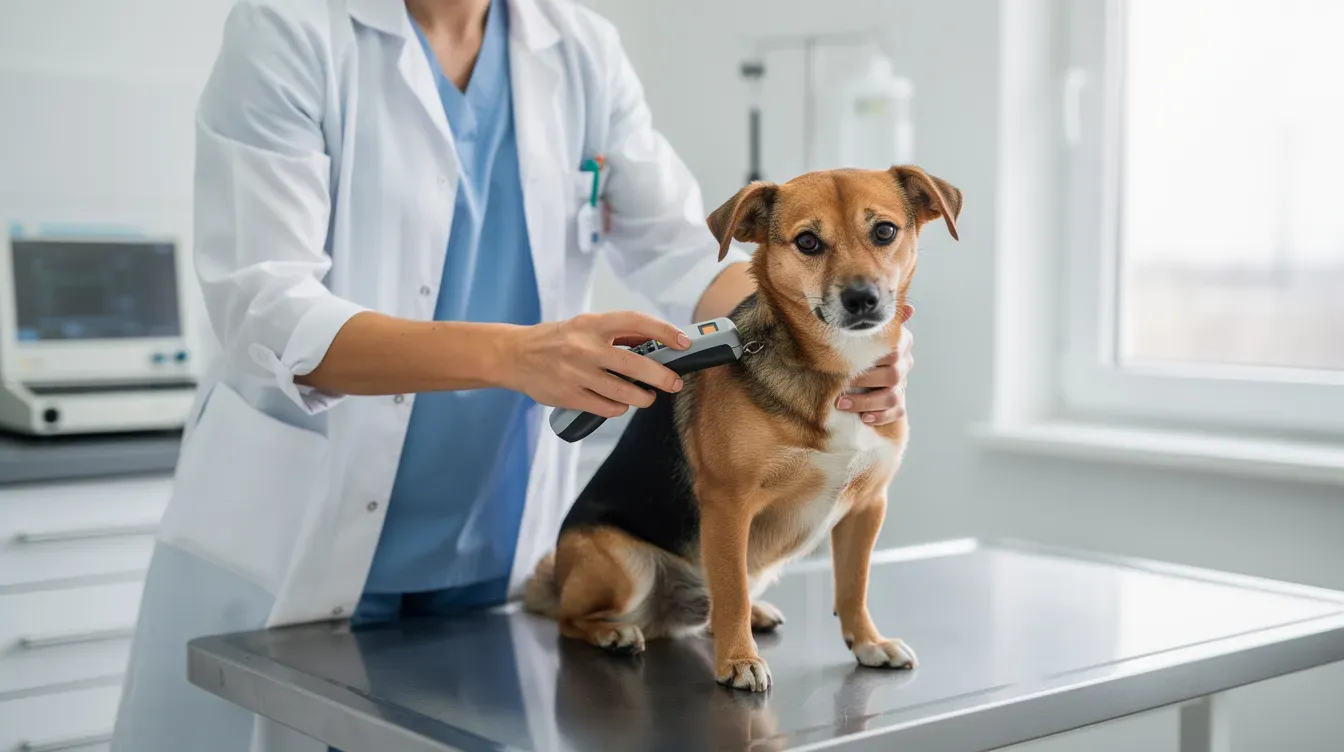
Every travelling dog, cat or ferret must be microchipped and vaccinated against rabies, regardless of whether you use an EU pet passport or an animal health certificate. Microchipping is required for pet travel to the EU and is also mandatory for pets entering Northern Ireland.
Pets must be microchipped before rabies vaccination. The ISO-compliant microchip must be implanted before, or on the same day as, the primary rabies vaccination. Microchips must meet ISO standards for international travel. If the chip was implanted after the rabies jab, the vaccination must be repeated.
Rabies vaccination requires pets to be at least 12 weeks old. After that primary vaccination, pets must be vaccinated against rabies at least 21 days before travel to an EU country, Ireland or Northern Ireland from Great Britain. This waiting period cannot be skipped.
A booster vaccination given on time, according to the manufacturer's schedule, does not trigger a new 21-day waiting period. However, if there has been a gap in coverage, the booster is treated as a primary vaccination and the full waiting period applies again.
At each visit, vets will scan the pet's microchip to confirm it matches the number recorded in the EU pet passport or EU animal health certificate.
When you’ll need an EU animal health certificate instead of a pet passport
Most Great Britain-based pet owners travelling with dogs, cats or ferrets into the European Union or to Ireland now require an EU animal health certificate for every trip.
You need an AHC when:
You and your pet are resident in Great Britain (england scotland or wales).
Your pet does not hold a valid EU pet passport issued in an EU country or Northern Ireland.
You are travelling onwards from Northern Ireland to another EU country with a GB-resident pet.
Key timing and validity rules:
An AHC must be issued within 10 days before travel to the EU. Animal health certificates are valid for 10 days for EU entry.
Once inside the EU, an AHC is valid for 4 months of onward travel within the EU, or until the rabies vaccination expires, whichever comes first.
The certificate is also valid for re-entry to Great Britain for up to 4 months.
The AHC must carry: pet identification, microchip details, rabies vaccination proof, a non-commercial movement declaration, and tapeworm treatment records for dogs where required. It must be issued in English and in the language of the EU country of first entry, so tell your vet your first destination before the appointment.
Travelling between Great Britain, Northern Ireland and Ireland
Movements between Great Britain, Northern Ireland and Ireland follow depend on a mix of UK and EU rules, and requirements differ depending on where you live.
If you live in Northern Ireland, you can usually travel between Northern Ireland and Great Britain with your microchipped pet animal without an AHC or PTD. Your pet just needs to be microchipped. You should still follow current northern ireland pet travel scheme guidance.
From 4 June 2025, Great Britain residents bringing a pet dog cat or ferret, or an assistance dog, into Northern Ireland normally need a free ireland pet travel document (the Northern Ireland PTD). This pet travel document is applied for online via APHA (the Animal and Plant Health Agency) with no vet appointment needed. It can last for as long as you own the pet.
Under the PTD scheme, rabies vaccination and tapeworm treatment are not required for travel into Northern Ireland from Great Britain. At ports and airports, officials will scan the pet's microchip and check it matches the PTD.
An AHC is only needed on this route if you plan onward travel from Northern Ireland into Ireland or another EU country. Northern Ireland travelling to the Republic of Ireland or beyond triggers standard EU pet travel rules.
If travelling by air into Northern Ireland, DAERA must be notified at least 10 working days beforehand. For the latest advice, contact the Animal and Plant Health Agency or DAERA directly.
Tapeworm treatment rules for dogs
In addition to rabies vaccination, some EU and EEA destinations require dogs to receive approved tapeworm treatment shortly before entry. For travel to certain countries, tapeworm treatment is required for dogs.
The tapeworm rule targets Echinococcus multilocularis and typically applies when entering Ireland, Malta, Finland and Norway from Great Britain or most other EU states.
Treatment must be given by a vet not less than 24 hours and not more than 120 hours (1–5 days) before the dog's scheduled entry into the destination country.
The treatment is recorded in the EU pet passport or the EU animal health certificate, with the vet's stamp and signature clearly visible.
Cats and ferrets do not currently require tapeworm treatment for EU entry under the same regulation, but owners should still ask their vet about parasite control for other animals.
Tapeworm treatment for dogs costs between £20 and £40 per administration.
Assistance dogs: extra considerations
Guide dogs and other assistance dogs must meet the same core rules as any pet dog: microchipping, rabies vaccination, tapeworm treatment where required, and an appropriate pet passport or animal health certificate.
Assistance dogs travelling between Great Britain and Northern Ireland also require the Northern Ireland Pet Travel Document under the PTD scheme, though they may receive special handling at ports and airports.
Inform your airline, ferry company or train operator well in advance when travelling with an assistance dog so accessibility and documentation checks can be organised.
Specialist charities, such as Guide Dogs organisations, often publish up-to-date travel guidance that complements official government rules. Their training teams can also help with acclimatising dogs to travel environments.
Arriving in an EU country or Ireland with your pet
All entering pet animals must pass through designated travellers' points of entry in the first EU country they arrive in. Pets must enter the EU through designated travellers' points of entry, such as Calais, Cherbourg, Dublin or Rotterdam.
Present your EU pet passport or valid EU animal health certificate, proof of the pet's microchip, rabies vaccination record, and tapeworm treatment documentation for dogs where required. Having the correct documents ready speeds up the process.
Border officials may scan the microchip and check that numbers match the documents. If they do not, the animal may be refused entry, quarantined or returned to the country of origin at the owner's expense.
You can travel with up to five pets without special permission. You cannot travel with more than five pets without special conditions. If you are travelling with more than five animals, or if the movement involves a change of ownership or is linked to sporting events or commercial activity, additional paperwork applies.
New EU rules from 22 April 2026 now limit the count of up to five pets per vehicle rather than per person.
Returning to Great Britain with your dog, cat or ferret
Requirements for re-entering Great Britain aim to prevent the re-introduction of diseases such as rabies and certain parasites.
Pets returning from an EU country or Northern Ireland to Great Britain must still be microchipped and vaccinated against rabies, with documentation in their EU pet passport or in the AHC used for the trip.
Dogs usually require tapeworm treatment 24–120 hours before re-entering Great Britain when coming directly from most EU countries and Ireland. Check for any exemptions for tapeworm-free territories before your visit.
The treatment must be administered by an authorised vet and recorded either in the EU pet passport or in the relevant section of the animal health certificate.
Verify the current re-entry rules on the official Great Britain pet travel pages before departure, as requirements and listed countries can change. A blood test may be required in certain edge cases, though this is uncommon for standard EU returns. If a blood test shows adequate rabies antibody levels, it can simplify re-entry from countries outside the EU where additional proof is needed.
Costs and practical planning for animal passports and certificates
There is no fixed "animal passport price." Costs follow depend on where you live, which documents you need and your vet's fees.
Here are typical UK cost components to budget for:
Item | Estimated cost |
|---|---|
Microchipping a pet | £10–£30 |
Rabies vaccination | £40–£70 |
AHC issuance by a vet | £100–£200 |
Full AHC appointment (first pet) | £150–£350 |
Additional pet AHC (same trip) | Around £125 |
Tapeworm treatment (dogs) | £20–£40 |
Northern Ireland PTD | Free |
An EU pet passport issued in an EU country or Northern Ireland may work out cheaper over the pet's lifetime because it allows repeat travel without a new certificate for every journey, provided rabies boosters remain current.
Budget for additional costs: carrier or crate purchase, airline or ferry pet fees, and any boarding or quarantine charges if problems occur at the border.
Start preparing at least 2–3 months before your travel date. This allows time for microchipping, the first rabies vaccination, the mandatory 21-day waiting period, and booking an appointment with an Official Veterinarian for the AHC.
During peak holiday periods such as July–August and school holidays, vets' AHC appointments can book up several weeks in advance. Early planning is essential information for any trip.

Frequently asked questions about animal passports and pet travel
Do I still need an animal health certificate if my dog has an EU pet passport?
If your dog's EU pet passport was issued in an EU country or in Northern Ireland and its rabies vaccination is up to date, you can usually travel within the EU and back using that passport without an additional EU animal health certificate. If you live in Great Britain but your pet holds a valid EU-issued passport obtained while you were resident in, say, France, most EU border officials will accept it. However, from 22 April 2026 the rules changed: if your main residence is now in Great Britain, that EU pet passport is no longer valid for entry into the EU. In that case, you will need a new AHC. Always confirm with both your vet and the relevant authorities in your destination country before departure.
How far in advance should I start preparing my pet for EU or Ireland travel?
Start planning at least 2–3 months ahead, particularly if the pet has never had a rabies vaccination or needs a new microchip. This window covers the microchip appointment, first rabies vaccination, the mandatory 21-day waiting period, any booster vaccination that may be needed, and booking an appointment with an Official Veterinarian for the animal health certificate. During busy periods, vet appointments for other pets can fill up fast.
Can someone else travel with my pet if I am not on the same journey?
Non-commercial EU rules usually allow another person to travel with your pet if they carry your written authorisation and the journey falls within 5 days of your own travel. The authorised person's details should be recorded where required on the EU animal health certificate or supporting documents. If the pet travels more than 5 days before or after the owner, or if ownership is being transferred, the movement may be treated as commercial and require entirely different paperwork.
What happens if my pet’s microchip cannot be read at the border?
If the scanner cannot detect the chip, border officials may treat the animal as non-compliant because they cannot link it to its documents. Possible outcomes include refusal of entry, quarantine at the owner's expense, or being returned to the country of origin. Ask your vet to check the microchip well before travel. Owners who travel frequently sometimes carry their own ISO-compliant scanner as a backup.
Are the rules different for puppies and kittens under 12 weeks old?
Puppies and kittens under 12 weeks of age cannot normally be vaccinated against rabies under EU rules, so they are rarely allowed to travel internationally under the standard pet travel scheme. A few EU countries may permit entry of very young pet meets specific conditions, such as remaining indoors with no contact with wild animals, but this is exceptional. The safest approach is to postpone international trips until the pet is old enough for vaccination and has completed the full 21-day waiting period.