
Applying for Universal Credit is one of those processes that feels more complicated than it should be - until you know exactly what to expect. Whether you've just lost a job, had your hours cut, or received a migration notice from the DWP, this guide walks you through every step, from gathering documents to receiving your first payment.
Key Takeaways
Most people must apply for universal credit online through GOV.UK and need to create an online account to start their claim. You need to submit your claim within 28 days of account creation.
Your first payment usually arrives about 5 weeks after the date you submit your claim and sign your claimant commitment - that includes a one-month assessment period plus processing time.
You'll need detailed information about income, savings, housing costs, childcare costs, other benefits, and bank account details before you begin your application universal credit process.
Moving from legacy benefits (including after a migration notice) can stop those benefits permanently, so always check if you're better off before making a new claim.
Free help is available through citizens advice "Help to Claim" support, Jobcentre services, and helplines - especially if you cannot apply online or do not have a bank account.
What Universal Credit Is and When to Apply
Universal credit is a single monthly benefit for people of working age who are on low income or out of work. It supports people with low or no income for living expenses and housing costs, and is administered by the Department for Work and Pensions. To be eligible, you must be a resident of the UK, be 18 or older, and be under State Pension age.
Universal credit replaces several existing benefits and tax credits, including:
Housing benefit
Income-based Jobseeker's Allowance (JSA)
Income-related Employment and Support Allowance (support allowance)
Working Tax Credit
Child Tax Credit
Income Support
Other benefits like personal independence payment (PIP) and carer's allowance may continue alongside universal credit, though they can affect how much you receive.
Claiming is done via GOV.UK. The date your claim starts sets your first monthly assessment period and determines the timing of your first payment. If your income drops, you lose your job, or your circumstances change, apply as soon as possible - delaying your claim delays your money.
If you live with a partner, you must apply for universal credit together as a joint claim.
Residents of Northern Ireland usually receive payments twice monthly. In Scotland, universal credit can be paid twice monthly if preferred. The core application process and online account work the same way across the UK.
Check if You’re Better Off Before You Claim
Once you claim universal credit and your existing benefits stop, you usually cannot switch back - even if universal credit pays you less. This is a one-way door.
Before making a new claim, use a reputable online benefits calculator to compare what you currently receive against a projected universal credit award. You can speak to an adviser at citizens advice or use tools from MoneyHelper to get a clearer picture. This is especially important if you're currently receiving tax credits, housing benefit, or income-related ESA or Income Support.
Couples where only one partner currently claims a benefit should pay close attention. A joint universal credit claim is based on both partners' income, savings, and circumstances - and the household's overall income could end up lower than expected.
If You Already Get Other Benefits or a Migration Notice
A migration notice is an official DWP letter telling you that your legacy benefits are ending and that you must claim universal credit by a specific date - usually within 3 months. If you don't claim by the deadline, your existing benefits will stop and you cannot reverse the switch.
When you apply under a migration notice, you may qualify for something called transitional protection if universal credit would pay you less than your previous benefits. This tops up your payment so you don't lose out. But this protection only applies if you claim before the deadline.
Claiming universal credit normally stops the benefits it replaces, such as housing benefit, tax credits, and some ESA or Income Support payments. However, benefits universal credit doesn't replace - like carer's allowance, PIP, or DLA - can continue alongside it and may affect the amount you receive.
If you receive a migration notice and have complex circumstances, a disability or health condition, or caring responsibilities, get independent advice quickly. Under certain circumstances, exceptions and protections may apply that could make a significant difference to your income.
What You Need Before You Claim Universal Credit
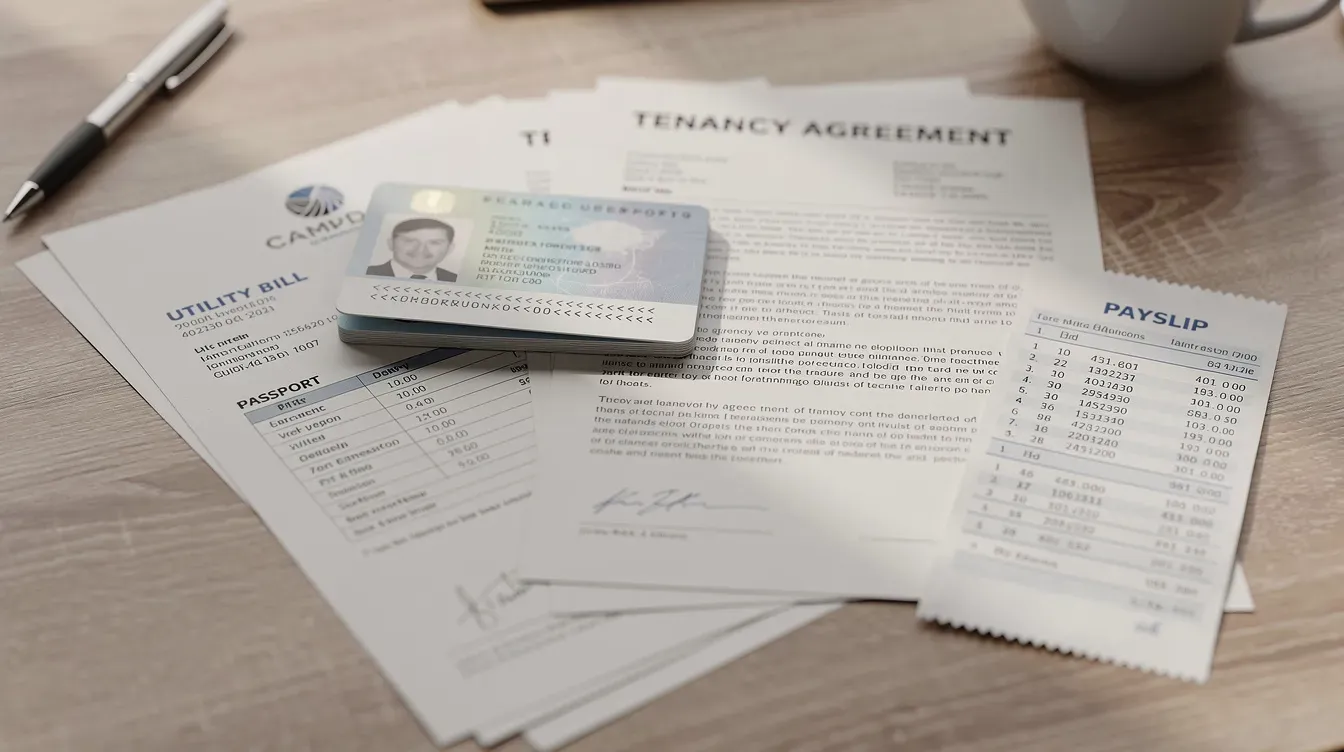
Having your documents and details ready before you start your application universal credit process will make everything faster and reduce the risk of delays to your first payment.
Here are the main categories of information you'll need:
Category | What to Prepare |
|---|---|
Identity | Passport, driving licence, National Insurance number |
Bank details | Account holder name, sort code, account number |
Housing costs | Tenancy agreement, rent amount, landlord's details |
Income | Payslips, self-employment records, pension statements |
Savings | Bank balances, investments, ISAs |
Childcare costs | Provider name, registration number, invoices |
Other benefits | Details of PIP, Carer's Allowance, DLA, etc. |
Each partner in a couple making a joint claim will need their own details and documents, even if only one bank account is used for payments.
Personal Details and Identification
You'll need to provide your full name, date of birth, current address (or an explanation if you have no fixed address), email address, and mobile phone number where possible. You will also need to provide household details, like National Insurance numbers, during the application process.
For confirming your identity online, common options include:
A valid UK passport
A photocard driving licence
A credit or debit card linked to your address
If online identity checks fail, you can verify your identity at a Jobcentre appointment instead.
Your National Insurance number is essential. You can usually find it on previous payslips, a P60, or DWP letters. If you've never had one, you can apply - but it's possible to start your universal credit claim while that's being arranged.
People without standard documents should know that DWP can often verify identity using security questions and other evidence at an in-person appointment, so don't let missing paperwork stop you from starting.
Bank Account and Payment Details
Universal credit is normally paid into a bank, building society, or credit union account. You must have a bank account to receive universal credit payments, and you'll need the account holder name, sort code, and full account number.
In a joint claim, the couple chooses one account where the whole payment goes. It can be in either partner's name, but both partners' bank details must still be provided.
Double-check your sort code and account number before submitting. A single wrong digit can delay your payment by days or even weeks.
If you don't yet have a suitable account, open a basic bank account as soon as possible. Most high-street banks offer these with minimal paperwork. In urgent cases, you may temporarily use a trusted person's account, or DWP can arrange payment through the Payment Exception Service as a last resort.
Housing Costs and Landlord’s Details
Universal credit can include help with housing costs - covering rent for tenants or, for homeowners, some mortgage interest support (paid as a loan) after qualifying periods.
You'll need to provide:
Your full address and type of tenancy
Monthly rent in pounds and pence, matching your tenancy agreement or latest rent letter from 2025–2026
Service charges, if applicable
Your landlord's name, address, and phone number
Whether you're in arrears
Some claimants can ask for the housing costs element to be paid directly to their landlord. If you're in arrears or at risk of eviction, raise this with your work coach at your first jobcentre appointment - they can arrange direct payments or flag additional support.
Income, Savings, Childcare Costs and Other Benefits
You must report all sources of income when you claim universal credit. This includes:
Wages from employment (your employer reports earnings to HMRC via Real Time Information)
Self employed income, including profits and losses
Pensions, including any private or workplace pension (note: pension credit is a separate benefit for people over State Pension age)
Maintenance payments
Student income
Regular support from family or friends
Savings and capital are subject to strict thresholds. You must have £16,000 or less in savings to apply for universal credit. Here's how it breaks down:
Savings Level | Effect on Universal Credit |
|---|---|
Under £6,000 | Ignored completely |
£6,000 – £16,000 | Reduces your payment by £4.35 for every £250 (or part) above £6,000 |
Over £16,000 | Generally ineligible |
Include current balances in bank accounts, savings accounts, investments, ISAs, and the value of any property other than your main home.
If you pay for registered childcare costs so you can work or prepare for work, have the following ready: provider name, registration number, and exact amounts with dates. Universal credit can reimburse up to 85% of eligible childcare costs, capped at £1,071.09 per month for one child or £1,836.16 for two or more children.
Finally, list all other benefits you currently receive - such as carer's allowance, PIP, DLA, Statutory Sick Pay, or Maternity Allowance. These may reduce your universal credit payment but generally won't stop you from claiming.
How to Apply for Universal Credit Online
Most claims for universal credit are made online through GOV.UK. This is the standard route, and most people will start by creating an online account.
The overall journey looks like this:
Go to the official Universal Credit page on GOV.UK
Check your eligibility
Create a username and password
Set up security details
Complete and submit the claim online form
Only use official government websites when you claim online. Never follow links from unsolicited texts, emails, or social media posts - scams targeting benefit claimants are common.

Creating Your Universal Credit Online Account
You need to create a universal credit account to begin your application. Each adult claimant must create their own universal credit online account with a unique username and strong password. You need an email address to apply for universal credit - if you don't have one, local Jobcentres or libraries can help you set one up in minutes.
Set up security questions and, where available, two-factor authentication using a mobile phone to protect your account from fraud.
If you've claimed before, sign in to your existing online account rather than creating a new one. Use the "forgotten details" links or contact support if you can't access it.
For couples, linking accounts for a joint claim involves entering a short linking code so DWP recognises you as a household. You'll receive instructions on how to do this during the process - do not create accounts using the same email address.
Starting and Completing Your Online Claim
Once your account is set up, the online applications process asks about personal details, housing costs, income, savings, children, health, caring responsibilities, and other benefits. Answer every question truthfully and as accurately as possible, using up-to-date figures.
You need to submit your claim within 28 days of account creation, or you may have to start the process again.
Inside your account, you'll see a to do list with tasks such as:
Uploading documents
Confirming identity
Providing additional information
Complete these as soon as possible to avoid delays.
The form can be saved and resumed, but the system may sign you out after about 30 minutes of inactivity. If your internet access is limited, prepare long answers in advance on paper or on your phone before logging in.
Confirming Your Identity
You must confirm your identity using specific identification documents. The online verification process uses GOV.UK checks, matching a UK passport, driving licence, or recent credit records against your details.
If online checks fail - for example, because you lack standard documents - you'll receive a to-do item to prove your identity at a Jobcentre appointment, by phone, or using alternative evidence. You must provide identity documents to confirm your identity, but the type of document can vary.
Bring original documents to your jobcentre appointment where possible: ID, proof of address, bank statements, and your tenancy agreement.
Your claim can usually still be created before identity is fully confirmed, but payments cannot be made until DWP is satisfied about who you are.
If You Can’t Apply Online or Don’t Have a Bank Account
Not everyone can apply online, and that's fine. There are alternatives for people without digital access, those with a disability, or anyone who can't easily open a bank account.
Support is available via phone, home visits in limited circumstances, and local Jobcentre or council services offering access to a computer and digital help. Struggling with literacy, disability, mental health, or language barriers should not prevent you from claiming.

Applying by Phone or with Local Support
You can start a claim by calling the universal credit helpline (0800 328 5644). The universal credit helpline is free to call. Have your key details - National Insurance number, bank details, housing information - ready before you ring, and be prepared to book a longer appointment call if needed.
In exceptional cases, such as severe disability, caring responsibilities, or no safe access to the internet, DWP may arrange a home visit or extra support.
Free support with online applications is available at Jobcentres, libraries, and community centres. You can use their computer and Wi-Fi, and staff can help you navigate the GOV.UK pages. Advisers or support workers can help complete online forms, but you'll still need to personally confirm information and attend any required Jobcentre meetings.
If You Don’t Have a Bank Account
Only one partner in a joint claim needs a bank or building society account for universal credit to be paid, and it can be in either partner's name.
For a first payment in urgent cases, claimants may temporarily use a trusted friend or family member's account with their permission - but open your own account as soon as possible.
The Payment Exception Service exists for people genuinely unable to open any suitable account. Payments may be collected via a payment card or voucher, but this is meant as a last resort.
Local Jobcentres, a credit union, and some banks can help people who've been refused accounts before to obtain a basic bank account. A credit union account is often easier to open than a standard bank account and is fully suitable for receiving universal credit.
If You Don’t Have an Email Address or Proof of Identity
An email address is normally needed to verify and manage your online account. If you don't have one, you can get help to set up an email address at local offices - Jobcentres and libraries can walk you through creating a free email in minutes.
Claimants without a passport or driving licence can still claim universal credit by answering security questions and showing other documents at a Jobcentre. Examples of alternative evidence include:
Birth certificates
Utility bills dated within the last 6–12 months
Council tax letters
Bank statements
If you don't know your National Insurance number, apply for one as soon as possible, but you can usually start your universal credit claim while this is being arranged.
What Happens After You Apply
Once you've submitted your claim and completed the initial to do list, your first monthly assessment period begins. From this point, you can contact universal credit through your online account - reading messages, completing new tasks, and keeping your information up to date.
Failing to respond to messages, missing appointments, or not updating changes can delay or reduce payments and may lead to sanctions.
Your To-Do List and Claimant Commitment
After creating your claim, your online account will display a to do list. Tasks might include uploading documents, confirming housing costs, or booking a Jobcentre appointment. You will need to attend a meeting to agree to a claimant commitment as part of the application process.
The claimant commitment is a personalised agreement between you and your work coach. It sets out your job search or work preparation requirements based on your situation - for example, how many hours you should spend looking for work each week. You need to book an appointment with your work coach to discuss and agree these terms.
Read the commitment carefully before accepting it. If you have caring responsibilities, a disability or health condition, or childcare obligations, raise these before signing so your requirements can be adjusted.
Your claim will not usually be fully processed and paid until the claimant commitment is accepted and your initial work coach interview is complete.
Your First Payment and Ongoing Payments
The first universal credit payment takes about five weeks to arrive after the date you submit your claim and sign your claimant commitment. This covers one full assessment period (one calendar month) plus up to 7 days for DWP to process the payment.
Here's an example timeline:
Step | Date |
|---|---|
Claim submitted | 10 May 2026 |
First assessment period ends | 9 June 2026 |
First payment due | Around 14 June 2026 |
Universal credit payments are made monthly in England and Wales. Universal credit is paid as a single monthly amount. In Scotland, you can opt for twice-monthly payments, and in Northern Ireland, universal credit is usually paid twice monthly. Payment dates can shift if they fall on weekends or bank holidays.
Around 57% of new claimants request an advance payment to help manage costs during the 5-week wait. You can request an advance through your online account or work coach. This advance is a loan - it will be repaid from future universal credit payments over a set period, so keep in mind that your monthly pay will be reduced until the advance is cleared.
Reporting Changes and Avoiding Problems
You must report changes in circumstances quickly through your online account. This includes:
Moving home
Starting or leaving a job
Changes in earnings or income
Relationship changes
Changes in childcare or caring responsibilities
Not reporting changes can result in overpayments (which DWP will recover) or underpayments that leave you short until corrected.
Check your payment every month against your online statement. If something looks wrong, contact universal credit through your account rather than assuming it's correct.
If you disagree with a decision - for example, being refused or receiving a lower amount - you can ask for a mandatory reconsideration within one month of the decision letter, and if needed, appeal to an independent tribunal.
Getting Extra Help While Claiming Universal Credit
People claiming universal credit may also qualify for additional support from the benefit system and local services, especially if they face high housing costs, childcare costs, or caring responsibilities.
Claiming universal credit can act as a gateway to help with council tax reductions, social tariffs for broadband and utilities, and free school meals in some areas. If you're struggling with food, rent arrears, or debt, speak to your work coach or a local advice service - they can refer you to practical support.
Help with Housing Costs and Childcare Costs
The housing costs element can help with rent payments, eligible service charges, and sometimes temporary accommodation. For private renters, there may be limits based on Local Housing Allowance rates, which can leave a gap between your actual rent and the amount covered.
Parents who pay for registered childcare so they can work may be able to claim back up to 85% of their childcare costs through universal credit, up to the monthly caps mentioned earlier. You must keep receipts or invoices as evidence and provide evidence of what you've paid and when.
Report any changes in rent or childcare costs as soon as they happen, so your payment reflects current expenses.
If your rent isn't fully covered, ask your local council about Discretionary Housing Payments - an additional pot of money specifically for people in this situation.
Other Benefits and Carer’s Allowance
Some benefits - carer's allowance, PIP, DLA, and certain war pensions - can be paid at the same time as universal credit, but may reduce your overall entitlement to avoid double support.
For example, a single person who cares for a disabled relative might receive carer's allowance (currently around £81.90 per week) and also qualify for a carer element within their universal credit. The carer's allowance itself would reduce the universal credit amount, but the carer element tops it back up, often resulting in more overall income than either benefit alone.
Having a health condition or disability can sometimes qualify you for extra universal credit elements, reduced work-search requirements, or a different claimant commitment with your work coach.
Report any new benefit awards or changes to existing benefits in your universal credit online account to keep your payments accurate.
Support from Citizens Advice and Other Services
Citizens advice offers free Help to Claim support, which guides people through the early stages of claiming universal credit - from checking eligibility to preparing for the first jobcentre appointment. The Help to Claim service is confidential and does not share personal information.
Local advice organisations can help if you're unsure about the impact of claiming on your existing benefits, or if you struggle to complete the online forms. Community organisations, charities, and local councils sometimes provide budgeting support, digital skills training, and referrals to food banks.
One important warning: beware of unofficial "fee-charging" services that offer to manage your universal credit claim. Legitimate help is always free. If someone asks you to pay to help with your claim, walk away and use recognised free advice providers instead.
Frequently Asked Questions
How long does it take to get my first Universal Credit payment?
It normally takes about 5 weeks from the date you submit your claim and sign your claimant commitment. This covers a one-month assessment period plus processing time. If you don't complete your to do list or attend your work coach appointment promptly, the wait can extend beyond 5 weeks. If you can't manage financially while waiting, you can request an advance payment - but it's a loan that must be repaid from future payments.
Can I claim Universal Credit if I still have a job?
Yes. Eligibility includes those out of work or on low incomes, so you can claim even while working, provided your income and savings are below the thresholds. The amount you receive depends on how much you earn each month, and your employer usually reports your pay directly to HMRC through the Real Time Information system. If your earnings fluctuate, your universal credit payment adjusts each month automatically and may stop altogether if your income rises enough.
What if I make a mistake on my Universal Credit claim?
Log in to your online account as soon as possible and correct the details, or send a message through your journal explaining what went wrong. Honest mistakes can often be fixed without major issues, though if they led to overpayments, DWP may still ask you to repay the extra money. Deliberately providing false information can be treated as benefit fraud with serious consequences, so it's always better to correct errors quickly.
Can I backdate my Universal Credit claim?
In limited circumstances, your claim can be backdated by up to one month. You'd need to show you had a good reason for not claiming earlier - for example, serious illness, bereavement, or technical problems with the GOV.UK website that prevented you from applying. Request backdating through your online account or work coach and provide any evidence such as medical certificates or letters.
What happens if I disagree with a Universal Credit decision?
If you disagree with a decision - such as the amount you've been awarded or having your claim refused - you can ask for a mandatory reconsideration within one month of the decision letter. A different DWP decision maker will review your case and either change or confirm the original decision. If you're still unhappy after that, you can appeal to an independent tribunal. Getting help from citizens advice or another free advice agency at this stage is strongly recommended, as the process can be complex.