Value added tax touches almost every transaction in the UK economy. Whether you run a growing e-commerce store, a consultancy, or a construction firm, understanding how VAT works is not optional once your revenue reaches a certain level. This guide walks you through everything you need to know about VAT in 2026: what it is, who needs to register, how to calculate it, how to file and pay, and how to reclaim it. Consider it your single reference for getting UK VAT right.
Key Takeaways
VAT (value added tax) is a consumption tax charged on most goods and services in the UK at a standard vat rate of 20%. This guide explains how to register for vat, pay vat, calculate vat, and reclaim vat using current 2025/26 rules.
Businesses must register for VAT when their vat taxable turnover exceeds the uk vat threshold of £90,000 in any rolling 12-month period. Registration is also required within 30 days if you expect to cross that limit. The vat registration threshold for 2025/26 is £90,000.
In practice, vat registered businesses charge VAT on sales (output tax), reclaim VAT on allowable costs (input tax), and pay HMRC only the difference via regular vat returns. Using professional services ensures compliance with tax regulations and reduces the risk of costly errors.
Correct VAT treatment is critical when supplying goods and services to other countries, when exporting goods, importing stock, or when running a limited company with complex transactions.
The rest of this article provides practical, step-by-step guidance on registering, paying, calculating, and reclaiming VAT, with concrete figures and current UK rules for the 2025/26 tax year.
What Is VAT and How Does It Work?
VAT stands for value-added tax. It is a consumption tax charged on most goods and services in the UK and many other countries. You encounter it every time you buy something: it is usually included in the selling price at the till or added as a separate line on a business invoice.
The reason it is called an "added tax" is because it applies at each stage of the supply chain. A manufacturer pays VAT on raw materials, charges VAT when selling to a wholesaler, who charges VAT when selling to a retailer, who charges VAT at the final sale to the consumer. At every step, the business in the middle reclaims the VAT it paid and passes on the VAT it collected.
So how does vat work in practice? Each vat registered business collects VAT from consumers and reports it to HMRC. It also reclaims the VAT it paid on its own business purchases. The net amount, output tax minus input tax, is what gets paid to the government. If input tax exceeds output tax in a given period, the business gets money back.
Here is a simple 2026 example. A manufacturer buys raw materials for £5,000 plus 20% VAT (£1,000). It then sells finished goods to a retailer for £15,000 plus 20% VAT (£3,000). The manufacturer's output tax is £3,000 and its input tax is £1,000, so the net VAT payable to HMRC is £2,000. The retailer follows the same process when it sells to the end customer.
VAT was introduced in the UK in 1973 and has been the main indirect tax ever since. It differs from a sales tax (common in many US states) in that sales tax is charged only once at the final sale, while VAT is charged and reclaimed at multiple stages. VAT systems are used across eu countries, the Gulf Cooperation Council, and many other countries worldwide. The US is one of the few major economies that relies on state-level sales tax rather than a national VAT.
VAT Rates, Thresholds and What You Must Pay in 2025/26
The UK currently applies three vat rates. Knowing which rate applies to each product or service you sell determines how much vat you charge, collect, and report.
Here is a summary of the current rates:
Rate | Percentage | Applies to |
|---|---|---|
Standard rate | 20% | Most goods and services: electronics, adult clothing, dining out, hotel stays, professional services |
Reduced rate | 5% | Domestic fuel and power, children's car seats, some energy-saving materials, certain renovation works |
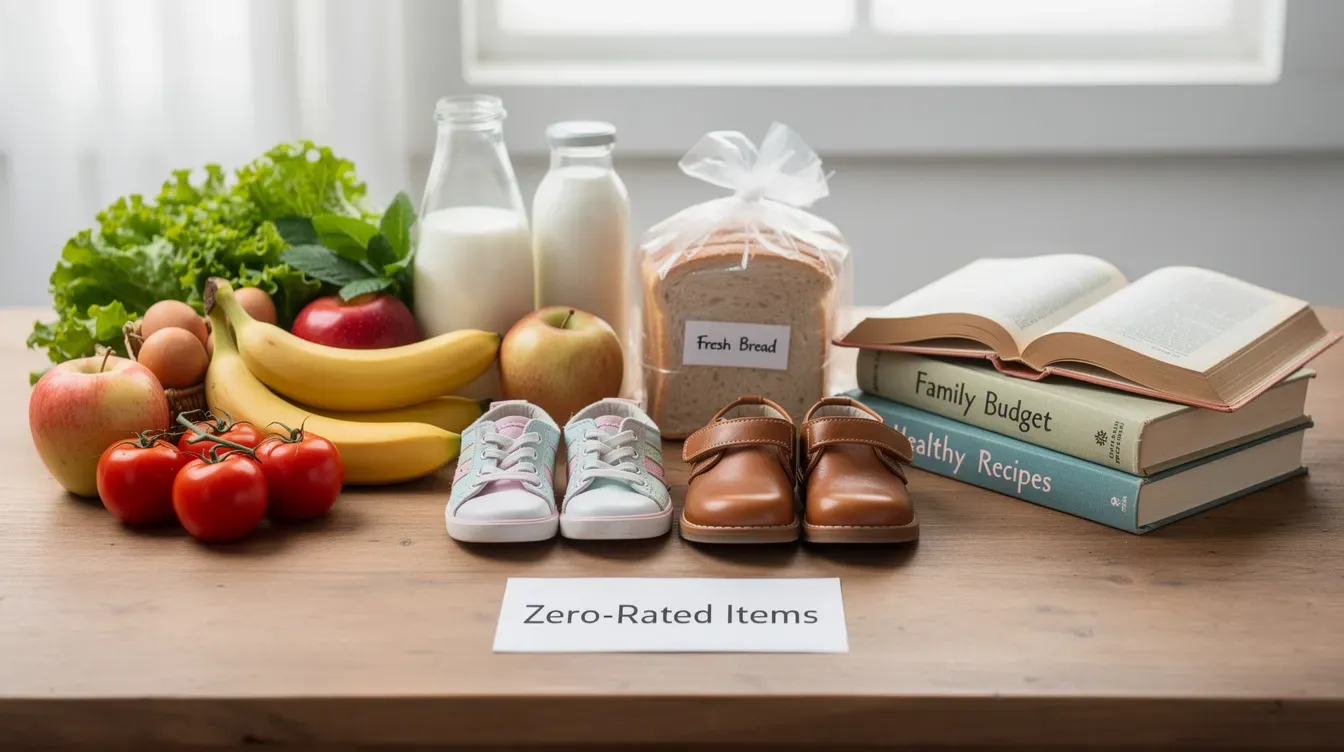
Zero rate | 0% | Most food and non-alcoholic drinks (excluding soft drinks, confectionery, and catering), children's clothing, printed books, newspapers, postage stamps, most prescription medicines, public transport |
The standard VAT rate in the UK is 20% and has been since January 2011. A reduced vat rate of 5% applies to some goods and services that the uk government has specifically listed. Zero rated VAT applies to most food and children's clothing, keeping essentials affordable.
Some supplies are entirely vat exempt. These include many financial services, insurance, some education and health care services, and certain postal services. The distinction matters: zero rated goods remain inside the VAT system (you still file returns and can reclaim input tax), whereas exempt supplies sit outside it (and generally block you from reclaiming VAT on related costs).
The uk vat threshold from 1 April 2025 is £90,000 of taxable turnover in any rolling 12-month period. The deregistration threshold is £88,000. These figures are not based on a calendar or financial year; HMRC checks them on a continuous rolling basis. If your taxable sales cross £90,000 at any point, you must register.
VAT rates differ significantly in other countries. Saudi Arabia charges 15%, Hungary charges 27%, and Switzerland sits at around 8.1%. Businesses trading internationally need to check local added tax rules before charging or reclaiming VAT abroad.
Registering for VAT: Who, When and How
Registration is compulsory once your taxable turnover exceeds the threshold. It can also be voluntary if you are below the limit but want the benefits of being vat registered. Either way, the process is straightforward if you have the right information ready.
When You Must Register
You must register for vat when your vat taxable turnover goes over £90,000 in any rolling 12-month period. Businesses must register if turnover exceeds the vat threshold, and registration is required within 30 days of exceeding the threshold. You must also register if you expect to exceed £90,000 within the next 30 days, for example because you have just signed a large contract.
Businesses based outside the UK that supply goods and services to UK customers often have to register for vat regardless of turnover. Distance-selling rules and marketplace rules may apply, particularly for e-commerce sellers shipping into the UK from abroad.
How to Register
VAT registration can be done online via the hmrc website. You will need:
A Government Gateway user ID and password
Your business name, legal name, and trading address
A description of your business activity
Your estimated taxable turnover for the next 12 months
Bank details so HMRC can process any VAT repayments
Your business name as it appears on official records
If you register for vat as a limited company, you will also need your company registration number, certificate of incorporation, and the date the company was incorporated. If you register for vat as a sole trader or partnership, you will need personal identification such as your National Insurance number and your trading name. The sole trader route is simpler but the information requirements overlap significantly.
Once registered, HMRC will issue you a vat registration number (also referred to as a uk vat number), which must appear on all your invoices and correspondence.
Voluntary Registration: Pros and Cons
If your turnover is below £90,000, you can choose to voluntarily register. Voluntary registration allows reclaiming VAT on purchases, which can be valuable if you have significant start-up or equipment costs. Businesses selling primarily to vat registered clients can make VAT costs neutral for clients, since those clients simply reclaim the VAT you charge them.
On the other hand, if most of your customers are private individuals who cannot reclaim vat, your prices effectively rise by 20% (or you absorb the VAT yourself). You also take on more vat work: filing returns, keeping digital records, and staying compliant with Making Tax Digital rules. Weigh these trade-offs carefully before choosing to voluntarily register.
How to Calculate VAT and Work Out Prices
Getting your VAT calculations right matters for every invoice, quote, and set of accounts you produce. Errors here cascade through your vat returns and can trigger penalties.
Standard Rate (20%)
To calculate vat at 20% from a net price, multiply the net amount by 0.20 to find the vat amount, or multiply by 1.20 to get the total price including VAT.
Example: Net price = £120. VAT = £120 × 0.20 = £24. To calculate VAT-inclusive prices, multiply by 1.2 for 20% VAT: £120 × 1.20 = £144 gross.
Reduced Rate (5%)
For a 5% VAT rate, multiply by 1.05 to find inclusive prices. VAT on a net price of £200 at the reduced rate: £200 × 0.05 = £10 VAT. Gross = £200 × 1.05 = £210.
Working Backwards from a Gross Price
To find VAT from a gross price, subtract the net price from the gross. Divide the gross figure by 1.20 (standard rate) or 1.05 (reduced vat rate) to get the net, then the remainder is the VAT.
Example: A till receipt shows £144 gross. Net = £144 ÷ 1.20 = £120. VAT = £144 − £120 = £24.
Invoice Example
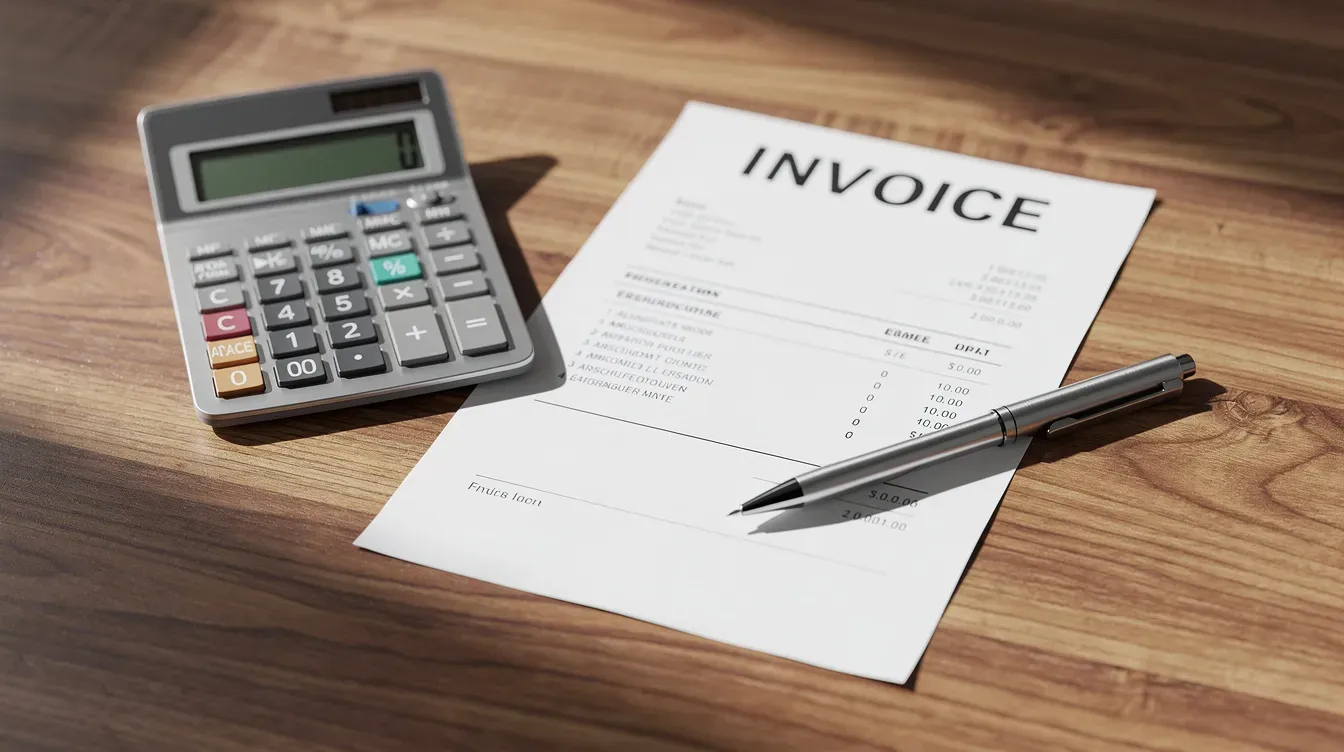
A consultant charges £1,000 plus VAT for work completed in June 2026. The invoice should read:
Line | Amount |
|---|---|
Consulting services | £1,000.00 |
VAT @ 20% | £200.00 |
Total price payable | £1,200.00 |
The consultant records £200 as output tax. The client, if vat registered, records £200 as input tax and reclaims it on their next return.
You must keep digital records of all sales and purchases, including zero rated supplies, exempt services sold, and any transactions at the reduced rate. These records support your vat returns and any future HMRC enquiry.
Paying VAT, Filing Returns and Using Online VAT Services
Once you are vat registered, you enter a cycle of reporting and payment. Getting this right is where a reliable vat service becomes essential.
The Quarterly Cycle
VAT returns must be submitted quarterly for most businesses. During each quarter, you track all taxable sales and purchases, recording the VAT charged vat on each transaction. At the end of the period, you calculate total output tax (VAT on your sales) and total input tax (VAT on your purchases). If output exceeds input, the difference is your vat bill. If input exceeds output, you claim a repayment.
VAT must be reported to HMRC via a vat return. The deadline to submit vat returns and pay any vat payable is one calendar month plus seven days after the end of the VAT period. For a quarter ending 31 March, the deadline is 7 May.
Some businesses use the annual accounting scheme, which allows you to make interim payments during the year and submit just one return at the end. This can simplify cash flow management for smaller firms.
How to Pay
You can pay vat using several methods:
Direct debit (HMRC collects automatically on the due date)
Faster Payments or CHAPS (same-day or next-day bank transfer)
Bacs (takes three working days, so plan ahead)
Debit or credit card via your online account on HMRC's system
Paying VAT electronically through direct debit or Faster Payments can give you a few extra days compared with older methods like posting a cheque.
Making Tax Digital (MTD)
Since 2019, businesses above the VAT registration threshold must use MTD-compatible software to keep digital records and submit vat returns. You cannot simply type figures into the old HMRC portal. The software must maintain an audit trail and digital links between your records, calculations, and return submissions.
Automated VAT services help sync transactions, check invoices, and submit returns directly to HMRC. VAT services manage registration, record keeping, and quarterly reporting to HMRC, removing much of the manual effort. Outsourcing VAT preparation reduces the administrative burden on internal teams, freeing up time to focus on running the business.
VAT services help prevent costly filing errors and avoid late penalties. They also adjust automatically to changes in tax laws and regulations, so you do not have to track every update yourself.
Appointing an Agent
Businesses can appoint an accountant or agent to manage vat returns and communications with hm revenue and Customs (His Majesty's Revenue and Customs). However, the legal responsibility and any VAT owed always remain with the business itself. Your agent files on your behalf, but penalties for errors or late filing fall on you.
Late Filing and Payment Consequences
Late paying VAT, missing filing deadlines, or failing to register on time can all lead to penalties, surcharges, and interest charges. Interest on late VAT payments is charged at the Bank of England base rate plus 4%. HMRC can also charge penalties on top of the interest. We cover the penalty structure in detail in the penalties section below.
Reclaiming VAT and What You Can (and Can’t) Claim
Being able to reclaim vat is one of the main advantages of registration, especially for businesses that incur significant costs before they start trading or during periods of heavy investment.
How Reclaiming Works
You reclaim vat by including input tax on your vat return. Add up the VAT on eligible purchases, deduct it from the VAT on your sales, and either pay the net amount to HMRC or reclaim vat if your input tax is higher. VAT-registered businesses can reclaim VAT on business purchases, which directly improves cash flow.
What You Can Normally Claim
You can usually claim vat on goods and services bought wholly and exclusively for business purposes. Common examples include:
Office rent where VAT has been charged vat by the landlord
IT equipment, software, and hardware
Stock and raw materials
Professional fees (legal, accounting, consultancy)
Utilities and business insurance where VAT applies
Marketing and advertising costs
Invoices must be from vat registered businesses to reclaim VAT. Always check that the supplier's vat number appears on the invoice along with a separate VAT line.
Businesses can reclaim input VAT on business purchases to improve cash flow, and VAT-registered businesses can claim back VAT on cross-border expenses where the correct documentation is in place.
What You Cannot Claim
You cannot reclaim VAT on personal use expenses. The private portion of any mixed-use expense (such as a phone line used for both business and personal calls) must be excluded.
Entertainment costs are not eligible for VAT reclaims. This covers client entertaining, hospitality, and similar expenses. VAT on most cars with private use is also blocked or heavily restricted.
If you make both taxable and exempt supplies, you are "partly exempt" and can only reclaim the portion of input tax that relates to taxable supplies. HMRC applies a de minimis test: if your exempt input tax is £625 or less per month on average and no more than 50% of total input tax, you can treat yourself as fully taxable.
Pre-Registration Expenses
You can reclaim vat on goods purchased up to four years before your registration date, as long as those goods are still on hand and used for taxable supplies when you register. For services, the window is six months before registration. Keep dated invoices and clear records, because HMRC will want to see evidence.
Repayment Example
Imagine a start-up that buys £50,000 of machinery in Q1 2026 (VAT of £10,000 at 20%) but only makes £8,000 of taxable sales in the same quarter (output tax of £1,600). Its input tax (£10,000) far exceeds its output tax (£1,600), so it claims a repayment of £8,400 from HMRC instead of paying any vat bill. This repayment mechanism is how the system supports businesses that invest heavily upfront.
International VAT: Importing, Exporting and Trading With Other Countries
Once you start moving goods or selling services across borders, the VAT rules get more complex. Different rules apply depending on whether you are dealing with EU or non-EU countries, and whether you are supplying goods or services.
Imports
When you import goods into the UK, VAT is usually due at the UK rate. VAT on imports from non-EU countries is charged at UK rates. Since Brexit, many businesses use postponed import VAT accounting, which lets you declare import VAT on your vat return rather than paying it at the border. This avoids a cash flow hit.
VAT is charged on imports from the EU at local rates when goods enter the relevant EU member state, but for goods entering the UK from the EU, UK VAT applies at the point of import. The mechanics mirror non-EU imports post-Brexit.
Exports
Exports to non-EU countries are generally zero-rated for VAT, provided you hold evidence that the goods left the UK and comply with HMRC's time limits for exporting goods. VAT must be reported on all exported goods, even zero-rated ones, on your vat return.
Export VAT depends on customer VAT registration status. When exporting goods to business customers in the EU, the Gulf Cooperation Council, or other regions, you may need to verify the customer's vat registration number. Reverse charge rules may apply, meaning the overseas customer accounts for local VAT in their own country.
Services
Services supplied to clients in other countries can have different place-of-supply rules. In many cases, when services are sold to a business customer overseas, the customer accounts for local VAT under a reverse charge sales list mechanism rather than the UK supplier charging uk vat.
VAT-registered businesses can claim back VAT on cross-border expenses, but the rules vary by jurisdiction.
If you expect to do significant cross-border trading, particularly in digital services or through a limited company, review local added tax laws or seek specialist advice. Specialized services ensure accurate submissions to prevent penalties or audits, which is especially important when multiple countries' rules overlap.

Comparison With Sales Tax and Other Consumption Taxes
Understanding how VAT compares to other consumption taxes helps clarify why the UK (and most of the world) uses this system rather than alternatives.
Sales tax is usually charged only once, at the final sale to the consumer. In many US states, retailers collect the tax and remit it to the state government. VAT, by contrast, is charged and reclaimed at each stage of the supply chain. The multi-stage collection creates a paper trail of invoices between other businesses, which significantly reduces the scope for tax evasion. The total value of revenue collected tends to be higher under VAT systems for this reason.
Because VAT is charged on intermediate transactions between businesses, it reduces the incentive for companies to vertically integrate purely to avoid tax. Under a pure retail sales tax, a company that manufactures and retails under one roof might avoid some tax that would otherwise apply if those functions were separate businesses.
VAT is typically a national-level tax. UK vat is set by the uk government, EU member states follow EU VAT directives (within allowed rate bands), and Gulf Cooperation Council countries operate under a regional framework. Sales tax, by contrast, is often set at the state or local level, as in the US, which creates a patchwork of different rates and rules.
Critics note that VAT can be regressive because it takes a larger share of income from lower earners, who spend a higher proportion of their income on goods. Many countries mitigate this by zero-rating essentials like most food, children's clothing, and health care, and by offering targeted welfare payments to lower-income households.
In sectors with high fraud risk, such as cross-border trading or large-volume zero rated supplies, some jurisdictions hold company directors personally liable for serious VAT fraud. Corporation tax obligations run in parallel, but VAT fraud can carry separate criminal sanctions.
VAT Penalties, Common Mistakes and How to Stay Compliant
VAT penalties can be costly, and avoiding common mistakes is almost always easier than fixing them after HMRC gets involved.
Penalty Situations
The most common triggers for penalties are:
Failing to register for vat on time when turnover exceeds £90,000
Submitting vat returns late (even nil or repayment returns count)
Paying vat late
Each of these attracts its own penalty or interest charge.
The Points-Based System for Late Returns
The UK now uses a points-based system for late vat returns. Each late submission earns you a penalty point. Once you hit the threshold for your filing frequency (four points for quarterly filers, two for annual, five for monthly), you receive a fixed £200 penalty. Late submission of VAT returns incurs a £200 penalty after the threshold is reached. Every further late return at the threshold triggers another £200 fine until your compliance record improves.
Late Payment Penalties
Late payment penalties escalate with time:
Days overdue | Penalty |
|---|---|
1–15 days | Interest accrues from day 1 |
16–30 days | 3% of outstanding VAT |
31+ days | Additional 3%, plus 10% per annum on the remaining balance |
Interest on late VAT payments is charged at the Bank of England base rate plus 4%, running from the first day the payment is overdue until the date you pay in full.
Common Mistakes
Charging the wrong vat rate on certain goods and services (e.g., treating soft drinks as zero rated when they are standard rated)
Confusing vat exempt and zero rated supplies
Poor record keeping: missing invoices, no vat number on documents, lost export evidence
Claiming VAT on cars used privately or on entertainment costs
Using non-MTD-compatible software or maintaining broken digital links between systems
Failing to account for the reverse charge when required on construction services
How to Stay Compliant
Practical steps that reduce your risk:
Use MTD-compatible accounting software that syncs with HMRC
Reconcile your VAT control accounts at the end of every quarter
Review the VAT treatment of every new product or service before you start selling
Seek advice before entering unusual property deals or international transactions
Keep all records for at least six years
HMRC can go back four years to correct under-declared VAT in cases of careless error, and up to 20 years in cases of deliberate fraud. It is cheaper to get things right as you go rather than waiting for a VAT inspection.
For further information, consult HMRC's own guidance or speak to a qualified VAT advisor, particularly if you operate in sectors with complex vat purposes like financial services, construction, or international trade.
FAQ
Do I have to pay VAT if my turnover is below £90,000?
Paying vat via vat returns is only mandatory once your vat taxable turnover exceeds £90,000 in any rolling 12-month period, or if you expect to cross that figure within 30 days. Below the threshold, you are not required to register, and you do not charge or pay vat. However, you may choose to voluntarily register below the threshold if it helps you reclaim vat on costs, for example if you are investing heavily in equipment or stock before your revenue catches up.
Can a sole trader register for VAT, or is it only for limited companies?
Both a sole trader and a limited company can register for vat. HMRC cares about taxable turnover and business activity, not the legal form of the entity. The main difference is in the registration details: a limited company needs its company registration number and certificate of incorporation, while a sole trader provides personal identification such as a National Insurance number and trading name. The vat number is issued to the legal entity, so if a sole trader later incorporates, a new registration may be needed.
How far back can I claim VAT on purchases made before I registered?
In the UK, you can usually reclaim vat on goods bought up to four years before your registration date, provided the goods are still on hand at the time of registration and are used for taxable supplies. For services, the window is shorter: six months before registration. You must hold valid VAT invoices for all claims, and the goods or services must relate to your vat-registered business activity.
What happens if I charge VAT but I am not actually registered?
It is illegal to charge VAT without being registered for vat. If you label an amount as VAT on an invoice without holding a valid vat registration number, HMRC can treat that amount as tax due and demand payment. You may also face penalties and be required to reissue corrected invoices to your customers. If you suspect you should be registered but are not, act quickly: the longer you delay, the higher the potential penalties.
Do I need to register for VAT if I only sell digital services to customers in other countries?
Rules for cross-border digital services are complex. Even if your UK turnover is below £90,000, foreign VAT obligations can still arise. Many jurisdictions require suppliers of digital services to register locally or use special schemes (such as the EU's One Stop Shop) to account for local VAT. The place-of-supply rules determine where VAT is due, and for business-to-consumer digital services, it is usually the customer's country. Review each market individually or seek specialist advice to avoid under-reporting or double taxation.