
The term "unicorn" used to describe something almost impossibly rare. Today, there are well over a thousand of these billion-dollar private companies operating around the world, and the number keeps climbing. But what exactly qualifies a company as a unicorn? How do they grow so quickly, and where are they concentrated?
Whether you're a founder trying to build one, an investor evaluating them, or just someone curious about the startup ecosystem, this guide breaks down everything you need to know about unicorn companies: their origins, their economics, the venture capital machine that fuels them, and the risks that come with chasing billion-dollar dreams.
Key Takeaways
A unicorn company is a privately held startup valued at $1 billion or more, with its valuation set by the price investors pay during private funding rounds, not by revenue or profit. Unicorn status is a venture-backed milestone, not a guarantee of financial health.
As of mid-2026, there are roughly 1,200 to 1,400 unicorn companies worldwide (depending on the tracker), concentrated heavily in the United States, China, India, the United Kingdom, and a handful of other innovation-rich ecosystems. The total valuation of unicorn companies may exceed $5.9 trillion by 2025.
Most unicorn startups are technology-driven and built on scalable business models such as SaaS, fintech, and e commerce. They typically achieve rapid growth within five to eight years of founding, though AI startups are compressing that timeline significantly.
Venture capital is the primary engine behind billion dollar valuations. Late-stage private funding rounds have allowed companies to stay private longer, delaying the initial public offering and changing the traditional path from startup company to public market listing.
Risks are real: overvaluation, "papercorns" built on optimistic projections rather than fundamentals, and dead unicorns that collapse after failing to justify their numbers. Founders and investors alike benefit from focusing on durable business models over headline valuations.
What Is a Unicorn Company?
A unicorn company is a privately held startup valued at $1 billion or more. The valuation is typically determined during a venture capital financing round, based on the price investors are willing to pay for equity.
To qualify, the company must be privately owned. Once a startup goes public through an initial public offering or gets acquired, it leaves the unicorn club. Most unicorn startups are venture-backed, technology-oriented, and still considered relatively young companies, usually under 20 years old at the time they first cross the billion-dollar threshold.
One important distinction: a company's valuation is not the same as the money it has raised. Consider this example:
If investors pay $250 million for a 25% stake in a startup during a Series C round, the implied post-money valuation is $1 billion. The company might have raised only $400 million in total across all funding rounds, and it might generate $50 million in annual revenue. But based on the price investors paid for that slice of equity, the company has a billion dollar valuation on paper.
This is how unicorn status works in practice. It reflects investor confidence in future potential, not current earnings.
Unicorn companies appear across a range of sectors, but they cluster heavily in technology-driven industries:
Enterprise software and SaaS
Fintech and financial services
E commerce and marketplace platforms
Artificial intelligence and machine learning
Healthtech and life sciences
Some definitions of "unicorn" exclude very old private companies, subsidiaries of established companies, or private equity roll-ups that happen to be worth $1 billion or more. The focus is on innovation-driven companies with startup dynamics: high growth, venture backing, and disruptive ambition.
Where the Term “Unicorn” Came From
The term is relatively recent and was originally chosen to highlight just how rare these companies were.
In 2013, venture capitalist Aileen Lee of Cowboy Ventures published an article in TechCrunch titled "Welcome To The Unicorn Club: Learning From Billion-Dollar Startups." She had analysed roughly 60,000 US tech startup companies founded between 2003 and 2013. Out of that massive dataset, she found only 39 billion dollar startups that had reached or exceeded a $1 billion valuation.
That works out to a probability on the order of 0.1% or less for any funded startup to reach unicorn status. The mythical unicorn metaphor was fitting: these companies were so rare they might as well have been imaginary.
Since then, several related terms have entered the startup vocabulary:
Decacorn: a private company valued at $10 billion or more
Hectocorn: a private company valued at $100 billion or more (sometimes called a "super unicorn")
These labels reflect even more exceptional outcomes. ByteDance, SpaceX, and OpenAI are examples of companies that have reached hectocorn territory while still privately held.
As the unicorn population exploded in the late 2010s and early 2020s, fuelled by low interest rates and massive amounts of capital sloshing through the private market, commentators started questioning whether the "mythical rarity" metaphor still applied. When there are over a thousand unicorns globally, the creature starts to feel less mythical. But the underlying achievement remains significant. Reaching a billion dollar valuation still puts a startup company in a tiny fraction of all ventures ever launched.
How Many Unicorn Companies Are There Today?
The exact count depends on which tracker you consult and what criteria they apply. Here is a snapshot across major data sources as of 2025-2026:
Source | Approximate Unicorn Count | Combined Valuation |
|---|---|---|
CB Insights | ~1,460+ | ~$4.8 trillion |
Crunchbase / SEOScaleUp | ~1,700+ | ~$5.2 trillion |
PitchBook (Q1 2026) | ~1,680 | ~$8.6 trillion |
These discrepancies arise because different trackers use slightly different criteria and data sources. Some include companies that others exclude (older private firms, certain Chinese entities, companies that may have quietly gone below $1 billion). When someone asks "how many unicorn companies are there," the honest answer is: it depends on who's counting and what filters they use.
The growth trajectory tells a striking story:
2013: 39 unicorns when Aileen Lee coined the term
2018–2019: several hundred globally
2021: a record year, with hundreds of new unicorn startups minted as venture capital flooded into startups at historically high valuations
2022–2024: a sharp slowdown in new unicorn creation as rising interest rates and macroeconomic uncertainty made venture capitalists far more cautious
2025: the number of US unicorns rose from 39 in 2013 to 700 in 2025, reflecting massive growth over a twelve-year span
There were over 1,200 unicorn companies worldwide as of 2023, and that figure has continued to climb, albeit more slowly.
Net numbers also mask significant churn. Some unicorns exit through IPO or acquisition and leave the private market. Others suffer valuation cuts during tougher funding rounds and lose their unicorn status entirely (these are sometimes called "undercorns"). Meanwhile, new unicorns continue to be minted each year. In Q1 2026 alone, PitchBook tracked 95 new unicorns crossing the billion-dollar mark, 60 of which were AI-focused.
The year 2021 stands out as exceptional: massive amounts of venture capital poured into startups, and the bar for getting a billion dollar valuation felt lower than ever. By contrast, 2023 and 2024 saw far fewer new unicorns, as the funding environment tightened and investors demanded stronger fundamentals before writing large cheques.
Geography of Unicorn Startups
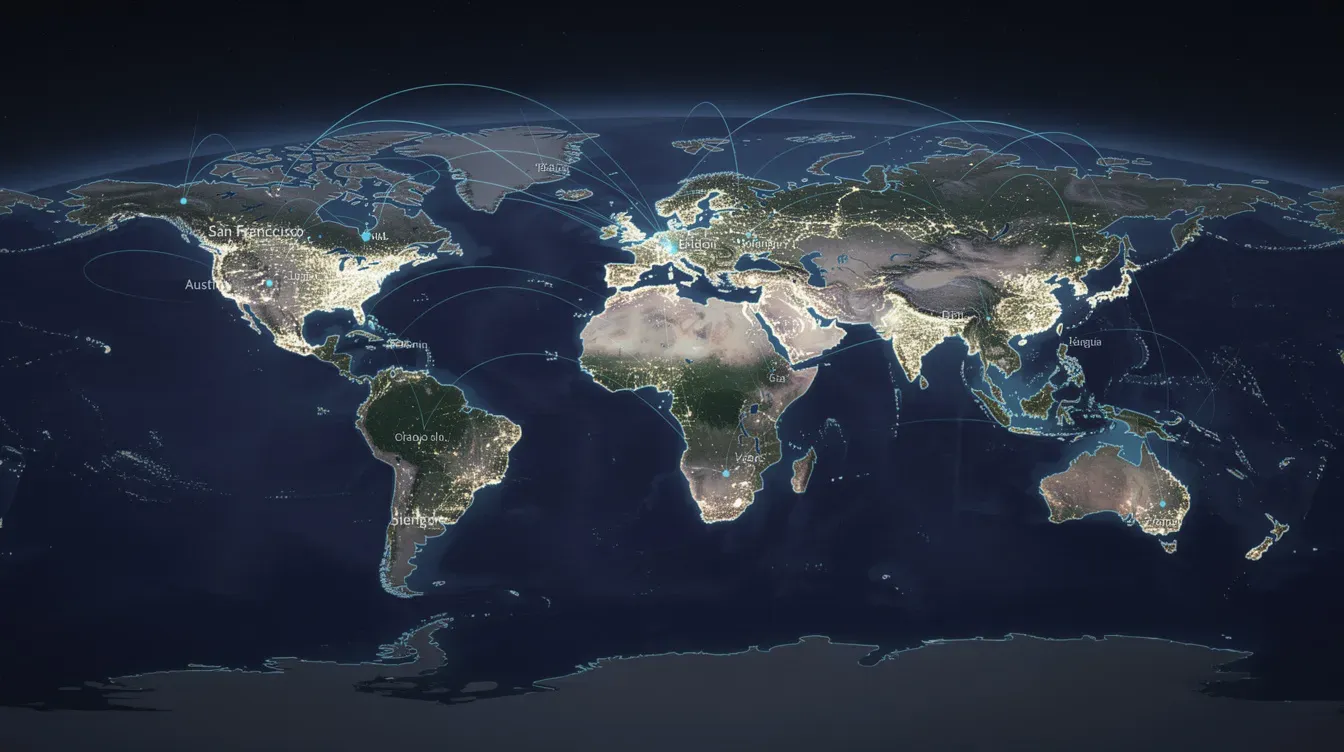
Unicorn startups are a global phenomenon, but they are concentrated in a handful of ecosystems where venture capital, technical talent, and supportive regulatory environments overlap.
Regional Patterns
North America hosts well over half of all unicorns globally. Asia, led by China and India, forms the second major cluster. Europe, the Middle East, and Africa contribute meaningfully but at a smaller scale.
Leading Countries
Here is how the top countries stack up by approximate unicorn count:
Country | Approximate Unicorn Count | Notable Strengths |
|---|---|---|
United States | ~1,126 | Software, AI, fintech, deep tech |
China | ~279–416 | Consumer internet, e commerce, hardware |
United Kingdom | 41 active unicorns (2025) | Fintech, SaaS, AI |
India | ~61 | Fintech, e commerce, logistics |
Germany | ~47 | Enterprise software, mobility |
Israel | ~30+ | Cybersecurity, SaaS, deep tech |
The United States leads by a massive margin, with Silicon Valley and the San Francisco Bay Area serving as the world's most prolific unicorn factory. New York has also emerged as a major hub, particularly for fintech and media startups. South Korea, Singapore, Canada, and France round out the list of notable contributors.
China's unicorn ecosystem is enormous in its own right. In 2025, reports placed China with roughly 416 unicorn firms, comprising about 30% of global unicorn numbers, with an average valuation of approximately $3.87 billion per company. Beijing and Shanghai are the primary centres.
The United Kingdom: A Closer Look
The United Kingdom had 41 active unicorn companies as of 2025, making it one of Europe's leading unicorn ecosystems. London hosts 74% of UK unicorns, reinforcing the city's dominance as a European tech and financial hub.
But unicorn activity extends beyond the capital:
The North West has five unicorns, including Gymshark, the fitness apparel brand that scaled rapidly through social media marketing
Scotland is home to two unicorns, Skyscanner and BrewDog, representing travel tech and consumer goods respectively
Bristol is a hub for innovation with unicorns like Graphcore, the semiconductor and AI chip company
Fintech and SaaS are the most common UK unicorn industries, with 17 fintech unicorns in the UK alone. Artificial intelligence is featured in 13 UK unicorn products, and mobile apps account for 13 UK unicorn companies. Three UK unicorns operate in cryptocurrency and alternative finance.
In 2024, only three new UK unicorns were minted, down from eleven in 2021, reflecting the broader global slowdown in new unicorn creation.
City-Level Clusters
Globally, unicorn startups tend to cluster in specific metropolitan areas:
San Francisco Bay Area (including Silicon Valley): the highest density of unicorns anywhere
New York: strong in fintech, media, and enterprise software
Beijing and Shanghai: the twin engines of China's unicorn ecosystem
Bengaluru: India's tech capital, home to numerous fintech, e commerce, and SaaS unicorns
London: Europe's leading hub, particularly for financial technology
Tel Aviv: punches well above its weight in cybersecurity and deep tech
Smaller ecosystems have also proven they can produce unicorns. São Paulo in Brazil gave rise to Nubank and other Latin American tech companies. Berlin in Germany, Singapore in Southeast Asia, and Stockholm in Sweden have each produced multiple billion-dollar startups. Billion dollar valuations are not confined to Silicon Valley, even if that's where the vast majority still originate.
Business Models and Industries Behind Unicorn Companies
Most unicorn companies combine innovative technology with scalable business models to achieve rapid growth and billion dollar valuations. They are often associated with disruptive innovation in technology, and unicorns typically introduce groundbreaking ideas that disrupt traditional markets.
Dominant Business Models
The leading models among unicorn startups include:
Software as a Service (SaaS): Recurring subscription revenue, high gross margins, and relatively low marginal cost to serve each additional customer. SaaS overtook e commerce in the late 2010s as the dominant model for tech unicorns, boosted by enterprise cloud adoption and predictable revenue structures.
E commerce platforms: Direct-to-consumer or marketplace models that use technology and logistics to sell at scale. SHEIN in fast fashion is a prominent example.
Fintech payments and infrastructure: Companies building the plumbing of modern financial services, from payment processing to neobanking. Stripe is the canonical example.
Marketplace and network orchestrator models: Platforms that connect supply and demand, generating network effects that become stronger as more users join.
AI and enterprise software: Companies building tools powered by artificial intelligence, machine learning, and automation for business customers.
Industry Breakdown
Unicorn startups cluster in several key industries:
Industry | Examples | Key Characteristics |
|---|---|---|
Enterprise software / SaaS | Canva, Notion | Recurring revenue, high retention |
Fintech / financial technology | Stripe, Revolut, Nubank | Regulatory complexity, large TAM |
Consumer internet | ByteDance (TikTok), Discord | Network effects, advertising revenue |
Artificial intelligence | OpenAI, Anthropic, xAI | Heavy R&D spend, fast recent growth |
Healthtech / life sciences | Tempus, Noom | Long development cycles, regulatory hurdles |
Logistics and mobility | Flexport, various ride-hailing platforms | Operationally intensive |
Climate tech | Battery storage, EV companies | Capital-intensive, long time horizons |
Gaming / entertainment | Epic Games, Discord | Large user bases, platform dynamics |
Within the UK specifically, the industry mix reflects broader global trends: fintech leads with 17 unicorns, and AI features in 13 UK unicorn products. Mobile apps account for 13 UK unicorn companies, and three UK unicorns operate in the cryptocurrency and alternative finance space. Successful unicorns validate emerging industries such as fintech and healthtech, signalling market opportunity to later entrants.
Characteristics of a Unicorn Startup
Unicorn startups are shaped by more than their valuation. They tend to share common patterns in technology focus, market orientation, founding team composition, and growth strategy.
Technology at the Core
Most unicorns leverage cutting-edge technology to drive their services. The vast majority have software at the core of their product or platform. A smaller share focuses on hardware or deep tech (semiconductors, biotech, space technology), and these typically require more capital and longer development timelines to reach the same valuation milestones.
Market Focus and Scale
Many unicorns adopt a consumer-centric approach, targeting huge addressable markets and leveraging social media, app stores, and digital marketing to scale quickly. Others focus on enterprise customers but still target markets worth tens or hundreds of billions of dollars.
Founder and Company Profiles
Key patterns among unicorn founders and their companies include:
The average age of unicorn companies is over eight years, though AI startups are shortening this significantly (some reaching unicorn status in four to five years)
Repeat or serial entrepreneurs are overrepresented: roughly 40% of unicorn founders have started companies before
AI unicorn founders have gotten younger, with average ages around 29 in recent cohorts
Women remain severely underrepresented, founding approximately 6% of unicorn companies
58% of UK unicorns attended an accelerator before reaching their valuation, underscoring the importance of structured early-stage support
The average unicorn raised £139m in equity investment before achieving unicorn status
Growth and Acquisition Patterns
Unicorns are generally highly scalable businesses designed for aggressive growth trajectories. Many expand rapidly through a combination of organic user acquisition and strategic acquisitions. In the UK, 45% of UK unicorns made at least one acquisition prior to reaching their unicorn valuation, using M&A to accelerate product capabilities, enter new markets, or eliminate competitors.
Qualitative Traits
Beyond the numbers, unicorns tend to share several less quantifiable characteristics:
Global ambition from day one, not just domestic market focus
Business models designed for network effects or strong economies of scale
Strong founding teams with complementary skills in technology, product, and business development
A willingness to operate at a loss during early growth phases to capture market share
How Unicorn Valuations Are Set
Valuations for high-growth startup companies differ significantly from the methods used to value established companies. There are no quarterly earnings reports, no stock price set by daily public market trading, and often no profits to point to.
How It Works in Practice
Unicorn status usually reflects a post-money valuation in a venture capital financing round. This is inferred from the price investors pay for a minority equity stake.
Here is a concrete example:
A startup raises a $200 million Series D round, with investors receiving 20% of the company. That implies a post-money valuation of $1 billion ($200m ÷ 20% = $1b). The company's valuation is now $1 billion on paper, but it may have only $300 million in cumulative funding, $80 million in annual revenue, and no profit whatsoever.
This is fundamentally different from how a public company's stock price works. On a public stock exchange, the current valuation fluctuates every trading day based on supply and demand among millions of market participants. In a private market funding round, the company's valuation is set by a small number of investors in a negotiated transaction.
What Investors Are Evaluating
When venture capitalists assign high valuations, they are betting on future potential rather than current performance. They evaluate:
Expected rapid growth rates (often 2x–3x year-over-year revenue)
Total addressable market size
Competitive positioning and defensibility (moats)
Scalability of the business model
Quality of the founding team and management
The Risk of Overvaluation
This system works well when investor optimism is eventually validated by real business performance. But it creates risk when valuations outpace fundamentals.
"Papercorns" is the informal term for unicorns whose valuations rely heavily on optimistic projections rather than proven revenue and profitability. When funding conditions tighten, as they did after 2022 when interest rates rose sharply, many of these paper valuations get tested. Down rounds, where a company raises money at a lower valuation than the previous round, reveal the gap between the last high-water mark and what the market currently believes.
Some former unicorns have seen their valuations cut by 50% or more, effectively losing their unicorn status. The gap between private market valuations and public market reality has been a recurring theme over the past several years.
The Role of Venture Capital in Creating Unicorns
Venture capital is the primary fuel behind unicorn startups, providing the capital needed to scale rapidly before a company generates enough revenue to sustain itself. Unicorns attract significant venture capital and institutional investment, and their existence indicates a thriving innovation pipeline attracting venture capital investment.
How VC Funds Work
Venture capital funds raise money from limited partners (pension funds, endowments, family offices, sovereign wealth funds like the Qatar Investment Authority) and deploy that capital into a portfolio of high-risk startup companies. The strategy relies on a power-law distribution: most portfolio companies will underperform or fail, but a few outsized winners, potential unicorns, drive overall returns.
Major VC firms that have backed prominent unicorns include:
Sequoia Capital
Lightspeed Venture Partners
Bessemer Venture Partners
Tiger Global Management
Insight Partners
General Atlantic
General Catalyst
New Enterprise Associates
Index Ventures
Bain Capital Ventures (the venture arm of Bain Capital)
Meritech Capital Partners
Altimeter Capital
GGV Capital
Shunwei Capital
Khosla Ventures
Dragoneer Investment Group
ICONIQ Growth
Salesforce Ventures
Coinbase Ventures
Rise Fund
B Capital
Franklin Templeton
Zeev Ventures
The Funding Ladder
Startups typically progress through successive funding rounds, each increasing in size and valuation:
Stage | Typical Round Size | Purpose |
|---|---|---|
Seed | $500K–$5M | Product development, early hires |
Series A | $5M–$20M | Product-market fit, initial scaling |
Series B | $20M–$60M | Accelerate growth, expand team |
Series C+ | $60M–$200M+ | Scale operations, enter new markets |
Late-stage / Pre-IPO | $200M–$1B+ | Prepare for public listing or maintain growth |
Each round potentially increases the company's valuation as it hits growth milestones. Large late-stage private rounds, sometimes called "megadeals" of $100 million or more, became far more common after 2015. These allowed companies to reach or exceed unicorn status without going public, keeping them in the private market longer.
In the UK, the average unicorn raised £139m before achieving unicorn status, and 56% of UK unicorns secured unannounced funding rounds, suggesting that much of the capital flowing into these companies happens quietly, outside public view.
Trade-Offs
Access to venture capital brings speed but also tension:
Dilution: founders give up ownership with each round
Pressure to scale: investors expect aggressive growth to justify their entry price
Scrutiny: later-stage venture partners and institutional investors demand detailed reporting and governance
Dependency: companies that rely on continuous external funding are vulnerable when capital conditions change
When interest rates rose sharply starting in 2022, the flow of easy money slowed. Early investors in many unicorns found themselves holding stakes in companies that could no longer raise at previous valuations. The capital sloshing through the startup ecosystem dried up significantly, forcing a reckoning for companies that had prioritised growth over financial discipline.
Why Unicorn Companies Grow So Fast
Rapid growth is both a cause and a result of unicorn-level valuations. Investors back companies specifically because they believe in blitzscaling strategies that can capture markets quickly.
The Blitzscaling Playbook
Many unicorns follow a recognisable growth playbook:
Heavy spending on customer acquisition: subsidised pricing, free trials, aggressive referral programmes
Rapid geographic expansion: launching in multiple countries within a few years of founding
Aggressive hiring: scaling engineering, sales, and operations teams faster than revenue might justify
Outrunning competitors: the goal is often to become the market leader before rivals can catch up
Unicorns are generally highly scalable businesses with aggressive growth trajectories. The companies that succeed at this approach often end up dominating their categories.
Technological Enablers
Several structural factors make this kind of growth possible today in ways it wasn't a generation ago:
Cloud computing: eliminates the need for massive upfront infrastructure investment
Mobile internet and app stores: provide instant global distribution for consumer products
Social media: enables viral growth and low-cost marketing
APIs and developer ecosystems: allow startups to plug into existing platforms and scale faster
These enablers lower marginal costs and allow a startup company in San Francisco to serve customers in São Paulo, London, and Bengaluru with minimal additional infrastructure.
Acquisitions as a Growth Tool
M&A is a common accelerant. Many unicorns buy smaller competitors, acquire technology or engineering teams ("acqui-hires"), or expand into adjacent verticals through purchases. This can compress years of organic development into months.
The Downside of Speed
Rapid scaling can mask weak unit economics. When a company is growing at 200% per year, it's easy to overlook that each customer costs more to acquire than they generate in revenue. Operational complexity grows, company culture can fracture, and management teams get stretched thin.
When capital conditions tighten or growth slows, these cracks become visible. The painful corrections of 2022 and 2023, when numerous unicorn startups laid off staff, cut spending, and accepted lower valuations, illustrated this dynamic clearly.

Notable Unicorn Companies and Sectors
While there are now well over a thousand unicorns, a smaller group of high-profile companies illustrates the different paths to billion dollar valuations.
By Geography
United States:
SpaceX (founded 2002, Hawthorne, CA): Perhaps the most capital-intensive unicorn, SpaceX spent over a decade and billions of dollars developing reusable rockets before achieving one of the highest valuations of any private company. Deep tech on a massive scale.
Stripe (founded 2010, San Francisco): A fintech infrastructure company that built its business by making it easy for developers and businesses to accept payments online. Grew steadily over many years, eventually reaching valuations above $50 billion.
China:
ByteDance (founded 2012, Beijing): Owner of TikTok and several other content platforms, ByteDance is among the largest unicorns globally, with valuations in the $180 billion+ range. Consumer internet, advertising monetization, and algorithmic content recommendation drove explosive growth.
Brazil:
Nubank (founded 2013, São Paulo): Latin America's largest fintech unicorn, focused on neobanking and financial inclusion. Nubank eventually went public but spent years as one of the most valuable privately held startups in the region.
Europe:
Revolut (founded 2015, London): A neobanking app that expanded from currency exchange into a broad financial services platform. Reached decacorn status before facing questions about regulatory compliance and sustainable profitability.
Klarna (founded 2005, Stockholm): A buy-now-pay-later fintech that saw its valuation soar and then crash, demonstrating how quickly public market and private market sentiment can diverge.
E Commerce and Marketplace Models
Companies like SHEIN used asset-light, digital-first models to expand internationally at remarkable speed. SHEIN's supply chain innovation, leveraging real-time consumer data to produce small batches of fast fashion, allowed it to scale globally without the physical retail footprint of traditional apparel companies.
Ride-hailing platforms similarly used marketplace models to expand into hundreds of cities, though many have struggled with profitability even after achieving massive scale.
Deep Tech and Climate Tech
Not all unicorns are pure software or consumer apps. Companies in battery storage, renewable energy infrastructure, and electric vehicle technology have also reached billion dollar valuations. These deep tech unicorns typically require more capital, longer development timelines, and different investor profiles (often including sovereign wealth funds and strategic corporate investors) compared to software unicorns.
AI: The Latest Wave
The current wave of new unicorns is heavily AI-driven. OpenAI, Anthropic, and xAI are frontier AI labs that have reached massive valuations in remarkably short timeframes. In Q1 2026, 60 out of 95 new unicorns were AI-focused. This concentration in a single technology wave is unprecedented in the history of the unicorn ecosystem.
Beyond Unicorns: Decacorns, “Papercorns”, and Other Variants
As unicorns became more common, new labels emerged to describe both larger successes and more fragile billion dollar valuations.
Decacorns and Hectocorns
Decacorns are privately held companies valued at $10 billion or more. Examples include Databricks, Canva, and Revolut.
Hectocorns are those valued at $100 billion or more while still private. This is an extremely exclusive category, with only a handful of members: ByteDance, SpaceX, and OpenAI are among the most prominent.
Papercorns
"Papercorns" are unicorns whose valuations rely heavily on optimistic paper marks rather than proven revenue and profitability. During the low-interest-rate environment of 2020-2021, many startups received sky-high valuations from enthusiastic investors. When conditions shifted in 2022, some of these paper valuations evaporated. Companies that had been valued at $5 billion found themselves raising at $2 billion or less.
Other Startup Jargon
The ecosystem has generated a small zoo of related terms:
Soonicorns: high-potential companies approaching but not yet reaching unicorn status
Minicorns: rapidly growing startups at lower valuations but on a fast growth track
Dead unicorns (sometimes called "unicorpses"): companies that achieved unicorn status but then collapsed, ran out of cash, or saw their valuations crater
UK Exit Patterns
The UK provides a useful case study in unicorn lifecycle dynamics. Nine UK unicorns have exited the private market through various channels. Five UK unicorns exited via initial public offering, though with mixed results. Deliveroo's IPO was labeled as London's worst in history, with shares falling sharply on the first day of trading. Two UK unicorns exited through acquisition, and one unicorn underwent a Special Purpose Acquisition Company (SPAC) merger.
These exit patterns illustrate that reaching unicorn status is only part of the story. How and when a company transitions to the public market or finds a buyer matters enormously for the ultimate returns delivered to founders and early investors.
Economic and Ecosystem Impact of Unicorn Startups
Unicorn companies matter not only to founders and investors but also to national and local economies. Their effects ripple outward through job creation, tax revenue, and ecosystem development.
GDP and Economic Contribution
Unicorns contribute to GDP through wages, operating profits, and taxes. Unicorn companies accelerate technological adoption and industry standards, pushing entire industries toward more efficient and innovative practices. In China, the 416 unicorn firms identified in 2025 carried a combined valuation of approximately $1.61 trillion, representing a meaningful share of the country's private technology sector.
Job Creation
Unicorns create direct jobs and stimulate local economies through rapid expansion. A single unicorn can employ thousands of engineers, product managers, marketers, and operations staff. The indirect employment effects are equally important: suppliers, professional services firms, landlords, and local businesses all benefit from the presence of a fast-growing tech company.
The Unicorn Alumni Effect
One of the most powerful but least visible contributions of unicorns is the alumni effect. Employees of successful unicorns often become founders of new startups, creating a "unicorn alumni" effect that seeds the next generation of companies. This is particularly visible in Silicon Valley, where alumni from companies like PayPal, Google, and Facebook went on to found or fund dozens of subsequent unicorns.
Validating Emerging Industries
Successful unicorns validate emerging industries such as fintech and healthtech. When a neobank like Revolut or Nubank reaches a multi-billion dollar valuation, it signals to other entrepreneurs, investors, and regulators that the market opportunity is real. This attracts more capital, more talent, and more supportive policy frameworks to the sector.
Regional Clustering
Unicorn presence in cities like London, Bengaluru, San Francisco, or Tel Aviv reinforces those ecosystems by attracting more venture capital, accelerators, and academic-industry partnerships. This creates a virtuous cycle: more unicorns attract more resources, which produce more unicorns. The concentration is self-reinforcing, which is one reason why small businesses and early-stage startups in these hubs have an easier time accessing capital and talent than their counterparts in less established ecosystems.

Risks, Criticisms, and Sustainability of the Unicorn Model
While unicorns are celebrated, they also raise legitimate concerns about bubbles, inequality, and long-term sustainability.
Valuation Risk
Some unicorns have seen sharp valuation cuts after going public or facing tougher funding rounds, revealing disconnects between private market expectations and public market reality. In 2024, UK equity deals dropped 24% from 2023, reflecting broader investor caution and tighter capital availability. Many companies that raised at peak valuations in 2021 have since had to accept significantly lower numbers.
The concentration of value is also striking. In Q1 2026, just five companies captured approximately 77.6% of all unicorn deal value, meaning the average unicorn received far less capital than the headline numbers suggest.
Governance and Transparency
Privately owned unicorns often disclose less information than their public peers. There's no obligation to publish quarterly earnings, no stock market scrutiny, and limited external oversight. This makes it harder for outsiders (and sometimes even investors) to assess true performance and risk. Some unicorns have hidden losses, overstated metrics, or maintained weak governance structures that only became apparent when the companies attempted to go public.
Social and Environmental Concerns
The "growth at all costs" culture associated with many unicorn startups has drawn criticism on multiple fronts:
Labour practices: Gig-economy unicorns have been criticised for how they classify and compensate workers
Data privacy: Consumer internet companies with massive user bases face ongoing scrutiny about how they collect and use personal data
Environmental footprint: AI companies consume enormous amounts of energy; hardware and logistics companies generate significant carbon emissions
Inequality: Unicorn wealth tends to concentrate among founders, early investors, and senior employees, while broader economic benefits are less evenly distributed
The Path to Sustainability
Sustainable unicorns pair rapid growth with sound unit economics, responsible governance, and credible paths to profitability. The post-2022 environment has been instructive: investors now demand more financial discipline, clearer paths to cash flow, and better governance before committing large sums. Companies that can demonstrate these qualities are better positioned for durable success, whether they remain private, go public, or find a strategic acquirer.
The news platform and media landscape has also shifted: coverage of unicorns has become more critical, with journalists and analysts increasingly questioning whether billion-dollar valuations are justified by underlying business performance.
How Founders and Investors Should Think About Unicorn Status
Unicorn status is a by-product of building a valuable company, not a goal in itself. Chasing the label without the substance behind it is one of the most common mistakes in the startup ecosystem.
For Founders
If you're building a startup company, focus on these priorities:
Solve a genuine problem: The most durable unicorns address real pain points for large groups of customers or businesses
Validate the business model early: Prove that customers will pay, that unit economics work, and that growth can be sustained without permanent subsidy
Build a strong team: Founding team quality is one of the strongest predictors of unicorn-level success
Focus on consistent rapid growth: Revenue growth, customer retention, and expanding margins matter more than headline valuation
Don't optimise for fundraising: Raising money is a means, not an end. The goal is to build something lasting
For Investors
Whether you're a venture partner at a major fund or an individual considering exposure to private markets, keep these principles in mind:
Look beyond valuation: A company's valuation at its last round tells you what one group of investors was willing to pay at one moment in time. It doesn't tell you what the company is worth today.
Assess fundamentals: Product-market fit, customer retention, margin structure, competitive moats, and management quality are better signals than the number of zeros on the latest term sheet.
Diversify: Most venture capital portfolios produce returns from a tiny fraction of investments. Don't bet everything on finding the next ByteDance.
Consider the exit environment: How will this company eventually return capital? Through an initial public offering? Acquisition? The current valuation only matters if there's a credible path to liquidity.
The Long View
Many successful companies never become unicorns yet deliver strong returns and durable impact to their founders, employees, and investors. Not every valuable business needs to reach a billion dollar valuation to be worth building.
Meanwhile, the forces reshaping the unicorn landscape are significant:
Artificial intelligence is compressing the timeline to unicorn status, with AI startups reaching billion-dollar valuations in four to five years or less
Regulation is increasing, particularly around AI, data privacy, and financial technology, which will shape which companies can scale and how
Geographic diffusion continues, with more unicorns emerging outside the US and China, particularly in India, Southeast Asia, and parts of Europe and Latin America
Sustainability is becoming more important: investors and customers alike are demanding that high valuations be matched by responsible business practices
The next generation of unicorn companies will be shaped by these emerging trends. Whether you're building or investing, understanding these dynamics will be more valuable than fixating on the label itself.

FAQ: Unicorn Companies
Are all unicorn companies profitable?
No. Many unicorns are not profitable when they first achieve billion dollar valuations. They typically reinvest heavily in growth: marketing, R&D, geographic expansion, and hiring. Companies like Uber operated at significant losses for years after reaching unicorn status. AI startups such as OpenAI and Anthropic incur massive R&D and compute costs that far exceed their current revenue. Unicorn status is a valuation milestone based on investor confidence in future potential, not a certification of profitability.
Can a company lose its unicorn status?
Yes. Unicorn status is not permanent. If a company raises a new funding round at a valuation below $1 billion (a "down round"), it effectively loses its unicorn status. Market corrections, disappointing financial performance, or shifts in investor sentiment can all cause this. These companies are sometimes called "undercorns." Major trackers like CB Insights and PitchBook typically remove companies from their unicorn lists when new data points confirm a valuation below the billion-dollar threshold. Going public also removes a company from the unicorn club, regardless of its market capitalisation after listing.
How long does it usually take to become a unicorn?
The median time from founding to reaching unicorn status is approximately seven years globally, though there is wide variation. AI startups in recent years have achieved it in four to five years, and a few exceptional cases have done it in under three years. On the other end, biotech and deep tech companies can take 10 to 15 years or longer, given the lengthy R&D cycles and regulatory approvals involved. Market conditions also play a major role: during the 2021 funding boom, timelines compressed as investors competed to deploy capital quickly.
Is every billion-dollar private company considered a unicorn?
Not in practice. Most trackers and media outlets focus on relatively young, high-growth, tech or tech-enabled companies. Older conglomerates, private equity roll-ups, subsidiaries of larger groups, or family-owned businesses that happen to be worth $1 billion or more are generally excluded. The "unicorn" label implies startup dynamics: innovation, venture backing, rapid scaling, and a technology-centric approach. A century-old privately owned manufacturing firm worth $2 billion would typically not be classified as a unicorn.
How can individual investors gain exposure to unicorn startups?
Direct investment in privately held startups is typically limited to accredited investors and venture funds. However, individuals can gain indirect exposure through several channels:
Public companies that invest in unicorns: Some publicly traded firms hold equity stakes in unicorn startups
Venture capital ETFs and funds: A growing number of public funds provide exposure to private tech company valuations
Pre-IPO investment platforms: Some platforms offer access to late-stage private companies for qualified investors
Post-IPO investing: Buying shares after a unicorn goes public is the most accessible route for retail investors, though valuations may have already risen significantly by that point
Each approach carries different risk profiles, liquidity constraints, and minimum investment requirements. Small businesses and individual investors should carefully evaluate these trade-offs before committing capital.