
Losing your passport abroad is one of those nightmares most travellers assume will never happen to them. But in 2024, nearly 20,000 UK travellers received emergency documents after finding themselves stranded without a valid passport. Whether your passport was pickpocketed in Barcelona, left in a taxi in Bangkok, or simply expired while you were living overseas, knowing how to get an emergency travel document can mean the difference between getting home and being stuck indefinitely.
This guide covers everything you need to know about uk emergency travel documents: who qualifies, how to apply, what they cost, and the critical limitations you need to understand before relying on one.
Key Takeaways
A UK emergency travel document is for British nationals abroad who need to travel urgently but cannot use their UK passport because it is lost, stolen, expired, damaged, or held by authorities. An Emergency Travel Document allows British nationals to travel urgently from abroad.
You usually must have held a UK passport issued on or after 1 January 2006 to apply online for an ETD. The application fee is around £125 and is non-refundable.
Urgent UK passport services in the UK (1 day Premium, 1 week Fast Track) issue full passports and are completely different from emergency travel documents issued abroad via embassies and consulates.
Emergency travel documents are valid for a single journey only through a maximum of 5 countries, with all countries and dates printed on the document.
Some countries do not accept emergency travel documents or emergency passports for visa-free entry, so you must check entry requirements with the destination embassy before travelling.
What Is a UK Emergency Travel Document?
An emergency travel document is a temporary, single-journey travel document issued by the UK government to British nationals abroad who cannot use their passport for urgent travel. Think of it as a stripped-down substitute that gets you from point A to point B when your full passport is unavailable.
ETDs are issued by British embassies, high commissions and consulates overseas, not by the passport office in Britain. You cannot apply if you are currently in the UK.
Crucially, an ETD is not a full UK passport. It is a small A6 booklet with a blue cover labelled "Emergency Passport," containing around 8 pages, a digital photo, and a machine-readable zone. Emergency travel documents are non-biometric and limited in acceptance compared to full passports. The document covers only the specific itinerary approved in your application - typically travel back to the UK, to your country of residence, or to a nearby country where you can get a new passport.
Border Force or foreign border control will often retain the ETD when you arrive at your final destination. An Emergency Travel Document is valid for a defined journey and must be returned upon re-entry to the UK, and it is later destroyed by HM Passport Office.
Emergency Passport Services vs Emergency Travel Documents
The phrase "emergency passport" can refer to two very different things depending on whether you are in the UK or abroad. Getting these mixed up wastes time in situations where hours matter.
If you are in the UK and need a passport urgently for upcoming travel, you use urgent passport services offered by HM Passport Office. These issue a full, biometric UK passport. Regular passports can be valid for up to 10 years.
If you are already overseas and your passport is lost, stolen, or unavailable, you cannot use 1 week fast track or similar UK-based services. You must apply for an emergency travel document instead through your nearest British embassy or consulate.
Here is a quick comparison:
Factor | Urgent Passport (UK) | Emergency Travel Document (Abroad) |
|---|---|---|
Location | You must be in the UK | You must be outside the UK |
Document issued | Full biometric UK passport | Non-biometric ETD |
Typical fee | £239.50+ (Premium) / £192+ (Fast Track) | Around £125 |
Validity | Up to 10 years | Single or return journey only |
Acceptance | Accepted globally | Some countries may refuse |
In genuine life-or-death emergencies, contact the Passport Adviceline or your local embassy for case-by-case guidance on whether any exceptions apply.
Who Can Apply For a UK Emergency Travel Document?
ETD applications are assessed individually based on urgency and supporting evidence. Meeting basic eligibility does not guarantee approval.
To be eligible you must be a British national (or otherwise eligible for British nationality) and be outside the UK at the time of application. You also need a valid UK passport issued within the last 10 years, specifically one issued on or after 1 January 2006, to apply online. If your passport has expired and predates that cutoff, you may be asked to apply for a full UK passport instead, unless there are exceptional circumstances.
Typical urgent reasons accepted include:
Serious medical emergencies requiring urgent medical treatment for you or a close relative
Death or life-threatening illness of a close family member
Urgent need to return to your country of residence
Your passport being held by local authorities or a foreign embassy
ETDs are not normally issued for routine holidays, weddings, job interviews, or non-essential trips. You will need to show why travel cannot reasonably be delayed until a new passport can be obtained.
Children can also receive emergency travel documents, but applications for under-16s usually require both parents or legal guardians to attend or provide written consent.
When You Should Use Urgent UK Passport Services Instead
If you are still in the UK and have time to reach a passport office before your departure, urgent passport services are almost always the better option. They produce a full, widely accepted UK passport rather than a limited ETD.
The 1-day premium passport service is available for adults renewing an adult passport issued after 31 December 2001. You book an appointment at a passport office, attend in person, hand in your old passport, and collect the new one about 4 hours later. The 1-day premium passport service takes 4 hours after appointment. The cost is around £239.50 for a standard adult passport, or £253.50 for a frequent traveller passport with 54 pages.
The 1 week fast track service covers adults and children: renewals, replacing a lost or stolen passport, changing details, or applying for a first child passport. Delivery comes by secure courier in about one week. The 1-week fast track passport service delivers passports in 1 week, costing around £192 for a standard adult passport.
Key limitations to know:
First-time adult passport applications are not eligible for Premium or Fast Track
You must book an appointment in advance online
Missing or cancelling late can lead to administrative fees with no refund of the main charge
These urgent services cannot help you if you are abroad, so plan accordingly.
How To Apply Online For an Emergency Travel Document
You must apply online for an emergency travel document through the official GOV.UK website. The process typically takes about 15 to 20 minutes.
Core steps:
Go to the GOV.UK "Travel urgently from abroad without your UK passport" page
Answer eligibility questions
Complete the online form with your personal and travel details
Upload a compliant digital photograph
Pay the fee online (around £125, non-refundable)
Before you start, gather the following: details of your lost or stolen passport, proof of your identity if available (for example a photo of your driving licence), your full travel plans including dates, countries, and airports, and a debit or credit card. You need to have travel booked or planned to apply.
If you have lost your wallet along with your passport, a relative or friend can usually pay online on your behalf, but the applicant's details must still be correct and complete.
Once submitted, you will receive email confirmation and may be told to book an appointment at your nearest British embassy, high commission, or consulate to present original documents and collect your ETD.
Documents And Evidence You Will Need
Missing paperwork is one of the most common reasons for delay. Preparing everything before you start the application saves significant time.
Typical identity and nationality evidence includes:
A scan or photo of your old passport (if you have it)
UK birth or naturalisation certificate
Biometric residence permit or other UK government ID
A driving licence as secondary identification
You must provide proof of residency in your destination country if you are not returning to the UK
Travel evidence requirements include a written itinerary, booking confirmations or e-tickets, and any proof of onward or return travel covering up to five countries if you need transit stops.
For emergency situations, you may need medical letters or hospital reports for urgent treatment or repatriation, death certificates or contact details for funeral directors, or a signed and dated letter from employers or government agencies if travelling on official business. A dated letter from a medical professional can significantly speed up processing.
For a child passport application, extra documents are needed: a full birth certificate, evidence of parental responsibility, and signed consent from both parents or legal guardians where possible.
Reporting A Lost Or Stolen Passport Abroad
If your passport is lost or stolen, it must be cancelled as soon as possible to prevent misuse. This step directly affects your ability to get an emergency travel document.
You must report a lost passport to the police. Do this promptly and obtain a police report or reference number, as many embassies require this documentation before processing an ETD for stolen passports.
You should also complete the UK LS01 lost or stolen passport form online or via the embassy. This form officially cancels your old passport and prevents it from being used for travel or identity fraud. Once cancelled, an old passport cannot be used to board flights or cross borders, even if you later find it in a jacket pocket.
Do not book new flights against a cancelled document. Wait until you have your ETD in hand.
Contact your travel insurer after reporting the loss. Many policies reimburse reasonable costs for emergency travel documents and replacement passport abroad expenses if receipts are kept.

Processing Times, Costs And Collection
Processing times for emergency travel documents vary by location and circumstances, so never assume same-day issue unless the embassy specifically confirms it.
The standard application fee for an emergency travel document is around £100 to £125 and is non-refundable even if you choose not to travel or your application is refused. An Emergency Travel Document typically costs £125 according to current GOV.UK guidance, though the application fee for an emergency travel document is listed at £100 on some older references.
Emergency travel documents are typically issued within a few days. In many major cities, an ETD is often ready within about 2 working days when the application and documents are complete. Applications for emergency travel documents may be expedited in urgent cases involving medical emergencies or bereavements. However, processing time can stretch to several weeks if further nationality checks are needed, particularly for children or expired documents.
Applicants will usually be told by email or phone when and where to collect their ETD. An in-person appointment at a British embassy, high commission, or consulate is often required.
Avoid booking or re-booking non-refundable flights until you have clear written confirmation about timing and collection arrangements from the issuing post.
Where You Can Get An Emergency Travel Document Abroad
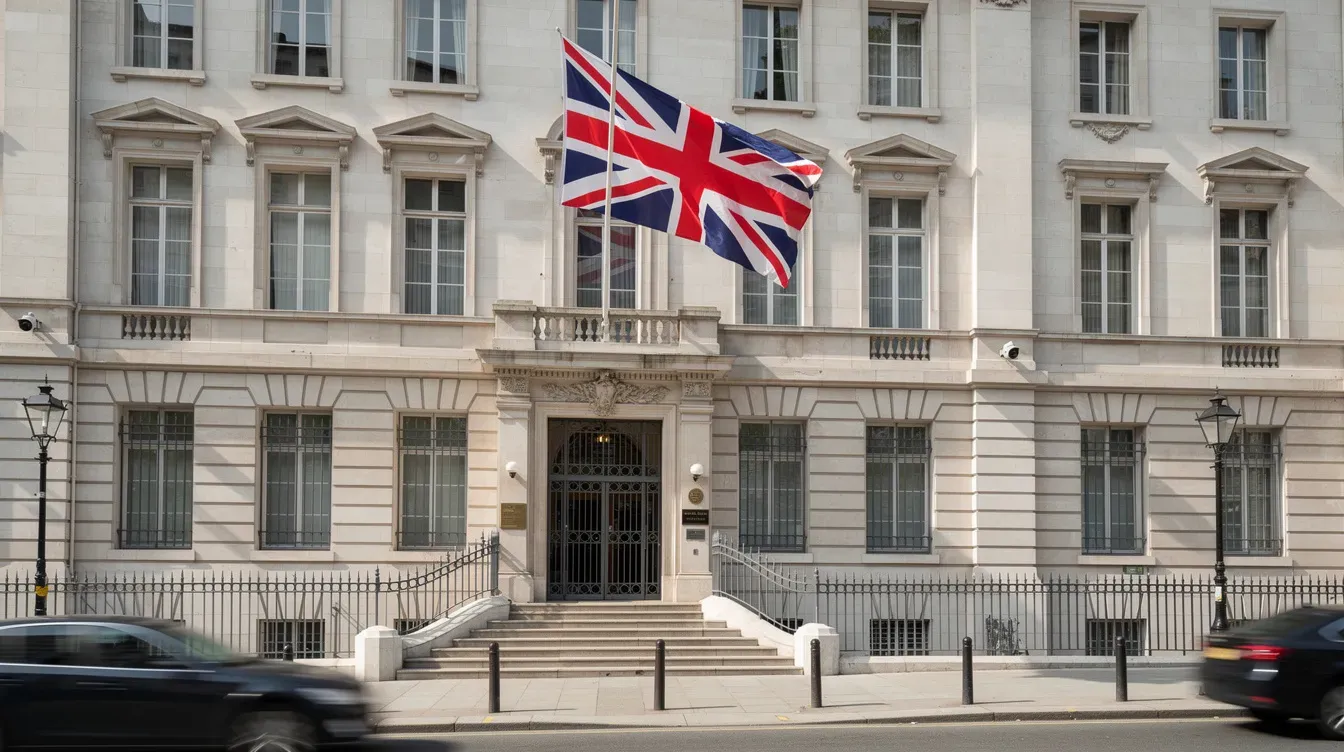
ETDs are issued globally through the UK's diplomatic network, but capacity, opening hours, and appointment systems differ between posts.
Typical locations where ETDs are issued include:
Europe: Madrid, Paris, Rome, Berlin and other capital cities
North America: Washington DC, New York, Los Angeles, Chicago, Miami
Asia and the Middle East: Abu Dhabi, Dubai, New Delhi, Bangkok
Africa and Oceania: Cairo, Rabat, Sydney, Melbourne
Before visiting, check the specific country page on GOV.UK for local instructions, any online forms, fees collected in local currency, and whether appointments are required. Not all small consulates can issue ETDs directly; some will direct you to a regional hub embassy in another city or neighbouring country.
During public holidays or local disruptions, emergency coverage might be limited to genuine life-or-death cases, so expect possible delays and plan accordingly.
Validity, Routes And Countries You Can Travel Through
ETDs are tightly linked to a specific journey. They are not flexible travel documents.
An emergency travel document is normally valid only for a single journey or a return journey, with start and end dates printed clearly. A UK Emergency Travel Document is valid for a single or return journey through a maximum of 5 countries. All planned stops, including transit airports, must be declared when you apply.
If you change your travel plans after the ETD is issued - adding extra countries or altering dates - you will usually need to apply for a new ETD and pay the fee again.
Validity also depends on entry rules of transit and destination countries. Some require a minimum of six months' validity on any travel document, even if it is an ETD. Transit visas may be required for countries being travelled through with an Emergency Travel Document, so check each stop on your route.
Restrictions And Countries That May Not Accept ETDs
Not all countries treat an emergency passport or ETD the same as a full biometric UK passport. This is one of the most important things to understand before confirming any immediate travel.
Some destinations, including the United States under its Visa Waiver Program, may not accept an emergency passport or ETD for visa-free entry and may require a full, biometric UK passport and a valid visa instead. Certain countries in Asia, Africa, and the Middle East have their own rules, sometimes restricting ETDs to direct return to the UK or requiring prior approval from immigration authorities.
Check both the UK Foreign, Commonwealth and Development Office (FCDO) travel advice and the website or helpline of the destination's embassy or consulate before travelling on an ETD. Airlines may also refuse boarding if the destination will not accept an emergency travel document, so confirm acceptance with your carrier as well.
Emergency Medical Repatriation And Family Crises
Serious illness, injury, or a death in the family often triggers the need to travel urgently when passports are missing or expired.
ETDs can support medical repatriation by allowing a patient or accompanying close relative to fly back to the UK or to a specialist centre for medical treatment when issuing a new passport in time is not realistic. Embassies may prioritise ETD applications backed by detailed medical evidence from hospitals or doctors, especially when transport is arranged by air ambulance or specialist repatriation providers.
For a bereavement abroad, consular staff from the development office may ask for documentation such as a death certificate, contact details for local authorities, or letters from funeral directors to support urgent travel.
Coordinate closely with both medical teams or funeral directors and the embassy to ensure all travel dates and routes match what will be printed on the emergency travel document.
Emergency Travel For Children And Newborns
Children and even newborns sometimes need emergency travel, but extra safeguards apply around consent and proof of identity to protect against child abduction.
A child who has lost a passport abroad can usually receive an ETD if their British nationality can be proven through passports, birth certificates, or parental documents. Both parents or all legal guardians are normally expected to attend the appointment with the child, or provide signed consent letters and evidence of parental responsibility where one cannot attend. Permission from both parents is essential.
For newborns abroad, consular staff may need to see local birth certificates, parents' passports, and in some cases evidence of the parents' marital status before issuing an ETD. Any person collecting the document must be able to prove their relationship to the child.
Incomplete or conflicting parental information can significantly delay issue of emergency travel documents, so gather every relevant document before your appointment.

Insurance, Refunds And What If Your ETD Is Delayed?
While ETDs are designed for emergencies, delays and refusals can still occur. Emergency travel documents are issued quickly for urgent situations, but "quickly" is relative.
The ETD fee is generally non-refundable. You should not expect a refund even if your travel plans change, the document arrives too late, or the application is rejected because criteria are not met. There is no payment refund process for ETDs.
Check your travel insurance policies for cover relating to lost or stolen passports, emergency travel documents, extra accommodation, and flight rebooking costs. Keep all receipts, as most insurers require proof of expenditure.
If an ETD does not arrive within the expected timeframe, contact the issuing embassy or consulate immediately with your reference number and any updated travel details. In extreme cases where an ETD cannot be issued in time, consular staff might discuss alternatives such as rescheduling travel or applying for a full replacement passport abroad, although a full passport takes longer to process and deliver.
If your passport has expired and you are not eligible for an ETD, you may need to renew or get a passport through the standard service, which can take several weeks.
Frequently Asked Questions
Is an emergency travel document the same as an emergency passport?
In UK practice, an "emergency passport" issued abroad is usually an emergency travel document rather than a full booklet passport. It has limited validity and route restrictions. Urgent UK passport services (1 day Premium, 1 week Fast Track) issue full UK passports and are only available when you apply from within the UK. The terms are often used interchangeably by travellers, but they refer to different documents with very different levels of acceptance.
Can I use an emergency travel document for multiple trips?
No. Emergency travel documents are valid for a single journey only, or a defined return journey, with all destinations and dates printed on the document. If you later need to take another journey, you must either obtain a full UK passport or apply for a new ETD and pay the cost again.
What happens to my old passport after I get an ETD?
Once you report your passport lost or stolen via the LS01 form, it is cancelled and cannot legally be used again for travel, even if you find it later. If a cancelled passport is found in your possession, border staff may confiscate it. You should rely on your ETD or new passport instead.
Can someone else apply for or collect an ETD on my behalf?
In some urgent situations - for example, if the person is hospitalised or is a young child - a parent, guardian, or authorised representative can help complete the online application and pay online on their behalf. Embassies may still require the applicant to attend in person to collect the document, but in exceptional circumstances such as intensive care patients, they may agree alternative arrangements if adequate proof and consent are provided.
Do I still need a visa if I travel on an emergency travel document?
Yes. Holding a UK ETD does not remove visa requirements. You must still meet the immigration rules of each country you visit or transit through. Check with the embassy or consulate of your destination whether a visa can be issued against an ETD and how long this process will take before confirming any flights. Some countries that normally offer visa-free access to UK passport holders may not extend the same treatment to ETD holders.