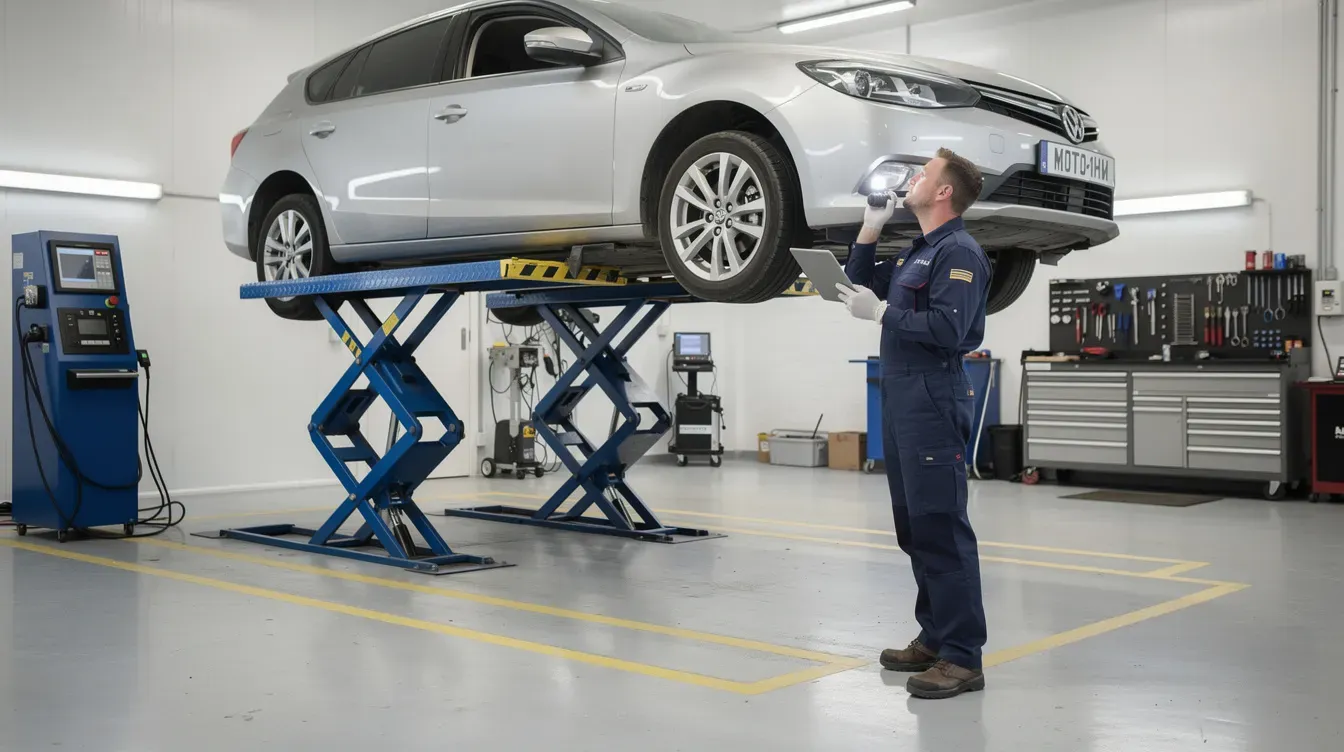
An MOT test is one of those things most UK drivers deal with every year, yet many aren't entirely sure what the mot tester actually inspects. Understanding what is checked during an mot can help you avoid preventable failures, plan repairs, and keep your car legal on the road. This guide breaks down every area the test covers, explains what happens if your vehicle fails, and gives you a practical mot checklist you can run through at home before your mot appointment.
Key Takeaways
The ministry of transport test, commonly known as the MOT, is a legal requirement for most vehicles over three years old in Great Britain and four years old in Northern Ireland. It is an annual mot test focused on vehicle safety and exhaust emissions rather than a full mechanical service. Driving without a valid mot certificate is illegal in the UK, unless you are travelling directly to a pre booked mot appointment.
The key items checked in an mot include the braking system, wheels tyres, all exterior lights, steering and suspension, seat belts, the windscreen, fuel system, electrical equipment, and the exhaust system. The most common failure points in an MOT test are lights, suspension, and brakes, which together account for the majority of all mot failure reasons across the country.
If a car fails its MOT due to major or dangerous defects, a mot retest is typically available after repairs are completed. Many garages offer a free partial re test or reduced-fee retest when the vehicle returns to the same test station within ten working days. The sections below provide a full "what is checked in an mot" overview, along with a simple pre-MOT checklist you can follow at home.
What Is An MOT Test And Why It Matters
The MOT takes its name from the original Ministry of Transport, the government department that introduced the scheme decades ago. Today, the test is overseen by the Driver and Vehicle Standards Agency (DVSA) in Great Britain and the Driver and Vehicle Agency (DVA) in Northern Ireland. Its purpose is straightforward: to confirm that a vehicle meets minimum road safety and environmental standards on the day of the test.
An MOT test assesses the roadworthiness of a vehicle. It is an annual inspection for road safety and environmental standards. However, it does not guarantee the car's mechanical reliability between tests. A vehicle could pass its MOT in the morning and develop a new fault in the afternoon, which is why regular servicing is still essential.
Cars need an MOT after three years of registration, and MOT tests must be conducted annually after a vehicle is three years old. In Northern Ireland, the first test is required after four years. A vehicle must pass its MOT to be legally driven on roads. The current maximum mot test fee for a standard car (Class 4) is £54.85, though many garages charge less. MOT tests for motorcycles cost a maximum of £29.65. Light vans and multistage build vehicles may fall under different test classes with their own fee structures.
What Is Checked During An MOT? (Overview)
Around a dozen separate systems and areas are checked during an mot, covering everything from lights and brakes to the exhaust system and vehicle structure. The mot test checks are designed to establish whether the vehicle meets legal safety and emissions standards on the day of inspection.
The following sections break each area down in plain language. No dismantling is done during the test. It is a largely visual and functional inspection using ramps, rollers, and emissions testing equipment. The test takes around 45 to 60 minutes for a typical car if no serious issues are found.
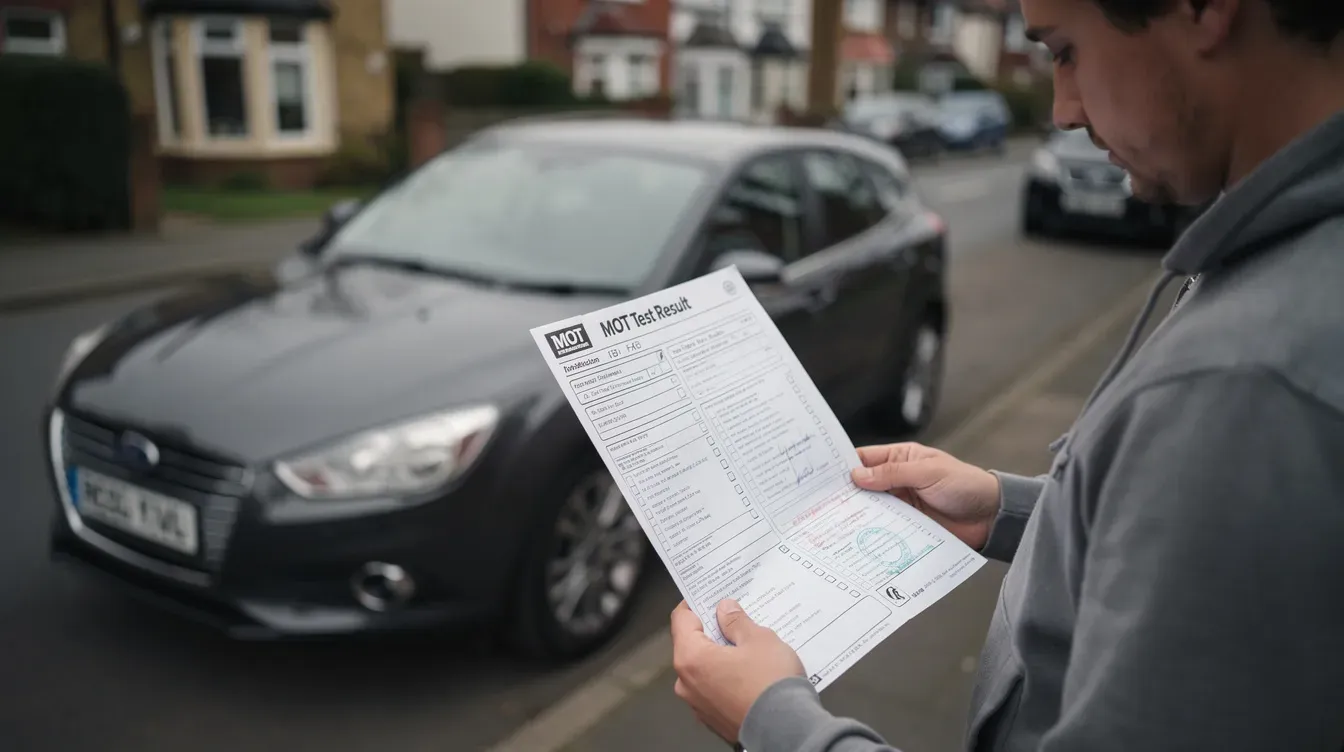
The mot tester records defects in four categories: dangerous, major, minor, or advisory. Dangerous or major defects mean the car is a failed mot. Minor and advisory items are noted but do not prevent a pass. When a vehicle passes, a printed or digital mot certificate is issued and results are stored in the government's MOT database, forming part of the car's test history.
Lamps, Reflectors And Electrical Equipment
Lighting and electrical equipment are among the most common reasons a car fails its MOT. Statistics show that 29.6% of MOT failures are due to lights and signals, making this the single largest failure category year after year.
All lights must be working correctly for the MOT. The key lighting items checked include:
Headlights (dipped and main beam, plus headlamp aim)
Sidelights and daytime running lights
Indicators and hazard lights
Brake lights and rear lights
Fog lights (rear, and front where fitted)
Reversing lights (where applicable)
Number plate illumination
Lights are checked for function, condition, colour, and aim during an MOT. They must be securely fitted, the correct colour, and bright enough without dazzling oncoming drivers. Reflectors are inspected for presence and condition.
Visible electrical wiring and the battery are checked for security and damage. Basic electrical equipment such as dashboard warning lights and any fitted towbar electrics are also included in the inspection. This covers warning lights related to safety systems that must not be permanently illuminated.
Brakes, Steering And Suspension
These systems are critical to vehicle safety, and defects here are serious mot failure points. Combined, suspension and brakes account for a huge proportion of failures: 20.2% of MOT failures are related to suspension issues, while 17.2% of MOT failures are caused by brake problems.
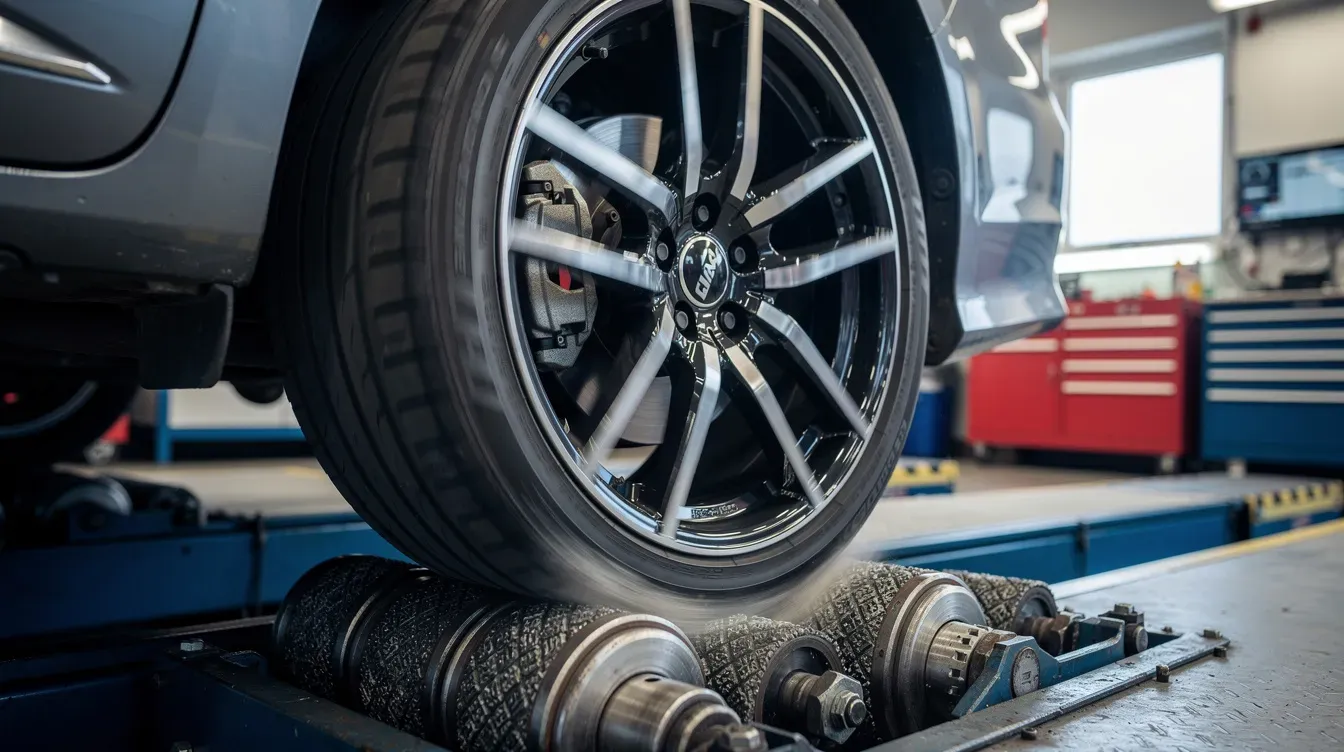
The braking system is tested using rollers to measure brake efficiency and balance. Brakes must be effective and not excessively worn. Brakes are assessed for efficiency, condition, and operation. Specific items inspected include brake pads, discs, drums, brake lines, brake pipes, and the handbrake or parking brake. The brake pedal is checked for travel and firmness. The minimum service brake efficiency is 58%, and left-to-right imbalance must not exceed 30%.
ABS, ESC, and other brake-related dashboard warning lights are checked to confirm no active faults. Suspension and steering components are inspected for wear and damage during an MOT, including springs, shock absorbers, struts, wishbones, ball joints, and anti-roll bars. The steering wheel and column are assessed for excessive play, and power steering systems are inspected for leaks and secure mountings. The steering rack, joints, and track rod ends are all part of the inspection. These are all areas where the driver's seat position and the indirect vision devices setup can also affect how the mot tester evaluates free play.
Tyres, Wheels And Load Security
Tyres are a major cause of car fails in MOT statistics, with 10.4% of MOT failures due to tyre issues. The good news is they are easy to check yourself in advance.
Tyres must have a minimum tread depth of 1.6mm across the central three-quarters of the tread width and all the way around the circumference. No deep cuts, bulges, or exposed cords are permitted. A quick check using a 20p coin works well: if the outer band of the coin is visible when inserted into the tread grooves, the tyre is likely below the legal limit.
Tyres must be the correct type and size for the vehicle, matched correctly across each axle, and inflated appropriately. On newer vehicles, the tyre pressure monitoring system warning light is also checked. Wheels are inspected for cracks, severe excessive corrosion, damage, and secure wheel nuts or studs. Spare wheels are generally not part of the MOT check.
Load security is checked too. The boot, tailgate, or load doors must close securely, and rear doors open and close properly so that luggage or tools cannot fall out during driving.
Body, Doors, Seats And Seatbelts
The MOT looks at how well the car's body and passenger compartment protect occupants. The body and vehicle structure are inspected for excessive corrosion, sharp edges, and damage in key areas such as suspension mounting points, seat belt anchorage points, and chassis rails. Structural integrity in these zones is essential to the car's safety in a collision.
All doors that are meant to open, including rear doors, must open from both inside and outside, latch securely, and provide a safe exit for passengers. The bonnet catch must hold, and the boot or tailgate must close properly.
Front seats and any seat fitted with a belt must be securely fixed and able to lock in position. The driver's seat must adjust if designed to do so and must not be dangerously loose. Seatbelts are inspected for proper operation and security in an MOT test. This includes checking for fraying, cuts, correct locking and release of buckles, and proper function of inertia reels. Airbag warning lights are also checked where they relate to restraint systems.
Driver’s View: Windscreen, Wipers, Washers And Mirrors
A clear view of the road is a core element of the MOT test, and 8.7% of MOT failures are related to the driver's view.
Windscreens are checked for cracks or chips during the MOT inspection. Windscreen chips must be less than 10mm in the critical zone directly in the driver's direct line of sight (Zone A, a 290mm-wide column). In the wider swept area, damage up to about 40mm may be acceptable. Anything beyond these limits leads to a failed mot.
Windscreen wipers must clear the screen effectively without leaving streaks, and washers must spray enough fluid to keep the glass clean. Both front and rear wipers are tested where fitted.
Front and side mirrors, also referred to as indirect vision devices, must be present, secure, and not cracked or badly damaged so they still provide a clear rearward view. Items blocking the driver's direct line of sight, such as oversized sat navs, dashcams, or large stickers, can also be flagged as issues.
Exhaust System, Exhaust Emissions And Fuel System
The exhaust system, exhaust emissions, and fuel system checks protect both the environment and the occupants of the vehicle.
The exhaust system is inspected along its full length for leaks, secure mountings, excessive noise, and corrosion. The exhaust system must be secure and not excessively noisy. The catalytic converter and diesel particulate filter must be present if originally fitted, with no signs of tampering or removal.
Emissions tests are carried out using a gas analyser for petrol vehicles or a smoke meter for diesels. The exhaust system and emissions are tested to ensure compliance with environmental standards. Limits vary depending on the vehicle's age, fuel type, and engine specification. A permanently illuminated engine management light is an automatic failure. Visible excessive smoke of any colour from the exhaust can also cause a failed mot, especially on modern engines that should run cleanly.
The fuel system is checked for leaks, secure pipes and hoses, correct routing, and safe mounting of the fuel tank. The fuel filler cap must seal properly. These checks ensure that no fuel can escape and create a fire or environmental hazard.
Registration Plates, VIN, Horn And Other General Checks
The MOT also confirms vehicle identification and basic road equipment. Front and rear registration plates must be present, clean, securely fixed, of the correct size and font, and clearly legible. The vehicle identification number (VIN) must be permanently displayed, usually on the dashboard or door pillar, and be readable without signs of tampering. Accurate vehicle identification is essential for the test to proceed.
The horn must produce a continuous, loud enough sound of a single tone to warn other road users effectively. Testers also look at general items such as the bonnet catch, any fitted towbars, visible electrical equipment, and overall condition to confirm the vehicle meets basic safety standards. The speedometer and electronic stability control warning lights are also checked where applicable.
What Is Not Checked In An MOT?
An MOT is not a full mechanical inspection. MOT tests do not cover the condition of the engine, clutch, or gearbox beyond what affects safety or emissions. Engine noises, oil consumption, and transmission smoothness are outside scope unless they present a direct safety risk.
Non-safety items are also excluded:
Air conditioning performance
Infotainment and radio systems
Interior trim and upholstery condition
Minor body scratches or scuffed alloy wheels
Fuel economy and general performance
The test covers roadworthiness and emissions, not comfort or cosmetics. Regular servicing alongside your annual mot is the only way to cover all these additional areas.
What Happens If Your Car Fails Its MOT?
MOT failures are classified by severity. Dangerous defects mean the car should not be driven away from the test centre. Major defects also result in a failed mot, but if the existing mot certificate or previous mot certificate is still valid and no dangerous faults are present, the car may be driven in limited circumstances to get repaired.
Once repairs are done, a mot retest can be carried out. MOT retests within ten days can be free or half price when the vehicle returns to the same test station. This is often referred to as a free partial re test. After that window, or at a different garage, the full mot test fee applies.
Keep the VT30 refusal certificate, review every listed fault and advisory, and prioritise repairs by safety urgency. Be aware that hidden fees may arise from inflated repair quotes after a failed mot, so it is worth getting a second opinion on costly work before committing. Reviewing the car's previous test results online can also help you spot recurring advisories before they become failures.
Pre-MOT Checklist: How To Reduce The Risk Of A Failed MOT
A few minutes of checking can prevent the most common and cheapest-to-fix failures. Use this mot checklist a few days before your test:
Walk around the car and check every exterior light: headlights, brake lights, indicators, rear lights, fog lights, reversing lights, and number plate bulbs.
Check the horn works clearly.
Inspect registration plates for cleanliness and legibility.
Test tyre tread depth with a 20p coin, look for sidewall damage or bulges, and check tyre pressures with a gauge or garage airline.
Top up screenwash and check windscreen wipers clear the glass without streaks.
Remove any large items from the windscreen area that could obstruct your view.
Look underneath the car for obvious fluid leaks.
Take a short drive and listen for unusual brake or suspension noises.
Make sure the fuel level is not too low, as the engine needs to run during emissions tests.
Check that dashboard warning lights are not permanently illuminated.
Addressing these items before your mot appointment can save you the cost and hassle of a retest.
Frequently Asked Questions
How long does an MOT test usually take?
A typical Class 4 car MOT test takes around 45 to 60 minutes if no serious issues are found. The time can increase if the mot tester needs to investigate possible faults more closely. If the car fails and needs repairs, it may need to stay at the garage longer or return on another day for a mot retest. The efficiency test on the brake rollers and the emissions tests each take only a few minutes, but the overall visual inspection is what takes the most time.
Can I drive without an MOT certificate if my test is booked?
You can only drive without an MOT if going to a pre-booked test. This means you are legally allowed to travel directly to or from a pre booked mot appointment, but the car must still be roadworthy for the journey. Keep proof of the booking, such as an email or text confirmation, in case you are stopped by police on the way. If the expiry date of your existing mot certificate has passed and you have no booking, driving is illegal and could result in a fine and penalty points.
Does an MOT check cover air conditioning and engine performance?
Air conditioning performance, cabin temperature, and general engine power or smoothness are not part of the MOT test. These are not considered critical to basic safety or emissions compliance. Issues like weak air con, rough running, or poor fuel economy should be investigated during a separate service or diagnostic visit rather than relying on the annual mot to detect them.
Will warning lights on the dashboard make my car fail its MOT?
Certain dashboard warning lights linked to safety systems can lead to a failed mot if they remain illuminated. This includes ABS, ESC, airbag, power steering, and tyre pressure monitoring system lights. Have any warning lights investigated and fixed before the MOT to avoid straightforward, preventable failures. Not every warning light is an MOT item, but the ones tied to safety systems are treated seriously.
How far in advance can I renew my MOT and keep the same expiry date?
You can renew your MOT up to one calendar month minus one day before the current expiry date and still keep the same renewal date the following year. For example, if your valid mot certificate expires on 13 July 2026, you could book your transport test from 14 June 2026 onwards without losing any days of cover. In Northern Ireland, booking is restricted to no more than 28 days before the due date. When a vehicle passes within this window, the new mot test certificate simply carries forward the original expiry date by twelve months.