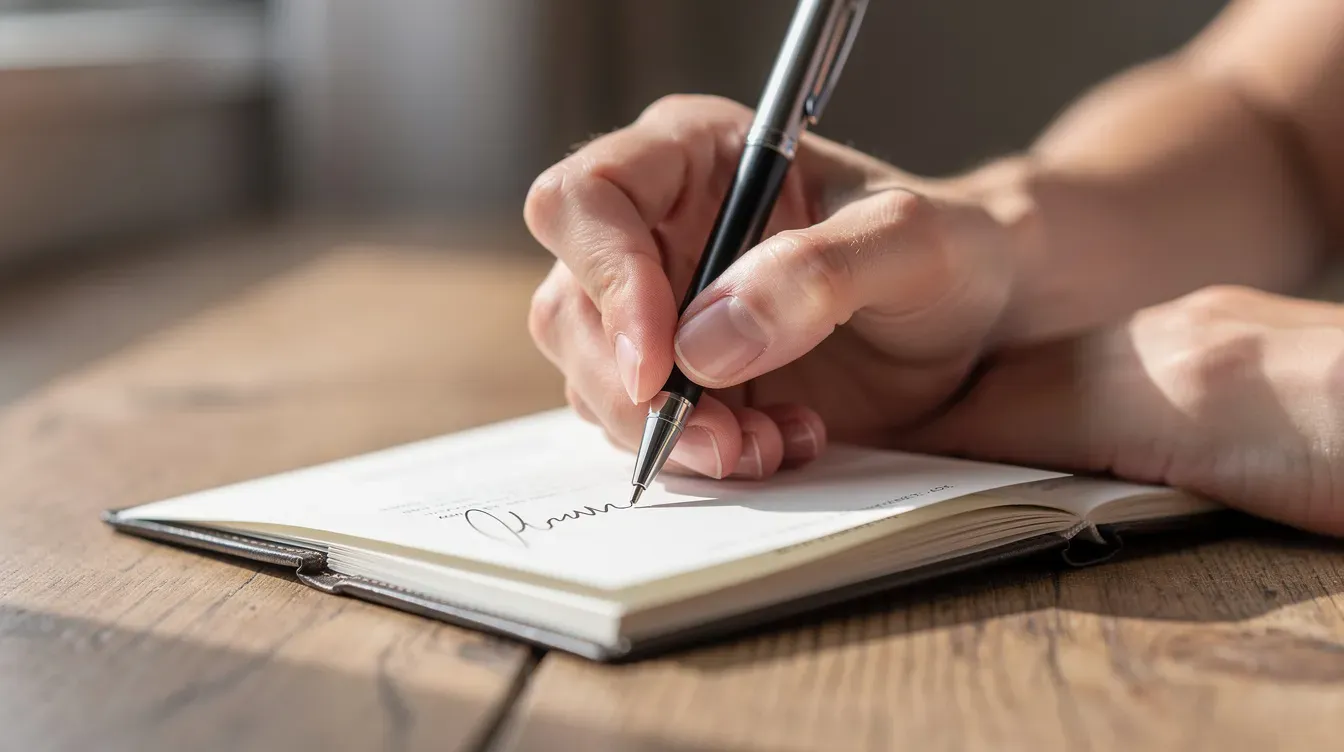
If you've just received a new passport in the post, the first thing you need to do - before booking flights or packing your bags - is sign it. This guide covers exactly where to place your signature on a British or Irish passport, what pen to use, who is exempt, and how to avoid costly mistakes.
Quick answer: exactly where and how to sign your passport
So, where do you sign your passport? For a British passport, you must sign on the holder's signature line located on the biodata page, beneath your photograph and personal details such as your name, date of birth, nationality, and passport number. This is the page you see when you first open the document to your photo.
For an Irish passport, the process is similar. The signature goes on the designated signature line on the identity page, directly under your printed name and photograph.
In both cases, you should sign your passport with a black ballpoint pen, keeping your mark within the box or line provided. Do not touch any printed text, security features, or the machine-readable zone at the bottom of the page.
Use your usual signature or mark - the same style of passport sign you use for banking, legal documents, and other official forms. If your signature is typically a cursive version of your name, use that. If it's a simple mark, that's fine too, as long as it's consistent.
Here's the critical point: an adult passport, whether British or Irish, is not valid for travel or identity checks until it is signed in the correct place. A passport is invalid until the holder signs it, unless the document clearly states that the holder is not required to sign. Sign your passport as soon as you receive it - don't wait until you're at the airport.
When you must sign your new passport (and when you don’t)
Most adults who receive a passport are required to sign it. However, specific exemptions exist and are printed inside the document itself.
You are required to sign if:
You hold a standard British adult passport issued since January 2017 (passports issued after January 2017 must be signed after receipt)
You hold a standard Irish adult passport
You are a teenager aged 12–15 and your passport does not carry an exemption note
You may not need to sign if:
Before picking up a pen, check the photo and details page carefully. Look for the phrase "The holder is not required to sign." If this phrase appears, the passport remains valid without a signature, and you should not add one.
Common reasons for this exemption include:
The holder has a physical disability that prevents them from signing
Certain medical conditions make signing impossible
The holder is aged 11 or under (on UK passports)
If the passport states no signature is required, do not sign it. Adding a signature to an exempt passport can cause confusion at border control and may even be treated as unauthorised marking.
Children's passports usually require a parent or guardian to sign, depending on the child's age and the specific rules of the issuing country. If you're unsure, check the wording printed on the photo page, and contact the relevant passport office for clarification.
How to sign your British passport correctly
Following HM Passport Office guidance carefully avoids invalidating a new passport. One mistake with a pen can mean paying for a replacement and waiting weeks for it to arrive.
You must sign your British passport after receipt and before using it for flights, border control, or bank and solicitor identity checks. Until signed, the passport is not valid for any of these purposes - an unsigned passport cannot be used for travel.
Where exactly is the signature box?
On a modern British passport (Series C from 2020 and Series D from December 2025), the signature area sits on the identity page alongside your photo, nationality, date of birth, issue date, expiry date, and passport number. Look for the line labelled for the holder's signature. In some designs, this line appears on the official observations page opposite the data page.
How to sign correctly:
Use a standard black ballpoint pen - never a gel pen, fountain pen, felt tip, or pencil
Sign once, using your usual signature
Stay within the box and avoid overwriting your printed name or any security features
Make sure the signature is completely dry before closing the book
If your name has changed - for example through marriage or deed poll - use the updated signature that matches the name shown on the passport. A signature confirms the passport holder's identity, so it must correspond to the printed details.
Customers who received passports before January 2017 may have a digitally printed signature inside their document. Passports with digital signatures remain valid until their expiration date. However, every current British passport issued under the "sign after receipt" process requires a handwritten signature from the holder.
How to sign your Irish passport correctly
Irish passport holders follow similar but separate rules from the British system. While HM Passport Office publishes very detailed step-by-step instructions, the Irish Department of Foreign Affairs guidance is less prescriptive - but the core practice is the same.
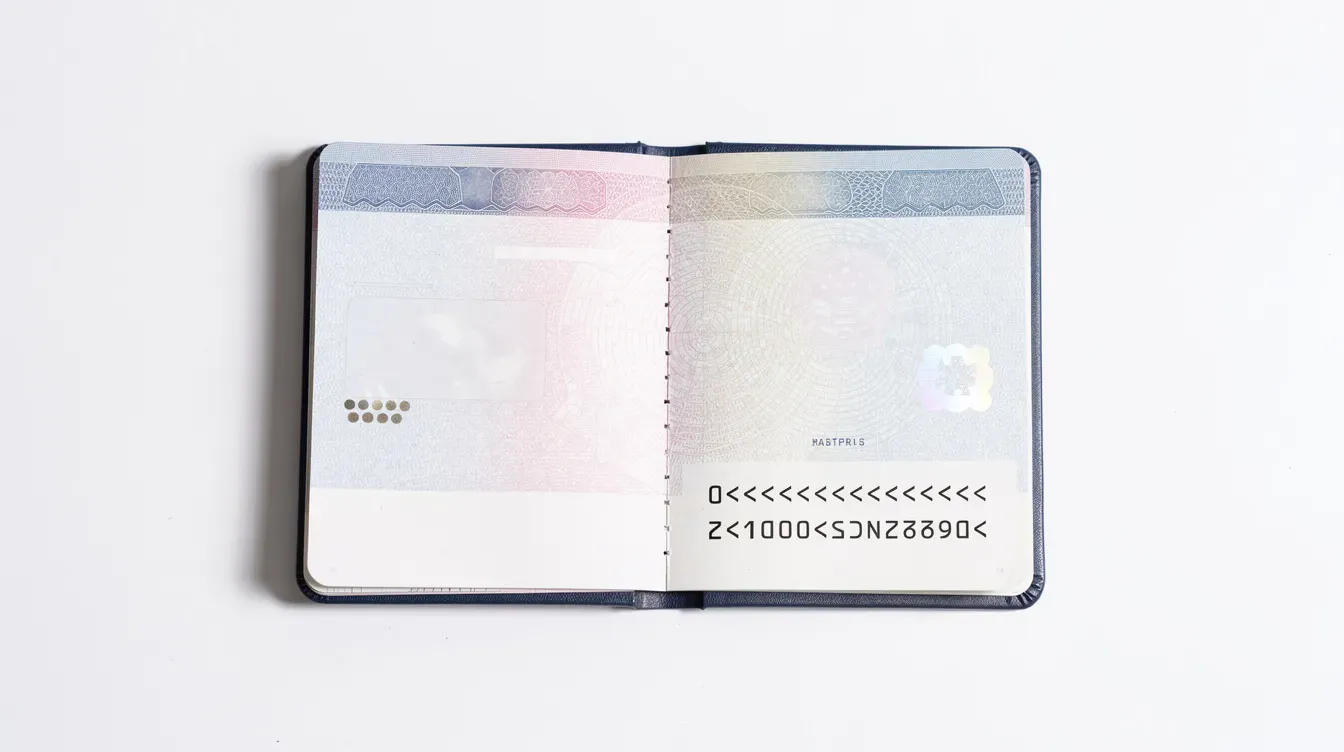
On an Irish passport, the signature space appears on the data page with your photograph, in the area labelled for the holder's signature. This conforms to international ICAO standards that all biometric passports follow.
Practical signing tips for Irish passports:
Sign in black or dark blue ballpoint pen
Keep your mark fully inside the signature line
Avoid smudges by letting the ink dry completely before closing the book
Use your normal signature or mark - the same one used on Irish passport applications and other official forms
Irish adult passports generally must be signed by the holder unless they are specifically issued for someone who cannot sign, in which case the exemption is printed on the document. If you hold an Irish passport and live in Great Britain or elsewhere, check the Department of Foreign Affairs guidance if your situation is unusual - for example, if you cannot physically sign due to disability or illness.
Why your passport signature matters
The passport sign is more than a formality. It is a core security and identification feature built into the design of every travel document.
Both HM Passport Office and the Irish Passport Service treat an unsigned passport as invalid. Signing is essential for passport validity and identification - it links the physical document to the person named inside it.
Who checks your signature?
Airlines at check-in
Border control officers at departure and arrival
Banks and mortgage lenders during identity verification
Solicitors handling property transactions or legal processes
Financial institutions require a signed passport for identity verification. If your passport is unsigned, you may be turned away from a mortgage appointment or prevented from opening an account. Border control agents may delay travel for unsigned passports, and in some cases you could be denied boarding entirely.
An unsigned passport is a security risk. Without a signature, there is no quick way for an officer to confirm whether the person presenting the document is genuinely the holder.
Mismatched signatures - for example, signing with an unfamiliar style very different from your usual signature - can also raise questions during checks. Signing promptly and consistently, using your usual signature, avoids complications later.
Common mistakes when signing a passport (and how to avoid them)
Some errors can make a new passport unusable and may force you to apply - and pay - for a replacement. Mistakes in signing may invalidate your passport, so it's worth getting this right the first time.
The most common mistakes:
Mistake | Why it's a problem |
|---|---|
Signing outside the designated box or over printed text | Treated as damage or tampering |
Using a gel pen, fountain pen, felt tip, or pencil | Do not use gel pens or felt tips as they can bleed or smudge; pencil fades and is not permanent |
Adding extra marks, dates, or doodles around the signature | Any unauthorised marks can invalidate the document |
Using block capitals instead of your usual signature | Your passport sign must match your normal signature style |
Using correction fluid to fix a mistake | Correction fluid and scribbling can invalidate the document |
Crossing out or overwriting a smudged signature | Treated as defacement; passport may be rejected at borders |
Mistakes in signing may invalidate the passport. If you make a serious error, do not attempt to fix it yourself. Contact HM Passport Office for a British passport, or the Irish Passport Service for an Irish passport, and ask for guidance. In many cases, a replacement application is required, and this is handled under specific "damaged passports" procedures involving the standard fee and processing time.
Practice your signature several times on plain paper first. Once you're confident, copy that exact usual signature onto the passport in one clean motion. This simple step dramatically reduces the risk of errors.
Make sure the signature is completely dry before closing the book. Smeared ink can obscure the signature and cause problems at identity checks.
Signing and your passport application: countersignatures and referees
Signing the physical passport is a completely separate process from getting passport applications countersigned or refereed. The two are often confused, but they serve different purposes.
British passport applications:
When you apply for a British passport (especially a first application or renewal where your appearance has changed significantly), you may need a countersignatory. This person must be:
A professional or person of good standing in their community
Someone who has known you personally for at least 2 years
A holder of a valid British or Irish passport (or a commonwealth passport, for UK-based applications)
Not a relative, partner, or colleague living at the same address
Your countersignatory confirms your identity and that the photograph on your application is a true likeness. They also confirm certain details about the customer's identity. They may need to send signed paper forms or a digital copy of their confirmation depending on whether you use paper passport applications or the online process. Applications that are processed faster tend to be those submitted online, though countersignatories can also support paper applications.
Irish passport applications:
For Irish passport applications, witnesses can include elected public representatives, members of An Garda Síochána, solicitors, and other professionals. In some cases, a friend or colleague of good standing may also qualify. The witness confirms that the photo is a true likeness and that the applicant's identity is correct.
In both systems, once the passport is printed and posted, it is the holder - not the countersignatory or referee - who is required to sign on the holder's signature line.
If you're unsure about countersignature or witness requirements before submitting your application, refer to the official GOV.UK guidance for British passports or the Department of Foreign Affairs for Irish passports. Getting these details correct helps avoid having your application rejected or delayed.
What to do if you can’t sign or are unsure
Some people cannot sign in the usual way because of disability, illness, injury, or literacy issues. There is official guidance for each of these situations, and having a limitation does not mean you can't hold a valid passport.
If you are unable to sign at all:
HM Passport Office or the Irish Passport Service can issue a passport that is clearly marked to show the holder is not required to sign. For British passports, you will need to declare your inability on the application and provide supporting evidence, such as a medical note. If approved, the passport will carry the printed statement confirming no signature is needed.
If you use a mark instead of a traditional signature:
Applicants who use a mark - such as a simple line or cross - as their usual signature can normally use that same mark inside the passport. The key requirement is consistency: whatever you use on application forms and legal documents should appear on the holder's signature line.
If you're uncertain about a child's passport:
If you're a parent collecting a child's new passport and the child has just turned 12, check the exact wording printed on the photo page. If the passport says the holder is not required to sign, leave it blank. If it does not carry this note, the child must sign. When in doubt, contact the UK Passport Adviceline for British passports or the consular and passport helplines for Irish passports.
These support lines can also help if you've experienced a lost or stolen passport, need to prove your identity through alternative means, or have questions about the validity of a passport where the holder's status has changed.
As long as you follow the printed instructions inside your passport and the official guidance from the issuing authority, your document will be valid and ready for use. If your passport has been issued and you haven't signed it yet, pick up a black ballpoint pen and do it now - before your next trip, before your next identity check, and before you forget.