
Introduction: What Is a Second UK Passport and Who Actually Needs One?
A second uk passport is not about acquiring citizenship in another country, buying a foreign passport, or entering an investment migration programme. In HM Passport Office terms, it simply means holding two valid British passports at the same time under the same identity and nationality record. The passport office refers to these as additional passports, and they exist for a very practical reason: keeping frequent travellers moving when their primary passport is unavailable.
Most people never need more than one passport. But for those who travel frequently for business, face overlapping visa applications across multiple countries, or regularly visit nations with political differences that make certain stamps problematic, a second passport becomes a genuine operational necessity. An additional British passport allows you to bypass travel disruptions caused by embassy visa processing times, and it provides a second valid travel document so you can keep crossing borders without interruption.
It is important to distinguish between three very different situations that people often confuse:
A second British passport (an additional passport issued alongside your existing one, under the same British nationality).
A duplicate passport or replacement passport, which replaces a lost or stolen document and cancels the original passport.
A second passport via dual citizenship, where you hold a foreign passport from another country based on a separate nationality entirely.
HM Passport Office uses the terms additional passports and overlap passports in its internal caseworker guidance (currently Version 37.0, updated November 2025). A frequent traveller passport with 54 pages is another option available for heavy-use travellers.
This article covers everything you need to know: eligibility criteria, common use cases, the exact documents needed, a step by step instructions guide through the application process, current fees and timelines, and key questions about border control and biometrics when using two passports.
Second UK Passport vs Dual Citizenship: Don’t Confuse the Two
These two concepts get mixed up constantly, so let's separate them clearly before going any further.
A second uk passport is an additional British passport linked to the same British nationality and the same existing passport record you already hold. You remain one person with one citizenship status. HM Passport Office simply issues you another book so you can manage overlapping travel commitments.
Dual citizenship (also called multiple citizenship) means holding nationalities from two countries - for example, British and Italian - and therefore holding two entirely different passports issued by two different sovereign governments. The UK allows citizens to hold passports from other countries without requiring permission, and from February 2026, dual nationals travelling to the UK are advised to hold a valid British passport.
Here is a concrete example of how these overlap in practice:
A British citizen with Irish ancestry might hold an Irish passport based on descent. That is dual citizenship - two nationalities, two passports from two different countries.
The same person might also apply for a second British passport because their uk passport is regularly lodged with embassies for visa processing. That gives them two British passports plus one Irish passport - three documents total, but only two nationalities.
Applying for a second British passport is faster and simpler than obtaining citizenship elsewhere. There is no residence requirement, no language test, no investment route, and no naturalisation ceremony involved. You are not obtaining citizenship or acquiring citizenship in a new country. HM Passport Office issues additional British passports based on genuine need for travel, not as a route to tax planning, global investment migration, or second citizenship programmes marketed by caribbean nations or other jurisdictions.
When a Second British Passport Makes Sense
The passport office evaluates every additional passport application against one core principle: genuine need. You cannot get a second passport simply because it sounds convenient or because you want a backup sitting in a drawer. HMPO expects clear, ongoing travel patterns that justify the application.
Here are the most common scenarios where a second passport makes practical sense:
Business travel with overlapping visas. A consultant who travels to the Middle East, Asia, and Africa multiple times per month frequently has their current passport sitting at an embassy waiting for a visa. A second passport allows uninterrupted travel during visa applications, meaning urgent trips do not get cancelled while the first passport is out of circulation. Second passports are issued for business travelers needing to visit multiple countries on tight schedules.
Incompatible country stamps. Some countries will refuse entry - or make entry extremely difficult - if your passport contains stamps or visas from certain other nations. The classic example involves Israel and certain Arab states, but similar issues arise with Kosovo and Serbia, Pakistan and certain other nations, and various combinations where political differences between two countries create border complications. It helps avoid travel issues due to conflicting country stamps by separating problematic travel history into one passport while keeping the other passport clean. Additional passports help avoid visa conflicts with incompatible countries.
Heavy stamp and visa usage. Frequent travellers whose passport pages fill up with entry and exit stamps faster than the passport expires. A frequent traveller passport with 54 pages helps, but even those can fill up if you cross borders dozens of times per year.
Specialist occupations. Government staff, airline staff, maritime crew, haulage and supply chain workers, defence personnel, and international students who cross borders repeatedly as part of their work or study may all qualify. The categories have broadened in recent years to include food preparation and distribution sector workers who cross borders regularly.
Who does not qualify? Tourists with occasional holidays - even two or three foreign trips per year - are unlikely to meet the threshold. HMPO generally expects applicants to demonstrate that they travel frequently enough that a single passport cannot keep up.
Types of Additional British Passports: Full, Frequent Traveller and Overlap
Additional passports is the umbrella term used in HMPO guidance. Within that category, there are several distinct types that serve different purposes.
Standard full-validity additional passport. This is a full British passport, usually valid for 10 years for adults aged 16 and over. Second passports are valid for 10 years from the issue date as standard. However, HMPO can issue restricted validity where circumstances dictate - for example, a second UK passport is typically valid for four years if HMPO determines that a shorter period is appropriate based on the applicant's specific situation or for travel to sensitive destinations. Once issued, both your original passport and the additional one remain valid simultaneously. A second UK passport allows you to hold two valid travel documents simultaneously.
Frequent traveller passport (54 pages). Instead of the standard 34 passport pages, this version has 54 pages for travellers who collect visas and stamps rapidly. Both your primary and additional passports can be issued as 54-page frequent traveller books, depending on your request and what HMPO approves. The passport cost for a frequent traveller passport is higher than the standard version.
Overlap passport. This is a short-validity passport - valid for a maximum of three months - issued so that frequent travellers can renew their new passport without surrendering the existing passport immediately. Overlap passports are temporary solutions during the renewal process, not permanent additional documents. Once your renewed passport arrives, the old one is cancelled.
You can hold multiple UK passports if justified, but having three or more concurrent British passports of the same type is rare. HMPO requires senior-level authorisation and very strong justification before approving a third passport.
Diplomatic and official passports are separate categories. Government employees may hold both a standard personal passport and a diplomatic or official one, but those follow different rules entirely.
Eligibility Criteria: Do You Qualify for a Second UK Passport?
HMPO decides every additional passport application case by case based on evidence. There is no automatic entitlement, but the criteria are well-established.
Base requirements:
You must be a British citizen (or hold another relevant British nationality) with an existing passport in good standing.
No pattern of repeated loss, theft, or fraud flags on your passport record.
Applicants must be aged 16 or over. Under-16 cases are possible but very unusual - typically linked to a parent's government or work-related travel requiring the child to cross borders repeatedly.
Main qualifying reasons:
Frequent travel for business where the passport is regularly unavailable due to visa application processing.
Overlapping visa applications across multiple countries simultaneously.
Travel to incompatible countries where stamps from one nation could prevent entry to another.
Intensive academic or study programmes abroad involving repeated border crossings.
Airline and maritime crew, haulage drivers, and supply chain workers.
Government, defence, and diplomatic personnel.
Self employed applicants can qualify, but they need to provide documentation beyond generic statements. Contracts, client letters, invoices showing international project work, and confirmed travel schedules carry far more weight than "I plan to travel a lot."
HMPO will not usually issue a second passport purely for convenience, tourism, or to help someone circumvent immigration rules in another country. Second passports are issued for specific travel needs - not as insurance policies.
Critically, HMPO can refuse an additional or overlap passport even if you held one previously. If your current evidence does not show a genuine need, the application can be rejected regardless of your history. Genuine need for a second passport must be demonstrated to apply successfully, every time.
Documents You Need: Building a Strong Second Passport Application
The strength of your supporting documents is often the difference between approval and refusal. Here is what HMPO expects:
Current British passport or, if the original passport is lodged with an embassy for a visa application, full colour copy photocopies of every page of your current passport - including blank visa pages. You need proof that your first passport is currently held at an embassy for a visa application.
A detailed employer letter on company headed paper, dated within the last month, and signed with a wet signature. The letter must explain the need for an additional passport, frequency of travel, likely destination countries, and why the current passport cannot be spared. Applicants must provide a letter from their employer. Submit a letter from your employer on headed paper.
Supporting travel evidence such as flight confirmations, itineraries, past visas, meeting schedules, or proof of enrolment for study programmes. Proof of frequent travel is necessary for eligibility.
Correct passport application form - usually the standard adult application, completed online or as a paper form, but clearly stating "application for an additional / second passport" in the relevant free-text section. Complete a standard passport application form online or by post.
Two passport photos - identical digital photo files or printed passport-sized photos meeting HMPO standards (plain background, no shadows, correct head size). Include two passport-sized photos with your application. If using a paper form, one photo may need a countersignatory signature on the back.
Proof of identity and address if HMPO requests it - for example, a driving licence, recent utility bill, or bank statement. This is especially relevant where identity checks flag discrepancies.
You must provide a letter justifying the need for a second passport. This can be the employer letter itself or a separate covering letter. Either way, it must be specific. Vague phrases like "travels a lot" are not sufficient.
Unlike a standard application, you do not send your primary passport when applying for a second. You do not need to submit your original passport with the application - colour copies suffice when the original is at an embassy.

The Application Process: How to Apply for a Second British Passport
The entire process follows the standard online passport route, but you must clearly reference that you are applying for an additional passport. There is no separate public-facing form for second passports. Here are the steps:
Step 1: Go to the official HM Passport Office online service on GOV.UK. Choose to apply for an adult British passport (renewal/change category) rather than a lost or stolen replacement. You must apply via the GOV.UK Passport Service detailing why an additional passport is required.
Step 2: Complete the application form carefully, using exactly the same personal details as on your existing passport. In the "more information" section (or Section 8 equivalent), state clearly that you are applying for a second UK passport / additional passport, and briefly explain why. Applications can be submitted online or by post.
Step 3: Upload a compliant digital photo or arrange printed passport photos if using a paper form. If HMPO requires a countersignatory based on your circumstances, line one up - they must have known you for at least two years and meet the professional service requirements outlined in HMPO guidance.
Step 4: Prepare and scan your supporting documents - the employer letter, travel itineraries, proof of incompatible countries, or whatever evidence applies. Ensure all letters are dated, signed in ink, and include clear contact details for verification. These are the required documents that can make or break your application.
Step 5: Pay the passport office fees online for the correct passport type and size. A second UK passport application costs £88.50 online for the standard application. Fees change periodically, so always check current HM Government rates before submitting. Pay a fee of £88.50 for online applications.
Step 6: If HMPO invites you for a biometric or identity appointment, book and attend it promptly. Bring your existing passport if requested, along with any additional documents HMPO has asked for.
Step 7: Send any requested originals or colour copies by tracked courier or Royal Mail Special Delivery. Keep copies of all completed forms and personal documents for your records.
Using a reputable checking service (such as a cibtvisas location or a cibtvisas location listed on their website) or a post office check-and-send service can reduce mistakes, but HMPO is the only body that issues British passports. No professional service or agency can guarantee approval - they can only help ensure your paperwork is correct before HMPO begin processing.
Fees, Timelines and Processing Options in 2026
Fees and processing time change regularly, so always verify current rates on GOV.UK before applying. Here is the landscape as of mid-2026:
Current HMPO fees (from 8 April 2026):
Passport Type | Online Fee | Paper Form Fee |
|---|---|---|
Standard adult (34-page) | £102 | ~£115.50 |
Frequent traveller (54-page) | £116 | ~£129.50 |
Fast track services (1 week) | ~£192 | N/A |
Premium same-day appointment | ~£239.50 | N/A |
Note: the required facts reference a fee of £88.50 for online applications, which was the rate prior to the April 2026 update. If you applied before the fee change, that rate may apply to your application. Always check the uk government website for the most current passport cost.
Second passports are charged at the same HMPO rate as primary passports - there is no surcharge for an additional passport.
Processing times:
Standard online service: approximately 3 weeks for renewals. HMPO reports 99%+ of renewal applications completed within this target.
First-time adult passports: up to 6 weeks, including nationality verification.
Fast track services: approximately 1 week.
Premium same-day: available at regional HMPO centres by appointment.
Not all expedited services may be available for additional passport applications. A first additional passport can typically only be processed via the standard online service, not through Digital Fast Track or Digital Premium.
Realistic planning example: If you have a major trip in six weeks and your main passport is about to go to an embassy for a visa application, apply for the additional passport immediately. Allow at least one full month for gathering evidence, obtaining employer letters, and accounting for any HMPO queries. During peak season (April through July), the processing time can stretch, so earlier is always better.
Delays are common if evidence of genuine need is weak, letters are undated or unsigned, or the application data conflicts with HMPO records.
Border Control, Biometrics and Using Two British Passports
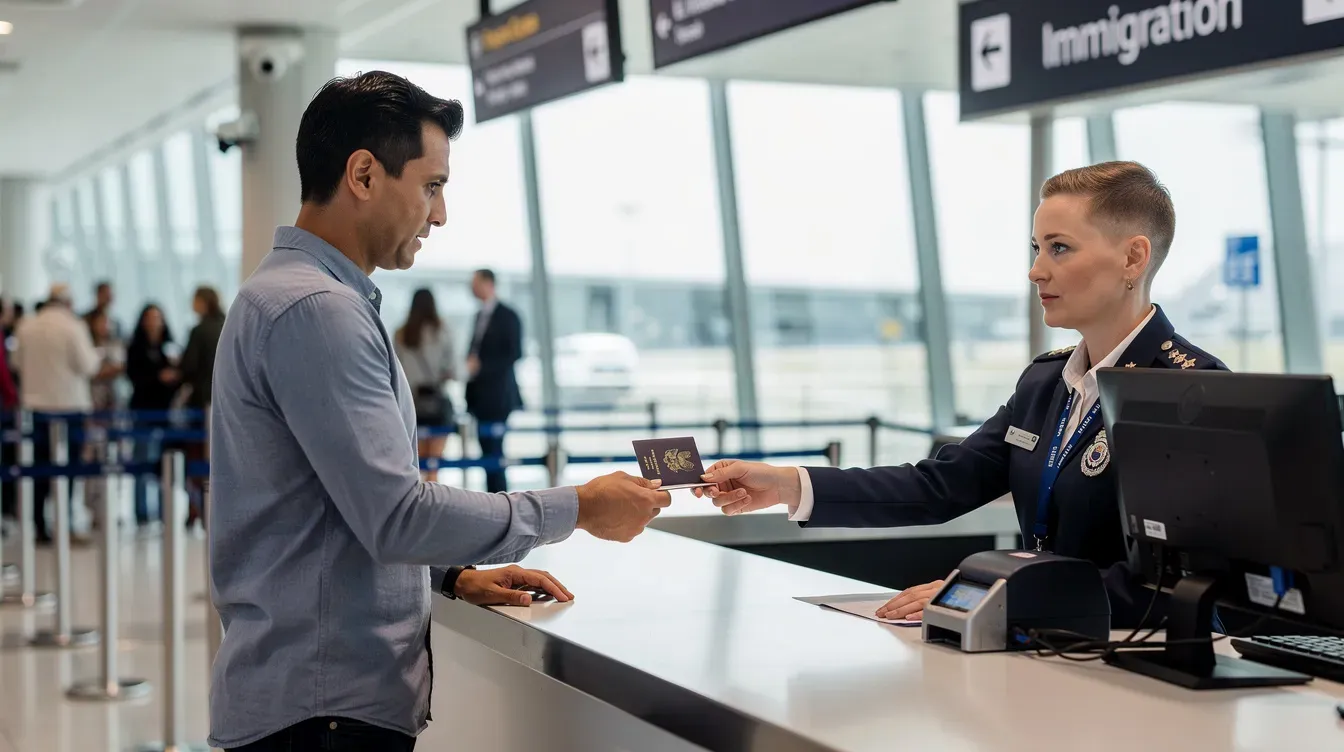
Holding two passports raises practical questions about how border control works. Here is what you need to know:
Each British passport has its own unique passport number and biometric chip. Data is captured separately for each document and does not simply copy over from one passport to another.
HMPO systems know you hold more than one passport. However, foreign border control systems generally see only the travel document you present at the desk. Travel history is not shared between multiple passports unless you volunteer the information or security systems are linked.
Visas, entry stamps, and exit stamps are attached to each passport separately. Immigration officers at a foreign border normally do not see your other passport unless you show it to them or they specifically ask.
Always be honest if questioned about holding an additional passport. Carry both passports when travelling between incompatible country combinations or dealing with complex visa rules. Second passports enhance personal security in politically unstable regions by allowing you to present a cleaner travel history if needed.
Deliberately using two passports to conceal previous travel from authorities may breach immigration rules and could lead to being refused entry. This is not what HMPO intends additional passports for.
Use one passport consistently for particular sensitive routes. For example, use passport multiple times for all travel to and from Israel or Kosovo, keeping those stamps contained in a single document while the other passport remains clean for countries that might object.
Employer Letters and Evidence: What HMPO Wants to See
The employer or client support letter is often the single most important piece of evidence in your application. A weak letter can sink an otherwise eligible application.
What an effective employer letter looks like:
Printed on company headed paper.
Dated within the last month.
Signed with a wet ink signature (HMPO may reject scanned signatures unless from certain government departments).
Includes the full name, job title, and contact details of the signatory.
Essential content the letter must cover:
Employee's full name and job title.
Description of the role and why it requires frequent travel.
Expected number of overseas trips per year and typical destinations.
Explanation of why the current passport is regularly unavailable - for example, lodged at embassies for visa processing.
A clear statement that the employer supports the passport application for an additional passport.
Avoid vague phrases. Instead of "travels internationally," write something like "travels to the Middle East and North Africa at least twice a month" or "requires Russian, Chinese, and US visas in parallel, meaning the passport is unavailable for weeks at a time."
For self employed applicants, provide documentation through equivalent evidence: company registration documents, contracts with international clients, letters from clients confirming upcoming projects abroad, and a history of flight bookings or invoices demonstrating regular international mobility.
Concrete numbers and specific destinations are what HMPO caseworkers want to see. Generic statements about "business travel" do not demonstrate genuine need.
How Many British Passports Can You Hold at Once?
There is no fixed legal cap written in UK legislation on how many British passports a passport holder can possess. However, HMPO policy guidance strongly controls the numbers.
Most qualifying travellers will be allowed up to two concurrent British passports of the same type - for example, two standard adult passports, or one standard and one frequent traveller passport.
A limited number of people - certain FCDO staff, high-intensity frequent travellers, or defence personnel - may hold three passports, but only with very strong justification and senior HMPO approval (typically at Higher Executive Officer level or above).
Diplomatic and official passports are separate categories and may not be counted in the same way as ordinary British passports. Government staff may hold a personal passport plus a diplomatic or official one without those being considered "additional" in the standard sense.
Every additional passport increases HMPO scrutiny around identity, personal security, and loss/theft history. If you lose one passport, HMPO may review and potentially cancel your remaining passports if misuse is suspected.
When renewing a second passport, the old second passport normally has to be surrendered or cancelled unless HMPO specifically allows an overlap period.
Common Questions About Second UK Passports
Can I apply for a second UK passport online? Yes. You apply through the standard online passport application service on GOV.UK. You must clearly state it is an application for an additional passport and provide documentation to support your case. There is no separate "second passport" form.
Can I travel while my existing passport is with an embassy? Yes - that is one of the main reasons a frequent traveller would apply for a second passport. A second passport allows travel while the primary passport is with an embassy, provided the new passport has been issued and you meet visa free entry requirements or hold the correct visa in the passport you are travelling on.
How long is a second UK passport valid? A second passport is typically valid for 10 years for adults, the same as a standard adult passport. However, HMPO may issue shorter validity in sensitive or exceptional cases - some applicants receive a passport valid for four years or less, depending on the circumstances and eligible criteria met.
Will a second passport affect my eligibility for dual citizenship elsewhere? No. A second British passport does not change your citizenship status or nationality in any way. It does not affect obtaining citizenship or acquiring citizenship in another country. However, applicants should check foreign laws in countries where multiple citizenship or dual citizenship is restricted - for example, Japan, China, or Saudi Arabia may have their own rules about holding a foreign passport.
Is a frequent traveller passport different from a second passport? A frequent traveller passport is primarily a larger-page passport (54 pages instead of 34). It can be your only passport or your additional passport, depending on what you request and what HMPO approves. The two concepts are independent - you can hold a 34-page first passport and a 54-page additional passport, or vice versa.
What happens if I lose one of my two passports? You must report the loss immediately to HMPO. They will cancel the lost document and may conduct extra checks on your remaining passport. If HMPO suspects misuse or fraud, they can cancel all your passports and require you to reapply. Frequent travellers may need a second passport to manage visa applications, but holding multiple documents also means greater responsibility.
Can my children get a second passport? It is possible but unusual. Strong evidence of genuine need for frequent or incompatible travel is required, often linked to a parent's work or study that involves the child crossing borders regularly. HMPO applies the same evidence-based approach as for adults.
Second UK Passport Checklist and Final Advice
Before you apply for a second British passport, work through this checklist:
Confirm genuine need: frequent travel, overlapping visas, or travel to countries with incompatible stamps.
Obtain a detailed employer letter (or self-employed equivalent) on headed paper, dated and signed in wet ink.
Gather supporting travel evidence: flight bookings, itineraries, visa application receipts, meeting schedules.
Obtain a compliant digital photo (or two printed passport photos meeting HMPO standards).
Complete the online application form on GOV.UK, clearly stating "second / additional passport" in the relevant section.
Pay the correct HMPO fee for the passport type you need.
Prepare a colour copy of every page of your current passport if the original is at an embassy.
Keep copies of everything you submit - every letter, every form, every photo.
Apply well in advance of known trips. Do not wait until your primary passport is already at an embassy with no backup - by then, the processing time alone could mean missing your flight.
HMPO can and does refuse applications that lack clear justification. Strong documentation, specific travel evidence, and a well-written employer letter reduce the risk of delay or rejection significantly.
For the right kind of frequent traveller, obtaining a second British passport is a well-recognised, legitimate solution that can dramatically reduce travel disruption. It provides increased travel flexibility for frequent travelers and keeps your international mobility intact when a single passport simply cannot keep up with your schedule. Start gathering your evidence now - before the next trip creates an urgent need.