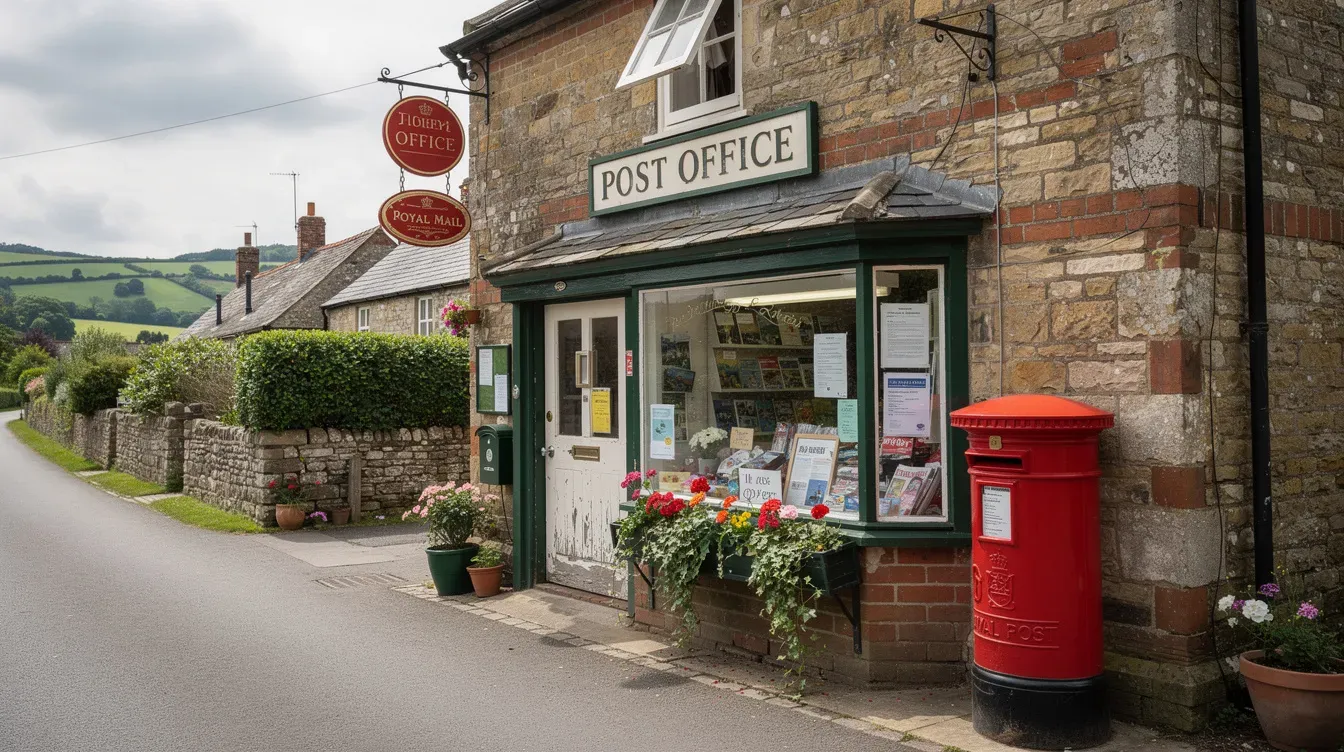
Post Office Ltd runs the largest retail network in the UK, yet many customers still confuse it with Royal Mail or underestimate the range of services behind those familiar red signs. This guide covers everything you need to know: what Post Office Limited actually is, how to send parcels and manage money, why branches matter to local communities, and how the organisation is governed and staffed.
Key Takeaways
Post Office Ltd operates a nationwide network of around 11,500 post office branches across the UK, entirely separate from Royal Mail, which handles delivery. It is a government-owned public corporation providing retail, financial, government and travel services.
Customers can buy postage online, manage parcels through multiple carriers, access banking at the counter, exchange foreign currency, and use passport and identity services - all through their local branch or digital tools.
The post office network plays a critical community role: providing access to cash, running outreach services in remote areas, and supporting vulnerable people with essential services. Post offices deliver an estimated £6.5 billion in social value annually.
Key corporate dates include accounts made up to 31 March 2026 (due filed by 31 December 2026) and a new banking partnership framework running from January 2026 to December 2030.
Readers can find a local branch using the online branch finder, make a complaint through dedicated forms, and explore jobs and careers at Post Office Ltd via official channels.
What Is Post Office Ltd?
Post Office Limited is the company that operates the UK post office network. It is not the same as Royal Mail. Royal Mail and other carriers like Evri and DPD transport and deliver most letters and parcels. Post Office Ltd runs the branches and counters where customers buy postage, access banking, handle government services and much more.
The scale is significant. As of March 2025, the network comprised 11,683 branches, with 11,572 of those run by independent postmasters and retail partners. Only 111 were directly managed Crown branches, and by November 2025, even those had been converted to franchise or agency models. The network reaches urban high streets, suburban shopping centres, and remote village stores across England, Scotland, Wales and Northern Ireland.
Post Office Ltd is a government-owned public corporation, sponsored by the Department for Business and Trade. It operates independently of the privately-owned Royal Mail, focusing on retail and customer-facing services rather than delivery logistics. Its core mission centres on maintaining access to essential services - postage, banking, identity verification and bill payments - for individuals and small businesses, especially those in areas where other services have disappeared.
Post offices provide essential services to vulnerable community members who may lack internet access or live far from the nearest bank. The sections below cover specific services, community stories, governance and how to get help.
Using the Post Office for Parcels and Mail
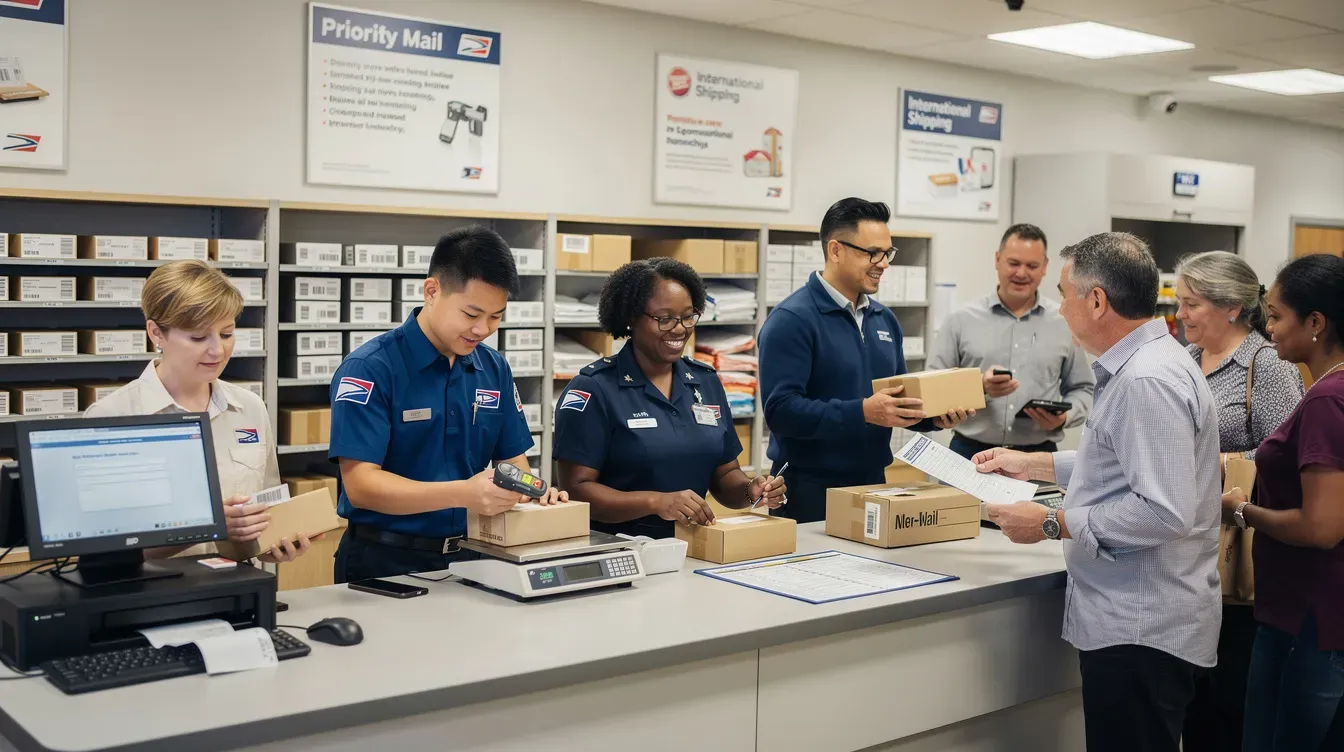
Customers can buy postage both in-branch and online for letters and parcels. At the counter, staff will weigh your parcel, help you select tracked, signed-for or special delivery options, and process items for UK and international destinations. You can also get basic packing advice if you need it.
Online tools have made the process faster. Services like Click & Drop allow you to print labels at home for Royal Mail shipments, then drop the item at a participating branch - no queuing at the counter required. Post Office Ltd branches increasingly support multiple carriers, so you can buy postage and drop parcels for Evri, DPD and other partners through a single local point.
Indicative pricing (always check current price lists):
Service | Approximate Starting Price |
|---|---|
Standard letter (Royal Mail) | Under £1 |
Small parcel (2nd class) | Around £3–£4 |
Tracked 24 parcel | Around £4–£5 |
International standard | Varies by destination |
For receiving mail, post office branches can serve as collection points for missed Royal Mail items. Bring valid ID and your "sorry we missed you" card to pick up a parcel. Marketplace sellers can manage multiple Royal Mail orders through personal accounts and dashboard-style integrations, making it easier to send in volume and track shipments from one place.
Family, Home and Everyday Services
Many post office branches now combine core postal services with convenience retail and home-related products. If your local branch is co-located with a SPAR, Tesco Express or an independent village store, you can pick up groceries and handle post office errands in one trip.
Typical household services available at the counter include:
Bill payments for rent, council tax and utilities
Mobile phone and prepaid top-ups
Postal orders
Basic stationery and packaging materials
Post Office branches facilitate utility bill payments and council tax payments, which is especially useful for customers who prefer paying in person or lack online banking. In many areas, the weekly visit to the post office is as routine as the weekly shop - a place where you handle the practical matters of running a household.
This is village life at its most practical. The branch is not just a place to send a letter; it is where you pay what needs paying, top up what needs topping up, and get on with your day.
Travel and Holidays with the Post Office
Post Office Ltd is one of the UK's largest providers of travel-related services. Before your next holiday, your local branch can handle several tasks in a single visit.
Key travel services include:
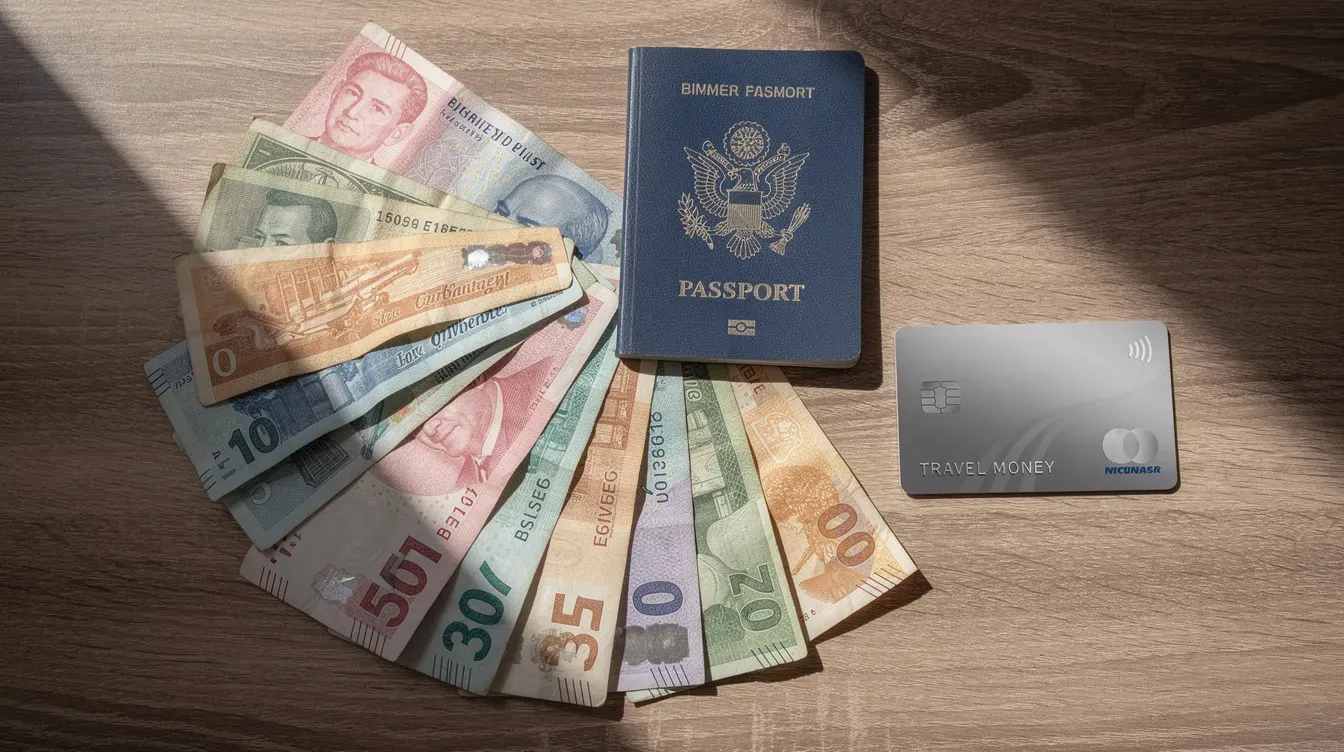
Foreign currency: purchase and buy-back of over 70 currencies, with a refund guarantee on unused notes. Post Office offers foreign currency exchange and travel insurance through branches and online.
Travel money cards: preloaded cards for spending abroad without carrying large amounts of cash.
Travel insurance: single-trip and annual policies available online or at selected branches.
Passport Check & Send: Post Office offers a passport check-and-send service where trained staff verify your application form, photos and supporting documents before sending them to HM Passport Office.
International Driving Permits: International Driving Permits are issued at approximately 2,500 branches, a service that expanded significantly after the UK's EU exit.
A simple customer journey might look like this: you walk into your local branch on a Tuesday, order euros for collection later that week, arrange annual travel insurance, and have your passport renewal checked and sent - all in one place. Not every branch offers every travel service, so use the online branch finder to confirm what is available near you before you travel.
Looking After Your Finances Through the Post Office Network
The post office network has become a critical part of the UK's financial infrastructure, particularly as high street bank branches continue to close. Post Office branches support cash withdrawals and deposits for consumers and SMEs, making them a lifeline for anyone who still relies on physical money.
The Post Office provides face-to-face personal and business banking services at the counter. Customers of most major UK banks and building societies can:
Withdraw and deposit cash
Pay in cheques
Check account balances
Deposit business takings
The numbers tell the story. Nearly 40 million cash transactions occurred at post offices in Q1 2026, and post offices processed nearly 40 million cash transactions in early 2026 - a figure that underlines just how much demand remains for in-person cash handling. In April 2025 alone, branches saw approximately 6.3 million cash deposits totalling around £2.74 billion. Customers can withdraw cash at Post Office branches using their bank cards, just as they would at a high street bank.
Access to cash matters deeply in 2026. Research commissioned by Post Office Ltd found that 89% of the public consider cash access important, and over half use cash at least once a week. For older people, small retailers and cash-based businesses, the post office counter is often the only option within walking distance.
Beyond banking, financial services available through Post Office Money and partner providers include savings products, home and vehicle insurance, and bill payment facilities. The post office also continues to support government and benefit payments, helping vulnerable people who need in-person help with money through schemes like the Payment Exception Service.
A renewed banking partnership framework running from January 2026 to December 2030 ensures that these over-the-counter banking services will continue for at least the next four years.
Community Stories: Post Office Limited at the Heart of Local Life
Many post offices are run by local communities for local needs. Behind the counter, postmasters often operate family businesses that have served their neighbourhoods for decades, offering far more than transactional services.
Consider a rural branch like Whalley Post Office, where the postmaster keeps doors open to deliver government pay-outs and support vulnerable neighbours - sometimes the only regular point of contact for isolated residents. Or a combined post office and charity hub like Pontrilas, serving dozens of surrounding villages with volunteer support and social projects that bring people together. In urban settings, outlets like Bellshill have doubled as warm hubs, providing hot food and social space for families and older residents during cost-of-living pressures.
Post offices deliver an estimated £6.5 billion in social value annually. That figure reflects something deeper than financial transactions: it captures the role these branches play as gathering places, advice points and safety nets.
Outreach services expand this reach further. Postmasters travel to smaller villages or housing estates on set days each week, using temporary counters in community centres or village halls. These outreach branches ensure that people who cannot easily travel to a main branch still have access to postal, banking and government services.
The themes run through every corner of the network: the post office as the heart of the community, a trusted place for informal social contact, practical help and a sense of belonging. In bad weather, during crises or simply on a quiet Wednesday morning, the branch is open and the postmaster knows your name.

How Post Office Ltd Works with Royal Mail and Other Carriers
Royal Mail Group is the main postal operator responsible for transporting and delivering letters and parcels across the UK. Post Office Ltd runs the retail counters where customers hand items over, buy stamps and access services. They are separate organisations with different ownership structures - Post Office Ltd is government-owned, while Royal Mail is privately held.
In practical terms, when you walk into a branch and post a letter, the post office counter handles the sale and the drop. Royal Mail then collects, sorts and delivers it. Increasingly, branches also accept prepaid parcels for carriers like Evri and DPD, meaning you can select the best price and speed for your needs and still use a single local point.
The benefits of this multi-carrier model are straightforward:
Choice: compare prices and delivery speeds across carriers
Convenience: one branch handles multiple services, reducing trips to separate depots
Support for sellers: online business owners can manage orders across carriers from one location
While Royal Mail provides the nationwide collection and delivery infrastructure, Post Office Ltd focuses on the customer-facing experience, contract management, and maintaining the physical access points that communities depend on. Think of it this way: Post Office Ltd is where you go; Royal Mail is how your item gets there.
Branches, Complaints and Customer Support
Finding and contacting your local branch is straightforward. The online branch finder lets you search by postcode or town to see opening hours, services available and accessibility information. Many Post Office branches have wheelchair-accessible entrances, but it is always worth checking specific details online before travelling, especially for specialist services like travel money, identity services or outreach sessions that may operate on limited days.
If something goes wrong, here is the process:
Branch visit complaint: use the online complaints form to report issues with opening times, queuing, staff conduct or accessibility. Typical response times run between 5 and 15 working days.
Product-specific complaints (insurance, banking, parcel problems): these are handled through dedicated support channels and forms, accessible from the main help area of the website.
Escalation: if you are not satisfied with the response, ombudsman services may apply depending on the product category.
Provide as much detail as possible - branch name, date, time, and a clear description of the issue - for the fastest resolution. You can contact the support team online, by phone or by post.
Post Office Ltd as a Company: Governance, Policy and Key Dates
Post Office Ltd is registered as a company limited by shares (company number 02154540), incorporated on 13 August 1987 and separated from Royal Mail Group in April 2012. It is wholly owned by the UK government and overseen by a board chaired by Nigel Railton, who was appointed permanently in May 2025 after serving as interim chair from May 2024. Neil Brocklehurst became permanent CEO in April 2025.
The board includes two non-executive directors who are active postmasters, elected by their peers - a governance feature designed to ensure that branch-level experience informs strategic decisions. Committees cover audit, risk, remuneration, nominations and transformation.
The Horizon IT inquiry, chaired by Sir Wyn Williams, published Volume 1 of its final report on 8 July 2025, focusing on the human impact and redress for the roughly 700–900 postmasters wrongfully prosecuted due to faults in the Fujitsu-supplied Horizon system. By March 2026, more than 11,300 claimants had received payments totalling £1.44 billion under redress schemes. The Post Office (Horizon System) Offences Act 2024 was enacted to quash eligible convictions. Parliamentary oversight has raised concerns about ongoing delays and structural failings in the redress process. The government response to the Volume 1 report was due in October 2025.
Financial pressures are real. Business rates will cost post offices £43 million this year, and approximately 600 more post offices will pay business rates this year under new rules taking effect in FY24. Postmasters need targeted business rate relief to survive, particularly in areas where margins are already thin. Revenue for 2024–25 was £871 million, down roughly 4.5% from the prior year.
Key corporate dates:
Item | Date |
|---|---|
Next accounts made up to | 31 March 2026 |
Filing deadline | 31 December 2026 |
Next confirmation statement | 28 October 2026 |
Confirmation statement due by | 11 November 2026 |
These dates matter for transparency and for stakeholders - from parliament to postmasters - planning around and tracking the financial health and reform of Post Office Ltd.
Jobs and Careers at Post Office Ltd
Post Office Ltd employs people across branches, head office, IT, operations and community outreach, supporting the nationwide post office network. The organisation had approximately 5,300 direct employees as of late 2025, excluding the thousands of self-employed postmasters who run branches under contract.
Branch roles include counter staff, branch managers and franchise postmasters. These positions involve customer service, cash handling and community engagement - you are the face of the post office in your area. Central and specialist roles cover IT and infrastructure engineering, cyber security, project management and administrative functions that keep systems and services running.
Post Office Ltd has launched several initiatives to build an inclusive workplace. Post Office celebrates Pride to support LGBTQIA+ communities, and Post Office's PRISM network promotes an inclusive workplace culture for LGBTQIA+ colleagues and allies. Post Office's women's network, Affinity, champions equality and empowerment across the organisation. Post Office hosted a colleague conference to launch its new corporate culture, and Post Office aims to create a culture where everyone feels accepted and can belong regardless of background.
For current vacancies, check the official careers pages or major job boards - the number of open roles fluctuates, but opportunities span the full range from counter work to senior leadership.
Directory and Specialist Services
Beyond core postal and financial services, Post Office Ltd offers extras that many occasional customers might not realise are available:
Directory enquiries: 118 855 service for customers needing phone numbers without internet access
Mobile top-ups: major UK networks, purchased over the counter
Photocard driving licence renewals: handled at many branches
International Driving Permits: available at around 2,500 branches, particularly important for drivers travelling in Europe after the UK's EU exit
Identity and passport services: passport Check & Send, digital photo services, and identity verification for government applications
Some branches also act as advice points, helping customers understand forms, applications and eligibility for government services. They operate within clear guidelines and do not replace professional legal or financial advice, but for many people, a few minutes with a knowledgeable postmaster saves hours of confusion.
FAQ
Is Post Office Ltd the same as Royal Mail?
No. Post Office Ltd and Royal Mail are separate organisations. Post Office Ltd runs the branches and counters where you buy postage and access services. Royal Mail and other carriers like Evri and DPD transport and deliver most letters and parcels. Post Office Ltd is a government-owned public corporation, while Royal Mail operates independently under private ownership. The two were formally separated in April 2012.
How can I find out which services my local post office offers?
Use the online branch finder on the Post Office website. Enter your postcode or town, then check the individual branch page for opening hours and a list of available services - including banking, travel money, identity checks and parcel drop-off. Filters let you select specific services so you can find exactly what you need before making the trip.
Can I still get cash and do my banking at the post office?
Yes. Most UK bank and building society customers can withdraw and deposit cash, pay in cheques and check balances at post office counters. The service is available under a banking partnership framework that runs until December 2030. Check with your own bank and the Post Office website to confirm your account is eligible. In the future, this access is expected to continue expanding as banking hubs open in areas where high street banks have closed.
What happened with the Horizon IT system and how is Post Office Ltd responding?
The Horizon system, supplied by Fujitsu and introduced from 1999, contained faults that wrongly showed financial shortfalls in branches. This led to the wrongful prosecution of around 700–900 postmasters. A statutory inquiry chaired by Sir Wyn Williams published Volume 1 of its final report in July 2025. As of March 2026, over 11,300 claimants had received redress payments totalling £1.44 billion. The Post Office (Horizon System) Offences Act 2024 quashed eligible convictions. However, members of parliament and oversight committees have stated that serious structural failings persist in the redress process. Readers should read official policy papers and inquiry reports held on government websites for the most current information.
How do I complain if something goes wrong with a post office service?
Customers can complain online, by phone or in writing. Use the dedicated complaints form for branch visit issues (opening times, queuing, staff conduct, accessibility). For product-specific problems such as insurance, banking or parcel matters, separate support channels and forms are available through the main help area of the website. Typical response times range from 5 to 15 working days. If you feel your complaint has not been resolved, escalation routes including ombudsman services may apply depending on the product category.