If your nearest bank branch has closed or sits halfway across town, there's a good chance you can handle most of your day-to-day banking without ever visiting it. Thousands of post office branches across the UK now serve as a front door for your existing bank account, letting you deposit cash, pay cheques in, withdraw money and check your balance - all at a counter you probably walk past every week. Here's everything you need to know about using the post office as your everyday banking hub.
Key Takeaways
Most UK personal and business customers can manage everyday banking - deposit cash and cheques, withdraw money, and check your balance - at thousands of post office branches across the UK.
You use your existing bank account and debit card at the post office counter. No separate "post office bank account" is needed, but cash deposit limits and available services are set by your own bank.
Post office banking is designed for both individuals and business customers who still rely on cash and cheques, with extended hours and widespread locations across the UK.
Cash and cheques deposited at the post office are handled securely, but processing times, fees and deposit limits may differ depending on your bank.
This article covers how to find your nearest branch, what you can do there, how deposit limits and cut off time rules work, and extra options like Banking Hubs for communities with fewer bank branches.
Bank at the Post Office: How It Works
Think of a post office bank arrangement as a partnership rather than a separate institution. Most high-street bank customers can deposit cash and cheques at post office counters because major UK banks partner with the Post Office for everyday banking tasks. You keep your current account with your bank - the post office is simply the place where you carry out transactions using your bank card.
The post office network is larger than all major traditional UK banks combined, with around 11,600 branches in operation as of late 2025. That reach means you're rarely far from a branch where you can pay cash in, withdraw cash or handle a cheque deposit. Post office banking is strictly for everyday banking needs, though - you won't get mortgage advice or investment services at the counter.
Most services are done at the post office counter using your debit card and pin. Some branches also have a cash machine or self-service device for quicker cash withdrawals and balance enquiries. The range of banking services available - whether you can deposit cheques, request change, or deposit large amounts of cash - depends entirely on which bank you hold your account with. Services apply to both personal and business accounts, but deposit processes and limits are often different between the two.
Everyday Banking You Can Do at the Post Office
Post office branches offer a practical set of everyday banking services built around the tasks most people need regularly: paying money in, taking money out, and keeping tabs on their balance.
Cash Withdrawals
You can withdraw cash at post office counters and ATMs. Most UK banks allow cash withdrawals at post office branches, so whether you need £20 for the weekend or a larger amount for a specific purpose, your debit card and pin will get the job done. Some branches have free-to-use ATMs inside or outside the building for faster withdrawals without queuing at the counter. Your daily withdrawal limit is set by your bank, not the post office.
Cash Deposits
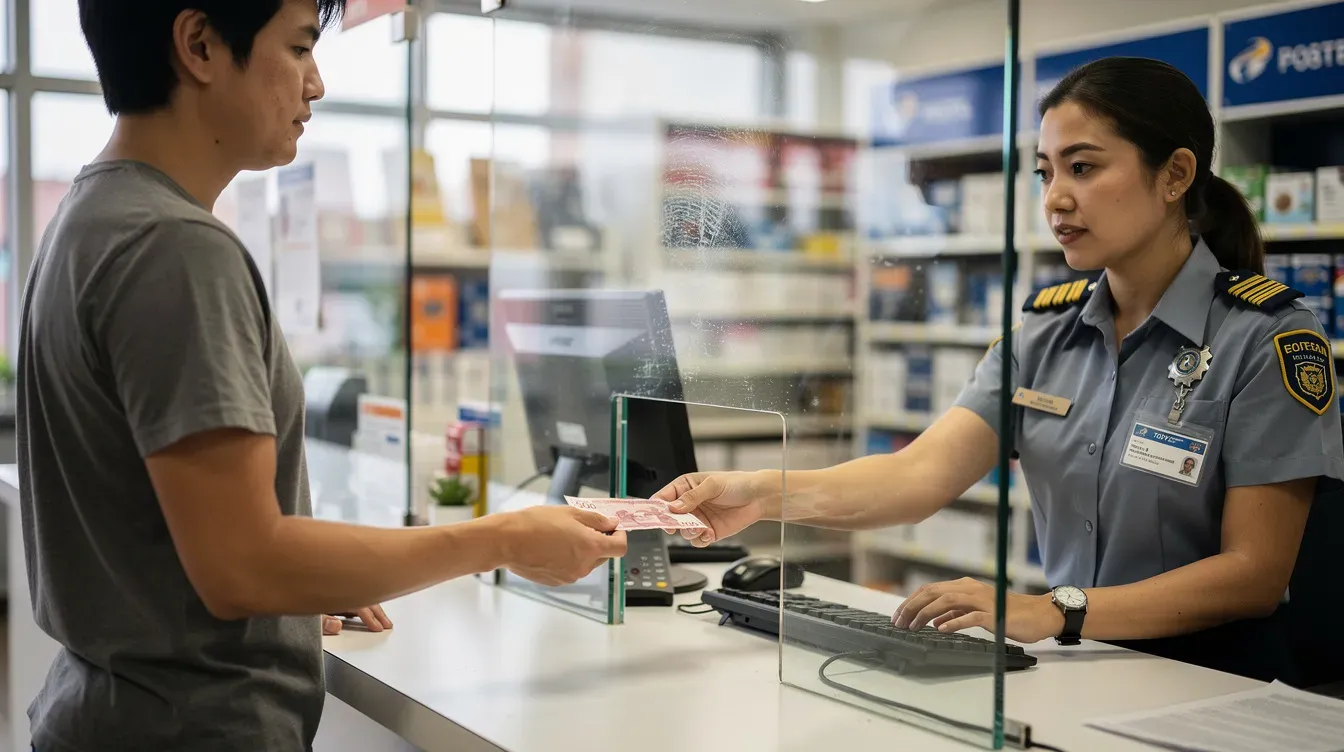
You can deposit cash or cheques at post office branches. Note deposits are accepted at nearly all branches, while coin deposits are available at branches with full counter service. You'll need to bring full coin bags in the correct denominations if your bank requires pre-bagged coins. Each bank sets its own limits for cash deposits, so check your account terms before making a trip with a large amount.
Cheque Deposits
To deposit cheques, you typically need a paying in slip and, where required, a branded deposit envelope from your bank. You hand the completed slip and cheque to the clerk, who processes it on your behalf. The cheque then follows your bank's standard clearing cycle. You need a paying-in slip to deposit cheques at post offices - your bank can supply these by post or at their own branches.
Balance Enquiries
You can check your account balance at post office counters. You need your debit card and PIN to check your balance. Balance inquiries are available for personal and business accounts. Clerks provide a receipt with your balance printed on it, which is especially useful for customers who don't rely on online banking or mobile apps.
Other Services
Some branches support other services such as a change giving service for business customers who need coins and smaller notes for their till, bill payments linked to your account, and top ups for certain prepaid products. Availability depends on your bank's agreements and the specific branch.
Using Your Bank Account and Debit Card
Your existing bank account and debit card are your keys to using post office banking services. You don't open a separate account - the post office simply acts as an agent for your bank.
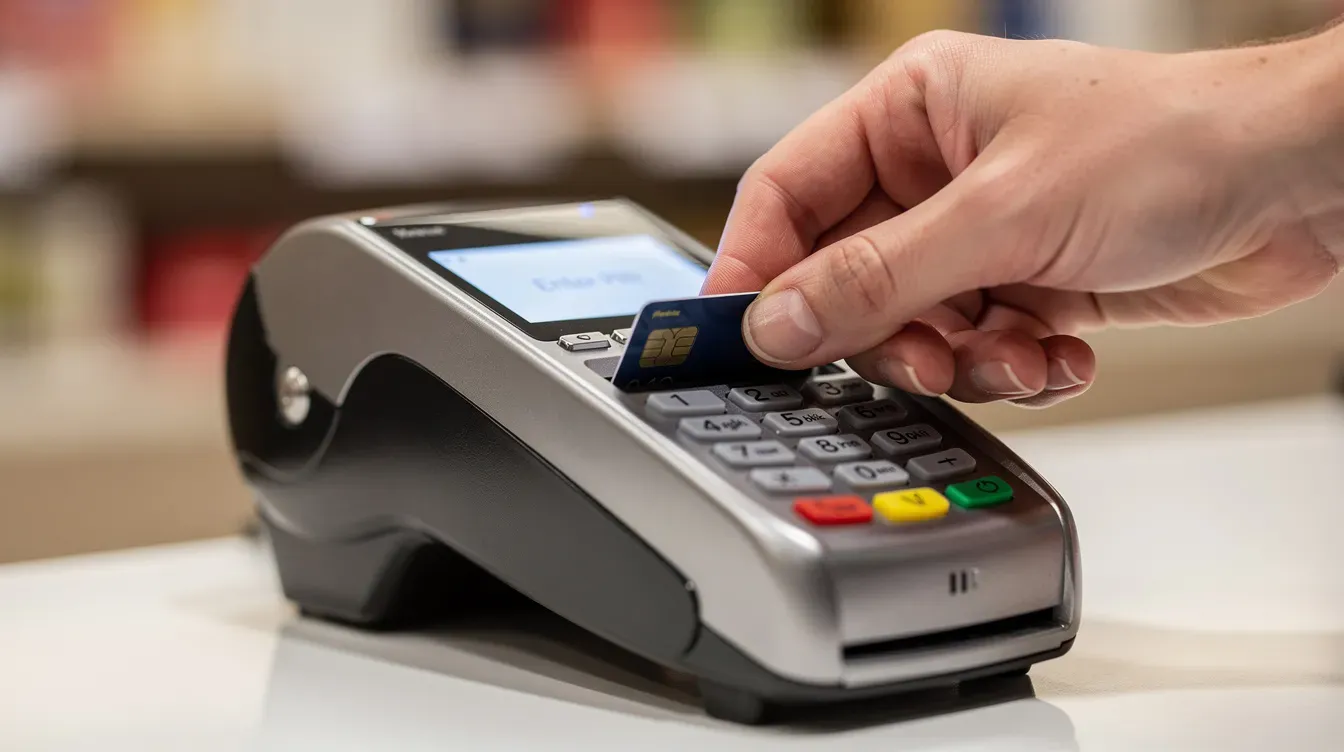
Personal customers present their debit card at the counter for cash withdrawals, balance enquiries and, where supported, to pay in cash. You'll always need your card and pin for security. You can deposit cash using a debit card at post office branches, making the process straightforward.
Business customers typically use a business debit card or business deposit card to deposit cash and cheques. These cards are linked to your business accounts, and transactions count towards agreed deposit limits. Some banks also issue a change giving card that enables you to collect coins and notes for your till float. If your bank requires a personalised paying in slip for deposits, make sure you have a supply before heading to the branch.
Most major UK banks, building societies and some challenger banks allow card-based services at the post office. Different banks choose which services they offer, though, so not every bank supports every transaction type. Virgin Money, Lloyds Bank PLC and many others participate, but the exact menu varies. Always check your bank's website or their dedicated post office banking services page to confirm what you can do with your particular card and account type, including whether a joint account holder can use the service independently.
The Post Office offers basic checking and savings accounts without strict minimum balance requirements through its own products, but these are separate from the bank-agency model described here.
Cash Deposit Limits, Cut-Off Times and Processing
While you can deposit cash and cheques at the post office, there are important rules around deposit limits, cut off times and how long funds take to reach your account. Getting these wrong can mean delayed access to your money or unexpected fees.
Cash Deposit Limits
Each bank sets its own cash deposit limits for post office transactions. These can vary by account type and whether you're depositing notes, coins or both. Here are some real examples to illustrate the range:
Bank | Account Type | Daily Limit | Monthly/Annual Deposit Limit |
|---|---|---|---|
HSBC | Business | £9,000 | £40,000/month |
Co-operative Bank | Personal | £2,000/day | £10,000/12 months |
RBS | Personal | £3,000/day | £24,000/year |
Bank of Ireland UK | Personal | £2,000/day | £10,000/year |
Metro Bank | Business | £10,000 single deposit | Varies |
A café paying in £500 of daily cash takings would stay well within most limits, but a busy market trader depositing heavy coin volumes could hit an annual deposit limit within a few months. If your business regularly handles large amounts, check whether a prior arrangement with your bank can raise your limit or whether you need to spread deposits across days.
Branch counter type also matters. Branches with glass screen counters can accept up to £20,000 in a single deposit, while open-plan counters typically cap out around £4,000 - regardless of what your bank's own limit allows.
Cut-Off Times
Each branch has a cut off time for same day processing. Cash deposits made before this time on a business day are usually credited to your account immediately or by the end of that same day. Cash deposits made after the cut-off take an extra working day to appear.
Cheques deposited via a paying in slip and deposit envelope follow your bank's standard cheque clearing cycle. Cheques deposited take an additional 2 days to clear compared to in-branch bank deposits, because the physical envelope needs to travel from the post office to your bank before clearing begins.
Fees
While the post office itself doesn't charge you for being the agent, your bank may apply fees for certain services. These can include charges for exceeding monthly cash allowances, coin deposit charges, or business change services. All charges appear on your bank statements. Check your account terms or your bank's published tariff to avoid surprises - especially if you run business accounts with high cash volumes.
Post Office Banking for Business Customers
If you're a sole trader or run a small business that handles cash and cheques daily, the post office can serve as your regular banking point - and for many, it already does.
Core Business Services
Business customers can use the post office to:
Deposit cash and cheques into business current accounts using a business debit card or business deposit card
Withdraw cash for wages, petty cash or change
Make balance enquiries at the counter or via a cash machine
Pay cheques into your account using a personalised paying in slip and deposit envelope
Use a change giving service to collect coins and smaller notes for your till
Many business accounts allow you to request change over the counter, subject to your bank's rules. HSBC, for example, lets business customers request up to £2,000 in change at larger branches, while smaller branches may limit this to around £1,000. You may need a dedicated change giving card to access this service.
Limits and Compliance
Cash deposit limits for business customers can be higher than for personal accounts, but they are still controlled by the bank and may vary by sector and risk profile. Banks also impose compliance requirements for high-volume cash businesses. If you regularly pay cash in above certain thresholds, your bank may require source-of-funds documentation, identity verification, or registration of a preferred branch. This is part of standard financial crime prevention obligations.
Convenience
Late and weekend opening at many post office branches means business customers can deposit takings outside normal banking hours - day saturday included. Local access reduces time away from the shop or office, and secure handling of cash and cheques gives peace of mind. You can often combine banking with posting parcels or handling other errands, saving an extra trip.
If you run a cash-heavy business, check your bank's detailed guidance on using post office branches. Look for requirements around special deposit envelopes, barcoded deposit slips, sort codes on paying-in forms, and any separate registration for change services.

Finding a Branch and Checking Opening Times
Thousands of post office branches are available across the UK - around 11,600 at last count - and many offer extended hours compared with traditional bank branches. Many branches have late and weekend opening hours, which is a major draw for customers who can't get to a bank during the working week.
How to Find Your Nearest Branch
Use the branch finder tool on the Post Office website to locate the nearest post office that supports banking services. You can filter results for services like cash deposits, cheque deposits and business facilities to make sure the branch you visit can handle what you need. You can also find your nearest branch by searching for the post office logo on local maps apps.
What to Check Before You Go
Opening times: Branches operate different hours; check specific opening times before visiting. Some open early, close late, or open on Saturdays and Sundays.
Counter type: If you plan to deposit large amounts, confirm the branch has a glass-screen counter rather than an open-plan layout.
ATMs: Some branches have free-to-use ATMs inside or outside for quick cash withdrawals and balance checks.
Services: Not every branch offers coin deposits, cheque book requests, or business change services. Check in advance.
If you regularly deposit larger amounts of cash or cheques, confirm in advance that your chosen branch has full counter service and the facilities you need. Your nearest branch may not always be the best option if it's a smaller outreach location.
Banking Hubs and Extended Access to Cash
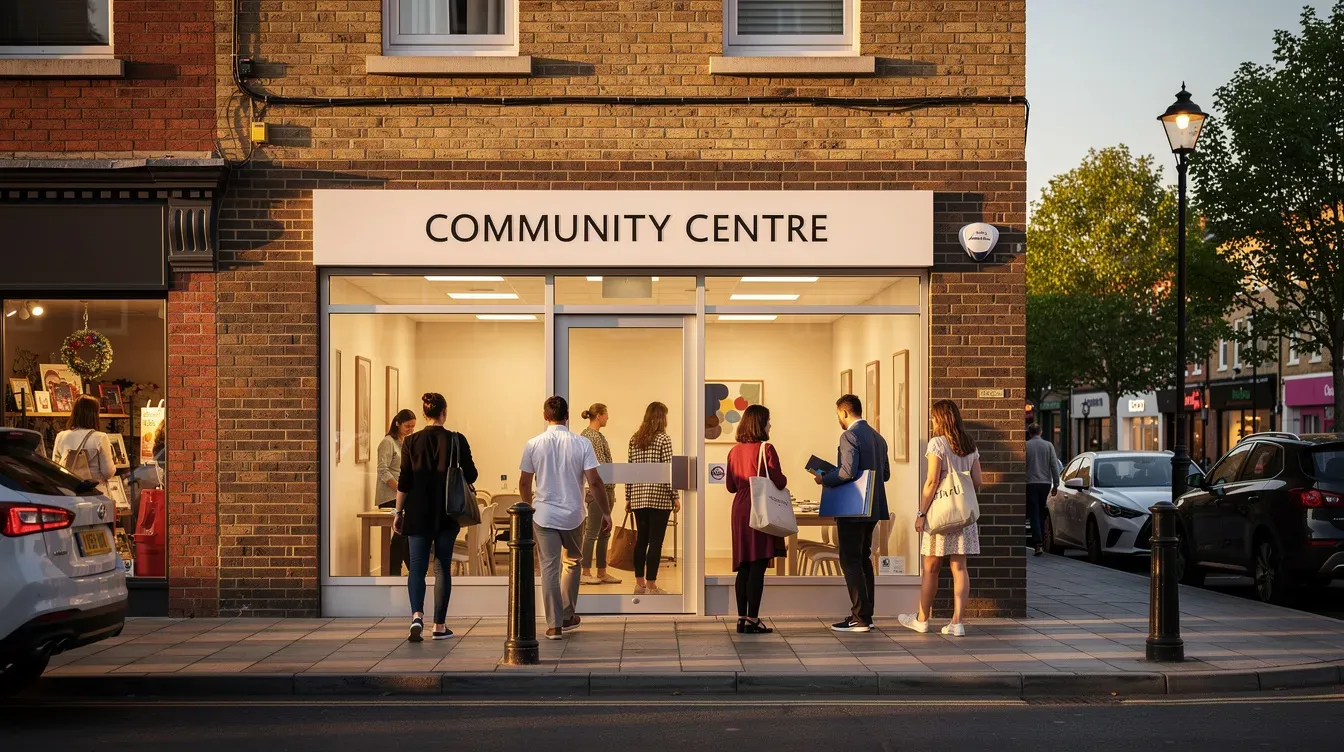
Banking Hubs are a newer development designed to fill the gap left by closing high street bank branches. The Post Office operates a comprehensive banking hub through partnerships with major banks, creating shared spaces where customers from several different banks can access everyday banking alongside standard post office services.
How Banking Hubs Work
At a Banking Hub, you'll find:
Post office counter services for cash and cheque deposits, cash withdrawals and balance enquiries - exactly as at a standard branch
Visits from community bankers on set days, representing individual banks, to help with more complex queries that post office counter staff can't handle
As of March 2026, there were 225 operational Banking Hubs across the UK, with more planned. They are targeted at towns and communities that have seen local bank branches close, helping maintain access to everyday banking and cash in areas that would otherwise be left without face-to-face banking.
At a Banking Hub, customers can pay in and withdraw cash, deposit cheques, check your balance and send money - in the same way as at any post office branch that supports banking services. Post offices are often located in rural or underserved areas, so Banking Hubs naturally extend this reach.
Check whether a Banking Hub is available in your area using an online locator, your local council website, or community information pages.
Safety, Security and Fees
Post office branches are a secure, trusted place for handling cash and valuables. They operate under strict security protocols, supported by specialist Cash and Valuables in Transit (CViT) networks that move money safely between branches and banks.
The scale of the operation speaks to its reliability. Post Offices handled over £3.7 billion in cash transactions in December 2024 alone - a volume that requires robust, proven systems.
Security Measures
Chip-and-PIN verification for every card-based transaction at the counter
Staff training on secure cash and cheque handling
Glass-screen counters at high-volume branches for added protection during large transactions
Internal processes aligned with bank-level compliance standards
Fees and Charges
Personal customers generally are not charged for daily banking transactions at post offices. However, any fees for banking transactions - such as cash deposits above allowances, cheque processing, or change services - are set by your bank and appear on your bank statements. The post office itself does not add its own charges on top.
Post office banking services are covered by the Financial Services Compensation Scheme, so your deposits are protected in the same way as if you banked directly at your bank's own branch. This is governed under the oversight of bodies including the prudential regulation authority.
Review your bank's tariff for using post office services, especially if you run a business or make frequent, high-value cash deposits.
Why Cash and Cheques Still Matter
Despite the rise of contactless cards and digital payments, cash accounted for around 9% of all UK payments in 2024. For millions of people, cash isn't a relic - it's a daily tool.
Many people still prefer cash for budgeting, keeping control of day-to-day spending and avoiding overspending on cards. This is especially true for those on tight incomes who find physical money easier to manage than app-based spending trackers.
Small businesses, market traders and local shops continue to take large amounts of cash, making local facilities to deposit cash and cheques vital for their cash flow. Without somewhere nearby to pay cash in and pay cheques in securely, these businesses would face longer journeys and higher costs just to manage their money.
Specific groups rely on cash more heavily:
Older adults who may not use digital banking
People in rural areas with poor broadband or mobile connectivity
Individuals in vulnerable situations who need cash for independence and privacy
Post office banking provides unmatched physical access and convenience for cash-heavy needs. Post offices offer significant accessibility benefits for personal banking, giving people a local post office - a familiar, trusted place - to handle their cash and banking tasks without needing a smartphone or laptop.
FAQs
Can I Open a New Bank Account at the Post Office?
You normally cannot open a brand-new current account for most banks at a post office counter. Instead, you open the account directly with your chosen bank and then use the post office for everyday banking on that account. In some cases, banks may allow you to pick up or return forms or identification via the post office, but account approval and set-up is handled by the bank itself. If you need a new bank account, visit your preferred bank's website or nearest branch first, then check which services will be available through post office branches once the account is open.
Do I Need My Debit Card to Deposit Cash or Cheques?
For many banks, you can deposit cash and cheques using a personalised paying in slip and, where required, a bank-branded deposit envelope rather than your debit card. Some banks also support card-based deposits, where you present your debit or deposit card at the counter and the cashier processes the cash deposit directly to that account. Check your bank's specific guidance to see whether you must bring a debit card, a business deposit card, a paying-in slip, or a combination of these for the kind of deposit you want to make.
Is There a Limit on How Much Cash I Can Deposit at the Post Office?
Yes, there are cash deposit limits, and they are set by each bank rather than the post office. Limits may differ for personal and business customers and can change over time. Some banks set daily or monthly caps for cash paid in at post office counters or multi-bank deposit ATMs. For example, the Co-operative Bank limits personal customers to £2,000 per day and £10,000 over any 12-month period. If you're planning to deposit a large amount or make frequent deposits, check your bank's current limits and any extra checks or identification requirements in advance.
How Long Will It Take for My Deposit to Show in My Account?
Cash deposits made before the branch cut off time are usually credited to your bank account immediately - often the same day. Deposits made after the local cut-off normally take an extra working day. Cheque deposits follow your bank's standard cheque clearing times, which can be several working days, and posting via the post office may add an extra day or two as the physical envelope travels to your bank. If you need funds quickly, ask your bank how post office deposits are treated and plan deposits earlier in the day where possible.
Are All Banking Services Available at Every Post Office Branch?
Not every branch offers the full range of banking services. Availability depends on both the individual branch facilities and the agreements your bank has with the post office. Some smaller branches may not process coin deposits or business change services, while others may not support cheque deposits for certain banks. Use an online branch finder and your bank's service list to confirm which services are available at specific branches before making a special trip. Your nearest post office may handle basic withdrawals perfectly well but lack the facilities for large business deposits or coin bags.