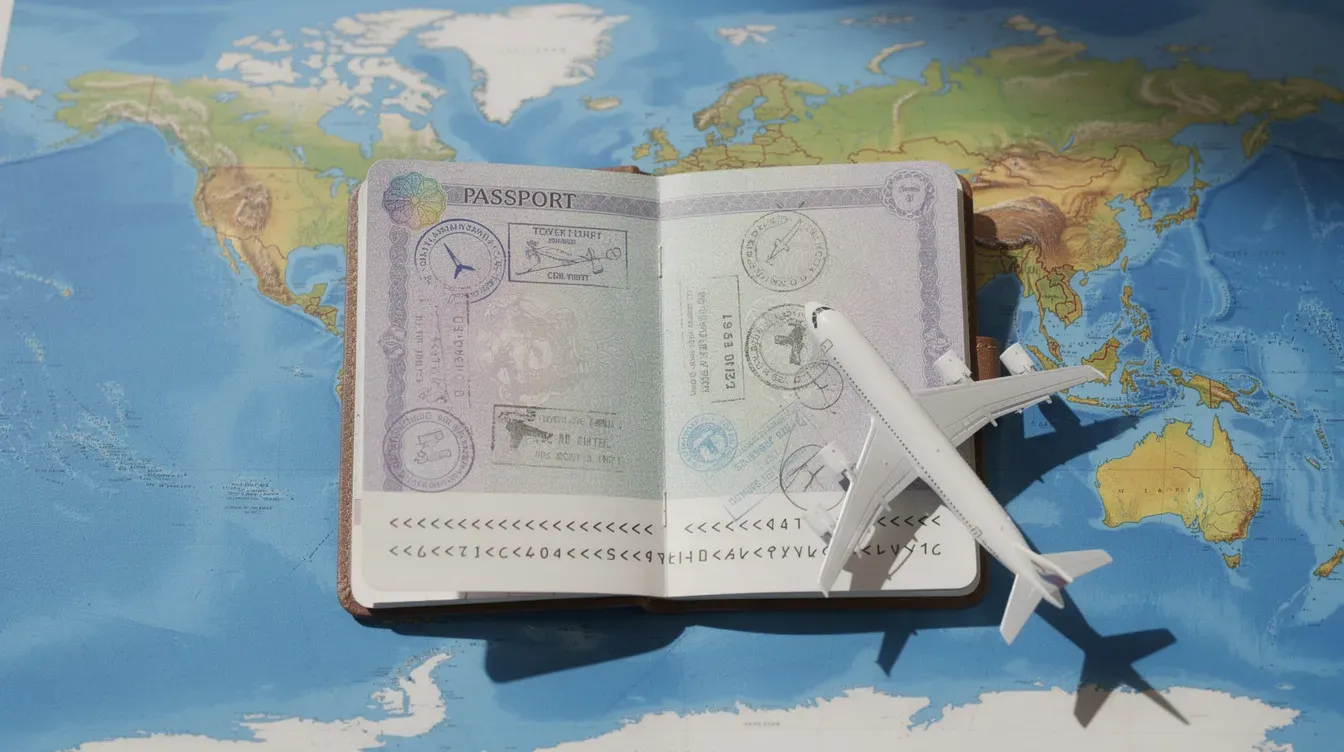
A passport checker tool takes the guesswork out of international travel planning. Instead of manually calculating dates and researching country-specific rules, you enter your passport details and travel dates, and the tool tells you whether your passport meets the entry requirements of your destination. If you have ever arrived at the airport only to be told your passport is not valid for your trip, you already know why this matters.
Key Takeaways
You can quickly use a passport checker tool to see if your passport is valid for specific travel dates and destinations. Passport validity checkers assess compliance with entry requirements so you know where you stand before spending money.
Always check your passport's expiry date and country-specific entry requirements before booking flights or accommodation. Properly checking passport validity can prevent travel disruption, cancelled holidays, and wasted money.
Validity requirements frequently range from 3 to 6 months for travel. Many destinations expect at least six months of remaining passport validity, while most EU and Schengen countries require a passport issued less than 10 years ago and valid for at least three months after your departure date.
The tool relies on accurate personal details, passport details, and holiday details to produce a reliable result. Even a one-day error in your date of issue or expiry date can flip the outcome.
If the checker tool shows your passport will expire too soon for your planned trip, start the renewal process immediately rather than hoping for the best at the airport.
Check your passport with our online passport checker
The passport checker tool compares your passport's expiry date and date of issue against your travel dates and destination to flag whether your passport will be valid. Passport validity checkers verify if passports meet specific destination requirements, and Document Checking Services allow for real-time validity checks. Travel companies provide tools for checking passport validity, and this one works the same way - you answer a few questions and get an instant result.
This is the "how to use it now" section. Here is the step-by-step process:
Select your country of issue from the drop-down list - for example, United Kingdom, United States, or Canada. This determines which passport travel rules the tool applies.
Enter your passport's date of issue and expiry date in day month year (DD/MM/YYYY) format, exactly as printed on your passport.
Add your holiday details: destination country (e.g. Spain, Greece, Australia), arrival date, and return date.
Review the result. The passport checker instantly shows one of two clear outcomes: "Your passport will be VALID for this trip" or "Your passport will be INVALID for this trip."
If the checker shows the passport is invalid, do not book non-refundable travel. Start a passport application or renewal immediately.

Your passport details
Accurate passport details are essential. Even a one-day error in the issue or expiry date can change whether a passport is valid for a particular trip.
The tool asks for the following fields:
Country of issue - determines which rules apply. For example, UK passport holders face specific EU rules post-Brexit, while a non UK passport holder follows their own country's agreements.
Passport number - optional for most tools, used for reference rather than validity calculation.
Date of birth - helps determine whether adult or child passports validity periods apply.
Date of issue - the exact day month year printed on your passport.
Passport's expiry date - again, exactly as printed.
Dates must match those on the passport photo page, including leading zeros (for example, 03/07/2024 instead of 3/7/24). Use the day month year date format the tool requests and perform a day month year check before submitting.
The tool does not store personal details. Identity verification services can confirm identity online using passport data, but this checker only uses your information temporarily to calculate validity. It assumes the passport is undamaged and not reported lost, stolen, or cancelled. Users with a damaged or cancelled current passport must follow official guidance from HM Passport Office or their country's equivalent.
Your holiday details
Holiday details allow the passport checker to match your trip with the entry requirements of your destination country.
You must enter at least three items:
Destination country - for example, Italy, United States, or Thailand
Arrival date - the date you arrive at the destination
Return date - the date you depart the destination
All dates should follow DD/MM/YYYY format, matching your united kingdom date conventions if you hold a UK passport, or whichever format the tool specifies.
For multi-country trips - for example, a cruise that visits several EU countries or a tour combining France and Switzerland - the tool assesses the strictest passport validity rule across all stops. If you change your holiday details later, re-run the passport checker with the new dates or destinations.
Holiday periods around peak seasons (summer and Christmas) can be risky for last-minute renewals. If you plan to travel during these windows, check your passport well in advance.
Understanding passport validity rules
Passport validity is the time between your trip and the passport expiry date, combined with how old the passport is based on its date of issue. Countries set minimum validity rules, and these differ depending on where you plan to visit.
Most countries care about two things:
Issue date rule - how old the passport is on the day you arrive. For example, EU and Schengen countries require a passport issued less than 10 years before entry.
Expiry date rule - how long the passport will remain valid after you leave. Some countries require at least six months from the date you arrive, while others only ask that it is valid for the duration of your stay.
These tools often consider the 3- or 6-month validity rule for entry, depending on the destination. Airlines often apply the strictest known rule and can deny boarding even if a country might technically allow entry with less remaining validity.
The safest approach is to renew well before your passport expires. If you have fewer than nine months of validity left and plan to travel abroad, run the checker now.
Travel to Europe and Schengen countries post-Brexit
Since 1 January 2021, UK passport holders are now considered third-country nationals in the European Union and the schengen area. This means british passport holders must satisfy different rules from those that applied before Brexit.
The 10-year issue rule: On your arrival date at any EU country or schengen zone country, your UK passport must have been issued less than 10 years earlier. Passports must be less than 10 years old for EU travel. Passports issued after 2018 are valid for exactly 10 years, so the maths is straightforward. However, passports issued before October 2018 may carry extra months of validity that were added from an old passport during renewal. EU countries ignore any validity beyond 10 years for entry checks.
The 3-month rule: On the date you leave the schengen area, your passport must be valid for at least three months after departure. If your passport expires sooner, it will be flagged as invalid.
Example: A UK passport issued in February 2016 with an expiry of February 2026 would fail the 10-year issue rule for any trip arriving after February 2026 - even though the passport hasn't technically expired.
Ireland has different rules and typically accepts a UK passport or an irish passport that is simply valid for the length of stay, but travellers should still verify up-to-date entry requirements.
The checker tool automatically applies the EU 10-year rule and 3-month rule when users choose a destination such as Spain, France, Italy, or Greece. UK passport holders can verify validity using official government resources as well.

Passport validity rules beyond Europe
Outside the EU and schengen area, passport validity rules vary widely from country to country, and different rules apply depending on your nationality and destination.
Key points to know:
Many popular long-haul destinations - such as the USA, Turkey, Thailand, and Dubai (UAE) - commonly require at least six months of remaining passport validity from the date of entry. Some countries require passports to be valid for six months post-return as well.
Some countries only require a passport to be valid for the duration of the stay, but travellers should still allow a buffer because rules can change with little notice.
Certain countries set minimum blank page requirements for visa stamps. While the checker tool focuses on dates, travellers should check this separately through destination embassy pages.
Non UK passport holders must always confirm their own passport validity and visa rules with their embassy or consulate. The checker should display a reminder message for them.
When in doubt, aim for at least six months of remaining validity. It covers you for the majority of destinations worldwide.
When your passport will be invalid for your trip
If the passport checker displays "Your passport will be INVALID for this trip," you must change either your passport or your travel plans.
The main reasons the checker might flag invalidity:
Your passport expires before the return date.
Your passport does not have enough months' validity beyond the trip (for example, three months for Europe or six months for Thailand).
Your passport was issued more than 10 years ago and you plan to visit an EU country.
The tool presents a clear warning message and suggests next steps: renew your passport or choose alternative travel dates.
Expired passports: If your passport expiry date has already passed, you cannot travel internationally. You will need a new passport before any trip abroad.
Check any booked flights or tours to see whether you can move dates while you wait for a new passport. Consider whether your travel insurance or travel insurance policy covers schedule changes caused by passport issues - most do not.
When your passport will be valid for your trip
If the checker shows "Your passport will be VALID for this trip," your passport's issue and expiry dates meet standard rules for the entered itinerary.
However, a valid result does not replace official travel advice. You should still check:
Visa requirements and any extra entry requirements such as vaccination certificates or ETIAS approvals
Whether your travel insurance policy covers your destination and dates
Any other documents required by your destination
If you plan multiple trips within the same year, keep an eye on your passport's expiry date. Frequent visits to EU countries fall under the 90-days-in-180-days rule, and each trip needs to pass the checker separately.
After a "valid" result, consider these tips:
Make photocopies of your passport bio page and store them separately from the passport itself
Keep a digital photo of the bio page in secure cloud storage
Share copies with a family member travelling with you
Renewing or applying for a new passport
There are two situations: renewing an existing passport before it expires, and making a first-time passport application. Both follow similar processes but first-time applicants need additional citizenship proof.
Processing times and costs:
Service level | Typical timeframe | Notes |
|---|---|---|
Standard (online or by post) | About three weeks | Renewing a passport typically takes about three weeks |
Fast-track (1 week) | 1 week | Available at higher cost |
Urgent (next day) | Next day service | For emergency travel; highest cost |
You can renew your passport online or by post. Some countries also accept applications at a local post office. You can renew your passport up to 10 years after it expires. Urgent passport renewal can be done in one day or one week depending on the service you select.
To pay for your application, you will typically need a credit or debit card, or a debit card for online submissions.
Documents usually needed:
Completed application form
Recent digital photo meeting official specifications
Supporting ID or citizenship proof
Your old passport if renewing
Renewing early generally does not add "unused" extra months from the old passport onto the new passport. Plan to renew your passport at a sensible point rather than years in advance.
Changing personal details such as name or gender during renewal normally requires extra documents, like marriage certificates or legal change-of-name records. Contact HM Passport Office or your country's issuing authority for further information.
Visas, ETIAS, and other entry requirements
Passport validity is only one part of entry rules. Many countries also require visas or electronic travel authorisations.
Short-stay trips to the schengen area currently allow third country nationals to stay for up to 90 days in any rolling 180-day period without a visa for many nationalities, provided passport validity rules are met. You can stay in Schengen countries for up to 90 days under this arrangement.
The EU will require ETIAS for short stays starting in 2025. This low-cost online travel authorisation applies to most non-EU short-stay visitors. Check official sources for the latest start date and details.
Research whether you need visas for destinations such as the USA, Canada, India, China, or Australia, and apply well in advance - ideally several weeks before departure. The passport checker page should signpost you to official government and destination embassy pages for up-to-date visa and entry information, since rules can change quickly.
How to read and track your passport’s expiry date
Your passport's expiry date and date of issue are printed on the photo page, displayed in day month year format.
Example calculation: If your passport has a date of issue of 15/04/2017 and an expiry date of 15/04/2027, and your trip ends on 20/10/2026, you have roughly 5 months and 25 days of validity remaining after departure. A destination requiring at least six months from departure would flag this as invalid.
Practical ways to avoid surprises:
Add a calendar reminder 12 months before your passport expires
Check your passport before every trip, not just annual holidays
Re-run the passport checker any time you book a new trip or change travel dates
Parents should pay special attention to child passports. Children's passports are valid for five years and require renewal more frequently than adult passports. Children's passports are valid for only five years, so they can run out sooner than expected - always include every family member's passport when you check your passport validity.

Frequently Asked Questions
Do I really need at least six months left on my passport?
At least six months is a common rule for many non-EU countries, but it is not universal. Some destinations only insist your passport is valid for the duration of your stay. Check the specific rule for each country you plan to visit using official government or embassy sources, as well as the passport checker tool. Some airlines follow the six-month guideline even when countries allow less, so having six months' validity is usually the safest option. Government resources offer the most reliable guidance on passport validity.
Can I travel if my passport expires during my holiday?
Most countries require your passport to remain valid until after you leave, and many require extra months beyond your departure date. If your passport expires mid-trip, you risk being refused entry at the border or denied boarding on your return flight. If the passport checker shows the passport will expire during or shortly after the trip, renew before travelling.
How far in advance should I renew my passport?
Check your passport at least 6–9 months before any major trip, especially for long-haul or multi-country holidays. Because processing times and entry requirements can change, renewing when fewer than 12 months remain is a sensible balance. Renewing too early can mean you lose leftover validity, as most countries do not carry unused months across to the new passport. A paper check of your dates against the rules is never a bad idea either.
Does the passport checker tool guarantee I will be allowed to enter a country?
The passport checker is an information tool that uses typical rules on passport validity and dates. It cannot guarantee entry at the border. Final decisions rest with immigration authorities, and you must still meet all entry requirements including visas, sufficient funds, and return tickets. Treat the tool as an early warning system and confirm any doubts directly with official government or embassy guidance.
What if my passport was lost, stolen, or damaged before my trip?
A lost, stolen, or badly damaged passport is not valid for travel even if the expiry date is years away. Report a lost or stolen passport to HM Passport Office or your issuing authority immediately, and apply for a replacement or emergency travel document. The passport checker only assesses dates - it assumes the passport is physically intact and not cancelled. If you are in this situation, follow official instructions rather than relying on the tool alone.