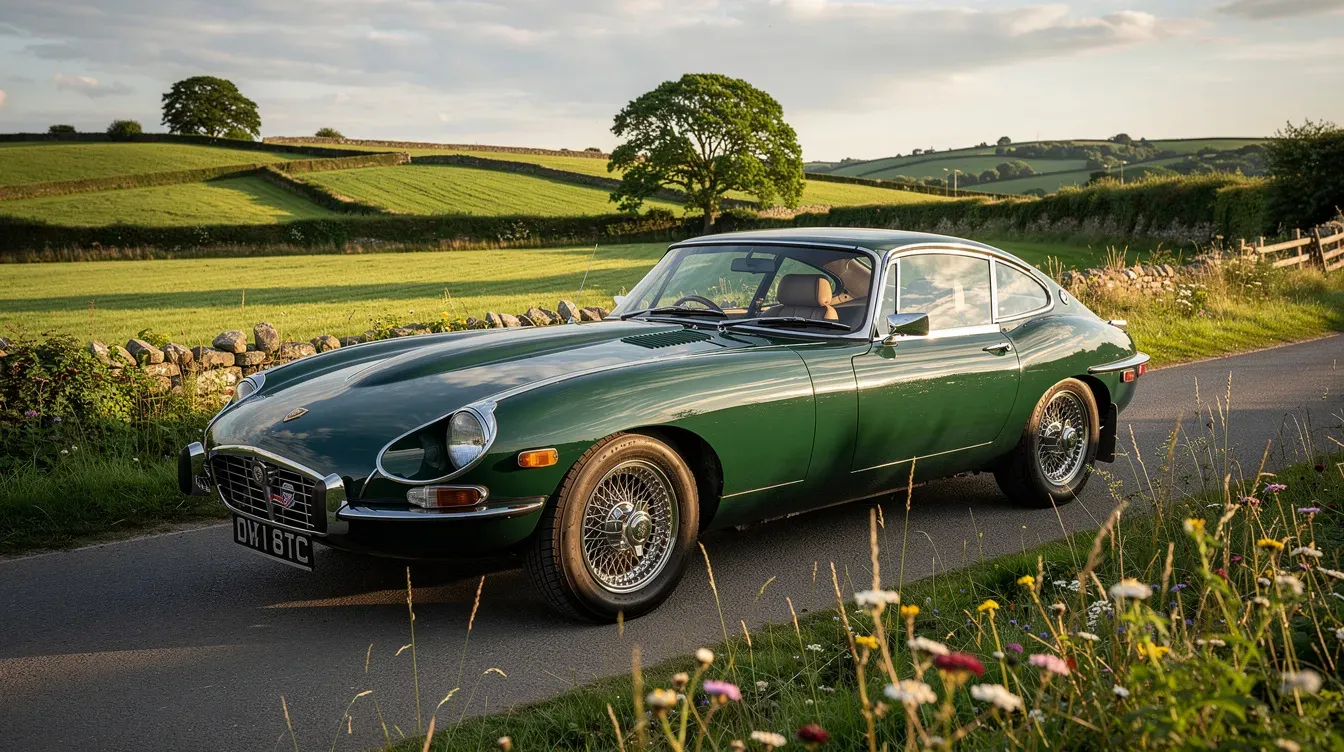
If you own a classic car, a historic motorcycle, or a specialist vehicle in the UK, you may not need to put it through an annual mot test. But knowing whether your vehicle actually qualifies - and what steps you need to take - is where many owners get caught out. This guide covers every category of mot exemption, the declaration process, and what you still need to do even when your vehicle is mot exempt.
Key Takeaways
Most cars need annual mot testing after the third anniversary of their first registration, but some vehicles are exempt from mot under UK rules - including new vehicles under three years old and historic vehicles over 40 years old.
Cars and motorcycles that are at least 40 years old, with no substantial changes in the last 30 years, can usually be declared mot exempt as vehicles of historical interest.
To declare mot exemption, you normally submit form V112 (light vehicles) or V112G (goods vehicles) when taxing the vehicle, either online or at a post office.
Even mot exempt vehicles must be roadworthy, insured, and have valid vehicle tax (or be on SORN) to be legal on any public road.
Some other vehicles, like agricultural tractors, electric goods vehicles registered before 1 March 2015, and certain pre-1960 heavy goods vehicles, are also exempt but may need other types of tests.
What Does MOT Exempt Mean?
The MOT (Ministry of Transport test) is a legal annual roadworthiness and emissions check for most vehicles in the UK. An mot test exemption means a vehicle can be driven without an annual mot certificate, provided it meets specific legal criteria set by the DVSA (or DVA in Northern Ireland).
Being exempt from mot does not mean exempt from all rules. The vehicle must still meet Construction and Use Regulations, be safe to drive, and have a valid insurance certificate and vehicle tax - unless it has been declared off road with a SORN. Mot exempt vehicles still require valid insurance and tax at all times.
For most cars, the normal requirement is straightforward: annual mot testing once the car passes its third anniversary of first registration. A 2025-registered car under three years old is automatically exempt - no declaration needed. A classic car over 40 years old can also be legally mot exempt, but only after the keeper actively declares it. When enforcement systems like ANPR check a vehicle's registration number, they will see the mot status recorded as exempt rather than showing a valid mot certificate date.
When Is a Car MOT Exempt in the UK?
Car mot exemption is based mainly on age, vehicle type, and how much the vehicle has been altered. The same rules apply across Great Britain, with Northern Ireland using the DVA instead of DVSA but following broadly equivalent criteria.
The two most common car mot exemption categories are:
New cars and motorcycles do not need an mot until their third birthday. A car first registered on 10 June 2025 does not normally need a car mot until 10 June 2028.
Vehicles of historical interest that are at least 40 years old and not substantially changed in the last 30 years. In the 2026 tax year, cars first registered before 1 January 1986 are reaching the age where they may qualify, depending on modifications.
Mot exemption does not automatically apply; it requires a declaration. The keeper must declare exemption with DVLA (or DVA), otherwise the system will still expect a valid mot and could flag the vehicle as untested.
Historic Vehicle MOT Exemption and the 40-Year Rule
The rolling "40 years old" rule is the main route to mot exemption for most cars, motorcycles, and light goods vehicles under 3,500 kg. Mot exemption applies to vehicles over 40 years old, measured from the date of first registration or, where recorded, the date of manufacture on the V5C.
A vehicle becomes potentially eligible from 1 April following the year it crosses the 40-year threshold. For example, a classic car first registered in September 1985 usually becomes eligible for mot exemption from 1 April 2026, assuming no substantial changes have been made. Vehicles over 40 years old are generally mot exempt once properly declared.
The concept behind the exemption is the Vehicle of Historic Interest - a vehicle maintained in original or near-original specification, used primarily for historical interest rather than daily commercial purposes. Many owners of a classic car in this category also look into the historic vehicle tax class, which allows vehicle excise duty to be set at £0. However, mot exemption and the historic tax class are separate processes that each require their own declaration, even though both use the 40-year threshold.

Substantial Changes: When a 40-Year-Old Vehicle Is Not Exempt
Car mot exemption for historic vehicles depends on the vehicle not having been substantially changed in the last 30 years. The Department for Transport publishes guidance on what counts as a substantial change, and getting this wrong can void your exemption entirely. Substantial changes disqualify a vehicle from mot exemption, and a vehicle loses mot exemption if it has substantial changes.
What usually counts as a substantial change: replacement of the chassis body axles or monocoque to a different design, major changes to suspension or steering type, fitting a non-period engine that materially alters performance (such as a different number of cylinders), or radically modifying the body. Substantial changes include replacing chassis, body, or engine - essentially anything that makes the vehicle fundamentally different from its original specification. Substantial changes also disqualify a vehicle from historic status.
What does not count as a substantial change: like-for-like engine rebuilds, cosmetic paintwork, interior retrims, replacement panels made to original pattern, or fitting modern tyres and seatbelts for safety. Routine maintenance does not count as a substantial change, and nor do modifications made to preserve the vehicle when original parts are no longer available.
A practical example: a 1980 classic car with its original chassis, a similar engine, and only cosmetic upgrades can usually declare mot exemption. However, a 1980 shell fitted with a modern performance engine and custom suspension has been substantially altered and must still get an mot every year.
Other Types of MOT Exempt Vehicles
Beyond classic cars and bikes, several specialist vehicle categories are also exempt from mot but may be subject to other vehicles testing regimes or specific conditions.
Agricultural tractors are exempt from mot tests when used solely for agricultural, horticultural, or forestry purposes and within certain distance limits from the base farm. Other specialist machines, such as some road rollers and works trucks, may also fall into exempt categories listed on forms V112 and V112G.
Electric goods vehicles registered before 1 March 2015 are exempt from mot. However, the same model registered after that date - say, April 2015 - would not be exempt. Owners should check the exact registration date and the category details on the relevant declaration form.
Vehicles used mainly on certain islands may be exempt from mot testing, depending on local regulations. Large vehicles such as heavy goods vehicles, buses, and some trailers do not use the standard car mot at all - they need separate annual testing services. Certain vehicles may require other types of tests instead of an mot, such as the HGV annual vehicle test or PSV inspections for buses used for commercial purposes.
Goods Vehicles, Heavy Goods Vehicles and MOT Exemption
It helps to understand the distinction between light goods vehicles (up to 3,500 kg) and heavy goods vehicles (over 3,500 kg), because this directly affects which test applies and whether exemption is possible.
Light goods vehicles used privately and over three years old usually need a normal mot unless they meet the historic vehicle rules - over 40 years old and not substantially changed. If they do qualify, the keeper must confirm mot exemption using form V112G for goods vehicles.
Heavy goods vehicles and some trailers sit outside the standard mot system entirely. They must pass an annual vehicle test, usually starting within one year of first registration. However, certain pre-1960 HGVs of historical interest may be exempt from that annual test if they are not used for commercial purposes and have not been substantially changed. Buses follow similar logic: a preserved heritage bus over 40 years old, used only for shows or rallies, may qualify.
A practical example: a preserved 1958 heavy goods vehicle used only for shows, carrying no goods and not substantially changed, may be exempt from modern HGV testing if correctly registered as a vehicle of historical interest through form V112G.
How To Declare MOT Exemption (V112 and V112G)
To declare mot exemption, you complete a V112 (for cars, motorcycles, and light vehicles) or V112G (for certain goods vehicles) whenever you tax the vehicle. Owners must declare mot exemption using form V112 during taxation - the process is not one-off, but must be repeated at each tax renewal period.
The steps for car mot exemption:
Check eligibility - confirm the vehicle is over 40 years old and not substantially changed.
Download or obtain form V112 from GOV.UK.
Tick the relevant exemption category (such as historic vehicle).
Sign the legal declaration.
Submit the form when taxing the vehicle online or at a post office branch that deals with vehicle tax.
For goods vehicles, the equivalent process uses V112G. The correct category must be selected - for example, historic HGV, specialist vehicle, or pre-2015 electric goods vehicle - to confirm exemption from mot or annual test.
At the post office, bring: the V5C logbook showing date of first registration, a vehicle tax reminder letter (V11) if available, a valid insurance certificate or cover note, and the completed V112 or V112G. In Northern Ireland, proof of insurance is required at the point of taxing.
Declaring mot exemption is a legal statement. Giving false information - for instance, claiming a heavily modified classic is unmodified - can lead to prosecution, penalty points, or invalid insurance.

Checking if a Vehicle Is MOT Exempt
There is no single "mot exempt checker" online, but you can combine government tools and paperwork to confirm mot status for your vehicle.
Start with the GOV.UK mot history service. Enter the vehicle's registration number to see either a valid mot certificate, an expired previous mot, or - for some exempt vehicles - a status that says no results were returned or that the vehicle may not need an mot. The system may automatically update to reflect an exemption once it has been declared.
The back of forms V112 and V112G lists all exempt vehicles categories. Owners should compare their vehicle type, age, and use to the descriptions there.
For historic vehicles, confirming the exact date of manufacture on the V5C and checking for any substantial modifications is essential before assuming exemption. If records are unclear - common with imported classics or former commercial vehicles - owners may need dating letters from the manufacturer or help from a recognised organisation such as one of the british historic vehicle clubs to clarify eligibility. A marque specialist can also assist with confirming build dates and originality.
MOT Exemption vs Historic Vehicle Tax Exemption
Mot exemption and vehicle excise duty exemption for the historic tax class both use a rolling 40-year rule but are separate processes with different legal effects. Being mot exempt does not automatically make the vehicle tax exempt, and being in the historic vehicle tax class does not automatically make a vehicle exempt from mot unless you also declare exemption as a vehicle of historical interest.
A concrete example: a 1985 classic car changed to the historic vehicle tax class from 1 April 2026 still needs an mot every year unless the keeper has also declared mot exemption with DVLA using form V112. You can check or update your historic vehicle status through the dvla website.
To apply for the historic tax class, visit a post office with the V5C and ask for the tax class to be changed to "Historic Vehicle." Road tax is then set at £0, but the vehicle must still be taxed annually - even at zero cost - or declared SORN. You cannot simply assume a tax exemption covers mot as well. Even if the tax is £0 and the car is mot exempt, it must always be roadworthy when driven on a public road.
Can You Still Get an MOT on an Exempt Vehicle?
Owners of mot exempt vehicles, including any historic vehicle or classic car over 40 years old, can still choose to get an mot test voluntarily. There is no rule preventing it, and many owners prefer to do so.
Reasons to consider a voluntary mot include: independent safety assurance, meeting insurer requirements (some insurance providers request it), gaining confidence before a long trip, or helping a future buyer verify the vehicle works as expected. For kit cars and other vehicles where history can be unclear, a voluntary mot provides useful documentation.
A voluntary mot is booked the same way as any other test - through a DVSA-approved testing services centre - and the result is recorded in the mot database, even though the car could legally be driven without it. If that voluntary mot reveals dangerous defects, driving the vehicle before fixing them is still an offence, despite the underlying mot exemption. For some transactions, such as transferring a cherished number plate, the DVLA or buyers may expect a recent mot even where not legally required.
Responsibilities and Risks When Your Vehicle Is MOT Exempt
Mot exemption does not reduce the legal responsibility to keep a vehicle safe. It simply removes the requirement to present it for the annual mot test. Vehicles must remain in a safe roadworthy condition even if exempt from mot tests, and vehicles must remain roadworthy even if mot exempt - that point cannot be overstated.
The ongoing legal requirements for exempt vehicles include:
Maintaining brakes, steering, tyres, lights, and structural integrity in safe condition
Keeping insurance in force at all times
Holding valid vehicle tax or SORN
Not driving the vehicle in a dangerous condition on any public road
Penalties for using an unsafe vehicle can reach fines of up to £2,500, three penalty points, and possible disqualification - even if the vehicle is legally mot exempt and carries no mot certificate.
Many owners of historic vehicles keep detailed maintenance records and seek specialist inspections for complex systems such as braking and steering. If you are unsure whether your vehicle truly qualifies as a vehicle of historical interest, seek advice from marque clubs, recognised organisations, or professional restorers before you declare exemption. Getting further information early can save significant legal and financial trouble later.

Frequently Asked Questions About MOT Test Exemption
What year car is currently MOT exempt in the UK?
In the 2026–27 tax year, cars first registered before 1 January 1986 may qualify for mot exemption. However, this only applies if they have not been substantially changed in the last 30 years and are used mainly for historic interest. The threshold rolls forward each year - so in 2027, it will cover vehicles first registered before 1 January 1987.
Do I need an MOT exemption certificate for my classic car?
There is no separate "certificate" for most owners. Instead, you declare exemption via form V112 (or V112G for goods vehicles) when taxing the vehicle. Form V112 confirms eligibility for mot exemption under DVLA rules, and DVLA records the car as mot exempt in its system.
Is a motorcycle MOT exempt at the same age as a car?
Yes. A motorcycle follows the same general 40-year rule as a car for historic vehicle mot exemption. A bike over 40 years old with no substantial changes can usually be mot exempt once the keeper has properly declared it.
Are imported classic cars eligible for MOT exemption?
Imported vehicles qualify based on the declared manufacture date. If the V5C shows the correct date and the vehicle is over 40 years old and unmodified, it can be exempt from mot. If the manufacture date is missing, owners may need a manufacturer's letter or club dating evidence to update DVLA before they can declare exemption.
What happens if I wrongly declare MOT exemption?
Falsely declaring mot exemption - for example, for a substantially altered or too-young vehicle - can invalidate your insurance, attract fines or prosecution for inaccurate declarations, and still leave the driver liable for using a vehicle in a dangerous condition. The declaration on form V112 is a legal statement, and the consequences of getting it wrong are serious.