Key Takeaways
Riders can perform a free mot check on any UK motorbike using its registration number, pulling data directly from official dvsa records held by the DVSA and DVLA.
You can instantly see your motorbike's current mot status, mot expiry date, and full mot history - including mileage recorded at each test, advisory notes, and faults - for bikes tested in England, Scotland, and Wales since 2005.
Riding without a valid mot is illegal on UK roads, with fines up to £1,000. The only exception is travelling directly to a pre booked mot test or a garage for repairs after failing.
This guide breaks down everything checked during a motorbike mot: lights, brakes, tyres, frame, steering, suspension, and more - so you can fix problems before the test.
You'll also find current motorcycle mot cost figures, common failure reasons, how MOT faults are classified, and how your mot certificate affects insurance and resale value.
Introduction: What Is a Motorbike MOT Check?
An MOT is a mandatory annual safety and emissions inspection for motorcycles over three years old that are ridden on uk roads. New motorcycles must get their first mot test by the third anniversary of their registration, and motorbikes need a valid mot after three years of manufacture.
When most riders say "mot check motorbike," they mean checking their bike's mot status and full test history online using the registration number - not actually performing the inspection themselves. DVSA and DVLA databases hold official mot certificate records, including the expiry date, mileage records, and mot faults logged at every test date.
This article focuses on motorbike-specific MOT checks, but the same online tools can also be used for a car check or van check using the vehicle's number plate.
How to Do a Free MOT Check on Your Motorbike
You can run a free mot check online in under a minute. No login, no payment - just the bike's registration number.
Here's the process:
Find the registration number - the exact format shown on the bike's uk number plate.
Visit the GOV.UK Check MOT History page or any trusted third-party service using the official MOT history API. Free checkers for mot status are available from various motor organisations.
Enter the registration - confirm the bike's make, colour, and approximate year of first registration to make sure you're looking at the correct record.
Review the results - you'll see the current mot status, mot expiry date, and whether the vehicle's mot is valid or expired.
A proper free mot check result also provides the full mot history since around 2005: every test date, pass or fail outcome, defects, advisory notes, and recorded mileage. You can check the mot status and expiry date of any UK-registered motorbike for free using the vehicle registration number.
One important note: data for England, Scotland, and Wales comes directly from the DVSA. Northern Ireland uses a separate DVA system, and records may not always appear in GB checks.

Understanding Your Motorbike’s MOT Status and Expiry Date
The mot certificate is valid for 12 months from the test date, and the expiry date is printed on the document and shown in any online mot check. MOT certificates are valid for 12 months after passing.
When you run the check, you'll see something like "valid until 13/06/2027." If the test failed, the current status will show "No MOT" or a failed result, meaning the vehicle's mot status is expired.
Riders can renew their MOT up to one month minus one day before the current certificate expires and still keep the original expiry date. For example, if your mot expiry date is 13/06/2027, you can have the next test from 14/05/2027 and your new certificate valid date will run until 13/06/2028.
If your MOT has expired, it is illegal to ride the bike on public roads - the only exception is travelling directly to a pre booked mot test or a garage for repairs after a failure. To avoid accidental lapses, set calendar reminders or sign up for free mot expiry alerts so you never miss your next mot.
Full MOT History and Mileage Records for Motorbikes
A full mot history check shows every mot test recorded for the motorbike since computerised records began. MOT history is available for motorcycles registered post-2005, and older paper-only records are not included in the DVSA database.
A detailed vehicle's mot history should include:
Each test date and result (pass or fail)
All mot faults - categorised as dangerous, major, minor, or advisory
Advisory notes such as "rear brake disc worn but not excessively"
The vehicle's mileage (mileage recorded at each test)
The test centres where each inspection was carried out
Buyers can use these mileage records to spot discrepancies. If the recorded mileage goes backwards between years, that's a strong indicator of mileage clocking (odometer tampering). Previous advisory notes also help predict upcoming repair costs - for instance, "front tyre close to legal limit" suggests you'll be buying rubber soon.
Before purchasing any used motorbike, check the full test history and compare it with service history and receipts. Recurring failure reasons for the same component - multiple lighting defects or repeated brake issues - can signal long-term neglect. This applies just as much when buying a used car.
Motorbike MOT Faults and Defect Categories
Since May 2018, mot faults have a clearer classification system, grouped into four categories that each affect the mot certificate differently:
Category | What It Means | MOT Result |
|---|---|---|
Advisory | Issue to watch but within limits | Pass |
Minor | Recorded defect, not yet at failure threshold | Pass |
Major | Significant safety or emissions concern | Fail |
Dangerous | Immediate road-safety hazard | Fail - bike should not be ridden |
Here's how these apply to real motorbike scenarios:
Advisory: brake disc slightly worn but within tolerance, chain showing early signs of stretch
Minor: small crack in a reflector, slightly frayed tread but still legal
Major: non-functioning brake light, loose forks, excessively worn tyres - major defects must be repaired without delay to pass the MOT
Dangerous: fuel leak risking fire, cracked frame, brakes extremely ineffective - dangerous defects cause immediate safety concerns and result in a fail
Dangerous faults require the tester to mark the bike as not roadworthy. The examiner will strongly advise against riding it away until repaired. Minor faults should be addressed soon but do not prevent passing. Advisory notes highlight issues needing attention but do not affect results.
Any mot faults found remain permanently in the vehicle's mot history and will appear in later free mot checks, which matters for resale value and buyer confidence.
What Checks Are Done in a Motorbike MOT Test?
DVSA publishes a detailed inspection manual - you can check comprehensive inspection criteria in the GOV.UK Motorcycle MOT Inspection Manual. The mot test checks 16 areas of a motorbike, covering over 60 individual checks for vehicle safety and roadworthiness.
The focus is road safety and legal compliance, not overall mechanical condition or cosmetic appearance. The examiner will also confirm VIN or frame number and number plate legibility as part of identity checks. Tests are conducted only at DVSA-authorised test centres, which are the only stations allowed to issue official mot certificates - often identifiable by their blue sign.
Lights and Electrical Equipment
Lighting faults are among the most common mot failures for motorbikes and one of the top failure reasons across all vehicle type categories.
Items checked include:
Headlight (main and dipped beam)
Rear light and stop lamps (brake lights)
Indicators (front and rear)
Number plate light
Rear reflectors
All must work, be securely fitted, and display the correct colour. Headlight aim is measured on an alignment rig to ensure it isn't dazzling other road users. Missing or non-working brake lights or indicators can be recorded as major or dangerous mot faults depending on severity.
Steering, Handlebars and Suspension
Secure and precise steering is vital for motorbike safety, so testers inspect all main steering components. Steering and suspension components are checked for secure fitting under dvsa rules.
Parts checked:
Forks, yokes, and head bearings
Handlebars and grips
Swing arm and pivot
Shock absorbers and damping
Excessive play in the head bearings, bent forks, leaking suspension units, or loose handlebars can lead to major or dangerous mot defects. Before the test, check for knocks, stiffness, or fork oil leaks to avoid an unexpected failure.
Wheels, Tyres and Wheel Alignment
Tyres and wheels must be the correct type, correctly fitted, and in good condition. Wheels and tyres must meet specific size and tread depth requirements based on engine size and fuel type specifications.
The tester checks:
Tyre size and speed rating appropriate for the bike
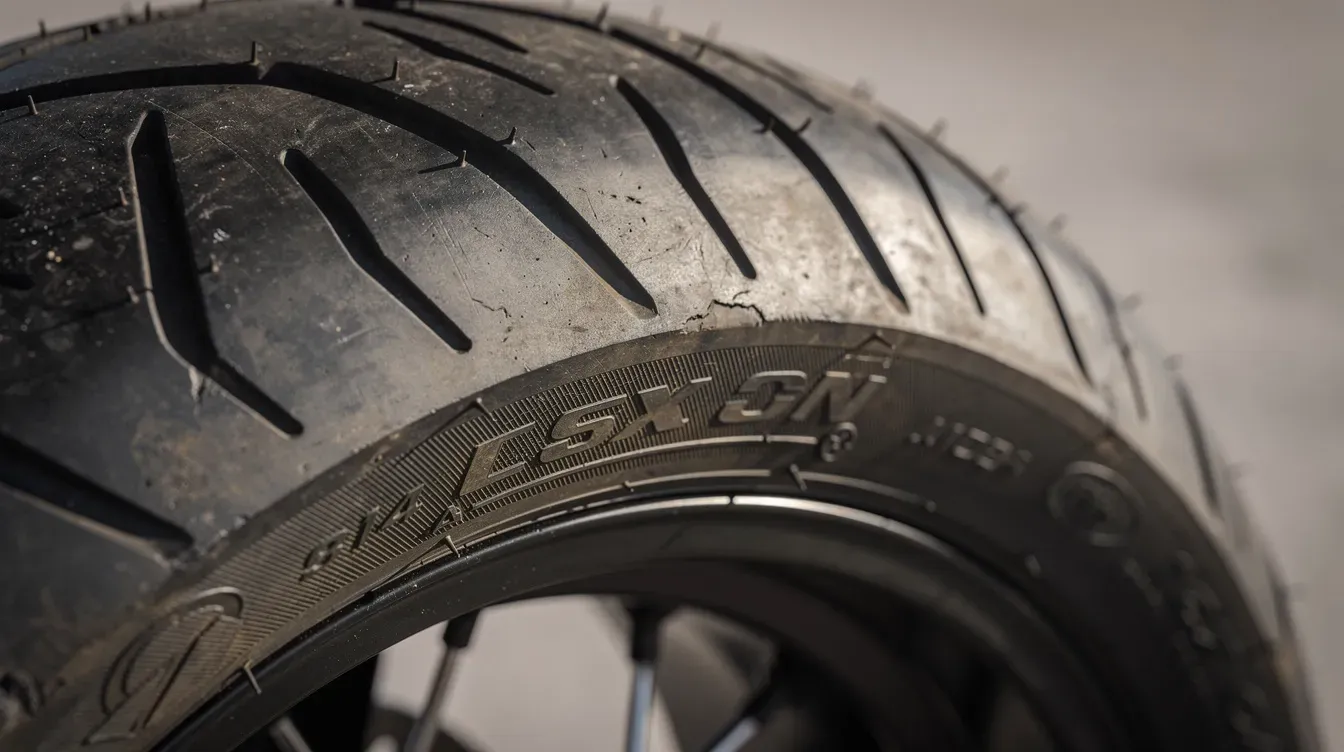
Tread depth - tyres on bikes over 50cc must have a minimum tread depth of 1.0 mm across three-quarters of the tread width (the legal minimum tread depth for motorbikes is lower than the 1.6 mm required for cars)
Sidewall condition - check sidewalls for cracks and proper inflation on motorcycle tyres
Valve condition and wheel security
Damaged rims, loose spokes, excessive wheel bearing play, or misaligned wheels can be classified as major or dangerous faults. Obvious flat spots, cuts, or exposed cords on tyres will lead to an immediate failure.
Frame, Body and Attachments
The frame is the structural backbone - the vehicle structure must be solid and free from serious corrosion or cracks.
Testers check:
Main frame and subframe integrity
Footrest hangers and engine mountings
Chain or belt guards
Typical failures include cracked welds near the headstock, heavy rust on load-bearing members, or loose engine bolts. If frame integrity is compromised, this will usually count as a major or dangerous mot fault.
Brakes and Controls
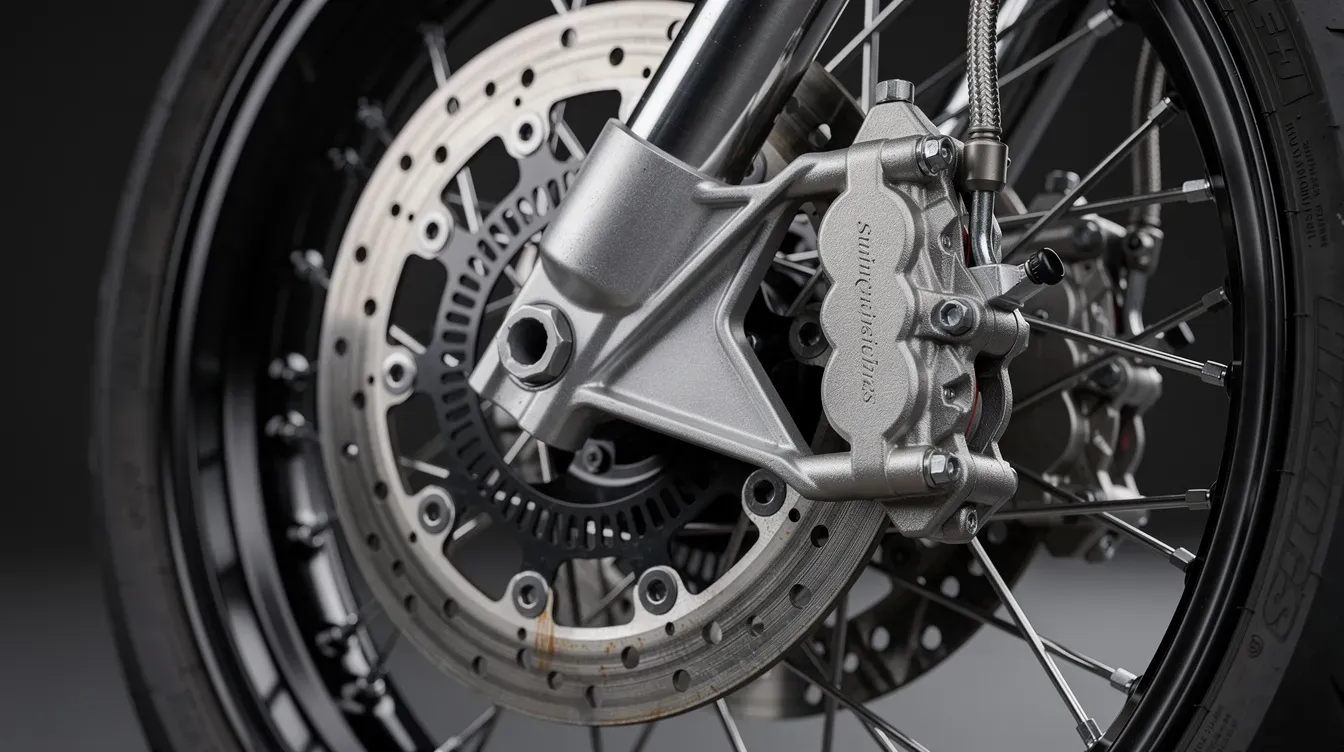
Braking performance is checked both visually and on a brake tester or via road test. Brakes have 43 possible major defects listed in the MOT - making this one of the most scrutinised areas.
Items checked:
Front and rear brake operation
Lever feel and pedal travel
Hoses, pipes, callipers, discs or drums
Pads or shoes thickness
Fluid leaks
The examiner assesses overall brake efficiency and any imbalance between wheels. Brake fluid leaks, seized callipers, or excessively worn pads usually result in a major or dangerous mot defect.
Exhaust and Fuel System
The MOT checks the physical condition of exhaust and fuel systems and, where applicable, basic emissions standards. The exhaust must meet noise limits during a motorcycle safety check.
Exhaust: security of all sections, absence of dangerous leaks, and the exhaust system must be secure and not excessively loud compared to a standard motorcycle system
Fuel: tank mounting, fuel lines and pipe joints, filler cap security, presence of leaks around carburettors or injectors
Significant fuel leaks are marked as dangerous faults due to fire risk and will instantly fail the MOT.
Seats, Footrests and Rider Controls
Basic ergonomic components must be present and securely fitted to ensure safe control.
Items checked:
Rider's seat and pillion seat (if fitted)
Rider and passenger footrests
Throttle action and clutch lever condition
The throttle must snap shut freely when released during a motorcycle safety check - a sticking throttle is a serious concern. The clutch lever must be easy to operate and not dangerously modified. Missing rider footrests or a loose seat can cause an mot failure even if the rest of the bike is in good order.
Horn, Registration Plate and Miscellaneous Checks
The MOT also covers visibility and communication items that help you interact with other road users.
The horn must be loud enough, produce a continuous tone (not musical or siren), and be operable from the riding position
The registration plate must be present, correctly sized, legible, and lit at night by a working number plate light - the vehicle's number plate must comply with current standards
Mirrors are not always a testable item on all motorcycle classes, but having secure, properly adjusted mirrors is strongly recommended
What Is Not Covered by a Motorbike MOT Test?
An MOT is not a full mechanical inspection or service - it focuses on minimum legal safety standards and mot requirements only.
Items not fully covered include:
Engine internal condition and gearbox wear
Clutch friction life
Cosmetic fairing damage (unless sharp edges create a hazard)
Non-safety-related accessories
A bike can pass the mot test and still need servicing - oil and filter changes, valve clearance checks, or chain and sprocket replacement. Use MOT checks alongside regular servicing, and consider an independent pre-purchase inspection when buying used bikes.
Motorbike MOT Cost, Classes and Exemptions
The mot cost for motorbikes is capped by DVSA, but most garages charge less than the maximum mot fee as a competitive or promotional rate. You can get discounts by booking your mot online at many test centres.
The maximum MOT fee for motorcycles is £29.65 for a standard motorcycle (Class 1 and Class 2). Bikes with sidecars (Class 3) have a higher cap of £37.80.
Class | Description | Max Fee |
|---|---|---|
Class 1 | Solo motorcycles up to 200cc | £29.65 |
Class 2 | Solo motorcycles over 200cc | £29.65 |
Class 3 | Motorcycle with sidecar / 3-wheelers up to 450kg | £37.80 |
MOT tests must be done annually for motorcycles over three years old. Classic motorcycles over 40 years old may be MOT exempt if they have not been substantially modified - though many owners still voluntarily test for peace of mind. Always confirm current fee caps and exemption rules on GOV.UK, as regulations can change.
Driving With an Expired MOT and Insurance Implications
Riding a motorbike on public roads with an expired mot is against UK law. Driving without a valid mot can result in a £1,000 fine. You can drive to a pre-booked mot test if your MOT has expired - but that is the only exception, along with travelling to a garage for repairs after a failed test.
Police and ANPR cameras can automatically flag bikes without a valid mot certificate, and enforcement is increasingly automated. Riders caught may face fines and possible penalty points depending on severity.
Many insurance policies require a current certificate for comprehensive cover. Riding without a valid mot can jeopardise claims - especially for damage to your own bike. In some cases, insurers may still pay third-party liabilities, but riders should never rely on this. An invalidated claim could leave you paying for repairs, medical bills, or a replacement bike out of pocket - potentially at a lower price than the bike was worth.
Use a free mot check regularly to confirm your vehicle's mot status and avoid accidental lapses. It takes less than a minute and could save you from a costly legal or financial headache.
FAQ: Motorbike MOT Check
How early can I book my motorbike MOT before it expires?
You can take your motorbike for its next test up to one month minus one day before the original expiry date and still keep the same renewal date for the following year. For example, if your MOT expires on 13/06/2027, you can test from 14/05/2027 onwards, and the new certificate will still expire on 13/06/2028.
If local test centres get busy during peak periods like spring, book a week or two in advance of this window to secure your preferred date.
Can I ride my motorbike to the garage without MOT or tax?
You may ride without a valid mot only when travelling directly to or from a pre-booked MOT appointment, or to a garage for repairs after a failed test. The journey should be as direct as reasonably possible, and you may be asked to prove the booking if stopped by police.
Separate rules apply to vehicle tax. In most cases, the bike must be taxed or declared SORN. Tax generally cannot be renewed online if there is no valid mot recorded against the registration.
Does my motorbike need an MOT if it is off the road on SORN?
A motorcycle declared SORN and kept entirely off public roads does not need a current mot certificate while it remains off-road. As soon as you want to ride the bike on uk roads again, you must obtain a valid mot (unless the vehicle is exempt by age) and then re-tax it.
Use a free check to confirm the bike's current status before ending SORN and attempting to ride.
Can I check MOT history for a motorbike I am thinking of buying?
Yes. Anyone can perform a free mot check and view the full mot history for a UK-registered motorbike using only its vehicle's registration number. You'll see every recorded test, pass or fail result, faults, advisories, and mileage.
Compare the online mileage records with the odometer reading and any service receipts. If the mot history shows repeated dangerous defects, corrosion issues, or unexplained mileage changes, consider walking away or getting a professional inspection before committing.
Do modifications affect my motorbike’s MOT result?
Many cosmetic modifications are acceptable, but any changes must still comply with MOT rules on lighting colour and functionality, exhaust noise, sharp edges, and visibility of the registration plate and reflectors.
Common problem areas include aftermarket exhausts that are excessively loud, tinted indicators that are not clearly visible, and non-standard lighting colours. Before fitting major modifications, check with a DVSA-authorised mot station to confirm the bike will remain compliant and avoid an unexpected failure at the next test.