The UK postal system is one of the oldest and most developed in the world. Whether you need to send a birthday card across town, ship parcels to business customers overseas, or simply understand how to receive mail at your home address, this guide covers everything you need to know about mail in the UK in 2026.
Key Takeaways
Royal Mail remains the core uk postal service, delivering letters and parcels nationwide six days a week under a Universal Service Obligation. Private courier and parcel services like DPD, Evri, and DHL operate alongside it for faster or specialist delivery.
Everyday users can send letters and parcels from thousands of post office branches, roughly 100,000 pillar boxes, parcel shops, and by buying postage online or booking home collections.
UK postcodes, a correct address, and the right postage are essential for reliable delivery of both domestic and international mail.
In 2026, the main ways to receive mail include home delivery, collection from depots and post offices, parcel lockers, and virtual or PO box addresses.
Business customers have access to dedicated business mail, parcel delivery, and address services, including discounted bulk rates of up to 32%, parcel tracking, and mail management platforms.
An Overview of the UK Postal Service
The story of postal services in the UK stretches back over five centuries. In 1516, Henry VIII appointed a "Master of Posts" to manage the movement of royal correspondence, and by 1660, the General Post Office was established as a government department responsible for managing mail across the country. For nearly three centuries it expanded steadily, building the network of roads, sorting offices, and delivery routes that still underpin uk mail today.
Two innovations in the 19th century transformed the system forever. The Uniform Penny Post was introduced on 10 January 1840, allowing anyone to send a letter anywhere in the country for just one penny. Months later, on 6 May 1840, the first adhesive postage stamp - the famous Penny Black - was issued, making prepaid postage simple and accessible for the first time. These changes turned sending letters from a privilege into an everyday act.
Fast forward to the modern era: the Post Office Act 1969 restructured the GPO into a statutory corporation, and the postal sector was liberalised in 2011, allowing private companies to compete in delivering mail. Most recently, in December 2024, the UK government approved the £3.6 billion sale of International Distribution Services (Royal Mail's parent company) to EP Group, with legal safeguards to preserve the universal service. The deal completed in early 2025, and Royal Mail continues to operate as the designated universal postal service provider.
Today, Royal Mail operates a Universal Service Obligation to deliver letters six days a week (Monday to Saturday) to every UK address, including remote areas in Northern Ireland, the Scottish Highlands, and offshore islands. The price is uniform - you pay the same to send a letter from London to Manchester as from Edinburgh to the Shetland Islands. Royal Mail operates a network of 37 mail centres across the UK that sort and route millions of items daily.
In modern terms, postal services are split across several categories. Letter mail covers First Class (aimed at next working day delivery), Second Class (2 to 3 working days), and Special Delivery Guaranteed for urgent or valuable items. Parcel services are handled by Royal Mail and Parcelforce Worldwide for domestic and international shipments, while private courier networks - Evri, DPD, DHL, UPS, FedEx - offer their own delivery services, often preferred for e-commerce and larger items.
It is worth clarifying a common point of confusion: Royal Mail and the Post Office are separate companies. Royal Mail is the delivery network - it collects, sorts, and delivers letters and parcels. The post office is the retail network of branches where customers buy stamps, drop off parcels, collect missed deliveries, and access banking services. They work closely together but have been independently operated since reorganisation.
Here is a quick summary of key services and starting prices in 2026:
Service Type | Examples | Starting Price |
|---|---|---|
Standard letter (2nd Class) | Domestic letters up to 100g | 91p |
Standard letter (1st Class) | Domestic letters up to 100g | £1.80 |
Small parcel (2nd Class) | Up to 1kg domestic | ~£4.25 |
Small parcel (1st Class) | Up to 1kg domestic | ~£5.45 |
International Standard | Letters and parcels overseas | Varies by destination |
Parcelforce Worldwide | Heavier parcels, express | Varies by weight kg and destination |
Post Offices, Pillar Boxes and Everyday Mailing Options
Post offices and pillar boxes remain at the heart of sending mail in the UK. Post offices are found in every town and city in the UK, ranging from large urban branches inside retailers like WHSmith to small rural counters inside village shops. Use the Post Office's store locator to find your nearest branch before heading out.
A typical post office branch in 2026 features the familiar red oval signage outside, counter positions staffed for personal service, and increasingly, self-service kiosks. Larger post office branches have self-service machines available for printing postage labels, weighing parcels, and processing returns. Many branches also serve as parcel drop-off points for Royal Mail, Parcelforce, Evri, DPD, and others, making them a convenient one-stop location for customers.
Core services at any post office go well beyond stamps. You can buy postage for letters and parcels, drop off pre-paid online purchases, collect missed deliveries, return online shopping, and access additional services. Post offices offer banking and financial services in the UK, including bill payments, travel money, insurance, and basic current account transactions - a lifeline for communities where high-street banks have closed.
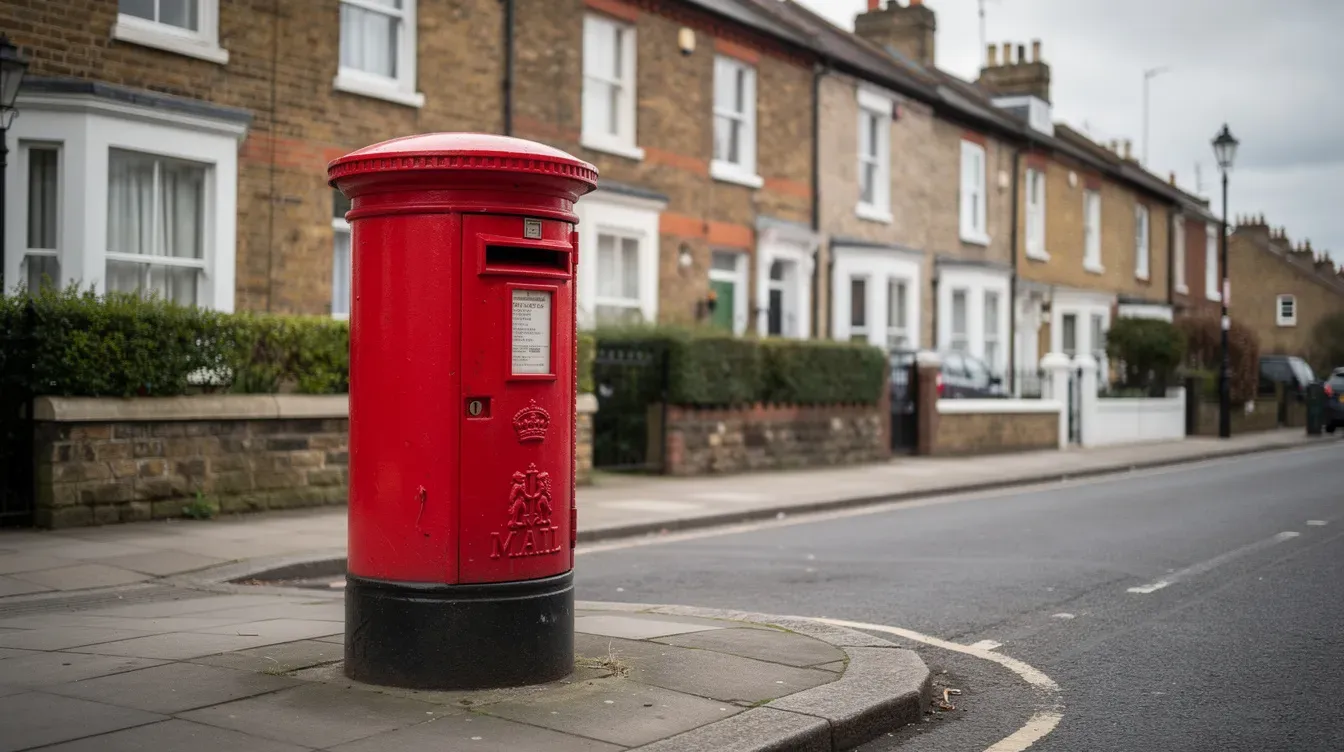
Across the country, there are around 100,000 postboxes in the UK, the iconic red pillar boxes that have been part of British life since the Victorian era. Many bear the royal cypher of the reigning monarch at the time they were installed - you can spot cyphers from Victoria to Charles III on a single walk through some towns. Each postbox carries an information plate showing the last collection times. Standard letters and many large letters fit through the slot, but parcels beyond small-parcel dimensions will need to be taken to a post office or parcel shop instead.
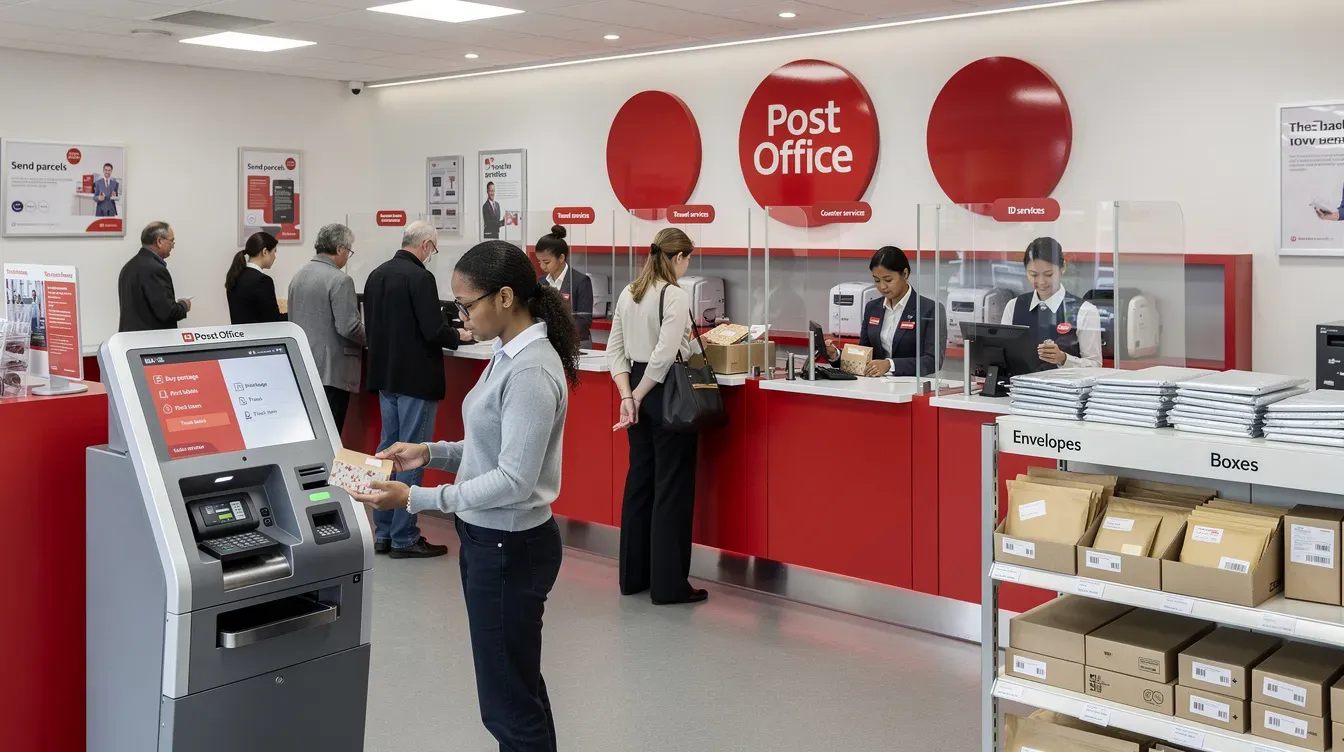
The busiest times at branches are typically lunchtimes (12:00–14:00) and Saturday mornings, especially in the run-up to Christmas. If you want to avoid queues, try visiting mid-morning on a weekday. Self-service machines at larger branches let you weigh items, buy postage, and drop off pre-paid packages in minutes.
For those who prefer digital convenience, many carriers now let you buy online and print labels at home. Royal Mail's Click & Drop service, Parcelforce's online portal, and most private couriers allow you to generate a qr code that can be scanned in-branch or at a parcel shop, removing the need for stamps or handwritten labels entirely.
Sending Letters and Parcels Within the UK
When sending mail domestically, you have several options: post letters and small items through pillar boxes, visit a post office, book a collection service from your door, use a parcel shop, or arrange a drop at a parcel locker. Choosing the right service depends on how fast you need your item to arrive and how much you are willing to pay.
Royal Mail's letter services form the backbone of domestic mail:
First Class - aims to deliver letters and parcels on the next working day. Ideal for time-sensitive correspondence.
Second Class - takes 2 to 3 working days for delivery. Perfectly fine for non-urgent post.
Special Delivery Guaranteed - Royal Mail offers guaranteed next-day delivery services through this premium option, with parcel tracking, a money-back guarantee, and compensation cover. Royal Mail's Special Delivery insures goods up to £750 as standard, with enhanced cover available up to £2,500 for valuable items.
For parcel delivery within the UK, Royal Mail handles small and medium parcels at various weight bands, while Parcelforce Worldwide covers heavier or bulkier shipments. Private delivery services like DPD, Evri, DHL, and UPS can be booked directly or through comparison tools, often offering flexible collection and delivery windows. Royal Mail and Parcelforce together cover the widest range of service speeds and price points.
Postage is calculated based on parcel size and weight. Royal Mail uses a system called Pricing in Proportion, which affects postage based on size and weight - meaning a lightweight but large envelope costs more than a compact heavy letter. Size categories run from standard letter through large letter, small parcel, and medium parcel, each with defined maximum dimensions. Parcel weight steps typically run up to 100g, 250g, 1kg, 2kg, 5kg, and beyond.
Here is a practical example. Suppose you want to send a 1kg box of clothes from London to Manchester. You would choose a strong box that fits within small parcel dimensions (roughly 45×35×16 cm), weigh it to confirm it is under the 1kg threshold, compare prices online or at the counter, and either print a label at home or buy postage at a post office. Royal Mail's 1st Class small parcel price for up to 1kg is approximately £5.45; 2nd Class is around £4.25. Keep your proof of posting and item tracking reference number to check progress or make a claim if needed.
You can buy postage online through Royal Mail, Parcelforce, or any courier website. Postage starts from £2.91 excluding VAT for online purchases through some services, making digital prepayment cheaper than counter prices in many cases. After purchasing, drop off your parcel at a post office, parcel shop, or locker.
Many domestic parcel services now include tracking as standard. Senders should always keep their reference number, which allows both sender and recipient to track the item's journey through sorting centres and out for delivery.
Stamps, Postage Rates and Where to Buy
UK stamps and printed labels both count as valid postage. Since 2023, barcoded stamps have become standard on Royal Mail services, replacing the older non-barcoded designs.
You can buy stamps at post offices, larger supermarkets, newsagents, petrol stations, and through Royal Mail's official website, where you can buy online and have stamps delivered to your home. Royal Mail offers first-class and second-class services in stamp form, as well as books of stamps for convenience.
Choosing the right postage rate depends on size category and weight. Current prices from April 2026:
Category | 1st Class | 2nd Class |
|---|---|---|
Standard Letter (up to 100g) | £1.80 | 91p |
Large Letter (up to 100g) | £3.30 | £1.55 |
Small Parcel (up to 1kg) | £5.45 | £4.25 |
Medium Parcel (up to 2kg) | £10.05 | £8.75 |
Special and commemorative stamps - issued for royal events, popular culture, and historical anniversaries - can be used for everyday postage as long as their face value meets the required amount.
Always check current prices on the Royal Mail website before sending. Letter and parcel rates are reviewed annually and may change each April.
Addresses, Postcodes and Packing Your Item
Correct addressing and secure packaging are essential to ensure letters and parcels reach the right UK address on time. Addressing standards require that the address is on the left-hand side of the parcel, written clearly and legibly.
Postcodes were introduced across Great Britain between 1959 and 1974. Today, UK postcodes are 5–7 character alphanumeric codes (for example, SW1A 1AA) that identify small groups of addresses. The Royal Mail Postcode Address File contains over 32.1 million delivery addresses and roughly 1.8 million postcodes. Use an official postcode finder to confirm details before sending.
Lay out a UK address on an envelope or label as follows:
Recipient's name
House number and street
Locality (if needed)
Town or city
Full postcode
Add "UNITED KINGDOM" only if sending from overseas
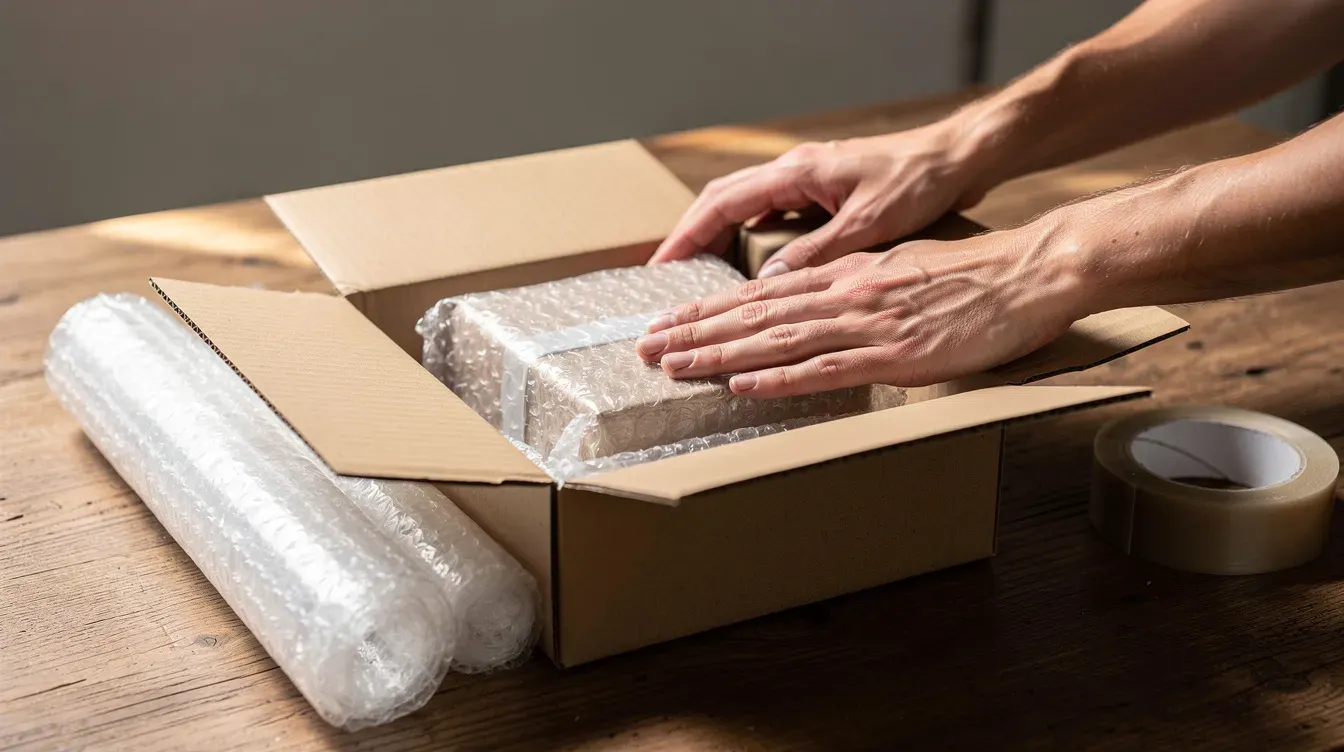
For packaging, choose a strong box or padded envelope suited to the item's weight kg. Fill empty space with bubble wrap or paper to prevent shifting. Tape all seams securely. Avoid using damaged or re-used boxes with old barcodes showing. Use rigid double-walled boxes for delicate items such as electronics, glassware, or ceramics. Valuable items and important documents should be double-boxed and sent using a tracked service with appropriate compensation cover.
International Mail and Sending Parcels Overseas
UK senders can use Royal Mail, Parcelforce Worldwide, and international courier networks to send letters and parcels to Europe, North America, Asia-Pacific, and the rest of the world. The process is straightforward, but there are additional steps compared with domestic post.
Key Royal Mail international mail options include:
International Standard - economy service, no tracking, suitable for non-urgent letters and lightweight parcels.
International Tracked - includes parcel tracking to the destination country.
International Tracked & Signed - adds a signature requirement on delivery for extra protection.
International Economy - the slowest and cheapest option for heavier or less urgent items.
For larger items, higher weights, or express transit, parcel services from Parcelforce Worldwide or global couriers like DHL, UPS, and FedEx are the usual choice. These offer door-to-door collection, timed delivery, and full track capabilities.
International parcels may require customs forms. Custom forms are mandatory for gifts sent outside the UK and for all commercial goods. Items valued under £270 require a CN22 customs form, while items valued over £270 require a CN23 customs form. For many Parcelforce Worldwide services, a CP72 form is used. These details are often completed online when you buy postage.
Since Brexit, customs declarations are required for most items sent from Great Britain to the EU. Senders should check country-specific prohibitions and restrictions before posting. Royal Mail prohibits sending dangerous items like flammable liquids. Royal Mail's prohibited goods include controlled drugs and human remains. Certain items have strict mailing restrictions and are considered prohibited - always check the latest guidance before sending parcels overseas.
International mail can incur customs duties and import VAT in the destination country. Recipients may need to pay these charges online or on delivery before they can receive mail. Some courier services offer a "duties paid" option where the sender covers these costs upfront.
For important overseas parcels, choose a fully tracked international mail or courier service, keep your tracking reference number, and share it with the recipient so they can monitor the shipment and plan to collect or clear customs when required.
Addressing and Labelling International Items
Clear international addressing in English and the use of correct country names helps avoid delays and misrouting when sending mail abroad.
When sending international mail from the UK, write the destination country name in English and in capital letters on the last line - for example, "FRANCE", "UNITED STATES", or "AUSTRALIA". Avoid abbreviations like "USA" or "UAE" on their own where local postal guidelines prefer the full name.
Attach customs forms on the outside of the package in a clear plastic wallet. Ensure barcodes and declarations are not covered by tape or straps. Packaging regulations for mailing items are in place to ensure safety and security - avoid using string, coloured twine, or loose straps that can catch in sorting machinery. Make sure address labels are firmly fixed and legible.
Receiving Mail and Parcels in the UK
In 2026, everyday household mail arrives through regular Royal Mail letter deliveries Monday to Saturday. The UK mail system includes a network of post boxes and sorting offices that process millions of items daily before dispatching them to your door. Parcels are handled by both Royal Mail and a range of private parcel services.
Royal Mail generally aims to complete most urban deliveries by mid-afternoon (around 15:00) and rural deliveries slightly later, though times can vary depending on workload, weather, and location. Parcel deliveries from private couriers may extend into the evening.
Parcel deliveries typically work door-to-door with tracking, and many carriers now provide photo confirmation or require signatures. If you are not home, carriers may leave the item with a neighbour, in a safe place you have nominated, or take it to a depot, local post office, or parcel shop for you to collect. You can often rebook delivery or manage preferences through an app or online account.
Modern alternatives for receiving parcels include parcel lockers (such as InPost), in-store pickup points at supermarkets and convenience stores, and dedicated collection services linked to online retailers. These are especially useful for people with unpredictable schedules.
If you expect to be away from home, consider services like Royal Mail mail redirection, "hold mail" options, or virtual address providers that digitise and forward letters and parcels. These let you manage your post remotely and avoid missing anything important.
For important deliveries, monitor your tracking numbers, sign up for carrier alerts via SMS, email, or app notifications, and keep ID handy when collecting parcels that require identity checks.
Receiving Parcels and Letters from Overseas
Cross-border parcels often pass through UK customs checks, which can introduce delays and additional charges compared with domestic deliveries.
The typical process works as follows: the item arrives in the UK, is assessed by HMRC and border agencies, and is then handed to Royal Mail, Parcelforce, or a courier for final delivery. If customs duties or import VAT are owed, recipients may receive a card, email, or text from the carrier directing them to pay online before delivery is released.
Once customs fees are paid, parcels are usually delivered on the next working day or made available for collection from a local depot, post office, or parcel shop. Check the sender's chosen carrier's website for specific guidance, as each company has its own rules for tracking updates, ID requirements, and proof-of-delivery procedures.
Mail Redirection, PO Boxes and Business Mail Services
UK residents and companies can use specialist services such as mail redirection, PO boxes, and business mail solutions to keep their post secure and organised.
Royal Mail's mail redirection service is available when moving home within the UK or overseas, typically bookable for periods of 3, 6, or 12 months. It ensures important letters and parcels follow you to your new address, which is particularly valuable in the weeks after a move when banks, insurers, and HMRC may still be sending post to your old address.
PO boxes are secure boxes located at delivery offices or post offices that provide a fixed mailing address. They are useful for people who move frequently, live in shared accommodation, or want to protect their personal residential address. Clients who run small businesses from home also find PO boxes helpful for projecting a more professional image.
Virtual address and digital mailroom services allow individuals, remote workers, and businesses to receive mail at a central UK address and manage it online - scan, forward, store, or destroy as needed. These are popular with expats, frequent travellers, and company directors who need a UK address.
For business customers, the UK offers substantial business mail services: bulk business mail can attract discounts of up to 32% through Mailmark franking and business accounts. Features include invoicing, marketing mail options, data cleansing, address verification against the Postcode Address File, and dedicated parcel delivery solutions for e-commerce. SMEs and larger organisations can often integrate their order systems directly with postal and parcel services, automating label generation, tracking, and customer notifications for both domestic and international mail.
Security, Privacy and Compliance
Security and privacy are central concerns for individuals and businesses when handling mail and parcels in the UK.
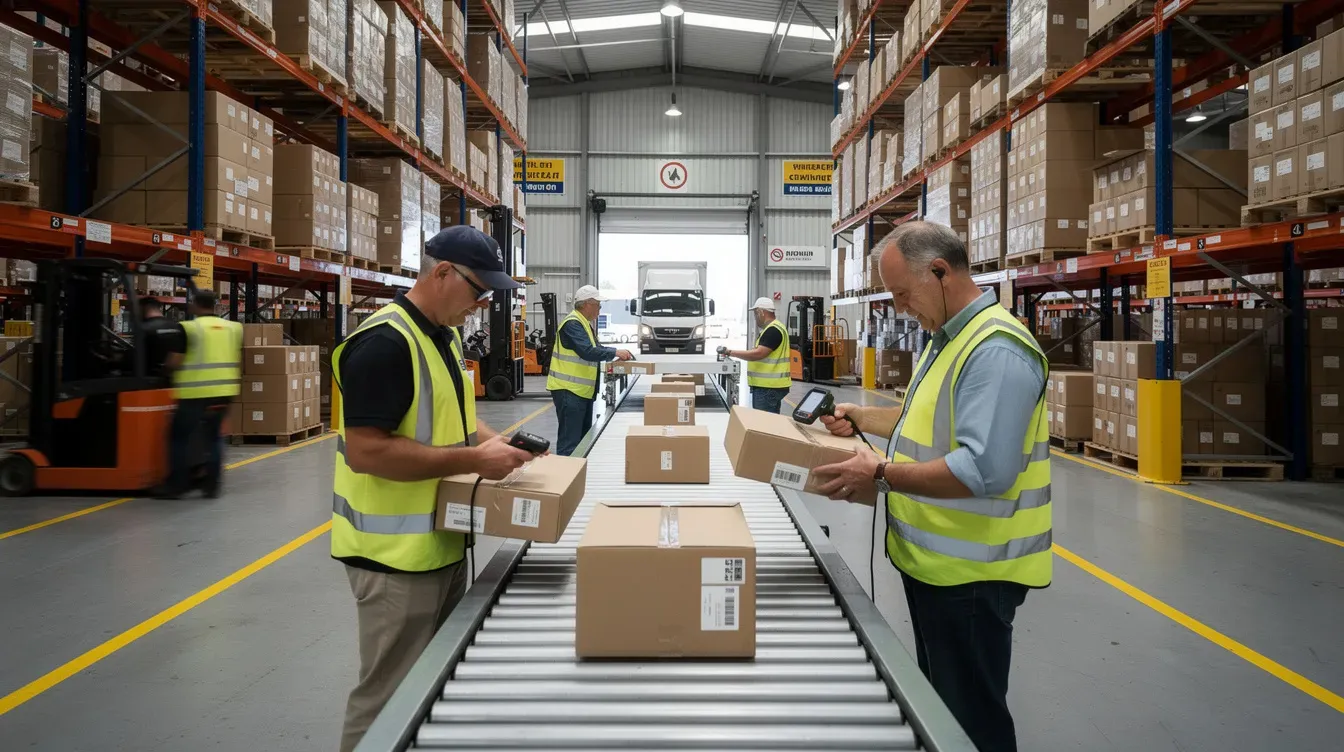
Reputable mail management and parcel services comply with UK GDPR, including secure handling of personal information, restricted access to sorting facilities, and encrypted online platforms for viewing and managing digitised mail. Whether you use a virtual address provider or a corporate mailroom, you should expect these protections as standard.
Some modern providers offer virtual addresses and digital mailrooms that explicitly avoid using AI to scan or analyse mail content, instead relying on controlled human workflows and automated image handling for security and compliance. This matters particularly for personal or legally sensitive correspondence.
When choosing a provider, look for services that offer clear audit trails, two-factor authentication, and transparent data retention policies. Businesses handling sensitive data - legal firms, healthcare providers, charities - should review their providers' certifications and policies to ensure compliance with UK data protection and sector-specific regulations.
FAQ: Common Questions About Mail in the UK
How long does UK post usually take to arrive?
First Class letters are generally aimed to arrive the next working day, while Second Class usually takes 2 to 3 working days. These are delivery aims rather than guarantees. Tracked parcel services often show estimated delivery windows and tend to be more reliable for time-sensitive items than untracked letter mail. Allow extra time during peak seasons such as Christmas, Black Friday, and periods of severe weather or industrial action.
What can I not send through the UK postal system?
There are detailed lists of prohibited and restricted items for both UK and international mail. These include explosives, corrosive substances, certain batteries, flammable liquids, some aerosols, controlled drugs, and human remains. Always check the latest restriction lists on the Royal Mail and post office websites before posting. For couriers, check each carrier's own guidance pages. If you are unsure about a specific item, contact the customer service team at your chosen carrier, especially when sending abroad where destination countries may have tighter rules.
Do I need a UK address to receive mail if I live overseas?
People living abroad can maintain a UK mailing presence using mail redirection combined with a trusted friend or relative's address, a PO box, or a virtual UK address service. Virtual address and digital mail providers can receive mail on your behalf, scan envelopes or contents, and forward or store items as required. This approach is popular with expats, frequent travellers, and remote business owners who need to keep up with UK banking, HMRC, or Companies House correspondence.
How can I track a parcel being delivered in the UK?
Most parcel services and many premium letter services provide tracking numbers that can be entered on the carrier's website or app to follow the parcel's journey. Keep receipts and confirmation emails showing the tracking reference, and share the number with recipients if sending an item. Tracking updates usually show key steps: acceptance at the post office or depot, transit between sorting centres, out-for-delivery status, and final delivery or attempted delivery notification.
What should I do if my mail or parcel doesn’t arrive?
Start by checking any available tracking information and asking neighbours or colleagues in shared buildings if they have accepted the item on your behalf. Wait the recommended period for the chosen service - often up to 10 working days for standard letters, shorter for tracked parcels - before reporting an item as lost. Senders can then submit a claim or enquiry with Royal Mail or the relevant courier, providing proof of posting, tracking numbers, and evidence of value for compensation where applicable. Having your item tracking reference number and proof of postage ready will speed up the process considerably.