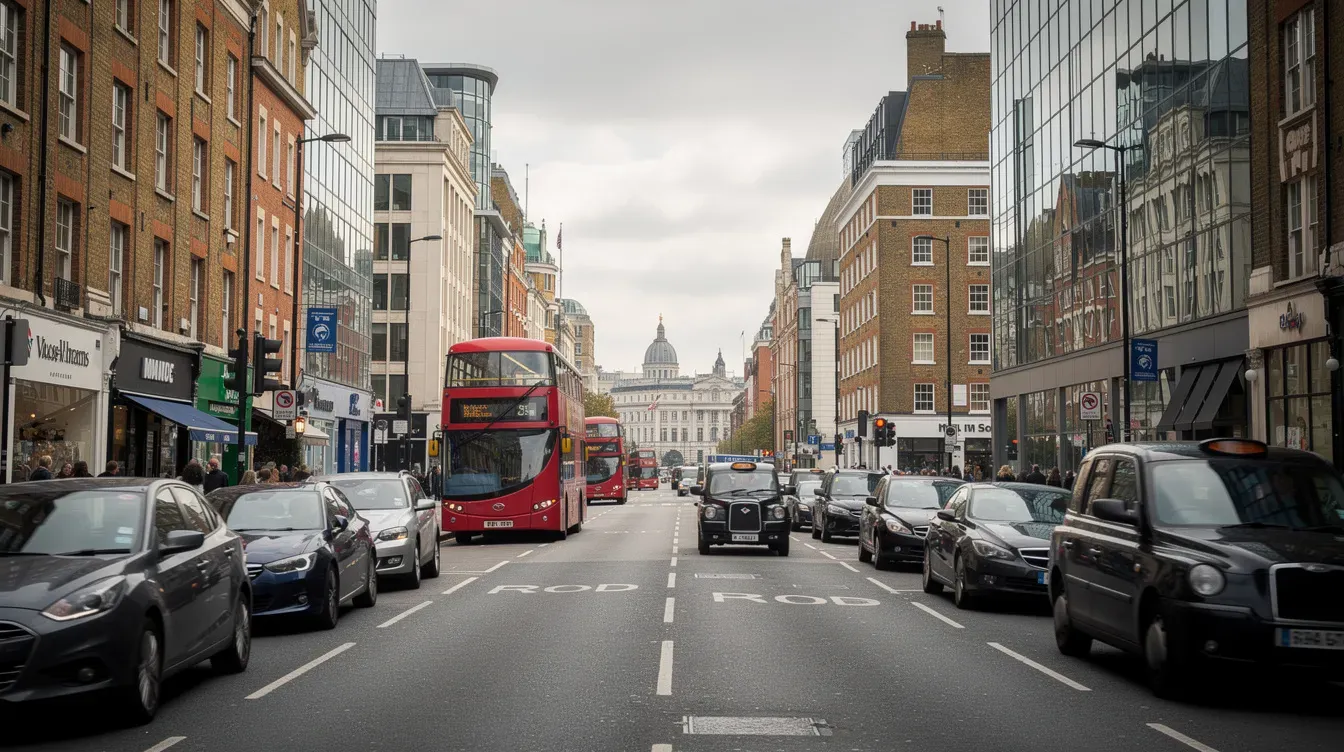
If you drive in London, your annual MOT test is one of those non-negotiable tasks that keeps you legal, safe, and insured on the road. MOT tests are required annually for vehicles over three years old, and the consequences of missing your due date range from a fine of up to £1,000 to invalidated insurance. This guide walks you through everything a London driver needs to know - from how to book an MOT and what certified mechanics inspect, to renewal date rules and how to prepare your car so it doesn't fail for something as simple as a blown bulb.
Key Takeaways
Every car and light van in London needs a valid MOT test certificate once it reaches three years from first registration, renewed every 12 months after that. Driving without a valid MOT can result in a fine of up to £1,000.
You can book an MOT online by entering your vehicle registration number and postcode to find a DVSA-approved test centre or local garage near you. MOT appointments can be made at any approved testing station across the UK.
Most London MOT tests take around 1 hour to complete, though your vehicle may need to stay at the test centre longer if repair work is required after a failure.
You can book your MOT up to one month minus one day before the current renewal date without losing any days on the new MOT certificate.
Sign up for MOT reminders by email or text so you never miss your expiry date - this is especially important for busy London drivers juggling congestion, parking, and tight schedules.
Booking an MOT in London
London drivers can book an MOT online around the clock, choosing from hundreds of DVSA-approved test centres across Greater London. You can book an MOT test online up to 12 months in advance, and across the UK there are around 23,000 approved garages that offer MOTs - so finding one near you shouldn't be difficult.
To find a nearby test centre, enter your vehicle registration and postcode. The search will return centres within your part of London, whether you're in E1, SW6, N1, or SE10. Most people book 2–4 weeks before their MOT expires, which is a sensible window to allow for any follow-up repairs if the vehicle fails.
Here's what the typical online MOT booking process looks like:
Enter your registration number and postcode to see available test centres
Choose a date and time that suits your schedule
Confirm your vehicle details (make, model, class)
Review the MOT price and any additional services offered
Secure the appointment with a confirmation email or text
A few things worth knowing before you book:
Many London test centres offer same-day or next-day slots during the week, but weekend appointments in Zones 1–3 fill up fast
If you need an MOT today and can't find a slot centrally, outer borough garages tend to have more availability
Some centres let you pay online at booking, while others take payment on the day
Choosing a London MOT Test Centre
London has thousands of authorised MOT garages, ranging from small independent workshops to large chain centres with combined experience across all vehicle types. Picking the right one saves you time and hassle.
Look for the blue MOT sign showing three white triangles outside the garage - this confirms it's a DVSA-approved test centre
Choose a centre close to home, work, or a nearby Tube or rail station (Stratford, Clapham Junction, and Hammersmith are all near well-rated garages) so drop-off and collection are convenient
Some London garages offer vehicle collection and delivery within a limited radius, which is useful if parking near the garage is difficult or you can't spare the time
Check online reviews, opening hours, and whether the centre can test small vans as well as cars before you commit to a booking
Confirm the garage can handle your specific vehicle - not every centre in central London tests all models or vehicle classes
Ask the team about waiting areas, Wi-Fi, and estimated turnaround time if you plan to wait on-site
What Happens During a London MOT Test?
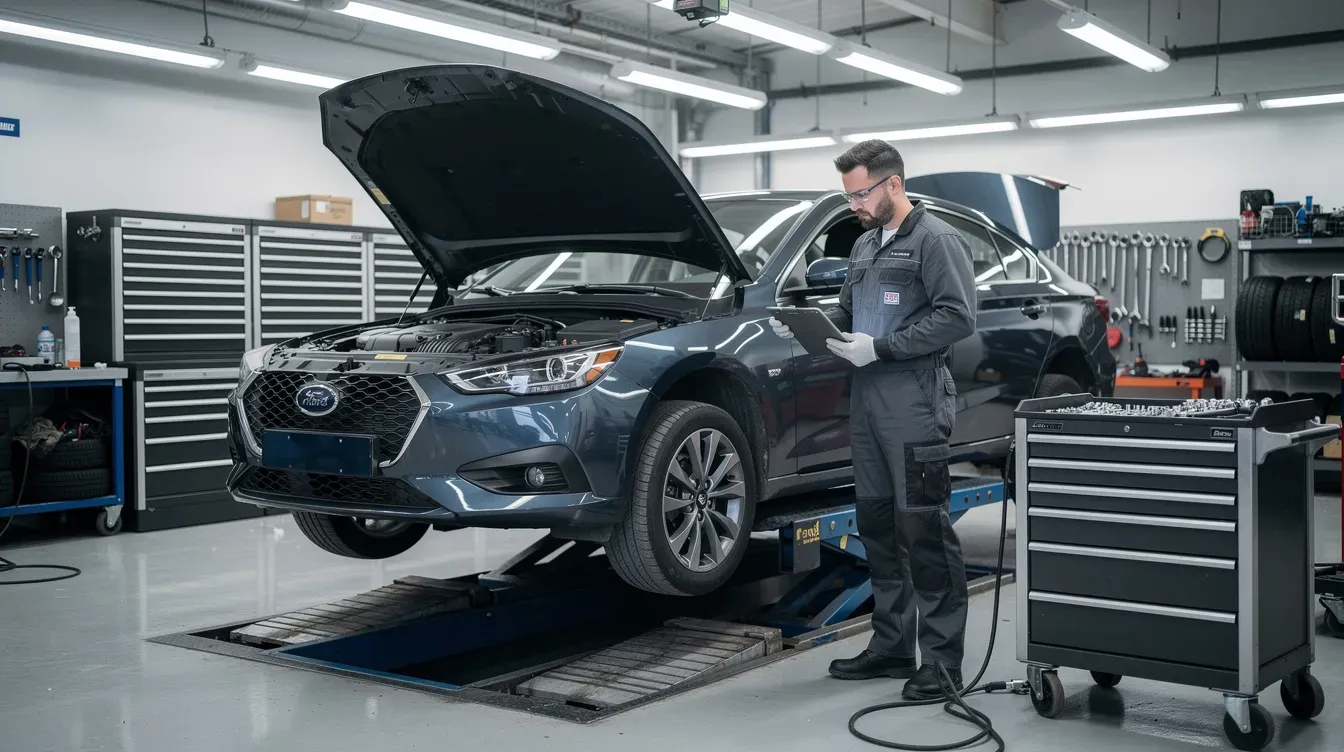
An MOT is a standardised safety and emissions inspection set by the DVSA. The test is identical whether you're in London or anywhere else in England, Scotland, or Wales (Northern Ireland has a separate system). First introduced in the UK in 1960, the MOT ensures cars meet strict safety and environmental standards that keep every driver and road user protected.
Certified mechanics inspect key components across an MOT test, covering eight groups of safety factors. Here's what they look at:
Lights and electrical - headlights, indicators, brake lights, reflectors, and number plate lights must all function correctly and be the right colour
Brakes - stopping power, balance between left and right, and condition of pads and discs
Steering and suspension - joints, shocks, dampers, springs, and anti-roll bars checked for excessive play or leaks
Tyres and wheels - tyre condition must meet minimum tread depth of 1.6mm across the central three-quarters of the tyre, with no serious damage. Brakes and tyres must have sufficient tread depth and stopping power
Seatbelts - all belts must latch, retract, and be free from damage
Bodywork and structure - sharp edges, corrosion, or structural weakness that could affect safety
Fuel system - no leaks, secure connections
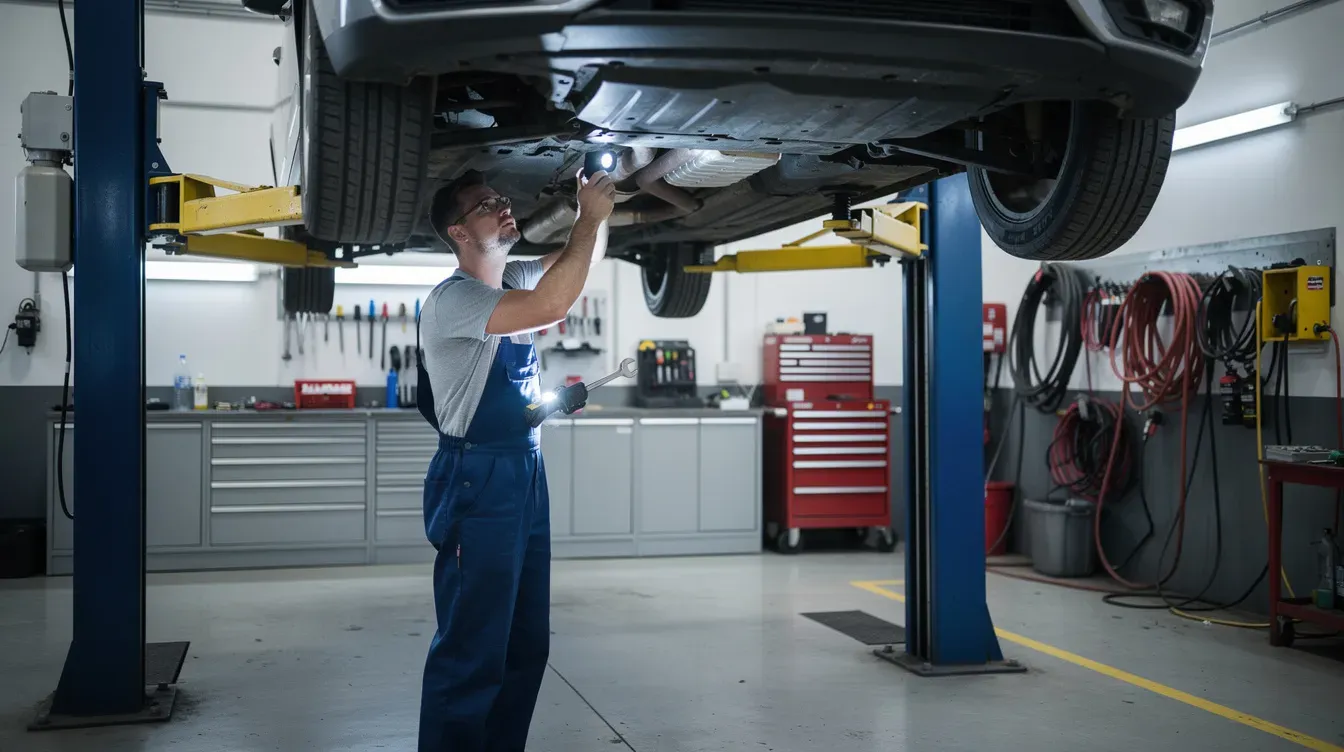
Exhaust and emissions - exhaust and emissions checks ensure gas levels fall within legal limits; diesel vehicles also have DPF functionality tested
The tester will also check mirrors, wipers, windscreen condition, horn operation, registration plates, VIN visibility, and dashboard warning lights. Headlights, indicators, and windscreen wipers are checked during every MOT test.
MOT tests typically take around one hour to complete. However, busy central London garages may ask owners to leave the vehicle for half a day, especially during peak periods. Once complete, the results of the MOT test are documented in the official GOV.UK database instantly. A pass results in a new MOT certificate (VT20), while a fail generates a refusal of MOT test certificate known as a VT30.
Prices, Classes, and Vehicle Types (Cars and Small Vans)
London MOT prices are capped by DVSA, so no garage can charge more than the maximum statutory fee for an MOT test, which is £54.85 for Class 4 vehicles. Many garages across London offer promotional pricing - the current MOT price at many centres is around £49.99 or lower, so it's worth shopping around for a fair price. Discounts are common, particularly if you book online or bundle your MOT with other mot services.
Here's a quick breakdown of MOT classes and vehicle types:
Class 4 - covers most cars and small vans up to 3,000kg. This is the class the vast majority of London drivers need
Class 7 - for goods vehicles between 3,000kg and 3,500kg, including larger vans used for delivery or trade
Other classes - motorcycles (Classes 1–2), larger passenger vehicles (Class 5), and specialist vehicles each have their own requirements
Before you book an MOT, confirm your vehicle class. Some central London garages only test cars, while centres in outer boroughs are more likely to accommodate vans and pickups.
Combining an MOT with a full service is often cheaper and more convenient, especially if your car is approaching higher mileage or hasn't been serviced in the last 12 months. A service covers maintenance items like engine oil, filters, battery health, and brake fluid that aren't part of the MOT but directly affect whether your vehicle passes.
Pass, Fail, Retests, and Repair Work
MOT results fall into two categories: pass or fail. A pass may still include advisory notes and minor defects flagged for future attention, so always read the full report even if your car sails through.
When a vehicle passes, the driver receives a valid MOT certificate, the digital record is updated in the DVSA database, and the new renewal date is set 12 months ahead. MOT certificates are valid for one year from the test date.
If your car fails its MOT, the test centre issues a VT30 refusal certificate listing all major and dangerous defects. A failed MOT means the vehicle must not be driven on public roads until it's been car repaired and retested (unless driving directly to a garage for pre-arranged repairs). If your vehicle fails, you must arrange repairs before the car can legally return to the road.
Practical next steps after a failed MOT in London:
Many MOT garages can complete repair work on the same day, subject to parts availability and workshop capacity
If the vehicle fails for a straightforward issue - a bulb, wiper blade, or minor brake component - most garages will fix it and retest immediately
Retest fees can be up to half of the original MOT price, but some test centres offer free or reduced-price partial retests if the vehicle is returned within 10 working days
Always confirm the retest policy and costs before booking, as this varies between garages
If your car fails for a dangerous defect, it must not be driven at all until that defect is resolved
MOT Due Dates, Renewal Date Rules, and Reminders
You can check your MOT due date online using the government's MOT history checker - just enter your registration number, and it returns your current expiry date, past test results, and recorded mileage.
Here's how the renewal date rules work:
You can book your MOT up to one month minus one day before the current expiry date and the new MOT certificate will carry forward the same renewal date. You lose no days at all.
If you book earlier than one month minus one day, the new certificate expires 12 months from the test date instead, which means you effectively shorten your cycle.
Example: if your current MOT expires on 11 April, you can book and complete the test from 12 March onwards and your new certificate will still expire on 11 April the following year.
You may not legally drive without a valid MOT certificate. There is no grace period after your MOT expires. Driving without an MOT can result in a £1,000 fine, and if the vehicle is in a dangerous condition, penalties can reach £2,500, three penalty points on your licence, and a potential driving ban. Your insurance is also likely voided if your MOT has expired.
To avoid this:
Sign up for MOT reminders through the government service or your local garage - you can receive MOT reminders by signing up for a service that sends email or SMS alerts
Set a reminder in your phone calendar for one month before the expiry date
Combining digital reminders with a note in your diary helps busy London drivers stay on top of both their annual MOT and full service schedules
Preparing Your Car for a London MOT
A few minutes of basic checks at home can prevent your vehicle from failing for something minor and avoidable. Pre-test checks include ensuring the vehicle is clean and checking lights and tyre tread before you arrive at the garage.
Run through this checklist the day before your appointment:
Walk around the car and test all lights - headlights (dipped and full beam), indicators, brake lights, fog lights, and number plate lights. Replace any blown bulbs
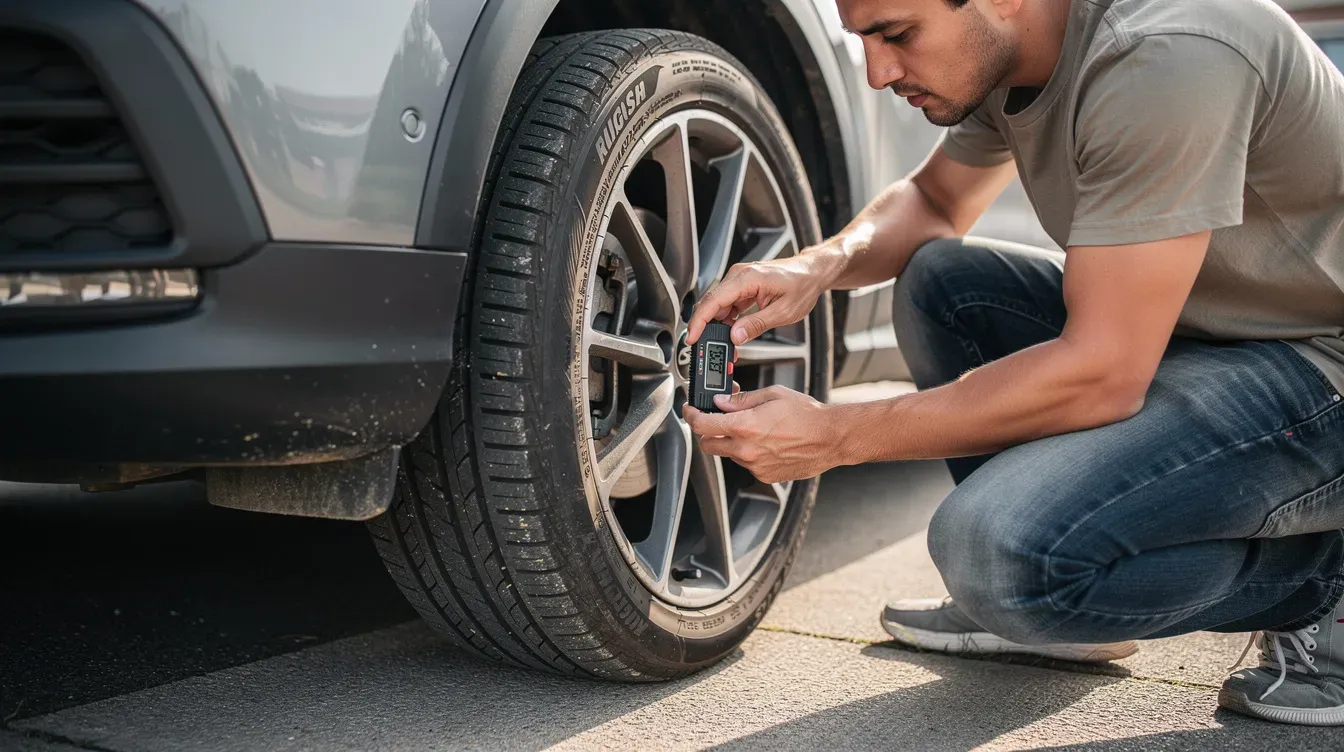
Check tyre tread depth with a tread gauge or the 20p coin method - the legal minimum is 1.6mm across the central three-quarters. Inspect tyres for cuts, bulges, or uneven wear
Top up screen wash and check wiper blades for splits or smearing
Test the horn
Make sure both number plates are clean, legible, and securely attached
Check all mirrors are intact and properly adjusted
Remove clutter from the cabin and boot so the tester can access seatbelts and the spare wheel area
Bring your locking wheel nut key to the test centre in case wheels need to be removed during inspection or related repairs
Check engine warning lights - if the engine management light is on, get it investigated early rather than waiting for it to cause a fail
Verify your steering feels normal and there are no unusual noises from the suspension when driving over bumps
Frequently Asked Questions about London MOT
Can I drive in London with an expired MOT if I’m going to a test centre?
You can legally drive a vehicle with an expired MOT only if you are travelling directly to a pre-booked MOT test centre, or to and from a garage for pre-arranged repair work following a failure. The journey must be direct - no detours. A valid driving licence and vehicle insurance are required to drive to the test centre, even with an expired MOT. If stopped by police, you may need to show proof of your booking, so keep your confirmation email or text accessible.
Do I need insurance and tax before I can get a London MOT?
It is illegal to drive on public roads in London without insurance, even when travelling to a test centre. Your vehicle must be insured for the journey. Vehicles must be taxed and insured to undergo an MOT test. Vehicle tax renewal typically requires a valid MOT certificate, so the sensible order is: complete the MOT first, then renew your tax.
How early should I book my MOT in busy parts of London?
In central and inner London boroughs, aim to book an MOT 2–3 weeks ahead during peak times (spring and autumn tend to be busiest). For quieter midweek slots, booking at least one week in advance should secure a convenient appointment. If you need flexibility, outer London garages in zones 4–6 tend to have shorter wait times and more availability.
Can I wait at the test centre while my MOT is carried out?
Many London MOT garages offer waiting areas with seating and Wi-Fi, and since MOT tests typically take around 1 hour, it's a manageable wait. However, some centres - particularly in busy central areas - prefer customers to leave the vehicle and return later, especially if there's limited parking or space. Check this when you book an MOT so you can plan your time accordingly.
Is my car’s service the same as an MOT test?
No. An MOT test is a legal safety and emissions check that covers items like brakes, emissions, steering, lights, and tyres. A full service is a more in-depth maintenance inspection that includes items such as engine oil changes, filter replacements, battery checks, and coolant levels. Combining both on the same day can save time, reduce overall costs, and help keep your vehicle reliable - many London garages offer a combined MOT and service package at a competitive price. The commitment to regular servicing also reduces the chance of unexpected failures at your next MOT.