
If you've ever tried to check whether a UK business is legitimate, find out who runs it, or verify its financial history, you've likely come across Companies House. As the house of companies UK entrepreneurs and investors rely on, it serves as the central gateway to corporate information across England and Wales, Scotland, and Northern Ireland. This guide walks you through everything you need to know about using it effectively, from searching the register to understanding recent reforms that are reshaping corporate transparency in the UK.
Key Takeaways
Companies House is the official registrar of companies for the UK, operating as an executive agency of the government, and it maintains information on approximately 5 million UK companies.
The Companies House register is free to search online, allowing anyone to look up company details such as directors, filing history, registered office address, and people with significant control.
Recent reforms under the Economic Crime and Corporate Transparency Act 2023 give Companies House stronger powers to query and remove inaccurate information from the register, including mandatory identity verification for company directors starting 18 November 2025.
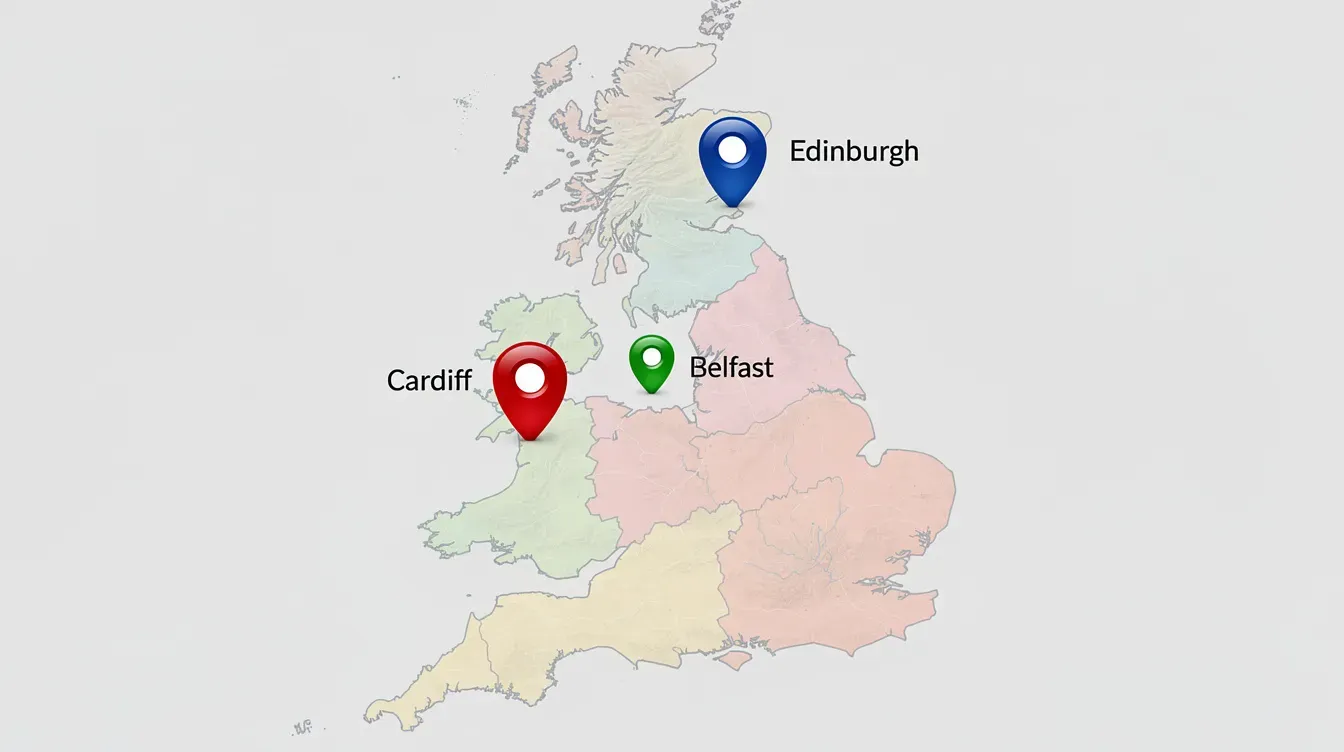
The Cardiff office serves as the registrar for England and Wales, while Edinburgh handles Scotland and Belfast covers Northern Ireland. Counter services have largely moved to online services and postal channels.
This article walks step by step through searching the register, understanding company information, navigating key digital services, and staying compliant when registering or updating a UK company.
What is Companies House? (Role and Purpose)
Companies House is the official registrar of companies in the UK, operating under the Companies Act 2006. It covers all three UK jurisdictions: England and Wales, Scotland, and Northern Ireland. As a uk government agency responsible for corporate registration, it acts as an executive agency of the government, meaning it operates with a degree of independence while still falling under government departments like the Department for Business and Trade.
Its core function is straightforward: it examines and approves applications for company registration, maintains the public register of companies, and records key corporate information for limited companies, limited liability partnerships, and other incorporated bodies. Companies House was established by the Joint Stock Companies Act 1844, which allowed company registration for the first time in the UK, creating a central register that has evolved into the digital service millions rely on today.
Incorporation at Companies House is a legal requirement for forming a UK limited company. Registration can be done directly through online services or via an online company formation agent. Either way, the company only becomes a legal entity once the registrar issues a certificate of incorporation.
The purpose of this system goes beyond paperwork. By making company details, ownership, and filing history public, Companies House promotes a transparent business environment for economic growth. It helps verify legal status, ownership, and financial health, which supports due diligence, credit checking, and trust in the UK business environment. The public register helps establish company credibility and allows anyone to check a business's legal status, helping level the playing field for fair competition.
Companies House Jurisdictions and UK Offices
The UK has three legal jurisdictions: England and Wales, Scotland, and Northern Ireland. Companies House mirrors this structure with three registrars, each responsible for companies with a registered office in their jurisdiction.
A key point many people miss: the jurisdiction is determined by the company's registered office address, not where it trades. A company registered in Cardiff can operate in Edinburgh, London, or internationally without changing its registrar. However, a company cannot simply move its registered office across jurisdictions (say from Northern Ireland to Scotland) without a formal re-registration process.
Companies House operates three offices in Cardiff, Edinburgh, and Belfast. The London office (previously known as the London information centre) closed in March 2020, and public counter services in other offices were phased out in favour of digital and postal interactions. Companies House provides public access to company information free of charge through its online portals, making physical visits largely unnecessary.
Cardiff office: England and Wales registrar
The registrar of companies for England and Wales is based at the Companies House Cardiff office. This office maintains the register for all companies with a registered office in England or Wales, which makes it responsible for the largest segment of the UK register.
The Cardiff office processes:
Incorporations and dissolutions
Changes of company name
Updates to registered office, directors, and confirmation statements
Filings for Welsh companies and all other England and Wales entities
All interactions are now primarily online or by post. Despite being registered in England and Wales, companies may trade across the UK and abroad without changing registrar, so the Cardiff registration does not restrict where a business operates.
Edinburgh and Belfast offices
The Edinburgh office is the registrar for companies with a registered office in Scotland, maintaining the Scottish section of the public register and handling local incorporations and statutory filings.
The Belfast office is responsible for Northern Ireland, administering company registration, changes, and the process to dissolve limited companies within that jurisdiction's register segment.
Scottish and Northern Irish companies follow largely similar Companies Act rules, but each jurisdiction links to its own legal system and court structures. For example, Scottish company law has distinct legal traditions from English law, which can affect certain formal processes.
All three offices deliver a consistent digital service through GOV.UK and the Companies House online portals. Response times for digital submissions are broadly equivalent across jurisdictions, with most standard filings processed within hours to a couple of working days.
What Company Information Does Companies House Hold?
Companies House collects and stores key company data on approximately 5 million registered companies and other bodies. It maintains a register of over 4 million active companies (the "effective register"), with the remainder being dissolved, in liquidation, or in the process of dissolution. Much of this corporate information is freely searchable online.
Key items typically available for each company include:
Data Field | Example |
|---|---|
Registered office address | 10 Downing Street, London |
Incorporation date | 01/03/2020 |
Company number | 12345678 |
Company type | Private limited by shares, PLC, LLP |
Accounting reference date | 31 March |
Status | Active, dissolved, in liquidation |
Ownership and control details are also recorded. This includes company directors, secretaries (if any), and every person with significant control (PSCs). PSC information has been required since 2016, covering individuals or entities that hold a major percentage of shares or voting rights, or have the right to appoint or remove a majority of the board. These records are central to the UK's corporate transparency framework.
Statutory documents appear in each company's filing history for the life of the company, including annual accounts, confirmation statements, changes of company name, and charges (security interests against company assets).
Filing history and corporate transparency
The filing history is a chronological list of every document a company has filed at Companies House since incorporation. Many of these certain documents are available to download as PDFs directly from the company's profile page on the public register.
This history is a valuable company information service for investors, suppliers, lenders, and regulators. Businesses use the register to make informed decisions about potential partners, customers, or acquisition targets by reviewing financial performance, governance quality, and compliance behaviour.
Companies must file annual accounts to report their financial activity. Companies House ensures compliance with corporate reporting obligations, and late or missing accounts and confirmation statements can trigger penalties, enforcement action, or even strike-off from the register. The registrar can also initiate the process of dissolving companies that consistently fail to meet their filing obligations.
The UK has strengthened its approach with measures like the Economic Crime and Corporate Transparency Act 2023, which enables the registrar to query and, where justified, remove inaccurate entries from the register. This shift means Companies House is evolving from a passive filing cabinet to an active gatekeeper of data quality.
How to Search the Companies House Register
Anyone can search the Companies House register online for free via the official "Find and update company information service" on GOV.UK. No account is needed to run a basic search. Companies House provides a free online search service for company information, making it one of the most accessible corporate registers in the world.
Searches can be made by:
Company name
Company number
Officer (director) name
Using the exact registered company name or number generally gives the best results and helps ensure that companies house register matches return the correct entity.
Here's a quick step-by-step guide:
Enter a name or number in the search bar on the Companies House service page.
Filter by status (active, dissolved, etc.) to narrow your results.
Select the correct company from the list showing company number, status, and registered office.
Open the company profile to view details, people (directors, secretaries, PSCs), filing history, and charges.
Download documents from the filing history tab to review accounts, confirmation statements, or other filings.
The search results page gives you a quick snapshot before you even click through, so you can identify the right record without opening every profile.

Using the Companies House “Follow” service
Companies House allows users to follow companies for free email alerts. By creating a free account, you can use the "Follow" feature to receive notifications whenever selected companies submit new filings, such as accounts, director changes, or address changes.
Typical use cases include:
Monitoring your own company to avoid missing deadlines
Tracking competitors' filings for market intelligence
Following clients, suppliers, or borrowers for risk management
Watching companies where you suspect unusual activity
Each alert includes a link to the updated filing history page, from which documents can usually be downloaded without charge. These free email alerts are particularly useful in light of increased scrutiny around economic crime, as they can flag unexpected changes in control or structure at an early stage.
Key Digital Services at Companies House
Companies House now operates primarily as a digital company information service. Most incorporations and statutory filings are submitted online rather than on paper, with over 92% of filings now accepted digitally.
The main tools available to users include:
Find and update company information service - for public searches and the ability to update company information service records
WebFiling service - for submitting accounts, confirmation statements, and other forms electronically
Ordering services - for certified documents, certificates, and official copies
The move to digital channels has accelerated processing times significantly. Private limited companies can receive incorporation certificates within 24 hours when filing online, compared to several days for paper submissions. Given the closure of the London office and historic counter services, these online services are now the default route for anyone dealing with the registrar.
WebFiling and online submissions
Company directors, LLP members, and authorised agents can use the webfiling service to submit accounts, confirmation statements, director changes, and other statutory forms electronically. The system is integrated with one login credentials, simplifying access.
Key benefits of filing digitally:
Faster processing - most changes reflected on the register within hours
Immediate acknowledgment - confirmation that your filing was received
Lower error risk - online validation catches common mistakes before submission
Email reminders - alerts for upcoming filing deadlines so you don't miss a date
Over the 2025–2030 period, Companies House plans to consolidate filing and search into a single integrated platform, making it easier to update company details and view the public register in one place.
All companies must file accounts digitally starting 1 April 2028, using iXBRL format. This aligns with broader UK corporate reporting modernisation and will apply across all jurisdictions. Companies House issues certificates of incorporation within 24 hours for online applications, reinforcing the advantage of digital-first engagement.
Certified copies, certificates, and other documents
Users can order certified copies of incorporation documents, specific filings, and official certificates (such as a certificate of incorporation or certificate of good standing) through Companies House services.
These documents are commonly required for:
Opening business bank accounts
Dealing with overseas authorities
Completing high-value transactions requiring formal proof of company status
Regulatory submissions to public bodies
While most documents can be viewed online free of charge, certification and certain specialised requests involve a fee and may take longer to process. Ordered documents are normally delivered electronically or by post, depending on the type selected and the jurisdiction of the registrar office.
Types of Business Structures on the Register
Companies House registers a range of incorporated business forms, not just standard private limited companies. Companies House registers limited companies, partnerships, and limited liability partnerships, along with several other entity types.
The main entity types you'll encounter include:
Private companies limited by shares - the most common type for small and medium businesses
Private companies limited by guarantee - often used by charities and non-profits, including each community interest company
Public limited companies - a public company that can offer shares to the general public
Limited liability partnerships (LLPs) - common in professional services
Limited partnerships - these are not legal persons and require registration certificates, often used in investment fund structures
Overseas companies with UK establishments
Companies House does not register sole traders or general partnerships. These business types deal directly with HM Revenue & Customs for tax purposes rather than the registrar of companies. This is why you won't find a sole trader on the Companies House register even though they are a legitimate UK business.
The choice of structure affects disclosure obligations, such as the level of detail required in accounts, audit requirements, and public visibility of members or shareholders.
Company registration and company name rules
Company registration involves several key steps:
Choosing an acceptable company name
Preparing constitutional documents (memorandum and articles of association)
Providing details of directors, shareholders, and PSCs
Specifying a registered office address within the correct jurisdiction
Companies must register within three months of incorporation to ensure their legal standing. The company name must be unique on the register, must not be offensive, and must not falsely imply a connection with government or public bodies without formal approval.
When checking name uniqueness, certain characters, punctuation, and common words (like "the" or "and") are disregarded. Restricted or sensitive words such as "bank," "royal," or "authority" require additional consent before use.
Once the registrar in the relevant jurisdiction (for example, the Cardiff office for England and Wales) is satisfied, a certificate of incorporation is issued and the company name is added to the Companies House register. At that point, the company becomes a legal entity that can trade, enter contracts, and hold assets in its own name.

Reforms, Economic Crime, and the Corporate Transparency Framework
UK company law is in a period of significant reform, with Companies House gaining new responsibilities and powers to tackle economic crime and enhance data reliability on the register. Companies House plays a vital role in curbing economic crime by strengthening the integrity of the information it holds.
The Economic Crime and Corporate Transparency Act 2023 (often referred to as the corporate transparency act) is the key legislative driver. The Economic Crime Act 2023 received royal assent on 26 October 2023, building on earlier measures such as the creation of the PSC register in 2016. It regulates corporate entities in the UK more robustly than previous legislation allowed.
These reforms are designed to make the register more trustworthy by:
Improving identity verification processes
Enabling data-sharing with law enforcement and the insolvency service
Giving the registrar power to challenge suspicious or inaccurate filings
Tightening rules for registered office addresses (must be a physical address where mail is actually received)
For businesses, this means closer scrutiny of company information and stronger expectations that details such as addresses, PSC information, and officer data are kept up to date. Companies House will enforce penalties for non-compliance with legal obligations, ranging from financial penalties to criminal proceedings.
Identity verification and new enforcement powers
From 18 November 2025, identity verification will become a legal requirement for directors, PSCs, and certain presenters of information at Companies House. Companies House requires identity verification for company directors starting November 2025, and this extends to LLP members and other relevant officers.
Individuals can verify their identity either directly with Companies House using id documents or through an authorised corporate service provider. Both routes separately confirm the person's identity before their details are accepted on the register.
Companies House now has explicit powers to:
Query filings that appear inconsistent or implausible
Reject submissions where supporting evidence is insufficient
Remove information that is false, misleading, or unnecessarily included
Request corrections within 14 days of issuing a notice
Enforcement options include financial penalties, civil and criminal proceedings, and director disqualification in serious or repeated cases. For example, if the registrar identifies an obviously fictitious registered office or a director whose details don't match any known person, they can now act to protect the integrity of the register rather than simply accepting whatever is filed.
These reforms represent a fundamental shift: Companies House is no longer just a repository. It's becoming an active guardian of corporate transparency.

Companies House vs HMRC: Different Roles
A common point of confusion: Companies House and HM Revenue & Customs (HMRC) are separate organisations with distinct roles separately defined in law. Companies House is the registrar of companies focused on corporate information and public disclosure. HMRC is the UK's tax authority, administering the corporation tax service, PAYE, and VAT.
Here's how their roles compare:
Companies House | HMRC | |
|---|---|---|
Primary role | Company registration and public register | Tax collection and compliance |
What they hold | Corporate information (directors, accounts, PSCs) | Tax returns, revenue data |
Public access | Yes - free public register | No - tax data is confidential |
Who registers | Limited companies, LLPs, PLCs | All taxpayers including sole traders |
Key filings | Annual accounts, confirmation statements | Corporation Tax returns, VAT returns |
Limited companies incorporate once at Companies House to become legal entities, then separately register with HMRC for Corporation Tax, PAYE, and VAT as applicable. Companies House operates on a principle of public transparency, while HMRC keeps tax information confidential and only shares it with other public bodies under strict legal controls.
Sole traders and some traditional partnerships interact only with HMRC, which is why they do not appear on the Companies House register even though they are legitimate UK businesses.
FAQ
How quickly is the Companies House register updated after a filing?
Online filings such as director changes, confirmation statements, or registered office updates are typically processed and visible on the register within a few hours to a couple of working days, depending on volume and any queries raised by the registrar. Paper filings take significantly longer because they must be manually checked and entered, so digital submission through the webfiling service is recommended for faster updates. The filing history will show both the date filed and the date accepted, so users can see exactly when a change became part of the official record.
Can I remove my home address or other personal details from Companies House?
Directors can apply to suppress their usual residential address from public view, provided a separate service address is shown on the register. However, historic filings may still contain the original address in older documents. Special procedures exist where there is a serious risk of violence or intimidation, allowing certain personal data to be protected, subject to evidence and approval from the registrar. Privacy rules are evolving alongside corporate transparency reforms, so it's worth consulting the latest guidance on GOV.UK or seeking professional advice before making changes.
How long does company information stay on the register after dissolution?
Even after a company is dissolved, its record usually remains available on the Companies House register for many years. The company's status will change to "dissolved," but key details, filing history, and documents continue to be searchable. This supports due diligence and historical research, which is why records are not immediately removed. In rare circumstances involving clear evidence of serious error or fraud, Companies House may have powers to remove or amend specific entries, but this process is closely controlled.
Do I need to use a formation agent, or can I register directly with Companies House?
You can incorporate a company directly through Companies House online services for a modest fee, and simple incorporations are often approved within 24 hours. Many people still choose to use a specialist online company formation agent for guidance on structure, share classes, articles of association, and compliance, especially if they are unfamiliar with UK company law. Whichever route you choose, the company only legally comes into existence once the registrar has issued a certificate of incorporation and added it to the central register.
Is the Companies House data always accurate and complete?
Information on the Companies House register is largely based on what companies and their officers file, so errors and omissions can occur, particularly in older records. Recent reforms, including new powers under the Economic Crime and Corporate Transparency Act 2023 and upcoming identity verification rules, are designed to improve accuracy and reduce misuse. If you're making critical decisions such as major lending or investment, combine Companies House data with other sources like credit reports and direct enquiries for a more complete risk assessment. The register is an essential starting point, but it works best as one tool among several for thorough due diligence.