Paying your self assessment tax bill on time is one of those tasks that feels straightforward until you're staring at a deadline with no idea which bank account to send money to, what reference to use, or whether your payment will arrive in time. This guide walks you through every payment method HMRC accepts, the key deadlines you need to hit, and practical steps to avoid interest, penalties, and unnecessary stress.
Key Takeaways
Self assessment payments are due by 31 January each year, with a second payment on account due by 31 July. Missing either deadline triggers daily interest and escalating penalties.
You can pay your self assessment tax bill online through your HMRC account, via online bank account, bank transfer (Faster Payments, CHAPS, Bacs), debit card, or corporate credit card. Personal credit cards are not accepted.
Your payment reference must be your 10-digit UTR followed by the letter "K", forming an 11-character code. Getting this wrong can delay allocation and leave your tax bill showing as unpaid.
Payments on account are advance instalments towards your next assessment tax bill. Each is normally 50% of the previous year's income tax and Class 4 NIC liability.
If you cannot pay in full, contact HMRC before the deadline to arrange a Time to Pay plan. The article below covers exact bank details formats, processing times, and tips to avoid last-minute payment issues.
When Self Assessment Tax Has to Be Paid
Self assessment tax is normally due by 31 January following the end of the tax year. If you also owe payments on account, the second payment falls due on 31 July. These two dates anchor the entire Self Assessment payment calendar.
For the 2024/25 tax year (ending 5 April 2025), the balancing payment and first payment on account for 2025/26 are both due by 31 January 2026. The second payment on account for 2025/26 is due by 31 July 2026.
The balancing payment is the final amount you owe for that tax year once HMRC has calculated your assessment tax return, subtracted any tax already deducted at source (such as through PAYE), and deducted any payments on account you have already made. It covers income tax, capital gains tax, Class 2 and Class 4 NIC, and student loan repayments where applicable.
There is a special rule: if HMRC issues a notice to file after 31 October, the balancing payment may be due three months after the notice date rather than 31 January. This is rare, but worth knowing if you register for self assessment late.
Making Tax Digital for Income Tax (MTD ITSA), currently scheduled for 2026/27 for many self employed taxpayers and landlords, does not change the core Self Assessment payment dates at the moment.
Payments on Account for Self Assessment
Payments on account are advance instalments towards your next year's assessment tax, calculated based on your current year's bill. First introduced in the 1996/97 tax year, they exist so that HMRC collects tax throughout the year rather than in a single lump sum.
You must make payments on account if your tax bill exceeds £1,000 and less than 80% of your tax owed was collected through PAYE or other deductions at source. If your previous tax year liability was under £1,000, or if most of it was already collected via your employer, you are exempt.
Payments on account only cover income tax and Class 4 NIC. They exclude capital gains tax, voluntary Class 2 NIC, and student loan repayments. Those items are settled through the balancing payment.
The cash flow impact for first-time payers is significant. In your first year of self employment, there are no prior payments on account, so on 31 January you may need to pay your full tax bill for the previous year plus the first payment on account for the following year. This can feel like paying 150% of a normal year's tax in one go.
How Much You Pay on Account and When
Each payment on account is 50% of the previous year's income tax and Class 4 NIC liability. Here is a worked example:
Your 2024/25 assessment tax bill is £4,000 (income tax and Class 4 NIC only).
First payment on account for 2025/26: £2,000, due 31 January 2026.
Second payment on account for 2025/26: £2,000, due 31 July 2026.
On 31 January 2026, you also pay any balancing payment for 2024/25.
If your actual 2025/26 liability turns out to be £5,000, you will owe a balancing payment of £1,000 (£5,000 minus £4,000 already paid via two payments on account) on 31 January 2027. If your liability drops to £3,000, HMRC refunds or credits the £1,000 overpayment once your self assessment tax return is processed.
For first-year self employed filers with a £3,000 liability: you would pay £3,000 (full bill) plus £1,500 (first payment on account), totalling £4,500 on 31 January. The next payment of £1,500 follows on 31 July.
Reducing or Changing Your Payments on Account
If your income for the current tax year will be lower than the previous year-perhaps because you are retiring, have lost a major client, or have moved into PAYE employment-you can reduce payments on account. You can submit a claim online through your personal tax account or on paper using form SA303, normally before the balancing payment due date.
HMRC does not estimate the reduced amount for you. You must provide a realistic figure and a reason. If you underestimate and your final bill turns out higher, HMRC will charge interest from the original payment due date on the shortfall. Be conservative with your projections unless you are very confident about the lower income figure.
A good time to reduce payments on account is when you have clear evidence of lower income-a redundancy, a business closure, or a shift to part-time work.
Changing Payments on Account After You’ve Paid
You can still reduce payments on account after you have already paid them by submitting an updated SA303 claim or amending the request through your HMRC online account.
If HMRC holds an overpayment at least 30 days before the next payment deadline, you can usually request a refund. If the next payment date is within 30 days, HMRC will normally offset the overpayment automatically against your upcoming liability.
HMRC pays interest on genuine overpayments held on your self assessment account, though the repayment interest rate (currently around 2.75% per annum) is significantly lower than the late payment rate. Check HMRC guidance for the most current rates.
How to Pay Your Self Assessment Tax Bill
You can pay your self assessment tax bill in several ways: online via your HMRC account, by bank transfer from an online bank account, by debit card or corporate credit card, by direct debit, or by arranging collection through your PAYE tax code where eligible. Payment methods for HMRC include Open Banking, online banking, and direct debit.
Always use the correct payment reference: your 10-digit Unique Taxpayer Reference (UTR) followed immediately by the letter "K", forming an 11-character code (for example, "1234567890K"). HMRC requires funds to clear by payment deadlines, typically 31 January. How fast a payment clears affects when it must be initiated, so allow enough time depending on your chosen method.
HMRC no longer accepts payment at the Post Office. Personal credit cards cannot be used for tax payments.
Pay Through Your HMRC Online Account or App
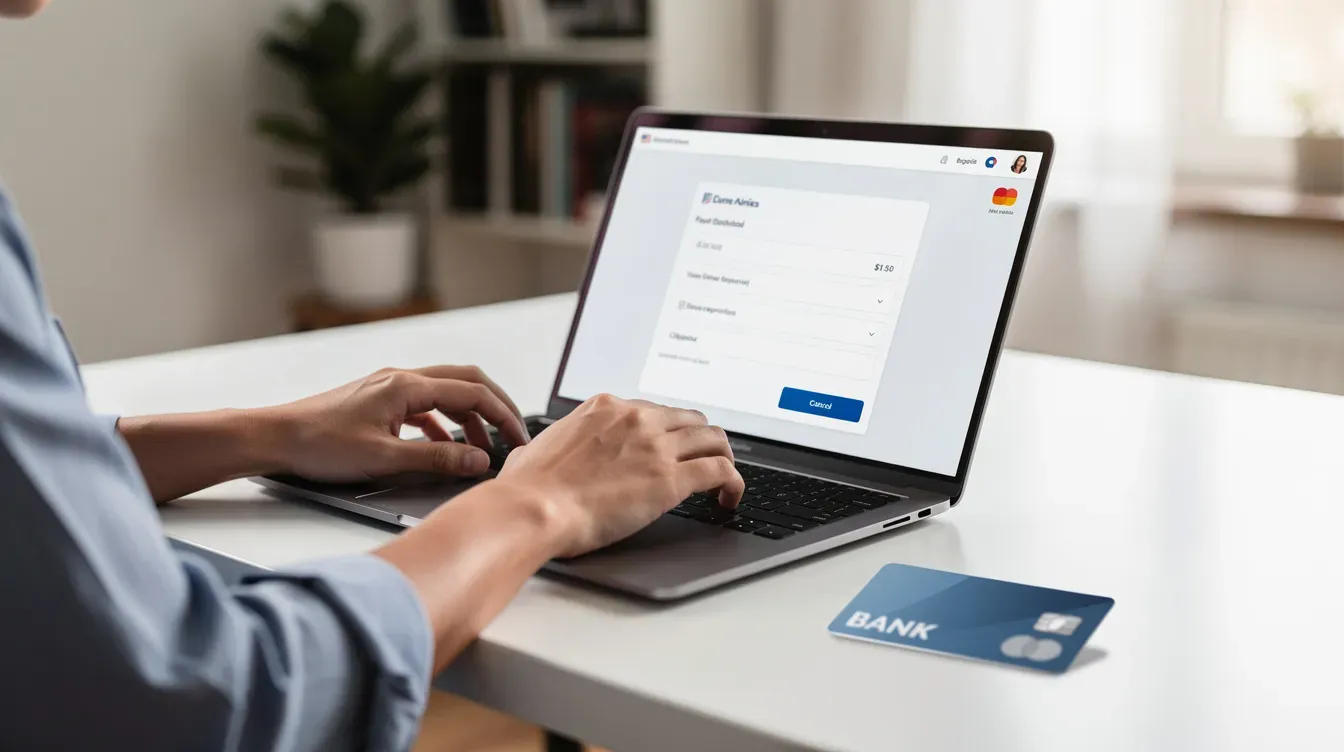
Log into your HMRC online services or the HMRC app using your Government Gateway user ID to view your self assessment account, your assessment tax bill, and due dates.
Select "Self Assessment", choose "Make a payment", confirm the amount (including the balancing payment and any self assessment payments on account), then select your chosen payment method. Available routes include an open-banking journey (pay directly via your online bank account), debit card, or corporate credit card (a fee applies to corporate cards).
Paying via the online account automatically uses the correct payment reference, reducing the risk of misdirected payments. HMRC treats the payment date as the date you authorise the transaction, including weekends and bank holidays, provided the transaction completes successfully.
Pay via Online Bank Account or Mobile Banking
You can pay self assessment tax directly from your online bank account or mobile banking app using Faster Payments, CHAPS, or Bacs. To set up the bank transfer:
Choose "Pay a company or organisation" in your banking app.
Enter HMRC's bank details (account name, sort code, and account number-confirm current details on GOV.UK).
Use your UTR followed by the letter "K" as the payment reference.
Confirm the amount and send.
Payments by Faster Payments reach HMRC the same or next day, including weekends. CHAPS arrives the same working day if sent before your bank's cut-off. Bacs takes around 3 working days-so if the deadline is a Monday, initiate a Bacs transfer no later than the previous Wednesday. Always factor in your bank's processing times when planning.
Bank Transfer: Faster Payments, CHAPS and Bacs
Faster Payments is the default for most online banking and is the best option for last-minute payments. CHAPS is suited for large same-day bank-to-bank transfers, but your bank may charge a fee. Bacs is slower and scheduled, making it better for payments set up well in advance. Payments by Bacs usually take 3 working days to process, and Bacs transfers and direct debits require additional working days for processing.
Self assessment payments can be sent to HMRC's Cumbernauld or Shipley bank account. If unsure which to use, check the account details on your latest self assessment tax bill or GOV.UK.
The payment reference must be the 11-character code: your 10-digit UTR plus "K". An incorrect reference can delay allocation or leave your assessment tax bill showing as unpaid, even though the money has left your account.
You can make multiple payments towards your bill (for example, monthly payments by standing order) as long as the full amount has arrived in HMRC's bank account by the statutory deadline.
Paying by Debit Card or Corporate Credit Card
HMRC accepts payments by UK debit card and corporate credit card for self assessment, but not by personal credit card (this has been the case since January 2018). Paying by corporate credit card usually incurs a non-refundable card fee, while payments by personal debit card are free.
You can pay by debit card over the phone or online via HMRC's secure card payment page, using your UTR + "K" as the payment reference. HMRC records the payment on the date it is authorised, including weekends and bank holidays, making card payments suitable for last-minute same-day payments.
Check your card limits and cut-off times with your bank before making larger assessment payments, especially if you are paying close to the deadline.
Pay Your Self Assessment Bill Without Logging In
HMRC offers a "pay without signing in" option, letting you make a self assessment payment online using your UTR + "K" reference even without a Government Gateway account.
Go to the official HMRC Self Assessment payment page, choose "Pay without signing in", enter your UTR, confirm the amount, and choose your payment method (open banking, debit card, or corporate credit card). This is useful when your accountant has already confirmed your assessment tax bill and you just need to pay it quickly. Keep a record of the payment confirmation for your files.
Paying Your Self Assessment Bill via PAYE (Coding Out)
If your total self assessment balancing payment is less than £3,000 and you have PAYE income from employment or a pension, HMRC may collect it via your tax code in the next tax year. To request coding out, you generally must file your tax return by 31 October (paper) or 30 December (online) before the 31 January payment deadline.
HMRC adjusts your tax code and collects the extra tax through your salary or pension over the course of the current tax year, effectively spreading the cost into monthly payments. This method cannot usually be used if the debt exceeds £3,000 or if it would push your tax code below HMRC's minimum threshold. Check your coding notice to confirm it has been applied.
Bank Details, References and Overseas Payments
Using the correct HMRC bank account and reference is essential to avoid delays or misallocated payments. Your 11-character self assessment payment reference is constructed from your 10-digit UTR plus the letter "K", exactly as shown on HMRC correspondence.
If you are paying from an overseas bank account, you will need HMRC's IBAN and BIC for the relevant account. Your sending bank may charge a fee, and the payment must usually be in pounds sterling. Allow extra time for international transfers-cross-border payments can take several working days depending on intermediary banks.
Typical UK Self Assessment Bank Account Details
Here is an illustrative example of the format:
Account name: HMRC Cumbernauld
Sort code: 08-32-10
Account number: 12001039
Reference: 1234567890K
These are example details based on commonly published HMRC information. You must verify current account details on GOV.UK or your latest SA statement before sending any money. Copy the sort code, account number, and payment reference carefully into your online bank account or bank transfer form. If you pay into the wrong account or with the wrong reference, contact HMRC's Self Assessment payment helpline to trace and reallocate the payment.
Planning Ahead for Your Self Assessment Tax Bill
Planning ahead is essential for anyone in self employment, landlords, and company directors who do not pay tax solely through PAYE. The January and July deadlines arrive quickly, and a large bill with no savings behind it creates real stress.
Set aside a percentage of each invoice or month's profit-25–30% of net profit is a reasonable starting point-into a separate savings or business bank account to cover income tax, Class 4 NIC, and payments on account. Spreading contributions through the year via standing orders reduces the shock of a large lump sum each January and July. If your income rises or falls significantly, review the level of savings and consider adjusting your payments on account.
Using HMRC Budget Payment Plans
HMRC offers a budget payment plan that allows you to pay your self assessment tax in regular weekly or monthly instalments by direct debit, in advance of the due date. You can set up the plan through your HMRC online account, choosing the amount and frequency of payments towards your future self assessment liability.
If the total paid into the plan is less than the final assessment tax bill, you must pay the remaining balance by 31 January (and 31 July if payments on account apply). HMRC does not pay interest on money held under budget payment plans, but plans can usually be paused for up to six months if cash flow becomes tight. This approach makes budgeting easier for those who struggle with large lump-sum tax payments.
Setting Money Aside in a Separate Bank Account
A common approach is to set up a dedicated savings or business bank account specifically for tax, separate from day-to-day spending. Transfer a fixed percentage of each payment you receive into this "tax pot" using automatic transfers or standing orders.
Depending on the type of account, your savings might earn some interest, which can slightly offset the cost of the assessment tax bill. The clear separation helps you see at a glance whether you have enough to pay your self assessment tax on time, while still keeping the money accessible if an emergency arises.
If You Cannot Pay Your Self Assessment Tax Bill
Some taxpayers may not be able to pay their assessment tax bill in full by 31 January or 31 July. If that is your situation, contact HMRC as soon as possible-ideally before the payment deadline-using the Self Assessment payment helpline or your online account.
You can set up a Time to Pay arrangement if you cannot afford your HMRC bill. Payment plans can be established online for amounts owed of £30,000 or less. HMRC will typically ask about your income, expenses, assets, and other debts when deciding on affordable instalments. Interest continues accruing on the unpaid balance, but late payment surcharges may be reduced or waived if you stick to the arrangement.
Ignoring the bill can lead to surcharges, enforcement action, and damage to your credit position. Engaging with HMRC early is always better than waiting.
Penalties and Interest for Late Self Assessment Payments
HMRC charges daily interest on late self assessment payments from the day after the due date until the bill is cleared. Late payments incur daily interest set at the Bank of England base rate plus 2.5%. As of January 2026, this rate stood at 7.75% per annum.
HMRC penalties increase by 5% after 30 days, 6 months, and 12 months of late payments. These surcharges apply to the original tax due, not to accrued interest. Late filing penalties (for missing the 31 January return deadline) are separate, so both can stack up if you file and pay late.
Paying HMRC self assessment tax bills on time avoids heavy fees. Even if you cannot pay the full amount, paying as much as possible by the deadline will reduce both the interest and penalty charges. Payments must reach HMRC by the deadline to avoid penalties-it is not enough to initiate the transfer on the due date if you are using a slower method like Bacs or cheque.
Frequently Asked Questions
Below are answers to common practical questions about HMRC payment for self assessment that are not fully covered in the sections above.
Can I Pay My Self Assessment Bill from My Business Bank Account?
HMRC does not mind which bank account the money comes from, personal or business, as long as the correct UTR + "K" payment reference is used and the full amount arrives by the deadline. Sole traders often pay self assessment from their business bank account because their business and personal tax affairs are legally the same person. Company directors using company funds to pay a personal assessment tax bill should treat it as drawings, salary, or dividends and record it accordingly. Check with an accountant on how best to handle the entry in your company books.
What Happens If I Use the Wrong Payment Reference or Bank Account?
If you use the wrong reference-for example, missing the final "K" or entering someone else's UTR-HMRC may not match the bank transfer automatically to your self assessment record. Contact HMRC's Self Assessment payment helpline with the date, amount, sort code, account number, and name so they can trace and reallocate the payment. If you accidentally pay into a different HMRC account (such as VAT instead of Self Assessment), reallocation is usually possible but can take time, and you may still be charged interest until the payment reaches the correct place. Keep any online bank account screenshots or bank transfer confirmations safe, as HMRC may ask for them.
How Long Do Self Assessment Payments Take to Show on My HMRC Account?
Faster Payments and most debit or corporate credit card payments normally reach HMRC the same or next day, including weekends and bank holidays, but may take slightly longer to appear on the online self assessment statement. Bacs payments generally take about 3 working days, and overseas bank transfers can take several days depending on the sending and intermediary banks. HMRC usually treats the payment as made on the date it is received into their bank account, not the date you set it up, so timing matters. Pay at least a few days before 31 January or 31 July if you are relying on bank transfer methods that are not instant.
Can I Make Several Smaller Payments Instead of One Lump Sum?
HMRC allows multiple payments towards your self assessment bill, whether by repeated bank transfer, standing order, or regular card payments, as long as the total amount due has arrived by the payment deadline. Each payment must still use the correct UTR + "K" reference so it is allocated to the right self assessment account. Some people choose to pay monthly via their online bank account as an informal way of spreading the cost, alongside or instead of the formal HMRC budget payment plan. If any part of the assessment tax remains unpaid after the deadline, interest and possible penalties will apply on the outstanding balance, even if you have already paid most of it.
Do I Still Have to Pay Payments on Account If My Income Has Dropped?
Payments on account are automatically based on your last completed tax year's assessment tax bill, so they will continue at that level unless you ask HMRC to reduce them. You can reduce payments on account if your income decreases by applying online or via form SA303 with a realistic estimate. If the final bill ends up higher than your reduced figure, you will owe the difference plus interest from the original due date. If your income drop is temporary and you are unsure of the final figure, you may prefer to leave payments on account unchanged and receive a refund later, rather than risk a shortfall. Keeping good records or speaking to an accountant will help you estimate your likely assessment tax more accurately before making any changes.