
If your Universal Credit, Jobseeker's Allowance or Employment and Support Allowance has been cut because of a sanction, you might be able to get emergency money to help cover the basics. This guide explains who can get a hardship payment, how to apply, what you'll receive, and what happens when you have to pay it back.
Key Takeaways
Hardship payments are emergency funds for individuals with reduced Universal Credit, provided by the Department for Work and Pensions in the UK. They also apply to income-based Jobseeker's Allowance (JSA) and income-related Employment and Support Allowance (ESA). Under Universal Credit, hardship payments are considered loans and must be repaid from your future universal credit payment. Under legacy JSA and ESA schemes, you usually do not have to pay the money back.
Most people can get around 60% of the money they lost because of a universal credit sanction. Hardship payments are roughly 60% of the sanctioned amount, usually paid within a few days directly into your bank account.
You normally apply for a hardship payment through your online account (UC journal) or by calling the universal credit helpline on 0800 328 5644, Monday to Friday, 8am to 6pm. You must show you don't have enough money for basics like food and bills.
If you're not eligible for a hardship payment, you may still get financial help from your local council's Household Support Fund, local charities, food banks and other emergency grants. Budgeting advances are also available for Universal Credit recipients.
If paying back a hardship payment leaves you without enough money to live on, you can request lower repayment rates if struggling financially. A welfare benefits or debt adviser can help you negotiate with the DWP.
What Is a Hardship Payment?
A hardship payment is reduced financial support when your benefit has been sanctioned and you're facing financial hardship. Hardship payments in the UK cover essential living costs like food and heating, as well as rent, gas, electricity and basic toiletries. They are intended for times of immediate and essential need, not as a long-term income replacement.
For universal credit, a hardship payment is a loan from the DWP. Hardship payments are loans that must be repaid. Repayments are deducted from future Universal Credit payments once the sanction ends. For some legacy JSA and ESA hardship payments, you usually do not have to pay it back.
The main benefits where hardship payments can apply include:
Universal Credit
Income-based Jobseeker's Allowance (JSA)
Income-related Employment and Support Allowance (ESA)
If you're on "new style" JSA or ESA, the rules work differently. You may need to claim universal credit instead and apply through that route. Hardship payments are short-term emergency support. You must show you've tried other ways to get financial help first, including asking family, checking other benefits, or contacting your local council.
Who Can Get a Hardship Payment? (Eligibility Rules)
Eligibility rules are slightly different for Universal Credit, JSA and ESA, but in all cases you must demonstrate hardship and inability to afford essential items. Your benefit must have been reduced or stopped because of a sanction or benefit offence.
You must be 18 or over to apply for hardship payments. In certain circumstances, a young person aged 16 or 17 can sometimes qualify-for example, after a fraud sanction or if they are considered vulnerable under specific DWP guidance.
To be eligible for a hardship payment under Universal Credit, you generally need to meet the following criteria:
Your universal credit sanction must have reduced your standard allowance by 100% (or at least 50% if you're part of a couple)
You must have started keeping to your claimant commitment again for at least seven days
You must be struggling to meet basic needs due to a sanction-unable to pay for food, heating, housing costs or hygiene
You must have completed required work-related activities before applying
You must have made efforts to obtain money from other sources
You may also need to show you've stopped or greatly reduced non essential costs and non essential things such as entertainment, subscriptions and takeaways before the DWP will agree that you're eligible.
People responsible for a child under 16 (or a qualifying young person in non-advanced education up to 19), pregnant people, or people with serious health conditions are often prioritised because the risk of harm from having too little money is higher.
If you live with a partner and claim as a couple, both of you normally have to agree to receive a hardship payment. Both your income or savings and spending will be assessed when deciding eligibility.
When You Are Not Eligible – and Other Ways to Get Financial Help
Not everyone affected by a sanction will be eligible for a hardship payment, but there are other emergency and longer-term options to get financial support.
Common reasons people are refused include:
Having too much in savings or cash to cover household expenses
Still choosing to spend money on non-essentials
Not being sanctioned at a high enough level
Not having taken reasonable steps to find other income, such as asking family or your local council
If you cannot get a hardship payment, consider these alternatives:
Household Support Fund or Local Welfare Assistance from your local council-local councils may provide financial aid through the Household Support Fund
Discretionary housing payments for rent shortfalls
Food banks and local charities for financial support with food or fuel vouchers
Emergency grants or crisis schemes run locally
If you're on "new style" jobseeker's allowance or support allowance (ESA) and are sanctioned, you might not be able to get a hardship payment for those following benefits, but could apply for universal credit instead. If later sanctioned on UC, you may then be entitled to a UC hardship payment.
Anyone turned down should seek advice from a welfare rights adviser, Citizens Advice or a local law centre to check the decision and look for grants, discretionary support or help with budgeting and debts.
How to Apply for a Hardship Payment
You cannot receive hardship payments until you have received a reduced payment. You can only apply after you've actually received a lower or missed payment because of a sanction or penalty-not when you first get the sanction letter.
For Universal Credit:
Apply for a hardship payment by sending a message in your online account (UC journal)
Contact the universal credit helpline on 0800 328 5644 (Mon–Fri, 8am–6pm)-this is the main universal credit contact number
Speak to your work coach at the local jobcentre
You can update your journal in your Universal Credit account to apply. A hardship payment usually covers the period up to your next universal credit payment date only. You must reapply for hardship payments each month if needed-hardship payments are limited to the duration of the sanction, and you must reapply for hardship payments after they run out.
For income-based JSA and income-related ESA:
If on JSA or ESA, contact Jobcentre Plus to apply for hardship payments. You can call the DWP on 0800 169 0310 (the esa contact number also works for ESA queries) or attend your local jobcentre and ask about a hardship payment appointment. Welsh language services are available on request.
During the application, staff can ask detailed questions about your monthly income, bills, rent or mortgage, debts, and whether you've asked for help elsewhere. Be prepared to answer clearly with a financial statement of your situation.
If you cannot manage until the hardship payment arrives-for example, no food or no electricity today-tell the Jobcentre this is an emergency. In some cases, a same-day or next-day decision may be possible.
Evidence You’ll Need When You Apply
The DWP decides if you are eligible for a hardship payment based on evidence of your financial hardship, your sanction, and your efforts to manage and cut costs. You must provide evidence of financial need when applying for hardship payments.
Common documents to prepare:
Recent bank statements for all accounts (showing income and savings)
Wage slips or other income proof, including other income
Universal Credit or benefit letters showing the sanction
Rent or mortgage bills
Council tax bill
Utility bills (gas, electricity, water)
Prepare a simple budget or financial statement showing your monthly income, essential outgoings (rent, council tax, utilities, food, travel to work, child costs) and the shortfall. Free online budget planners are available from several advice services.
You should show you've stopped or reduced non-essential spending such as streaming services, gym memberships and takeaway meals. Be ready to explain any spending that might look non-essential-DWP decision makers do review bank statements.
Clearly state which essential costs you currently cannot meet. For example: "I have no money for food from 20 June 2026" or "I am in arrears with my gas bill and risk disconnection." This helps the decision maker understand the risk of harm.
If the DWP asks for new evidence or extra information and it isn't provided within a set time, the hardship payment can be refused or delayed. Respond quickly, or ask an adviser for help.
How Much You Can Get from a Hardship Payment
Hardship payments are deliberately lower than your usual benefits. The payment is calculated as 60% of daily benefit times sanction days-typically about 60% of the amount your benefit has been reduced by.
For universal credit, the amount is usually around 60% of the money taken off your standard allowance in the previous monthly assessment period. Extra elements for children, rent or disability are not usually included in the calculation. Only the basic amount of your standard allowance is used.
Worked example (2026 figures):
Detail | Amount |
|---|---|
Standard allowance (single, 25+) | £424.90/month |
Sanction level | 100% |
Hardship payment (~60%) | ~£254.94 |
So if your standard allowance is around £424.90 a month and you're sanctioned 100%, a hardship payment might be about £255 for that month.
For JSA and ESA hardship payments, the calculation is based on a daily rate (around 60% of the usual daily rate multiplied by the number of days covered). If you are pregnant or have a serious illness, you may receive a higher rate of around 80%.
Hardship payments are normally paid directly into your bank, building society or credit union account, often on the same day the decision is made or within a few working days.
If your hardship payment is not enough money to cover your basic costs, ask about additional help from your local council, local welfare schemes or local charities rather than going without essentials or taking high-cost credit.
Spending Rules – What You Can Use a Hardship Payment For
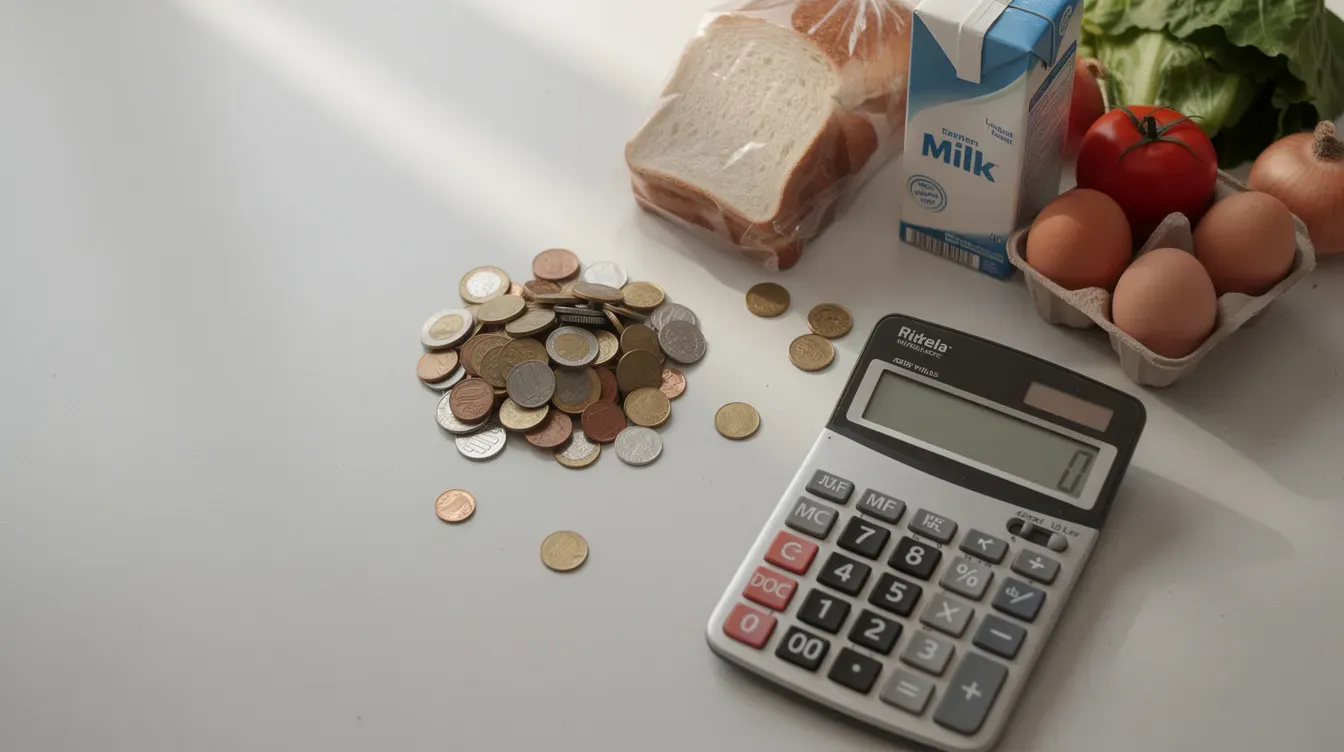
Hardship payments are meant only for essential living costs. The DWP expects you to prioritise meeting basic needs over everything else while you're sanctioned.
Permitted uses include:
Food and basic groceries
Gas and electricity bills
Water charges
Rent or essential mortgage payments
Toiletries and cleaning products
Children's essentials (nappies, school costs)
Essential travel such as getting to work or medical appointments
The money is not intended for non-essential items such as entertainment, alcohol, cigarettes, takeaways, holidays, luxury goods or paying off non-priority debts ahead of essentials. You should not spend money on anything the DWP would consider unnecessary during a sanction period.
If the DWP later sees hardship payment money being spent on non-essential items in bank statements, this could affect future hardship applications. Keep a simple record of how you used the payment, in case you need to re-explain your situation for later applications or appeals.
Paying Back a Universal Credit Hardship Payment
Universal Credit hardship payments are loans that you must pay it back once the sanction ends. Repayments are usually made through automatic deductions from your future universal credit payment.
The DWP normally takes up to 15% of your standard allowance each month to repay the hardship payment. Deductions can be up to 15% of your standard allowance, not including extra elements like housing or child components.
Repayment example:
Detail | Amount |
|---|---|
Standard allowance (single, 25+) | £424.90/month |
Repayment deduction (15%) | ~£63.74/month |
If you and your partner both claim UC as a couple, repayments may be based on the couple's standard allowance, so deductions can be larger but are spread across the household payment.
If total deductions from your universal credit (for example, advance payments, overpayments and hardship) would leave you without enough money for essentials, you can ask the DWP to reduce the rate. A lower rate can be agreed. Seek support from a welfare or debt adviser if you're struggling.
Repayments usually stop automatically once the full hardship amount has been repaid. Once the sanction ends and you pay back the loan in full, no further deductions should be taken. If you think DWP is still taking money after this, query it through your online account or the UC helpline.
What If You Stop Claiming Universal Credit or Change Your Circumstances?
If you received a hardship payment and then stop claiming UC before it's fully repaid, the debt does not disappear. It is passed to DWP Debt Management.
DWP Debt Management will write to you with details of how much you owe and how to repay, usually offering methods such as bank transfer, direct debit or payment card.
If you move into work-perhaps taking on extra hours-and your UC award ends because your earnings are too high, the hardship payment still has to be repaid. Repayments can be paused if earnings exceed a threshold, but you can also negotiate affordable instalments with DWP Debt Management.
If your income is very low even after leaving UC, tell DWP Debt Management you are in financial hardship and may need a lower repayment rate or a temporary pause (sometimes called a "breathing space"). Keep all letters from DWP and seek free debt advice if you're worried about enforcement action or cannot agree a repayment plan.
Appealing a Hardship Payment Decision
If your hardship payment application is refused, or you think the amount awarded is too low, you have the right to challenge the decision.
The first step is asking for a "mandatory reconsideration" within one month of the decision date. This is where the DWP looks at the decision again and you can send new evidence.
Information that can help includes:
Updated bank statements showing you have no money
Letters about rent arrears or disconnection threats
Medical evidence about health risks from lack of heating or food
Proof of children in the household or limited circumstances that increase vulnerability
If mandatory reconsideration is unsuccessful, you can appeal to an independent tribunal. Welfare benefits advisors can help find alternative financial support and prepare an appeal.
While an appeal is ongoing, you can still access other forms of help such as local welfare assistance, emergency money from your council, or food bank referrals. Do not wait for the outcome to seek support.
Other Ways to Manage Financial Hardship During a Sanction
Even with a hardship payment, many people still struggle to cover all their essential costs. The ongoing cost-of-living pressures make this harder than ever.
Here are practical steps to manage:
Create or update a realistic budget listing all income and priority bills (rent, council tax, gas, electricity, food, travel) first. Cut or cancel lower-priority spending where possible.
If you have problem debts, contact a free, independent debt advice service. They can help you prioritise payments, negotiate with creditors and check for options like breathing space, debt relief orders or work related activities to improve your situation.
Check with your local authority about discretionary housing payments, council tax support, school uniform grants, or energy support schemes. People on low incomes or universal credit may be eligible for several of these.
Regularly check whether you're receiving all the other benefits you're entitled to-including support allowance, disability benefits or carer's allowance-using a trusted online benefits calculator or by speaking to an adviser.

FAQs About Hardship Payments
Can I get a hardship payment if I have savings?
You're unlikely to be eligible for a hardship payment if you have enough savings or cash to cover your essential needs. The DWP will usually expect you to use those funds first. There is no fixed savings threshold published specifically for hardship payments, but having significant savings will count against you. Under universal credit, capital over £16,000 generally disqualifies you from the claim itself.
How long does it take to get a hardship payment after I apply?
Timescales vary by area, but many Universal Credit hardship payments are decided within a few days and sometimes on the same day, especially if you flag it as an emergency. JSA and ESA hardship payments may depend on the timing of your Jobcentre appointment and how quickly you can provide evidence.
Can I get more than one hardship payment?
Yes. You can often receive hardship payments in successive assessment periods if your sanction continues and you still have financial hardship. However, you usually have to apply again and show you remain eligible each time. You must reapply for hardship payments after they run out.
Does a hardship payment affect other benefits or tax credits?
The hardship payment itself usually does not reduce other benefits like Child Benefit or tax credits. However, any change to your Universal Credit award-for example, because of deductions-could indirectly affect passported help such as free prescriptions or school meals. Always check with an adviser if you're unsure.
Can I work while receiving a hardship payment?
You can work while receiving a hardship payment. If your earnings rise above a certain threshold, DWP may pause or permanently stop collecting repayments. Your entitlement to UC or a hardship payment may also change, so you must report changes promptly through your online account or by contacting the universal credit helpline. Working additional hours does not automatically disqualify you, but it affects the calculation of your claim and any work related requirements attached to it.