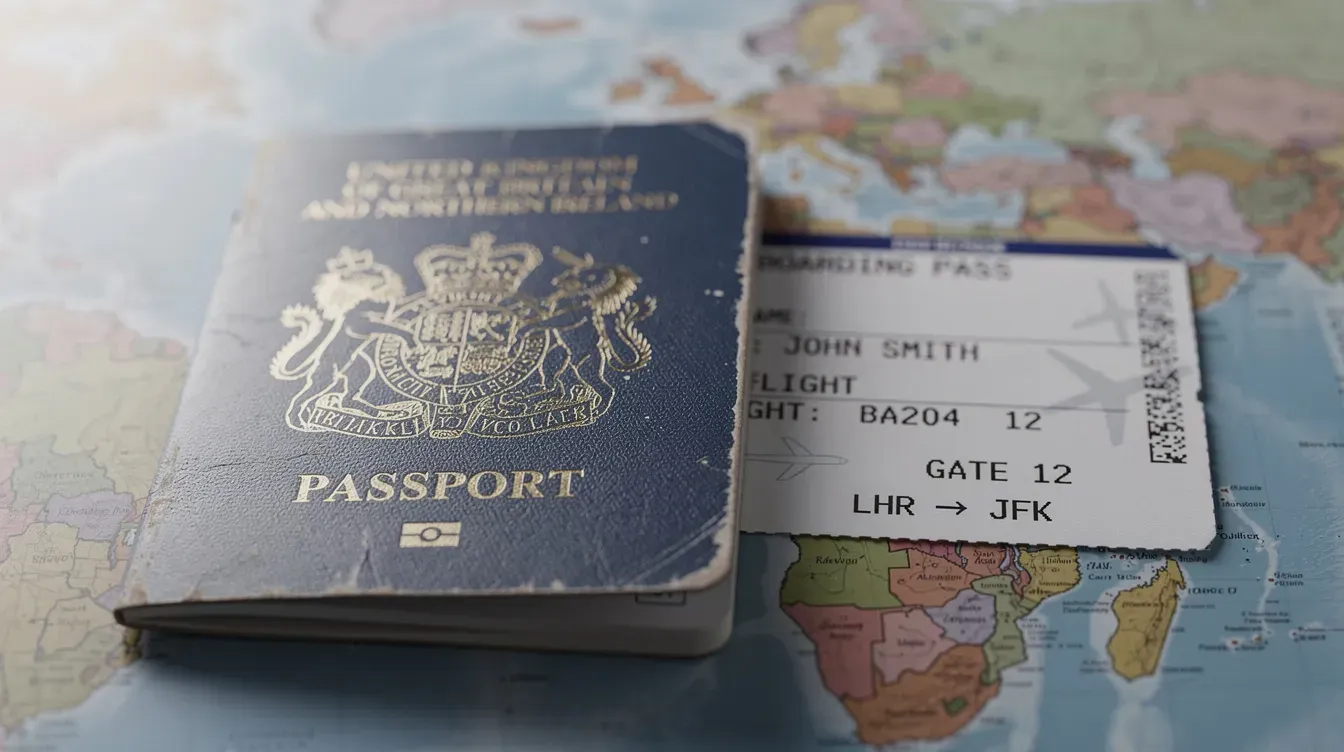
Whether you're planning a holiday to Spain, renewing an old passport, or researching your family tree, understanding how a Great Britain passport works is essential. This guide covers everything from modern passport details and validity rules to renewal procedures, application tracking, and historical records dating back to the 1790s.
Key Takeaways
A "Great Britain passport" in everyday language refers to a standard UK passport issued by HM Passport Office. The current British passport is blue and features the Royal Coat of Arms, with a biometric chip storing your personal details.
You cannot travel internationally with an expired passport. Most EU and Schengen countries require your passport to be issued within the last 10 years and valid for at least 3 months beyond your departure date.
Passport applications for new and renewed documents can be made online using a digital photo, via the Post Office's Digital Check and Send service, or by paper form. Applications can take up to 10 weeks to process.
Historical Great Britain passport records from 1795 to 1948 are held at The National Archives in Kew and are valuable for genealogy research.
British citizens enjoy visa-free or visa-on-arrival access to 184 countries and territories, making the UK passport one of the most powerful travel documents in the world.
What you need to know about a Great Britain passport today
When people refer to a "Great Britain passport," they generally mean a standard UK passport issued by HM Passport Office, part of the Home Office. This document is officially issued by the "United Kingdom of Great Britain and Northern Ireland" and enables international travel for British citizens. British citizens have the automatic right to live, work, and study in the UK, and under specific conditions they hold an automatic right to a passport.
The distinction between a modern UK passport and historical British passports matters. Before 1948, holders were typically described as "British subjects" rather than "British citizens," and older documents looked very different from today's biometric e-passports.
Current passports are blue-covered, C-series biometric documents. Biometric passports feature an electronic chip that stores personal details and a digital signature. The photo page includes your:
Full name (surname and given names)
Nationality (usually "British Citizen")
Date of birth
Passport number
Date of issue and date of expiry
Sex and issuing authority
Checking your issue and expiry dates is essential. Your passport must be valid for the duration of your visit, and many destinations require at least 3 to 6 months of remaining validity beyond your return date.
Understanding your UK passport details
The photo page of a modern UK passport is where all critical passport details are printed. Getting these right when booking flights, applying for visas, or completing security checks can save you from costly mistakes.
Your passport number is a 9-character code printed near the top right of the details page. It must be entered exactly as printed when filling in any form or booking. The page also displays:
Field | What it shows |
|---|---|
Surname | Family name as registered |
Given names | All forenames, including middle names |
Nationality | e.g. "British Citizen" |
Place of birth | City or country |
Date of birth | Day/month/year format |
Sex | M or F |
Date of issue | When the passport was issued |
Date of expiry | When the passport ceases to be valid |
Issuing state | United Kingdom of Great Britain and Northern Ireland |
Common mistakes when entering passport data online include confusing the letter "O" with the digit "0", transposing date fields, and omitting middle names. These errors can cause airline check-in failures or visa rejection. For example, if your passport reads "James Michael Smith" and you enter only "James Smith," some systems will flag a mismatch.
HM Passport Office and authorised identity services verify passport numbers against government systems to confirm a document is not lost, stolen, or cancelled.
Checking if your Great Britain passport is valid for travel
Post-Brexit rule changes caught many travellers off guard. Before you buy flights or book accommodation, you need to check whether your passport meets entry requirements for your destination.
British citizens can travel to Europe for holidays without a visa post-Brexit, but your passport still needs to meet specific validity conditions. For EU and Schengen countries, the typical rules are:
Your passport must have been issued within the last 10 years on the date you arrive
Your passport must remain valid for at least 3 months after your planned departure from the Schengen area
To check, compare three key dates: your passport's issue date, its expiry date, and your planned travel dates. Some countries require passports to be issued within the last 10 years, which trips up people whose older passports had extra validity added under previous renewal rules.

Your passport will be INVALID for this trip
Your passport will fail destination rules if any of the following apply:
It was issued more than 10 years before your date of entry
The expiry date falls within 3 months of your planned departure from the Schengen area
The passport has already expired on the date of travel
If any condition applies, do not book non-refundable travel. Renew your UK passport first. For the most accurate and current entry requirements, check FCDO foreign travel advice pages and contact the embassy or consulate of your destination country.
Your passport will be VALID for this trip
If your passport was issued within the allowed period and remains valid for your entire stay plus the required buffer, you can generally use it for that trip. Still check for additional requirements such as visas, blank pages, or longer minimum validity periods for destinations outside Europe. British citizens enjoy visa-free access or visa-on-arrival to over 180 destinations, but requirements vary. Run this check before booking to avoid last-minute surprises.
Has your UK passport expired? What to do next
You cannot travel internationally with an expired passport. Full stop. British citizens must hold a valid passport before leaving the UK.
Adult UK passports are normally valid for 10 years from the date of issue. Children's passports are valid for only 5 years. If your passport expired less than 10 years ago, you can submit a standard renewal. If it has been longer, you may need to apply as if for a first adult passport, providing additional documents.
Travel insurance usually does not cover expired passport issues, so checking your dates early is financially important. For urgent travel, fast track and premium services are available at higher cost but may have limited appointment slots.
My UK passport has expired – can I still travel?
No. You cannot use an expired Great Britain passport for international travel, airline boarding, or border checks. Some domestic flights within the UK may accept alternative ID, but an expired passport is not reliable. If your expiry date is close or past, renew before booking overseas travel. Plan several weeks ahead, as processing times during summer months can be longer.
How long after my passport has expired can I renew it?
You can renew your passport up to 10 years after expiration using a standard renewal process. If the passport has been expired for longer than that threshold, you will likely need to follow a first-time adult application process with additional documents. Under current rules, any unexpired time on your old passport is not added to the new one. Renew well before expiry to avoid being caught by sudden policy or processing changes.
What about my child’s expired passport?
Children's passports are valid for only 5 years and cannot be extended. When a child passport expires, parents or guardians must apply for a completely new child passport. Additional supporting documents may be needed, such as a full birth certificate and consent from a parent or guardian. Remember to check your child's passport dates before school holidays and family trips abroad.
Will travel insurance cover me if I can’t travel because my passport expired?
Travel insurance usually does not cover expired passport issues. Most policies exclude claims arising from a traveller failing to hold valid travel documents. Check your policy wording carefully, but assume that an expired passport will not be grounds for a successful claim. Insurers treat passport validity as the traveller's responsibility. Align your renewal timelines with major trips to stay protected.
How to apply for a new or renewed Great Britain passport
HM Passport Office is the official authority for issuing UK passports. British citizens have an automatic right to a passport under specific conditions. You can apply for a passport online or by post, and applications can take up to 10 weeks to process.
The key stages of any passport application are:
Gathering original documents (original documents are required when applying for a British passport)
Preparing a suitable digital photo or printed photo
Completing the application form
Paying the fee
Sending supporting documents
You must provide proof of identity when applying for a passport. For a first adult or child passport, a countersignatory may be needed to confirm your identity. Applicants must truthfully declare if a previous passport was lost, stolen, or damaged, as this affects processing.
Fees and processing times vary by service type. British citizens abroad may need to apply through overseas passport services or consular channels.
Online application with a digital photo
Online applications for British passports are the fastest method. The gov.uk service lets you create or log into a government account, enter personal and passport details, and submit everything digitally. Passport applications require a recent digital photo taken within the last month, with a neutral background, correct size, no filters, and your eyes clearly visible. You can upload a photo file or use a code from a participating photo booth.
Once the form is submitted and fee paid, applicants post their old passport and supporting documents to the address provided in the online instructions.
Applying at the Post Office using Digital Check and Send
Many UK Post Office branches offer a Digital Check and Send service. Staff help complete the passport application, capture or scan a compliant digital photo, and check the form for errors. The Post Office then sends the application to HM Passport Office.
This service can reduce mistakes in passport details and help ensure your image meets official standards, lowering the chance of delays. Confirm which local branches provide this service and check current charges before you visit.
Applying with a paper form
You can still use a traditional paper passport application form, typically collected from certain Post Office branches. Paper applications require printed passport photos glued or clipped to the form as instructed. Tracking and updates for paper applications are more limited and may require phone contact with the Passport Adviceline.
Write clearly in black ink, double-check all dates and passport numbers, and send documents by a tracked postal service to reduce risk.

Tracking your UK passport application
Tracking depends on how you applied for your passport. Once a Great Britain passport application is submitted, you can usually monitor its progress, but the method differs.
Online applicants get an application reference (often starting with "PEX")
Post Office users receive a receipt with a reference number
Paper-form applicants generally need to call for updates
Allow the typical processing time before chasing, but contact the Passport Adviceline earlier if you have urgent travel.
If you applied online with a digital photo
You can track your application status online if you applied digitally. Track online applications with a reference starting "PEX" by logging into the gov.uk tracking service with your application reference, surname, and date of birth.
Status messages you might see include "application received," "documents received," "being processed," "approved," and "passport printed and sent." Check your email, including spam folders, for requests from the passport office for further information or replacement photos.
If you applied at the Post Office using Digital Check and Send
Digital Check and Send users can track applications online using the reference number on their Post Office receipt. Status updates may take slightly longer to appear if the application was batched. Keep your receipt safe until you receive your new passport. If tracking information doesn't appear after several working days, contact the Passport Adviceline.
If you filled in a paper form
Tracking for paper applications is more limited. Call 0300 222 0000 to track paper applications. Have your name, date of birth, and any reference or barcode numbers from the form ready when you call. Service hours are typically weekday business hours. Allow a few days after posting before making an enquiry.
Using UK passport details to confirm identity
UK passport details are widely used in identity checks for digital services, employment screening, right-to-work, and right-to-rent processes. Employers and service providers increasingly rely on passport data to verify who you are.
A typical identity confirmation flow asks the user to enter passport details exactly as shown on the photo page, using a secure device and encrypted connection. Matching spelling, name order, and date formats is critical to avoid failed checks.
These services usually verify the passport number and basic data against HM Passport Office or approved third-party services to confirm the document is genuine and has not been reported lost or stolen. Never send passport scans over untrusted channels such as unsecured email, and always check that any website or app requesting this information is legitimate.
Entering your details exactly as they appear on your UK passport
When online forms request passport details, copy information exactly, including all middle names and punctuation. The passport number is case-insensitive but must be entered with all digits and letters in the correct sequence. HM Passport Office and some identity providers run automatic checks to ensure the passport number is valid and still active. Repeated incorrect entries can cause delays or temporary account locks.
Third-party checks against passport data
In controlled circumstances, organisations outside government may check certain passport details to verify identity, subject to strict privacy and security rules. These checks typically confirm only whether your details match an existing valid document. They do not give the organisation access to full passport records or stored historical data.
Such checks are increasingly used in pre-employment screening, financial services onboarding, and digital identity products. Any company running these checks must comply with UK data protection law and be transparent about what data it collects and why. Information shared in this way must be handled securely.
Historical Great Britain passport records and research
The National Archives in Kew is the primary repository for historical British passport records, especially from the late 18th to mid-20th century. While modern passports are handled by HM Passport Office, older records - including passport applications, registers, and correspondence - are archived in specific record series.
These records are particularly valuable for family historians researching ancestors who travelled abroad, emigrated, or worked as diplomats, merchants, or colonial officials. Access to original archival records usually requires an in-person visit to Kew or ordering paid digital or paper copies. Use The National Archives' online catalogue to search indexed British passport applicants by name and date.

Indexes of British passport applicants (19th–early 20th century)
Specific index volumes cover British passport applicants between the mid-19th century and 1916, some of which have been digitised by commercial genealogy platforms. These indexes often provide the applicant's name, date of issue, and sometimes occupation or destination. Coverage is incomplete for some years, and certain date ranges may be missing. Cross-check index entries with original registers to confirm details.
Registers and original passports at The National Archives
The National Archives holds register books of passport applications (series FO 610) arranged by date and passport number, spanning from the late 18th century into the mid-20th century. These registers summarise applications and may contain less detail than some indexes but offer broad chronological coverage. A smaller collection of physical passports (FO 655) is preserved mainly to illustrate design changes, not as a complete record of all holders. Find the correct record series via the online catalogue before visiting.
Colonial and pre-passport travel records
Before modern passports became standard, travellers used passes and letters of introduction. Colonial passports and letters from employers or sponsors can indicate a traveller's name, destination, and ship, helping trace movement to and from British colonies. These documents are scattered across foreign office, state papers, and colonial office series and require advanced catalogue research skills. Published guides on migration and passport history provide deeper strategies for this type of work.
Frequently Asked Questions about Great Britain passports
Is a Great Britain passport the same as a UK passport?
In everyday language, people use "Great Britain passport" to mean a standard UK passport issued by the United Kingdom of Great Britain and Northern Ireland. The holder is usually described as a British citizen. However, not all British passports automatically confer the right of abode in the UK - specialised types such as British Overseas Territories passports carry different rights. UK law allows dual citizenship for British passport holders, and citizens have rights of movement within the Common Travel Area with Ireland.
Can I travel while my new UK passport is being processed?
Once you send your old passport to HM Passport Office as part of a renewal, you usually cannot use it for travel. Do not book non-refundable trips during processing. If urgent travel is unavoidable, investigate fast track or premium services before submitting your application.
Do I need a visa as well as a UK passport?
A valid UK passport is a travel document, not automatic permission to enter every country. Visa requirements depend on your destination, length of stay, and purpose of visit. British citizens enjoy visa-free or visa-on-arrival access to 184 countries and territories, but rules change frequently. Check FCDO foreign travel advice and the embassy of your destination for current requirements.
What happens if my passport is lost or stolen abroad?
Report the loss or theft to local police, then contact the nearest British embassy, high commission, or consulate. Access to British consular services is available worldwide for British citizens. Staff can help arrange an emergency travel document or replacement passport. Keep a separate copy of your passport number and a secure digital image of your details page to speed up the process.
Can organisations check my passport number without my consent?
Legitimate organisations require your explicit consent to check your passport details against official records. UK data protection law restricts how personal data such as passport numbers can be used, stored, and shared. Question any unexpected request for passport data and deal only with trusted, verifiable organisations when providing identity documents. If something feels wrong, contact the passport office or report the request through official channels.