
Few institutions have shaped everyday life in the United Kingdom quite like the General Post Office. From a single London sorting room handling royal dispatches to a nationwide network processing billions of letters and parcels, the GPO built the infrastructure that still underpins how people communicate, save money, and access government services today. This article traces that journey in full - from the 1660 founding act to modern-day Royal Mail deliveries and the 11,500 post office branches that serve customers every week.
Key Takeaways
The General Post Office was established in 1660 by Charles II under the Post Office Act, creating a state-run postal system that would grow into the backbone of communication across Great Britain and the British Empire. Henry Bishop, as the first Postmaster General, introduced the Bishop Mark in 1661 - the world's earliest known postmark - to improve accountability for late deliveries.
Over nearly four centuries, the GPO pioneered reforms that reshaped modern mail. The uniform penny post of 1840 introduced a flat postal rate for the first time, while the Penny Black became the world's first adhesive postage stamp. Later innovations such as pillar boxes (1852), postcodes (fully rolled out by 1974), and mechanised sorting transformed how royal mail letters and parcels moved across the country.
The GPO's reach extended far beyond sending letters. It operated the Post Office Savings Bank from 1861, provided money orders and postal orders, and eventually became a civic hub for pensions, government bonds, bill payments, and other financial services - a legacy still visible at every local post office today.
Strong military links defined the GPO through two world wars. The post office rifles, formed in 1868 from GPO employees, served on the Western Front during the First World War, while tens of thousands of women entered the postal workforce for the first time to keep domestic services running.
Today, the GPO's successors - Royal Mail (responsible for collection and delivery) and Post Office Ltd (the retail branch network) - continue to serve millions of customers, though rising postage costs and ongoing debate about public ownership keep the institution's future firmly in the spotlight. As of February 2025, proposed changes to delivery standards and ownership structures remain under discussion.
Origins of the General Post Office (GPO) in the 17th Century
Before there was a formal postal system, getting a letter from London to Edinburgh was a risky and expensive affair. Private carriers, royal couriers, and informal arrangements handled most correspondence. State control over mail was minimal, and ordinary people had virtually no access to reliable delivery.
That began to change in 1657 when Parliament passed a statute titled "Postage of England, Scotland and Ireland Settled." This act created a unified general post office with a monopoly on carrying letters and maintaining post-horses. It established the role of Postmaster General and brought all mail services under a single authority for the first time across England, Scotland, and Ireland.
Three years later, following the Restoration of Charles II, the government cemented these arrangements. The Post Office Act of 1660 (12 Cha. 2. c. 35), passed on 29 December 1660, formally established the GPO as a state institution. It confirmed the Postmaster General's authority over all public and royal mail, gave the office monopoly rights over letter-carrying, and laid the legal foundation for centuries of postal expansion.
Henry Bishop stepped into the role of Postmaster General almost immediately. He leased the post office operation for seven years at a cost of £21,500 per year, gaining control of the monopoly. His most lasting contribution came in 1661 when he introduced what is now called the Bishop Mark - a small circular stamp showing the day and month a letter was processed. For the first time, there was a way to track delays and hold postal workers responsible for slow deliveries. It was, in essence, the world's first postmark.
Early GPO revenues quickly became an important source of government income. The Crown treated postal profits as hereditary revenue, and Parliament regularly appropriated them for military campaigns. The Post Office (Revenues) Act of 1710, for example, directed weekly sums from postal income toward war expenses. Mail wasn't just about communication - it was about money and power.
Building a National and Imperial Postal Network
The GPO started as a London operation, but ambition and commerce pushed it outward. Within decades of its founding, the postal network reached every county town and major port in England, Scotland, and Ireland, turning isolated communities into nodes on a growing web of communication.
The system depended on post roads and post houses. Fresh horses waited at intervals of roughly 20 miles along major routes, allowing post-riders and post-boys to swap mounts and maintain speed. These relay stations became small hubs of activity, and the post roads themselves shaped patterns of trade, travel, and settlement across the country.
At the centre sat the General Letter Office in London - the main sorting hub. Under the Commonwealth, mail was dispatched from London three times a week (Tuesday, Thursday, Saturday evenings), with inbound deliveries arriving on alternate days. Over the following century, frequency increased and routes multiplied.
Packet boat services extended the GPO's reach overseas. Regular sea-borne routes connected Britain with Ireland and continental Europe, often departing from Falmouth or Holyhead. These services, sometimes operated directly by the GPO and sometimes subcontracted to private ship-owners, carried diplomatic correspondence, commercial letters, and personal mail across open water.
The GPO model was replicated across the British Empire. Jamaica had postal services under GPO regulation as early as the 1680s. In the 1690s, Thomas Neale held contracts to establish colonial posts in several North American territories. By 1855, there were 10,498 post offices across the UK alone - a figure that hints at how deeply the postal network had embedded itself in daily life. The GPO didn't just deliver letters. It knitted together an empire.
Innovations: Penny Post, Stamps, and the Modernisation of Mail
For most of its first two centuries, the GPO served the wealthy, the government, and the commercial classes. Ordinary people could rarely afford postage. A series of reforms in the 18th and 19th centuries changed that, transforming mail from an elite service into a mass communication system.
The London Penny Post
The first breakthrough came in 1680, when William Dockwra and Robert Murray established the London Penny Post. For a single penny, anyone could send a letter or small parcel (up to one pound in weight) anywhere within London - across the City, Westminster, and Southwark. An additional penny covered areas up to ten miles beyond the city limits.
The system was remarkably sophisticated:
Roughly 400 to 500 receiving offices across London
Frequent scheduled collections throughout the day
Central sorting among a handful of main offices
The GPO saw this as a threat to its monopoly and absorbed the London Penny Post in 1683, compensating Dockwra for his losses. But the concept was proven: affordable, prepaid postal service worked.
Uniform Penny Postage and the Penny Black
The truly revolutionary moment arrived in 1840. Sir Rowland Hill, a former schoolteacher and civil servant, published his pamphlet Post Office Reform: Its Importance and Practicability in 1837. He argued for:
A uniform postal rate regardless of distance
Prepayment via adhesive stamps
Simplified weight limits (up to half an ounce)
The Uniform Penny Post launched on 10 January 1840. On 6 May 1840, the first postage stamp - the Penny Black - went on sale. In 1840, the Uniform Penny Post introduced a flat postal rate that applied to any letter up to half an ounce sent anywhere in the UK. The first postage stamp, the Penny Black, was issued in 1840, making it the world's oldest adhesive postage stamp.
The impact was dramatic. Mail volume by 1870 was roughly ten times higher than pre-reform levels. Cheap postage democratised written communication and fuelled commerce, migration, and personal connection in ways that no previous reform had managed.
Pillar Boxes and Physical Infrastructure
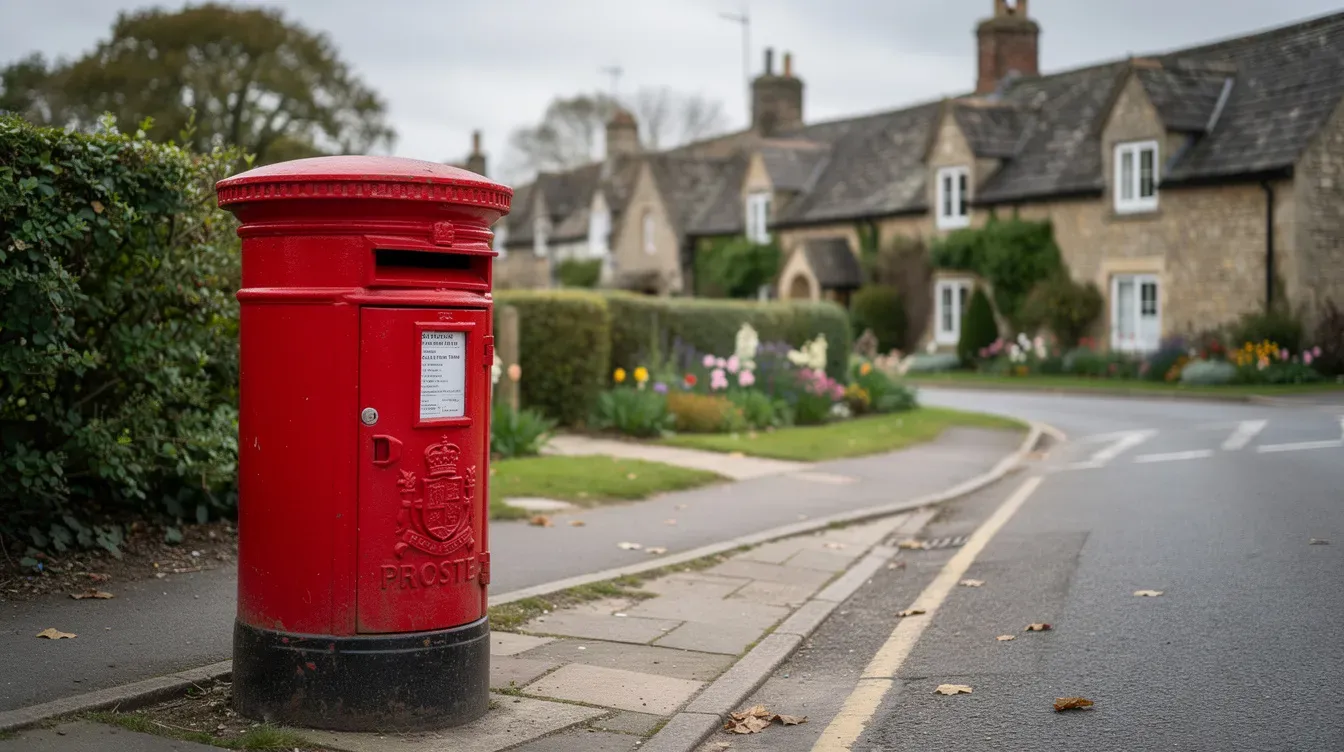
The post office pillar box first appeared in 1852, giving people a way to post letters without visiting an office. These distinctive red boxes quickly became visible symbols of GPO infrastructure in towns and rural villages alike, and they remain in use across the United Kingdom today.
The first purpose-built mail facility opened in 1829 at St Martin's Le Grand in London. Constructed between 1825 and 1829, this imposing building served as the central sorting and administrative hub for the GPO. Its design reflected a new ambition: the post office as a modern institution of the state, not merely a commercial operation.
Transport, Technology, and New Communication Systems
The GPO's growth would have been impossible without constant upgrades in transport and technology. Each new mode of movement - from horse post to mail coach, from railway to steamship - reshaped how quickly and reliably mail could travel.
Mail Coaches
In the 1780s, mail coaches replaced mounted post-boys on major routes. John Palmer's experimental coach between Bristol and London in 1784 cut the journey from up to 38 hours down to approximately 16 hours. Coaches ran on scheduled night routes with armed guards to protect the mail - a visible sign that the government took postal security seriously.
Railways
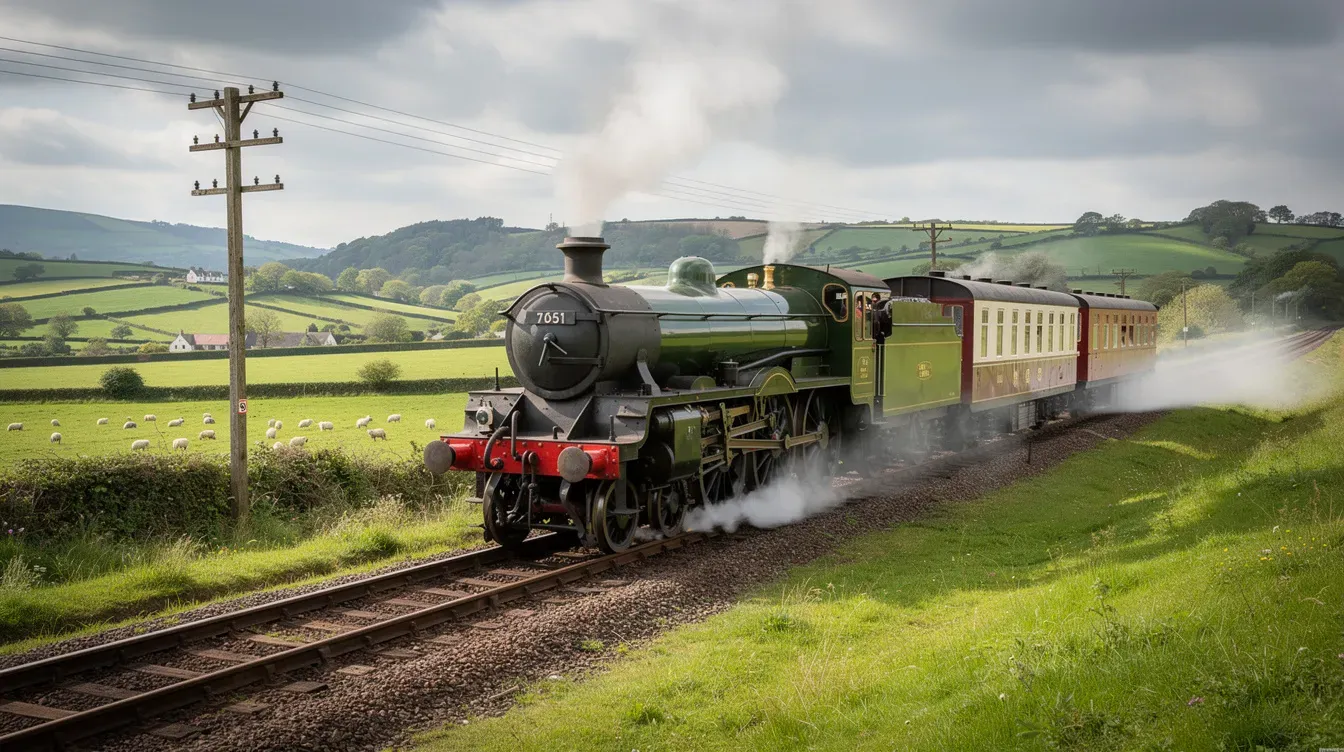
Railways transformed the postal service starting in 1830, when the Liverpool–Manchester Railway carried mail for the GPO. By 1837, the Travelling Post Office (TPO) had been introduced: dedicated railway carriages where GPO staff sorted letters and parcels en route. By 1914, there were 126 active TPO carriages criss-crossing the UK. Ingenious apparatus allowed mailbags to be picked up and dropped off at railway stations without the train needing to stop.
Steamships and Imperial Mail
Overseas, packet ships gave way to steamships under contract. Royal Mail Ships carried mail and passengers, connecting Britain to its colonies and trading partners. These services were vital for maintaining communications across the British Empire and for the commercial networks that depended on reliable correspondence.
Telegraph and Telephone
The GPO's reach extended beyond physical mail in the second half of the 19th century:
Year | Milestone |
|---|---|
1870 | GPO nationalised the Electric Telegraph Company |
1880 | GPO began licensing telephone services |
1912 | Full nationalisation of telephone services under GPO |
By 1912, the GPO was no longer just a postal service. It was a national communications infrastructure provider handling mail, telegrams, and telephone calls - a role it would hold until the late 20th century.
Financial and Government Services at the GPO
The GPO was never just about carrying letters and parcels. From the mid-19th century, it steadily built a second identity as a provider of state-backed financial services, serving millions of customers who had no access to commercial banks.
The Post Office Savings Bank
The Post Office Savings Bank was established in 1861, opening on 16 September of that year. It was designed to give ordinary working people a safe, government-guaranteed place to save money. The minimum opening deposit was just one shilling.
The bank expanded rapidly:
Initially operated through 301 money-order offices in the London area and 1,700 post offices acting as agents
Within months, over 2,300 local offices were participating
By 1871, there were approximately 1.3 million accounts holding £15 million in deposits
This was transformative. In rural areas and small towns without a commercial bank, the local post office became the only place to deposit savings securely.
Financial Products and Government Transactions
Beyond savings accounts, the GPO introduced a range of financial products over the decades:
Money orders: Under GPO control from 1838
Postal orders: Introduced in 1881
Government stocks and bonds: Sold via post office counters from 1880
Insurance and annuities: Available from 1888
War savings certificates: Launched in 1916 during the Great War, later renamed National Savings Certificates in 1920
Premium Bonds: Introduced in 1956
By the early 20th century, GPO counters also handled old-age pensions (from 1908), making the post office a true civic hub. Citizens used post office counters for pensions, government bonds, bill payments, cash withdrawals, and other official transactions. These government services reinforced the post office's role as a trusted intermediary between the state and its people.
The parallels to modern procurement are striking. Just as the historic GPO leveraged its nationwide network to offer services at scale, today's Group Purchasing Organizations (also abbreviated as GPOs) aggregate purchasing volume to negotiate better prices with vendors. GPOs command large-scale leverage to secure tier-one pricing from suppliers, and outsourcing negotiations to a GPO reduces administrative costs associated with procurement.
Modern GPOs negotiate improved payment terms and member rebates beyond unit prices, while pre-negotiated GPO catalogs help reduce off-contract spending. GPOs help procurement teams streamline workflows and reduce time spent on supplier management. Leveraging a GPO's extensive supplier network can lead to greater supply chain stability, and GPOs simplify the purchasing process by providing access to a wide network of suppliers.
GPOs establish high standards for suppliers to ensure consistent product quality, and GPOs can yield savings of 10–25% across various spending categories. Members of GPOs gain access to competitive contract terms typically reserved for larger buyers, and GPOs ensure suppliers meet strict quality and delivery standards. GPOs secure protections against price spikes and guarantee better payment terms, while GPOs eliminate sourcing bottlenecks by offering access to pre-vetted vendor contracts.
GPOs provide industry knowledge and procurement expertise to their members, enabling businesses to focus on strategic initiatives instead of tactical purchasing. Members access advanced spend-data analysis and industry intelligence through GPOs. In this sense, the concept of pooling purchasing power to cut administrative costs and secure better terms is a direct echo of what the historic GPO did when it centralised postal and financial services under one roof.
Military Links and the Post Office Rifles
The relationship between the GPO and the armed forces runs deeper than most people realise. Postal workers were not only responsible for keeping communications flowing during peacetime - they also formed dedicated military units and played critical roles in wartime.
Formation of the Post Office Rifles
The first military links to the Post Office formed in 1868 with the Post Office Rifles. Officially designated the 49th Middlesex Rifle Volunteers Corps, this unit was raised from GPO employees and civil service staff. Under the Cardwell Reforms of 1880, it became the 24th Middlesex Rifle Volunteers, but the name "Post Office Rifles" stuck.
The First World War
During the First World War, the office rifles saw heavy action on the Western Front. Recruited mainly from postal workers, the unit suffered high casualty rates. One member, Alfred Joseph Knight, earned the Victoria Cross at the Battle of Wurst Farm on 20 September 1917 - one of the highest honours in the British military.
Beyond combat, the GPO played essential roles in wartime communications:
Delivering soldiers' letters and parcels to the front
Maintaining telegraph and telephone signals across the war zone
Running the Army Postal Service, which handled millions of items per week
By 1914, the Post Office employed over 250,000 people, making it one of the largest employers in the country. When the world war drained the workforce, tens of thousands of women entered GPO roles for the first time, keeping the domestic postal and telegraph services running. This was a watershed moment - both for the postal system and for women's employment in Great Britain.

From Statutory Corporation to Public Limited Company
The GPO's status changed dramatically in the late 20th century. What had been a government department for over 300 years was reshaped through a series of legislative acts, corporate restructurings, and privatisation decisions that remain controversial to this day.
The Post Office Act 1969
The Post Office Act 1969 (c. 48), which received Royal Assent on 25 July 1969 and came into effect on 1 October 1969, abolished the historic General Post Office as a government department. In its place, Parliament created the "Post Office" as a statutory corporation with a chairman and chief executive, replacing the Postmaster General. A new Minister of Posts and Telecommunications took over policy responsibilities.
This was a turning point. The post office was no longer a branch of government - it was a business, albeit a state-owned one.
The Split with British Telecom
By 1980, the strain of managing both postal and telecommunications services under one roof had become untenable. The British Telecommunications Act 1981 formally separated telephone and telegraph activities from the Post Office corporation, transferring them to a new public corporation: British Telecom (BT). This ended the GPO's century-long role in telecommunications and set the stage for BT's eventual privatisation.
The Postal Services Act and Beyond
The Postal Services Act 2000 pushed restructuring further. Royal Mail was transformed into a public limited company, and new regulatory bodies - including Postcomm and the consumer body Postwatch - were established to oversee the market.
The period also saw several rebrandings:
Year | Change |
|---|---|
2001 | The Post Office was renamed to Post Office Ltd. The parent company briefly rebranded as "Consignia" |
2002 | The Consignia name was dropped after widespread criticism |
2013 | Royal Mail was privatised and listed on the London Stock Exchange |
Royal Mail was privatised in 2013, separating it from the Post Office. The UK government sold Royal Mail for £3.3 billion in 2013, a figure that many critics argued was well below the company's true value. Royal Mail's annual profits were £324 million before privatization, and the sale sparked public debate about whether such a profitable public asset should have been sold at all.
Today, Post Office Ltd remains a wholly owned subsidiary of the UK government, while Royal Mail operates as a private company. Post Office Ltd and Royal Mail are separate businesses - Post Office Ltd runs the branch network, while Royal Mail Group Ltd handles collection, sorting, and delivery.
The crown network of directly managed crown post offices has shrunk, and many branches are now run as agency branches by independent business people. Local authorities have often raised concerns about the impact of closures, particularly in rural areas where the local post office serves as the only access point for financial services and government transactions.
GPO Legacy in Today’s Post Office and Royal Mail
The historic GPO may be gone as a formal institution, but its DNA runs through every aspect of how mail moves across the UK today. The two successor organisations - Royal Mail and Post Office Ltd - each carry forward different parts of the GPO's mission.
Royal Mail and Universal Service
Royal Mail, now part of International Distribution Services (IDS) and owned since late 2024 by EP Group, continues to deliver letters and royal mail parcels under the universal service obligation. This means Royal Mail is responsible for delivering mail to every UK address six days a week at a uniform price - a principle that traces directly back to the uniform penny post of 1840.
EP Group's acquisition came with legally binding commitments to maintain the "one-price-goes-anywhere" standard and keep Royal Mail's headquarters in the UK. Ofcom oversees compliance, and penalties can be steep: Royal Mail was fined for failing to meet delivery targets in the 2023–24 financial year. Royal Mail's stamp prices breached Ofcom's price cap in 2019, raising questions about whether the universal service model can survive in a competitive market.
Competition from general logistics systems, UK mail carriers, and private courier companies - particularly for royal mail parcels - has intensified. Downstream access arrangements allow rival operators to inject mail into Royal Mail's delivery network, adding further pressure.
Rising Costs and Public Sentiment
Postage costs have more than doubled in the last decade, hitting customers of small businesses and individual senders alike. The cost of a first-class stamp rose by 47% in 18 months, a pace that has drawn criticism from consumer groups and politicians. Royal Mail's parent company paid £400 million in dividends in 2021, fuelling arguments that profits are being extracted at the expense of service quality.
Polling shows that 75% of people want Royal Mail in public ownership - a reflection of deep attachment to the postal service as a public good rather than a profit centre. The business secretary has faced regular questions about whether privatisation was the right decision and what role public ownership might play in the future.
Post Office Ltd: The Branch Network
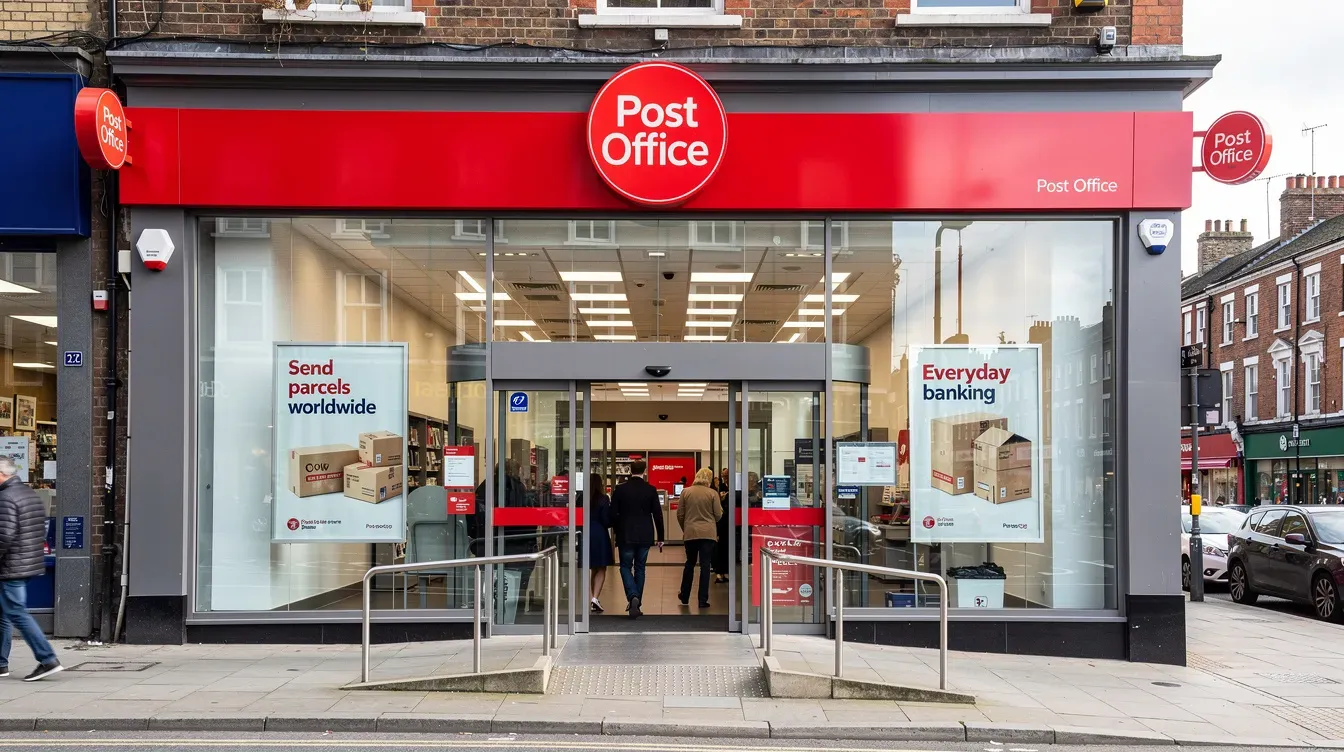
Post Office Ltd operates a nationwide network of approximately 11,500 post office branches. These are not delivery offices - they are customer-facing outlets where people buy postage, drop off letters and parcels, access financial services, make bill payments, handle cash withdrawals, and interact with government services.
Many of these branches are run as agency branches by independent business people rather than directly by Post Office Ltd. The crown network of directly managed offices has been reduced through successive rounds of network modernisation designed to cut administrative costs. Post office counters ltd, the former operating name for the counter services division, has been absorbed into the broader Post Office Ltd structure.
Living Infrastructure
Much of the GPO's physical and administrative infrastructure remains in daily use:
Postcodes: Rolled out nationwide by 1974, now essential for everything from mail delivery to online shopping
Pillar boxes: Over 115,000 red post boxes remain in service
Mechanised sorting: Modern sorting centres in major cities descend directly from GPO-era innovations
Separate account structures: Postal and counter operations maintain distinct financial reporting, a legacy of the GPO's evolving corporate structure
Whether you are a postal worker sorting mail in a distribution centre or a customer buying stamps at a village post office counters window, the systems and standards you interact with were built - legislation by legislation, route by route, reform by reform - by the General Post Office.
The GPO's story is ultimately one of scale. It connected remote communities, enabled affordable communication, supported migration and trade, and served as a critical institution during both world wars. Its principles - universal access, uniform pricing, civic responsibility - continue to shape how millions of people across the United Kingdom send letters, manage money, and access services from their government every single week.
FAQ
How is the historic General Post Office different from today’s Post Office?
The General Post Office was a single government department that oversaw all postal, telegraph, and early telephone services across Great Britain. It was responsible for everything from delivering royal mail letters to maintaining telephone lines. Today's Post Office Ltd is a retail and services business operating a network of branches where customers buy stamps, drop off parcels, access financial services, and handle government transactions. Post Office Ltd does not itself deliver mail - that responsibility belongs to Royal Mail. The GPO's telecommunications functions were separated decades ago and are now handled by entirely independent companies like BT.
What happened to the GPO’s telecommunications responsibilities?
Telephone and telegraph services initially moved from the GPO to Post Office Telecommunications when the Post Office Act 1969 restructured the department into a statutory corporation. In 1981, the British Telecommunications Act formally separated these functions into British Telecom (BT), which was later privatised. This ended any direct GPO link to telecoms.
Who delivers my letters and parcels now: the Post Office or Royal Mail?
Royal Mail collects, sorts, and delivers mail across the UK under the universal service obligation. Post Office branches act as customer-facing outlets where people buy postage, drop off parcels, and access related services. When you hand a parcel over a post office counter, it enters Royal Mail's logistics network for delivery. The two organisations are legally and operationally separate, even though they share counter space in thousands of branches.
Did the GPO offer financial services similar to modern banking?
Yes. From the 19th century onwards, the GPO ran the Post Office Savings Bank, money orders, postal orders, and later National Savings products, effectively providing basic banking and savings facilities long before widespread commercial banking reached rural and working-class communities. These services were especially significant in areas where no commercial bank operated. Today, post office branches continue to offer savings products, insurance, cash withdrawals, and bill payments - a direct continuation of the GPO's financial mission.
Why is the General Post Office important in British social history?
The GPO connected remote communities with reliable mail, supported migration and trade across the British Empire, enabled affordable communication through the Penny Post, and played major roles in both world wars - from delivering soldiers' letters to providing communications infrastructure. Its physical presence in villages and towns made it a civic hub where people paid bills, collected pensions, and saved money. By 1914, it employed over 250,000 people, making it one of the nation's largest employers and a defining institution of everyday British life.