Driving without an MOT is one of the most common motoring offences in the UK, and the penalties can escalate quickly. Whether your car's MOT has slipped your mind or you're unsure about the rules after a failure, this guide covers everything you need to know about MOT fines, legal exceptions, and how to stay on the right side of the law.
Key Takeaways
Driving without a valid MOT certificate is illegal under the 1988 Road Traffic Act. You can be fined up to £1,000, or up to £2,500 if the vehicle is in a dangerous condition.
There is no grace period after your MOT expires. From 00:01 the day after expiry, you are driving without an MOT unless heading to a pre booked MOT test or pre-arranged repairs.
Driving with no MOT can invalidate your car insurance, leaving you personally liable for damages and facing separate penalties for driving uninsured.
Police and the DVSA use automatic number plate recognition (ANPR) cameras linked to a national database to detect vehicles without a valid MOT in real time.
The only legal exceptions allow you to drive directly to a prearranged MOT test or to/from a garage for pre-arranged repairs, provided the vehicle has no dangerous defects.
What Is an MOT and When Are You Breaking the Law?
An MOT is an annual roadworthiness test required for most vehicles in Great Britain once they reach their third anniversary of first registration. In Northern Ireland, the first MOT is required when vehicles are four years old. The test is a legal requirement under Section 47(1) of the Road Traffic Act 1988.
MOT tests check vehicle roadworthiness and environmental standards across roughly 40 individual checkpoints, including:
Brakes (effectiveness, pedal efficiency, balance)
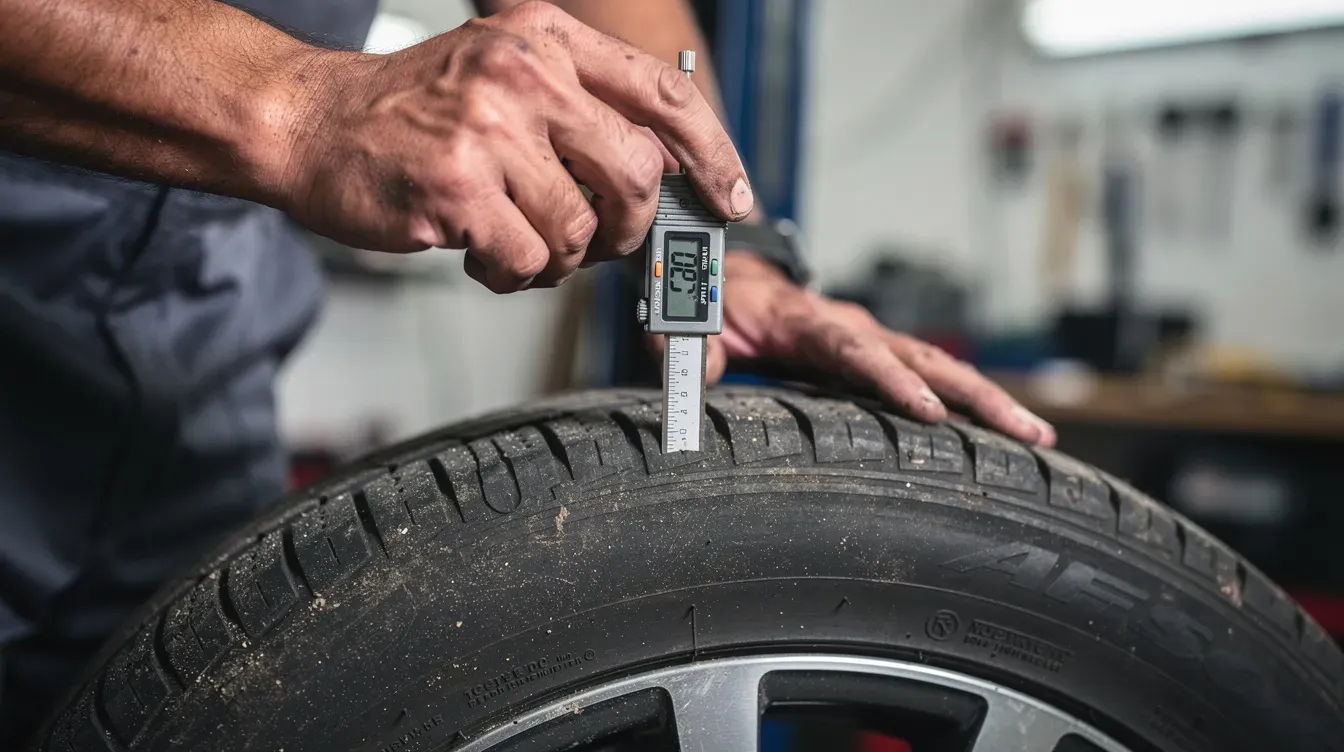
Tyres (tread depth, condition, sidewalls)
Lights and signalling equipment
Emissions and environmental impact
Steering and suspension
Windscreen and visibility
Structural integrity, including corrosion
Seat belts and other safety equipment
MOT tests are mandatory for vehicles over three years old. A new car does not need an MOT until that third anniversary - after which the test is required every 12 months.
You are breaking the law the moment your MOT expires and you use the vehicle on a public road for anything other than the narrow legal exceptions described below. Even parking a car on a public road without a valid MOT can lead to prosecution. If you keep a vehicle off the road, you must either hold a current MOT certificate or declare a Statutory Off Road Notification (SORN) with the vehicle licensing agency.
How Much Is the Fine for Driving Without an MOT?
MOT fines are financial penalties issued for using a vehicle on public roads without a valid MOT or in a dangerous condition. The exact amount depends on how the offence is handled and the state of the vehicle.
Here are the key MOT penalties you should know:
Offence | Typical Penalty | Maximum Penalty | Points |
|---|---|---|---|
Driving without a valid MOT (standard) | £100 Fixed Penalty Notice | Up to £1,000 (court) | None for this offence alone |
Driving in dangerous condition | Higher FPN or court summons | Up to £2,500 | 3 penalty points |
Serious or repeat dangerous vehicle offence | Court summons | Up to £2,500 + disqualification | 3 points + possible six month driving ban |
Fixed penalty notices are commonly issued at £100 for a straightforward no-MOT offence. However, if the matter goes to court - for example, if the hefty fine is contested or the vehicle has dangerous defects - magistrates can impose up to the statutory maximum.
You can be fined up to £1,000 for driving without an MOT. Fines can increase to £2,500 if the vehicle is deemed dangerous, with three penalty points added to your driving licence and a possible driving ban.
You must pay an MOT fine within 28 days to avoid further penalties or court action. MOT fines are separate from any penalties for other offences uncovered at the same time, such as bald tyres, defective parts, or driving without insurance.
Is There a Grace Period After Your MOT Expires?
There is no 14-day or any other grace period once your car's MOT expires. You can be fined from the very first day it is out of date. This is one of the most widely misunderstood points about the law explained in motoring guides, and getting it wrong can be costly.
At 00:01 the day after the date on your current certificate, the vehicle is treated as driving without a valid MOT if used on roads - unless you are travelling directly to a pre booked MOT test or to pre-arranged repairs.
Example: If your MOT expiry date is 13 June 2026, everyday driving on 14 June 2026 is illegal and can trigger an MOT fine. Driving without a valid MOT is illegal from midnight after expiry - no exceptions for "just nipping to the shops."
ANPR cameras and the DVSA national database immediately reflect when a car's MOT expires. Authorities do not need to wait any number of days to issue penalties. The system updates to the national database immediately, and board police cars equipped with number plate recognition ANPR can flag cars in real time.
You can book your next MOT test up to one month minus one day before the current MOT expires and keep the same renewal date for the following year. This means you can test early without losing any validity - helping you avoid the risk of slipping into illegality.
Driving With No MOT: Exceptions and Grey Areas
The law allows only very narrow exceptions where you can legally drive without a current MOT certificate. These are not loopholes - they are tightly defined.
You can legally drive without an MOT only when:
Going directly to a prearranged MOT test (you must have a booking)
Driving directly to or from a garage for pre-arranged repairs related to MOT or roadworthiness
The vehicle must be safe to drive - if the last MOT or latest MOT test recorded a dangerous defect, the car must not be driven at all
In all allowed journeys, the vehicle must remain roadworthy. If dangerous defects were noted on your previous MOT, you should arrange transport via a trailer or recovery vehicle instead of driving. Under certain circumstances, a car with only major defects (no dangerous ones) and a still-valid previous MOT may be driven to repairs, but this is a grey area that courts interpret strictly.
Drivers should carry proof of any pre-booked MOT or repair appointment - an SMS, email, or booking reference with your own personal details and notice number - if stopped by police.
Everyday trips such as commuting, school runs, shopping, and leisure are never covered by these exceptions. These count as driving without a valid MOT and can result in prosecution.
MOT Failures and ‘Dangerous’ Cars: When You Can and Can’t Drive
Since 20 May 2018, new rules mean MOT failures are categorized as minor, major, or dangerous. These defect categories appear clearly on your MOT certificate and carry different legal consequences.
Minor defects result in a pass with advisory notes. There is no immediate MOT fine, but faults should be repaired promptly for road safety. Items that are no longer accepted as passing standard may become advisories that flag serious problems developing over time.
Major defects cause an automatic fail. If your current MOT certificate has not yet expired and there are no dangerous defects, you may in limited circumstances drive to repairs or a retest. But the vehicle must remain roadworthy - driving beyond the garage or test centre risks prosecution for operating an unroadworthy vehicle.
Dangerous defects mean the vehicle is in a dangerous condition and unfit for the road. It must not be driven at all. Doing so can attract fines up to £2,500, three penalty points on your licence, and even a short driving ban.
Examples of dangerous defects include:
Severely worn tyres exposing cords
Brake hoses that are leaking or burst
Steering components with severe wear
Structural corrosion at suspension mounting points
Windscreen damage that blocks the driver's view
A car fails its MOT with a dangerous defect, it should be repaired on the spot or transported by recovery vehicle. Even a short drive to a garage is illegal if a dangerous defect exists. An MOT tester will record these defects on the certificate, and the information is visible in the national database.
How Authorities Catch You Driving Without a Valid MOT
Modern enforcement relies on databases rather than physical stickers. When an MOT test is completed, results are uploaded in real time to the DVSA's national database. This means the moment your MOT expires, the system knows.
Automatic number plate recognition cameras - both fixed gantries and units fitted to board police cars - constantly scan the vehicle's registration number and cross-reference it against the database. These cameras can flag cars driving without a valid MOT instantly, recording model colour location data alongside the number plate.
Police can seize and impound vehicles driven without a valid MOT. Roadside stops, local enforcement operations, and parking sweeps can all reveal cars without valid MOTs or with recorded dangerous defects. If caught driving without a valid MOT, you may receive a fixed penalty notice on the spot or be summoned to court.
You can check your MOT history on the GOV.UK website using your vehicle's registration number. This free service shows your latest MOT test results, advisories, and the registration number linked to your record. Anyone - including buyers of used cars - can verify a vehicle's MOT status, which encourages wider compliance and transparency among road users.
Impact on Car Insurance, Tax and Your Driving Licence
MOT penalties extend well beyond the initial fine. An expired MOT creates a chain reaction that can affect your car insurance, vehicle tax, and driving licence.
Car insurance: Most UK car insurance policies require a valid MOT certificate for cover to apply. Driving without an MOT can invalidate your car insurance - particularly the elements covering damage to your own vehicle. While third-party cover (your legal liability to others) is harder for insurers to deny outright, comprehensive claims are commonly refused. You may be personally liable for damages in an accident if you do not have a valid MOT.
Road tax: You usually cannot renew or obtain vehicle tax (sometimes called road tax) without a valid MOT. If the MOT expires, you must either retest promptly or declare the vehicle SORN and keep it off public roads. The vehicle licensing agency will block tax renewal until a new MOT is passed.
Driving licence: Driving without insurance is a separate offence under Section 143 of the Road Traffic Act 1988. It carries a £300 on-the-spot fine, up to six penalty points, possible vehicle seizure, and potentially unlimited court fines. These stack on top of MOT fines. If you accumulate 12 or more points within three years, you face a totting-up six month driving ban. The offence code for driving without insurance is IN10 - and it stays on your licence for four years.
Diesel cars and petrol vehicles alike are affected equally. Whether your vehicle has four wheels or is a motorcycle, the consequences of driving with no MOT follow the same framework.

How to Avoid MOT Fines and Stay Legal
Avoiding MOT fines is straightforward if you plan ahead and keep on top of your vehicle's safety and maintenance.
Check your MOT expiry date using the government's free online service. Enter your vehicle's registration number and you'll see when your car's MOT expires, plus your full MOT history.
Book early. You must arrange your next MOT before the current one expires. Book up to one month minus one day before expiry, and you keep the same renewal date for the following year.
Set reminders. Sign up for official MOT reminder services by text or email. Use calendar alerts or your garage's reminder system so you never miss a renewal date.
Do basic pre-MOT checks. Around 30–33% of vehicles fail their first MOT due to easily avoidable issues. Check lights, tyres, fluid levels, and warning lights before the test. This reduces MOT failures and the risk of dangerous defects being found. Additional tests or retests add cost and delay.
Carry proof of appointments. If you must drive without a valid MOT to a test or repairs, keep proof of the booking in the vehicle - booking reference, email confirmation, or SMS with personal details.
Arrange recovery if in doubt. If there is any question about whether your vehicle is safe, use a trailer or recovery vehicle rather than driving. Classic cars and older vehicles are especially prone to developing issues between tests.
Frequently Asked Questions
Can I drive my car the day my MOT expires?
You can legally drive up to and including the date printed on your MOT certificate. If your MOT expiry date is 13 June, you can drive normally all day on 13 June. From 00:01 on 14 June, everyday driving without a valid MOT is illegal. The key time is 23:59 on the expiry date - after that, you need to be heading to a pre booked MOT test or have stopped using the vehicle on public roads.
What if I’ve been unknowingly driving for days with no MOT?
If you realise your car's MOT has expired, stop using the vehicle immediately for normal journeys and book an MOT test as soon as possible. You can drive the car only directly to the prearranged MOT test or a garage for pre-arranged repairs. Any previous days you drove without an MOT can still be penalised if detected - ANPR data is stored and reviewed, and the DVSA's national database records every gap in coverage.
Does changing my number plate or modifying my car affect the MOT?
Most cosmetic modifications do not change the MOT requirement. However, major structural changes can, in rare cases, require DVLA re-registration and a matching MOT against the new registration. Owners should inform DVLA and their insurer about significant modifications and check whether these alter MOT timing or test requirements. A change that is no longer accepted under current testing standards could trigger additional scrutiny.
Are any vehicles exempt from needing an MOT?
Some vehicles are exempt. Classic cars and most historic vehicles over 40 years old that have not been substantially modified do not require an MOT. Certain other categories - such as electric goods vehicles manufactured before 1 March 2015, and some agricultural vehicles - may also be exempt. However, normal everyday cars, vans, and motorbikes over three years old still require a valid MOT. Exemptions do not allow the vehicle to be in a dangerous condition - road safety obligations apply regardless.
Can I report someone I suspect is driving without an MOT?
Members of the public can report vehicles they believe are being used on the road without an MOT to their local police force, usually via non-emergency contact channels such as 101 or online forms. The report should include the vehicle's registration number, make, model colour location, and any other relevant details. Police may investigate and issue MOT fines if an offence is confirmed. You do not need to provide your own personal details to make a report, though doing so can help with follow-up.