Introduction: UK passport application form at a glance
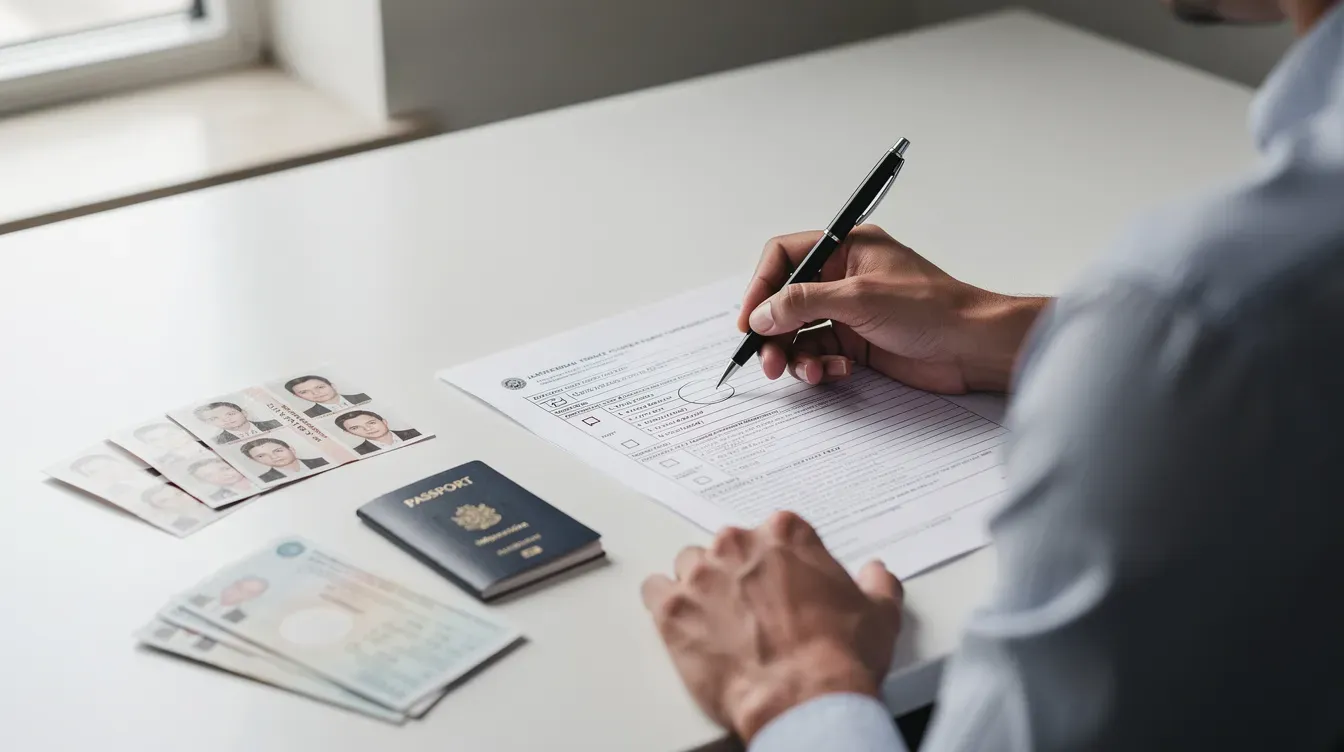
This is a practical, step-by-step guide on how to fill the paper UK passport application form using a realistic example. Whether you need a first adult passport, a renewal, or a child passport, each section of the form is covered with concrete details so you can see exactly what a correctly completed form looks like.
This guidance is based on current HM Passport Office rules as of June 2026 and is written for applicants in the UK and overseas. You can apply online or by post for a UK passport, and it is recommended to apply for a UK passport online for faster processing, since the application process can be done through an organized digital workflow to minimise errors. The UK Passport Service provides tailored prompts and a personalised document checklist when applying online.
That said, many applicants still need the paper application form, and that is where this article focuses. Where the online British passport application differs - such as digital identity confirmation replacing a physical countersignature - we will flag it.
Our main worked example follows "Jane Elizabeth Smith," a British citizen renewing her adult passport. Side notes cover first passport and child passport scenarios, plus considerations for British Overseas Territories citizen applicants. Every example uses concrete names, dates, and occupations rather than generic placeholders.
One critical reminder before we begin: do not book travel until you have physically received your new passport. Always check GOV.UK for the latest fees and processing times.
Before you start: choose the right type of UK passport application
The first step is identifying which application type you need, because this controls which sections of the form you must complete. Here are the main types:
First British passport (adult or child) - you have never held a British passport before
Adult renewal - renewing an existing passport that is expiring or has expired
Child renewal - renewing a child passport (under 16)
Replacement for a lost or stolen passport - your passport has been lost stolen or damaged and you need a new one
Replacement for a damaged passport - your passport has tears, water damage, or an unreadable chip
Change of details - updating name, gender, or other personal data
Extension - requesting a 50-page frequent-traveller passport
You must be 16 or over to apply for an adult passport, or turning 16 within three weeks of the application date. Adult passports are valid for 10 years. Child passports cover applicants under 16 and are valid for 5 years.
Different categories of British nationality exist - British citizen, British Overseas Territories citizen, British Overseas citizen - and only certain statuses are normally eligible for a full British citizen passport. If your immigration status or national status has changed, you will need further documentation.
Applicants born before 2 September 1929 may qualify for a free 34-page concessionary passport, so check this before paying any fee.
Current fees for paper forms: adult passport application fees are £100 paper (£88.50 online), and child passport application fees are £69 paper (£57.50 online).
Section-by-section example: how to fill the UK passport application form
This section walks through each numbered passport section of the standard UK passport application form, showing what to write and what to avoid.
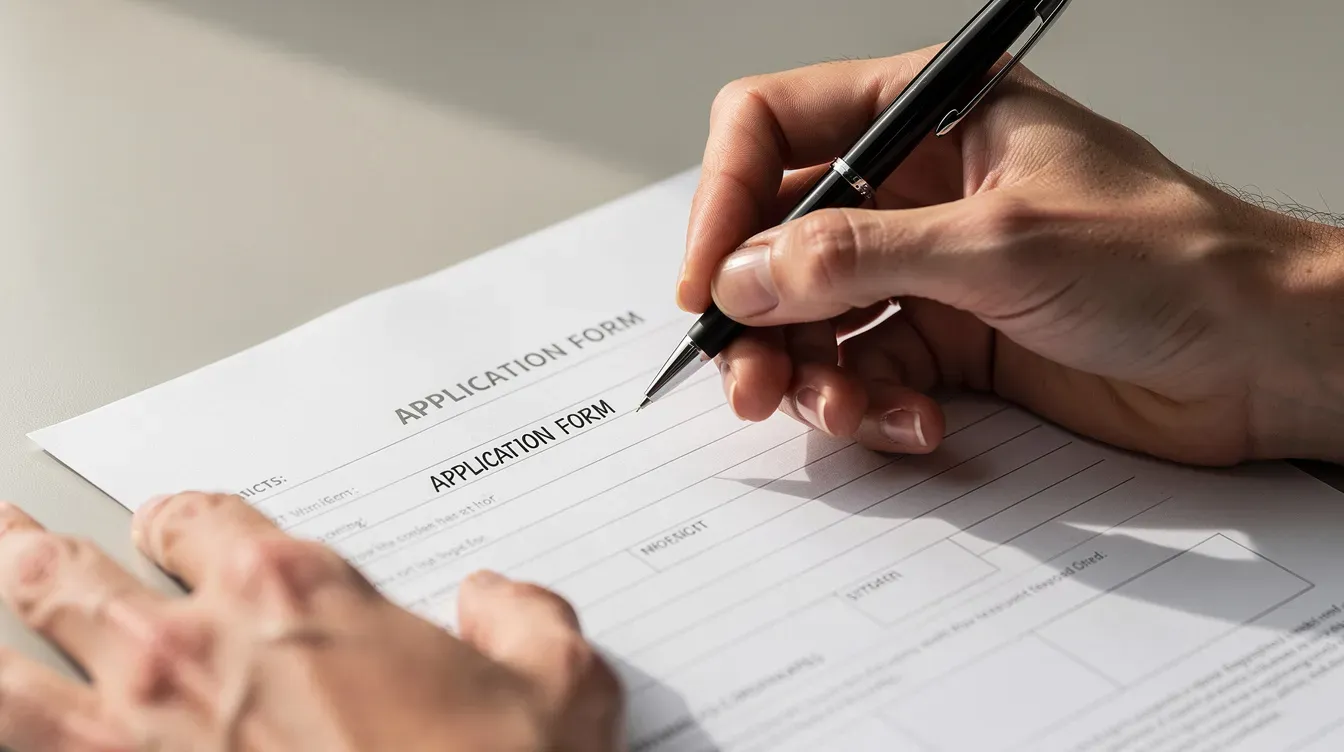
Our main worked example is an adult renewal for Jane Elizabeth Smith, born 14 March 1992 in Birmingham, with side notes for first-time and child applicants. A UK passport application requires black ink and CAPITAL LETTERS. If completing a paper form, write in capital letters using black ballpoint pen only. Maintain information strictly within white boxes on the form. More than three mistakes on a single line usually requires starting a fresh original passport application form.
Section 1 – What are you applying for?
Mark the box for your correct application type. The options are: first British passport, renewal, replacement for lost or stolen, replacement for damaged passport, change of details, or extension.
Jane is renewing a 10-year adult passport issued 15/05/2016 and expiring 15/05/2026, so she places an X in the "Renewal" box. She does not both mark renewal and first passport - only one box applies.
If your passport has tears, water damage, or has been chewed or altered, tick the damaged passport box and describe the damage in the "More information" section (Section 8) later.
For a first British passport - whether adult or child - ticking that box automatically triggers extra document and countersignatory requirements. Be ready for those.
Frequent travellers who need to obtain travel visas regularly can request a 50-page passport by marking the appropriate box. The standard passport has 34 pages, so a business traveller visiting multiple countries annually will benefit from the extra pages.
Section 2 – Applicant’s personal details
This is where you enter the applicant's full name, date of birth, place of birth, sex or gender, and marital status exactly as you want them to appear in the British passport. Your full name and details must exactly match your supporting documents when applying.
Names must match supporting evidence - birth certificate, deed poll, or marriage certificate. Jane's form reads:
Surname: SMITH
First and middle names: JANE ELIZABETH
Date of birth: 14/03/1992
Place of birth: BIRMINGHAM, UNITED KINGDOM
Sex: Female
Any name changes since birth or the last or current passport must be supported with documents. If Jane married and took a new surname, she would need her marriage certificate dated, for example, 21/09/2022.
Changes to date or place of birth after registration require strong legal evidence such as an amended birth certificate.
The form uses a "sex" or "gender" field. Applicants who have changed gender must tick the correct box and provide supporting medical or legal evidence, covered later.
Here is what not to do: writing "JANIE SMITH" (a nickname) instead of the legal name, or leaving out a middle name that appears on the birth certificate. Poor and incorrect photographs of the applicant's name - meaning mismatched details - are a leading cause of delays.
Section 3 – Previous and current passports
Everyone must complete Section 3A, giving details of any current or previous passports - both British and non British passport documents - held by the applicant.
Jane lists her current passport details:
Passport number: 123456789
Date of issue: 15/05/2016
Place of issue: HM PASSPORT OFFICE LIVERPOOL
In Part B, record any uncancelled foreign passports. For example, a dual national might list a valid Irish passport alongside their existing passport.
Part C covers a lost or stolen passport. If your stolen passport or lost passport needs replacing, describe where and when the loss occurred, include a local police crime reference number, and note that the loss should also be reported online. If a passport is lost or stolen, report it immediately via the GOV.UK Lost or Stolen Service.
If you have never held a British passport, you still answer the questions but mark that you have not previously held a UK passport. Previous passports of any nationality must be disclosed.
Section 4 – Parent’s details and British citizenship
This section is vital for a first British passport and for applicants whose British nationality depends on their parents or grandparents. Provide details of your parents if born outside the UK.
Enter full names, dates and places of birth, and nationalities of "Mother or Parent 1" and "Father or Parent 2." Example:
Mother: MARGARET ANN SMITH, born 18/11/1965, GLASGOW, UNITED KINGDOM, British citizen
Legal definitions of "mother" and "father" are used for British citizenship purposes. Step-parents or carers do not go here unless they are legal parents as recognised in UK law.
For adoption, surrogacy, or children conceived via assisted reproduction, the information should match adoption orders or parental orders. A parental responsibility order or other court documentation can be referenced, and further details should go into the "More information" section (Section 8).
If parents were born abroad applying for their child's passport, or were born after 1 January 1983, extra information about grandparents or a home office certificate of registration may be needed. Cross-reference the "Additional documents" section below.
Section 5 – Certificate of registration or naturalisation
This section applies to applicants who became British citizens by registration or naturalisation rather than by birth.
Tick "YES" if you hold a Certificate of Naturalisation or Registration. Enter:
Certificate number
Date of issue (e.g. 02/02/2021)
Place of issue (e.g. HOME OFFICE, LIVERPOOL)
Holding such a certificate normally confirms British citizenship even if you were previously a British Overseas Territories citizen or another type of British national, but supporting details may still be required.
The original home office certificate must be sent with the application. Original documents are required; photocopies are not accepted. Never send a photocopy of your naturalisation or registration certificate.
Section 6 – Children aged 12 to 15
If the applicant is a child aged 12 to 15 - or will turn 12 within three weeks - they must sign Section 6 themselves within the white box using a black ballpoint pen write clearly.
Unclear or oversized signatures can trigger a request for a new form. If the child cannot sign due to disability, this must be explained in the "More information" section and supported by documents such as a doctor's letter if requested.
Parents or guardians still sign the main declaration in Section 9 for child passports, even if the child signs Section 6. This applies to all child passport applications.
Section 7 – For official use only
Leave Section 7 completely blank. It is reserved for HM Passport Office use. Writing anything here - even a stray mark - can cause processing delays or require a new form blank to be obtained and restarted.
Section 8 – More information (optional but important)
Section 8 is used when the standard boxes are not enough. Common reasons include complex nationality routes, court orders, unusual name changes, sole parental responsibility, surrogacy arrangements, or explanations about a lost or stolen passport.
Here is a concrete example of what you might write:
"I changed my name by deed poll on 10/01/2024. I previously held a passport in the name JANE ELIZABETH BROWN. Enclosed: original enrolled deed poll dated 10/01/2024."
This section should also reference any court order dates and case numbers. If the applicant is unable to sign due to disability, state this here with a brief, factual explanation.
Keep entries short and formal. Use dates, document names, and reference numbers rather than lengthy narratives. The tone should match a legal statement: factual, specific, and free of personal opinion.
If you have a previous or alternative address that differs from the one on your current passport, note it in this section.
Section 9 – Declaration by the applicant or parent
This is the legal declaration where the applicant (for adult passports) or the person with parental responsibility (for child passports) signs and dates the form.
For child applications, the following people can sign: mother, father, second female parent, adoptive parent, or another person with parental responsibility under a court order. If the arrangement is complex, explain it briefly in Section 8.
You must sign within the white box on the application form without touching the borders. Use black ink. Enter the date in DD/MM/YYYY format - for example, 12/06/2026.
The declaration warns that giving false information is a criminal offence and can lead to refusal or cancellation of a British passport. Read the declaration text carefully before signing.
Section 10 – Countersignatory (accepted occupations and examples)
The countersignatory confirms the applicant's identity and that the photo is a true likeness. You need a countersignatory for your first passport application, for replacements of lost stolen or damaged passports, and for some child applications where the child's appearance has significantly changed. This is how you get the form countersigned.
Eligibility rules for the countersignatory:
Must have known the applicant (or the adult signing for a child) for at least 2 years
Cannot be related to the applicant
Cannot live at the same address
Cannot be in a personal relationship with the applicant
Must be a professional person or someone of "good standing" in their community
Must hold a valid passport (British or Irish preferred; overseas applicants have broader options)
Accepted occupations include: doctors, solicitors, teachers, chartered accountants, engineers, police officers, civil servants, and bank managers. These are recognised professions trusted by HM Passport Office. Passport specialists at HMPO may verify the countersignatory's details.
Who is not accepted: close family members, partners, housemates, people with recent criminal convictions, and most doctors who only know the applicant as a patient and not personally through a personal relationship outside of professional care.
Here is a realistic filled-in example for Section 10:
Full name: DAVID JOHN CARTER
Occupation: CHARTERED ACCOUNTANT
Professional qualification: ICAEW MEMBER NO. 1234567
Passport number: X1234567
Contact details: 020 7946 0958
Address: 15 KINGS ROAD, LONDON, EC1A 1BB
Signature and date: [signed] 12/06/2026
For paper applications the countersignatory must also write on the back of one photo "I certify that this is a true likeness of [full name]" and sign and date it. For Jane's application, the countersignatory writes: "I certify that this is a true likeness of Jane Elizabeth Smith," then signs and dates.

Contact details, delivery options, and tracking
The application form asks for your contact details to allow HM Passport Office and couriers to reach you. Enter:
A mobile number for SMS updates (you will receive texts when your application is received and when printing starts)
A daytime phone number
An email address you check regularly
Text Relay numbers can be added where indicated, or in the "More information" section if there is no specific box. This is the preferred method for applicants with hearing impairments.
For secure delivery of supporting documents, mark the secure delivery box and pay the extra fee. Without this, documents return via second-class post. Your passport itself is usually delivered by courier - no signature required, but delivery is logged with a photo and timestamp. If nobody is home, the courier will follow standard redelivery procedures.
Keep your application or barcode number safe. You can use it to track progress online or when phoning the passport office. Having an alternative address ready is also useful if you will be away from your main address during processing.
Supporting documents for adult and child passport applications
This section summarises the main document bundles. For full checklists, always check GOV.UK.
All applications need:
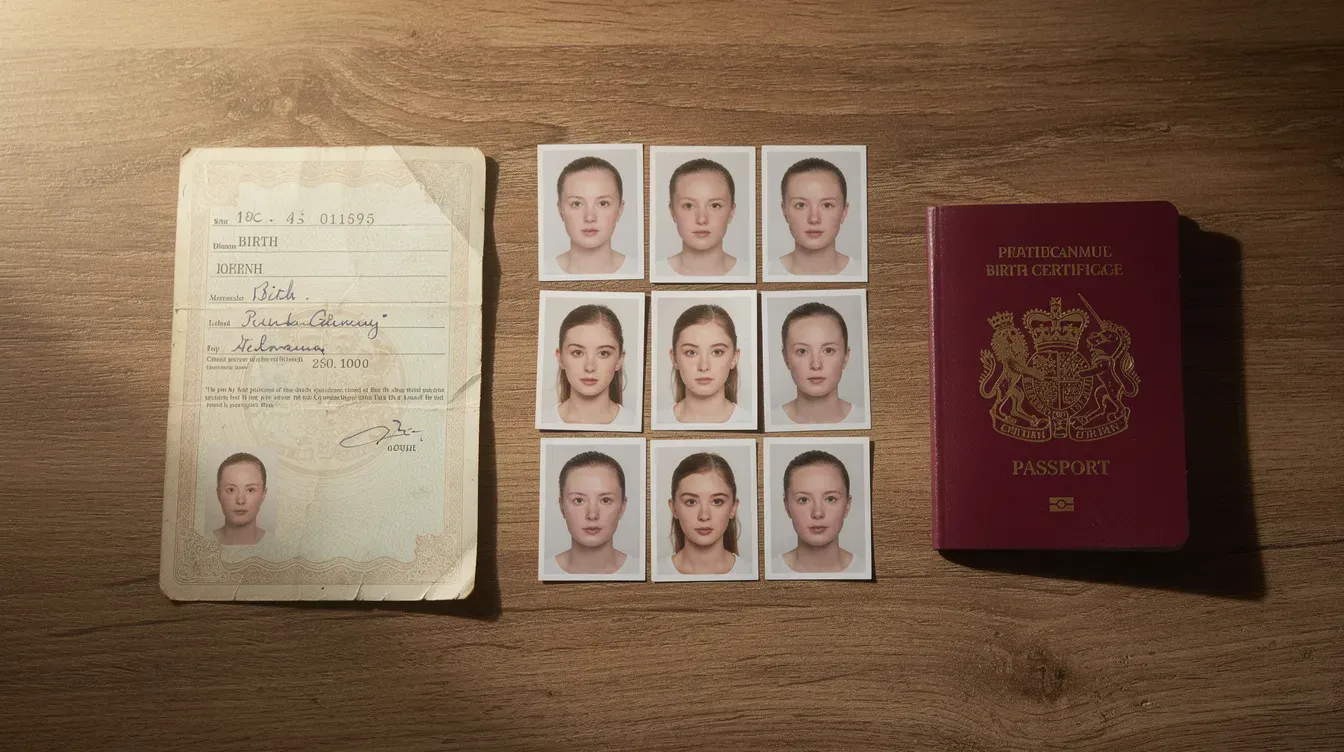
Two identical colour photographs meeting official photo rules - photos must be taken within the last month, with a cream or light grey background without filters. Digital photo requirements apply equally to photographs passport applications submitted online
Your current passport (if you hold one) plus any valid foreign passports
For a first British passport (adult or child):
Full birth or adoption certificate
Parent(s) passports or birth certificates
Any Home Office registration or naturalisation certificates
You must provide two identical passport photos - not one, not three
For adult renewals:
Completed paper application form
Two identical passport photos (current passport photo standards apply)
The previous passport
Name change evidence if applicable - include your marriage or civil partnership certificate, civil partnership certificate, or deed poll as relevant
For child passports:
Evidence of parental responsibility (full birth certificate naming both parents, or court orders)
This is especially important where only one parent is applying
For applicants born abroad applying or adopted overseas:
The passport used to enter the UK
Evidence linking the applicant to a British citizen parent or grandparent
British Overseas Territories citizens who have become British citizens need to send proof of the status change. Original documents must be sent; photocopies are not accepted in any of these categories.
Incorrect photographs - including poor and incorrect photographs that do not meet the current passport photo standard - are one of the most common reasons for delays. Check the popular passport pages on GOV.UK for current photo guidance.
Name changes, gender changes, and complex personal details
This section covers how to handle changes to name, gender, date of birth, or nationality between your last passport and the new application.
Common name change scenarios and required evidence:
Marriage or civil partnership: original marriage certificate (e.g. dated 21/09/2022)
Divorce and reverting to maiden name: decree absolute plus birth certificate showing original name
Deed poll: original enrolled deed poll (e.g. dated 10/01/2024 at the Royal Courts of Justice)
Gender reassignment name change: Gender Recognition Certificate, or a letter from a medical consultant plus deed poll
Changing order or spelling of forenames: statutory declaration or deed poll
Where the applicant's national status has changed - for example, from British Overseas Territories citizen to British citizen in 2019 - evidence of that change must accompany the form and be summarised in Section 8. This is a matter of British nationality law and further documentation will be required.
Changes to date or place of birth are rare and require strong legal evidence, such as amended birth certificates or court orders. These must be clearly explained in the "More information" section.
How to fill the form neatly and avoid common mistakes
Here is a practical checklist of "do" and "don't" points to prevent avoidable delays.
Do:
Use a black ballpoint pen for every entry
Write in capital letters throughout
Stay within the white boxes
Cross out mistakes with a single line and write the correct information in the same box if space allows
Keep the official guidance booklet that comes with the paper forms next to you as you fill in each question
Don't:
Do not use correction fluid on passport application forms - ever
Do not use blue, green, or any other coloured ink
Do not write outside the white boxes
Do not use nicknames or abbreviations for your legal name
Common pitfalls that frequently asked passport questions revolve around:
Missing signatures in Sections 6, 9, or 10
Mismatched names versus supporting documents
Incomplete parent details for first passport applications
Photos that do not meet the official standard
A mini-checklist before you seal the envelope:
Correct form type ticked in Section 1
All relevant sections completed (not all apply to every applicant)
Countersignatory filled in and photo certified where needed
All supporting documents gathered (originals, not copies)
Correct fee included or paid
Passport fees are non-refundable if the application is unsuccessful, so double-check everything
Submitting your UK passport application and what happens next
You have three main submission routes:
Online application - digital form with digital identity confirmation, the fastest route to a fast passport renewal. Payment methods include debit or credit cards for online applications. It is the best way to apply for a passport online if you want to minimise errors. The application online process is streamlined compared to paper
Paper form sent by post - mail directly to the address printed on the form. This is the standard send service for paper forms
Post Office Check and Send - the Post Office offers a Check and Send Service for applications, where staff at a post office check your form and documents before sending them on. You can submit your application at a local Post Office branch. The Post Office Check and Send Service incurs an additional fee, but a post office check can catch errors that would otherwise delay your application. Both digital and paper Check and Send options exist
Applications can be submitted in person for urgent processing. Urgent passport services can be completed in 1 day through the Premium service if you need your passport urgently. The professional service at a passport office appointment centre handles these requests, though availability is limited and fees are significantly higher.
Standard processing time is 3 weeks for UK passport applications - this applies when all documentation is correct. First-time passports may take up to 6 weeks. Processing may take longer if additional information is required.
An identity interview may be required for applicants over 16 applying for their first passport. You will receive written or email instructions if this applies to you.
Applications can be submitted online or by post. You must include two identical photos with your application regardless of which route you choose. Keep your application number and any courier tracking references safe. Check your email and phone regularly for messages from HM Passport Office or the delivery company.
A carefully completed application form, accurate supporting documents, and clear contact details will greatly reduce delays when applying for or renewing a British passport. Follow the passport application guidelines in this article section by section, refer to the official guidance for any edge cases, and you will have your new passport in hand without unnecessary stress. Take it one section at a time - your travel visa stamps and future adventures are worth the effort of getting the paperwork right.