
Companies House has launched a mandatory identity verification process that affects every company director and person with significant control in the UK. Starting 18 November 2025, verifying your identity is no longer optional - it is a legal requirement. Here is everything you need to know to stay compliant and avoid penalties.
Key Takeaways
18 November 2025 is the mandatory start date. Identity verification is mandatory from 18 November 2025, with a 12-month transition period for existing directors and people with significant control (PSCs) to comply.
You can verify for free. You can verify identity using gov.uk one login at no cost, or use an authorised corporate service provider if you prefer professional assistance.
You receive a unique code. A companies house personal code is issued after successful verification. This personal code is required for all future filings, including confirmation statements.
Multiple verification routes exist. You can use the login app on a smart phone, verify online by answering security questions online, or attend a participating post office with photo id for in-person checks.
Non-compliance carries real consequences. Failure to verify may result in fines or prosecution, blocked filings, and the inability to start a new company.
Overview of the Companies House Identity Verification Launch
From 18 November 2025, companies house began rolling out mandatory identity verification under the Economic Crime and Corporate Transparency Act 2023. This marks a fundamental shift: Companies House is no longer a passive filing registry but an active gatekeeper with enforcement powers. Verification is mandatory under the corporate transparency act, and the reforms aim to improve the accuracy and reliability of company registration information.
The identity verification process is a one-time exercise per person. Once you have a verified identity, it is linked to your companies house account and records via a unique personal code. The measures are designed to create a more trustworthy business environment for everyone involved - directors, investors, lenders, and the public.
Voluntary verification has been available since April 2025 through gov.uk one login, and by November 2025, over one million people had already completed it ahead of the mandatory deadlines. If you have not started yet, now is the time.
Why Identity Verification Is Being Introduced
Historically, Companies House did not verify the identity of company directors or PSCs. Anyone could register a company using fabricated details, making the UK corporate register vulnerable to abuse. Shell companies were set up with fictitious officers to launder money, commit fraud, and evade sanctions.
The new identity verification process aims to combat fraud and money laundering by requiring every individual in a registrable role to prove who they are. Verification can include biometric checks - such as scanning the chip in a biometric passport or matching a live selfie to a photo id - ensuring that the person filing is genuinely who they claim to be.
For legitimate businesses, the benefits are significant: a more reliable companies house register, greater confidence when dealing with counterparties, and stronger protection against impersonation. The requirement applies equally to UK and non-UK residents connected with UK companies and other registered entities.
Who Needs to Verify Their Identity and When
From 18 November 2025, verifying your identity for companies house is a legal requirement for UK company controllers. The identity verification process is part of a phased rollout for existing company directors and PSCs, with a 12-month transition running through to autumn 2026.
The key groups who need to verify their identity include:
Company directors (and directors appointed to overseas companies with UK establishments)
People with significant control PSCs
Members and managers of any limited liability partnership
General partners in limited partnerships
Individuals who file on behalf of companies, including any company secretary acting in a filing capacity
Corporate members and relevant officers of corporate PSCs
Timing depends on your role:
Role | When You Must Verify |
|---|---|
New directors appointed after 18 Nov 2025 | Before or at the time of the appointment filing |
Existing directors | By your company's confirmation statement date falling within the transition period |
PSCs who are also directors | Same as directors, plus provide your code via the psc service within 14 days |
PSCs who are not directors | Within 14 days from the first day of your birth month after 18 Nov 2025 |
All company directors must verify their identity by 18 November 2025 for new appointments, and existing directors must do so by their due dates within the transition window. People with significant control must also verify their identity. Companies must ensure all officers verify their identity by their due dates to avoid disruption to filings.
You only need to verify once, even if you hold multiple roles across several companies. However, you must separately link your verified identity to each role using your personal code.
Verifying Your Identity Directly with Companies House Using GOV.UK One Login
The main way to verify your identity directly is through the free "Verify your identity for Companies House" companies house service, which uses gov.uk one login. Verification can be completed online via this route at no charge.
To start, you create or sign into a gov.uk one login using a single email address. The service then asks a few simple questions to determine the best verification route based on your device, your identity documents, and your address history. Identity verification can be completed in 10-15 minutes in most cases.
There are three main routes the service may offer:
Using the GOV.UK ID Check app on your smart phone
Answering online security questions via the GOV.UK website
Verifying identity online is not possible? Attending a participating post office in person
You must not send id documents by post or email to Companies House. All verification goes through the official digital or post office routes.
Using the GOV.UK ID Check / One Login App
The login app is often the fastest method. The average completion time for verification is under 2 minutes 30 seconds when using this route. You need a compatible smart phone (iOS 15+ or Android 10+ with NFC capability) and acceptable photo id - typically a biometric passport with a biometric chip or a uk photo driving licence.
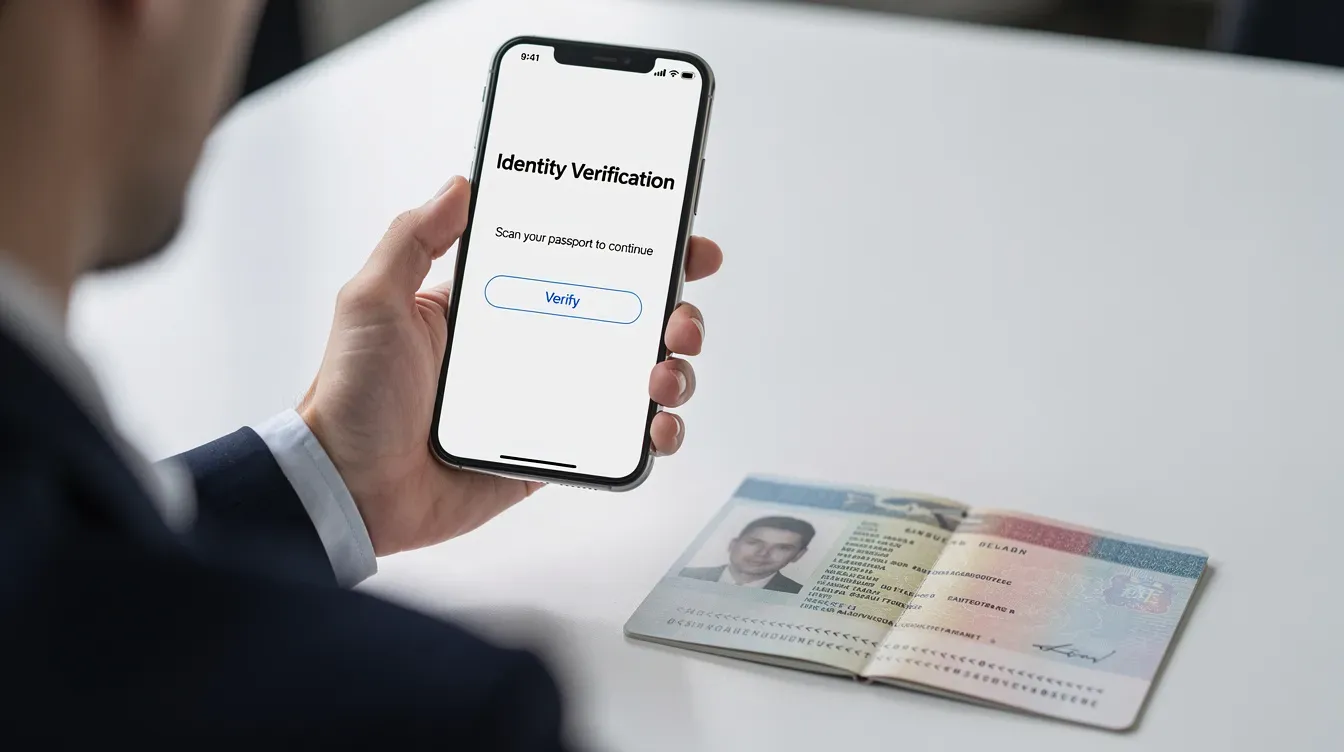
The steps are straightforward: start the process on GOV.UK, choose to use the app, download it if needed, scan the chip in your passport or the front of your driving licence, and take a live selfie. The app checks the authenticity of your identity documents and uses facial recognition to match your live photo to the photo id.
If you find it easier, you can start the journey on a laptop and switch to your phone mid-process. Guidance is available for users who may need help with technology.
Online Security Questions via the GOV.UK Website
This route works best for UK-based users with a financial footprint - for example, a uk bank account, credit card, loan, or mobile phone contract. You enter details from an accepted identity document, then answer security questions based on information held by credit reference agencies. These might cover building society details, bank accounts, previous addresses, or your national insurance number.
You do not need to verify identity online through the app if this route is available. It is suitable for people who have stable UK credit history but have difficulty using the app. Questions are time-limited, and errors may mean you need to choose a different route to verify online.
In-Person Verification at a Participating Post Office
When online methods are not suitable, the post office route is your fallback. You first enter your photo id details online within the gov.uk one login service, then attend a participating post office branch.
At the branch, staff scan your photo id and take a live photograph. Acceptable documents include uk passports, non-UK passports, a uk photo driving licence, EU photocard driving licences, a national identity photocard, or EU national identity cards - all must be current, not expired.
You are normally emailed the result within around one working day. If successfully verified, Companies House will issue your personal code. Make sure to attend within the timeframe shown on your customer letter (usually around 15 days), or you will need to restart.
Verifying Through an Authorised Corporate Service Provider (ACSP)
Not everyone can - or wants to - verify identity directly. Verification can be done via an authorised corporate service provider. ACSPs are professional firms such as accountants, solicitors, and company formation agents that are registered with Companies House and supervised under UK anti money laundering rules.
ACSPs follow the same assurance standards as Companies House. They will ask for identity documents (photo id and supporting documents), run identity verification checks, and confirm the result electronically to Companies House. A corporate service provider acsp is particularly useful for individuals without accepted UK id, those based overseas, or anyone who prefers professional support through the id verification process.
When you verify via an ACSP, you do not need to use gov.uk one login for the verification step itself. However, setting up a one login account is still helpful to access your companies house personal code later.
Before using any provider, confirm that they are listed as a registered ACSP with Companies House. Avoid unregulated intermediaries or anyone asking to "borrow" your identity. Authorised agents are subject to oversight and accountability.
Your Companies House Personal Code (House Personal Code)
Once your identity is successfully verified, you will receive a unique companies house personal code. This house personal code is an 11-character identifier that is unique to each individual - it is not linked to any specific company or role.
The personal code links verified identities to company records. Think of it as the thread connecting your real identity to every registrable position you hold at Companies House.
How you receive and use your code:
If verified via gov.uk one login: viewable in your companies house account under "Manage account"
If verified via an ACSP: sent to the same email address you provided during verification
Directors must provide their personal code in confirmation statements. Specifically, you must provide your personal code in your company's confirmation statement filed after 18 November 2025. PSCs use a separate service - the dedicated psc service - to provide your personal code within 14 days of their verification duty starting. Individuals must provide their personal code within 14 days as PSCs.
If you are both a director and a PSC, you only verify once but use the same code to link to both roles. The personal code is required for all future filings with Companies House, so keep it secure. GOV.UK guidance covers recovering or updating your code if you lose access.
Preparing Your Identity Documents and Personal Details
Before attempting to verify, check that the personal details held at Companies House - your name and date of birth - match exactly what appears on your identity documents. Mismatches in spelling, missing middle names, or incorrect dates of birth will cause the verification process to fail.
Where discrepancies exist, submit corrections to Companies House and wait for the updates to process before trying to provide your personal code in filings.
Common acceptable id documents include:
Biometric passport (UK or international, with biometric chip)
UK photo driving licence
Immigration documents (BRP, BRC, Frontier Worker Permit)
National identity photocard or EU national identity cards
If you lack typical photo id, start the gov.uk one login process anyway - the service will confirm whether alternative routes are available or whether you may need support from an ACSP.
Never email or post copies of identity documents directly to Companies House unless explicitly instructed by official guidance.
What Happens If You Do Not Verify Your Identity
Verifying your identity with companies house is now a legal requirement, and failing to comply carries serious consequences.
Criminal offences and fines. Failure to verify may result in prosecution and fines. A financial penalty can be imposed on individuals and, in some cases, on their companies.
Blocked filings. Unverified directors cannot file confirmation statements after 18 November 2025. If your company's confirmation statement date arrives and your directors are not verified, the filing cannot proceed.
PSC offences. Continuing as a PSC without verification is an offence during and after the transition period.
Public register annotations. Companies House will publish a note against non-compliant individuals on the companies house register, which can damage business reputation and relationships with banks or investors.
Incorporation blocked. You cannot start a new company without completing identity verification. Any new company formation will require all proposed directors and PSCs to have a verified identity beforehand.
Verify well ahead of your deadlines. If you are using an ACSP or expect complications with your identity documents, allow extra time. Do not wait until the last day of your company's confirmation statement date.

Getting Help with the Verification Process
If you find technology difficult, you can ask a trusted friend, family member, or adviser to help you work through the gov.uk one login process. You will still need to answer security questions yourself and take your own selfie where required.
GOV.UK One Login has customer support available on weekdays, including phone and online support, for technical issues such as login problems, app errors, or questions about accepted id documents.
Digital accessibility support services such as AbilityNet can help you adapt your device - for example, with larger text or higher contrast - if you have accessibility needs.
If online methods fail entirely, use the participating post office route or seek out an ACSP who can manage the id verification process on your behalf as a separate service. There is always a route available, regardless of your technical confidence.
Frequently Asked Questions
Below are answers to common questions not fully covered above, focusing on timing, non-UK residents, and practical issues.
Do I need a UK address or UK ID document to verify my identity?
No. You do not need a UK address or UK-issued id to verify. Many non-UK officers can use internationally recognised uk passports or other acceptable identity documents either via gov.uk one login or through an ACSP. However, availability of specific online routes - such as answering security questions online - may be limited if you do not have a UK credit history. In that case, the app, post office, or ACSP methods are more likely to be appropriate.
Can more than one person use the same email for GOV.UK One Login?
No. Each verified identity must have its own gov.uk one login linked to a unique email address. You cannot use the same email address to verify two different people. If multiple directors or PSCs in an existing company currently share an email for WebFiling, each will need to create separate accounts with different email addresses.
How long does the verification process usually take?
The verification process using the GOV.UK ID Check app can be completed in minutes, with most users finishing in under 2 minutes 30 seconds. Post office and ACSP routes may take longer - typically from one working day to several days - if additional identity verification checks on identity documents are required. You can verify id at a later date if your first attempt is unsuccessful.
What should I do if my verification attempt is unsuccessful?
Read the error message carefully. It may suggest a different verification route - for example, moving from the app to security questions, or from online to a participating post office. Check that the details you enter details for match exactly what is on your identity documents. If problems continue, contact GOV.UK One Login support or consider verification via an ACSP.
Is my personal code a digital ID that others can use to act on my behalf?
No. The companies house personal code is not a general digital ID and does not allow others to impersonate you outside of companies house services. You should only share your personal code with trusted individuals or professionals who file on your behalf. Keep it secure, and never sell or trade it - misuse can lead to serious legal consequences. The code exists solely to link your identity checks to your roles on the companies house register.