If you are planning international travel, understanding your passport type matters more than ever. Border control systems worldwide now rely on biometric technology embedded in travel documents, and the rules around which passports qualify for visa waivers, epassport gates and faster processing are tightening. This guide explains everything you need to know about chip passports, from what they store to how they work at the border and how to apply for one.
Key Takeaways
A chip passport, biometric passport and e passport all refer to the same thing: a travel document containing an embedded electronic chip that stores biometric information, primarily a digitised photograph of the holder's face.
All UK passports issued since October 2010 are biometric passports, and british citizens can use them at epassport gates in many countries for faster processing through border control.
The embedded microchip and multiple security features help combat fraud and support automated identity checks, but the chip does not store criminal record information, medical data or financial history.
Travellers should always check destination rules before booking trips. For example, the US Visa Waiver Program has required a biometric passport for UK visitors applying through ESTA since April 2016.
If your passport lacks the chip symbol on the front cover, you may need to renew before travelling to countries wishing to verify identity electronically.
What Is a Chip Passport (Biometric Passport)?
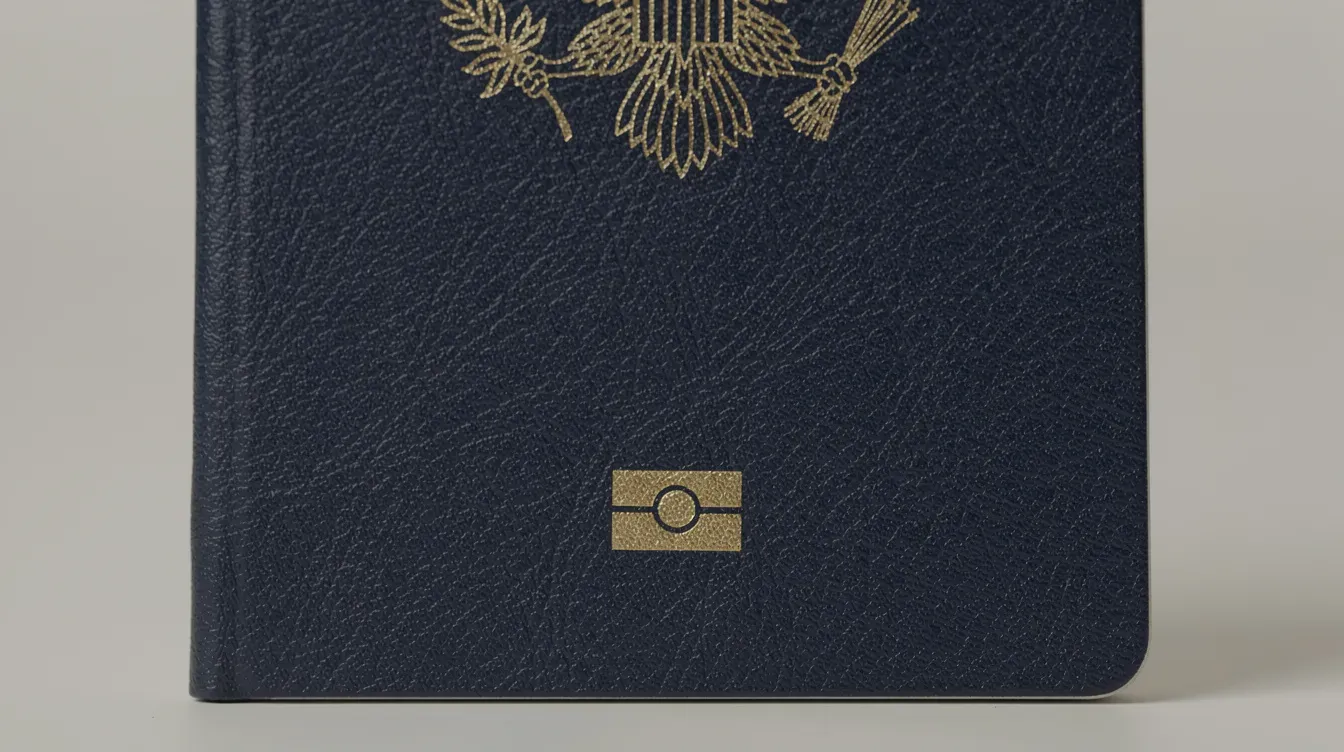
A chip passport is a biometric passport (also called an e passport) containing an embedded electronic chip on or near the identity page. This embedded microchip stores personal and biometric data, allowing border control systems to verify the passport holder's identity electronically. It looks and feels much like a traditional passport, but carries a small gold biometric symbol resembling a camera icon on the passport cover.
Biometric passports were introduced internationally from around 2006 under standards set by the international civil aviation organization (ICAO), specifically to strengthen border control and reduce identity theft. The goal was straightforward: create a travel document that is far harder to forge or misuse than older paper-only designs.
In the UK, biometric passports were launched in 2006. All standard british passport documents issued or renewed from October 2010 onwards are biometric. If you hold a UK passport issued after that date, you already have a chip passport.
For clarity, the following terms all refer to the same passport type:
Chip passport
Biometric passport
E passport / e passports
Digital passport
These are not different products. They describe a single type of travel document meeting ICAO biometric standards and technical specifications.
How to Tell If Your Passport Has a Chip
Not sure whether your passport has an electronic chip? Here are the practical checks you can do at home without any special equipment:
Look at the front cover of your passport. A small rectangular symbol (a gold camera-like icon with a horizontal line through a circle) at the bottom indicates an embedded microchip. Chip passports feature a universal logo indicating the presence of the chip.
If you hold a UK passport issued since 2010, it will almost always include this symbol. All British passports issued today are biometric.
Check the data page inside your passport. Modern passports usually reference "ePassport" or include wording confirming an electronic chip is present, along with biographical details printed on the page.
Older non biometric passports, particularly those passports issued before 2006, will lack this symbol. However, they remain valid for travel until their printed expiry date, unless your destination specifically requires a biometric passport.
If you plan to use epassport gates or apply for programmes like the us visa waiver programme (ESTA), confirm your passport's biometric status before travelling.
If you cannot see the chip symbol and your passport was issued before 2006, you almost certainly have a non-biometric document. Consider renewing before your next trip abroad.
What Data Is Stored on the Chip?
The embedded microchip mirrors most of the biographical information printed on the passport and adds biometric data used for identity checks. Here is what is typically stored:
Data Element | Description |
|---|---|
Full name | As printed on the data page |
Date of birth | Day, month and year |
Nationality | Country of citizenship |
Passport number | Unique document identifier |
Date of issue | When the passport was issued |
Expiry date | When the passport ceases to be valid |
Digitised facial image | High-resolution digital photograph of the holder |
Sex | As declared by the holder |
The microchip stores the passport holder's facial image and personal details. The facial image is stored as biometric data, encoded so that automated systems can measure facial features such as the distance between eyes, nose, mouth and jawline. This is the biometric identifier used at border control.
UK biometric passports store a high-resolution digital facial image. Importantly, UK biometric passports do not store fingerprint or iris data, even though some different countries do include fingerprint biometrics or iris scans on their chips. The chip data is encrypted to prevent unauthorized access, and it can only be read by authorised passport readers at border control or consular offices.
Chip passports store biometric data such as digitized images and, in some countries, fingerprints. The chip itself is passive, meaning it has no battery and only activates when held near a reader's electromagnetic field. Chip passports use RFID technology for wireless data reading, operating at 13.56 MHz under international standards.
How a Chip Passport Works at Border Control
When you arrive at border control, systems read the embedded microchip in your passport and compare chip data with the person presenting the document. Biometric verification compares the stored facial image with the traveller's live image, confirming that the person holding the passport is the person it was issued to.
The verification process combines three elements:
The physical document - officers or machines inspect the printed data page, security features and photograph.
The machine-readable zone (MRZ) - the coded lines at the bottom of the data page, scanned electronically.
The chip's biometric information - the image stored on the chip and biographical data, cross-checked against the printed details and MRZ.
When the passport is scanned, border control systems cross-check printed details, MRZ data and chip contents for consistency and authenticity. Chip passports must match biometric data with the physical passport for identity verification. Any mismatch can trigger further investigation.
This process happens at both traditional staffed border booths and at automated epassport gates in many countries. Checks can also be cross-referenced with immigration, watchlist or visa databases, depending on the country's system and the traveller's immigration status.
Using ePassport Gates (eGates)
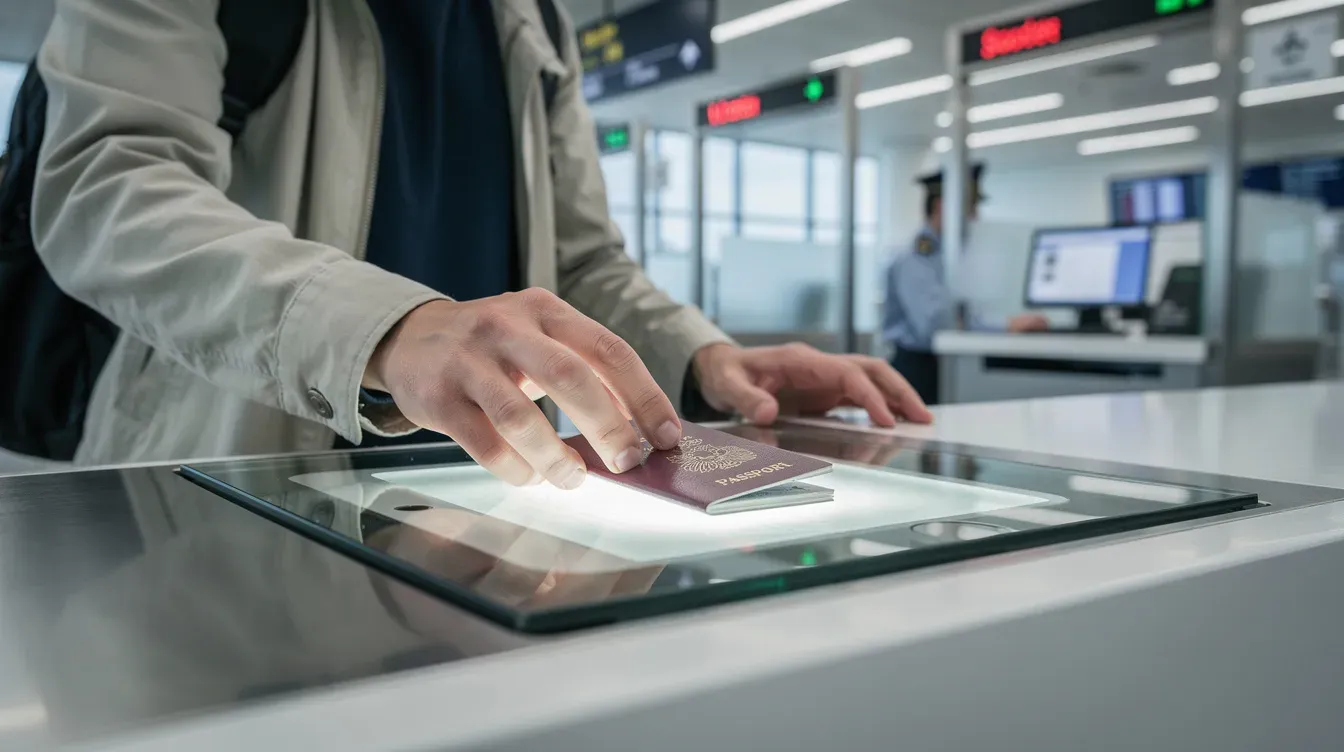
Biometric passports support faster processing at border control using eGates. Automated eGates can be used at airports with chip passports, and here is how the process typically works:
Step 1: Place your passport photo page face-down on the scanner. The gate reads the MRZ and wirelessly accesses the passport chip.
Step 2: Step into the gate area and face the camera. The system captures a live image of your face.
Step 3: The gate matches the live facial image captured at the gate with the digital facial image stored in the chip. If the biometric match is confirmed and no alerts are flagged, the gate opens.
Step 4: Walk through. The entire process typically takes under 30 seconds.
In the UK, epassport gate eligibility typically includes british citizens and nationals of certain partner countries aged 10 or 12 and over, depending on the airport and date-specific rules.
Practical tips for faster processing at epassport gates:
Remove hats, sunglasses and head coverings (unless worn for religious reasons)
Keep prescription glasses on if you normally wear them, but avoid glare
Face the camera directly and follow on-screen instructions
Do not hold items in front of your face
If a chip cannot be read or the biometric match fails, you will be redirected to a border force officer for manual checks. This is not unusual and does not imply any wrongdoing.
Manual Checks by Border Officers
Even with biometric passports, traditional officer-led checks remain a core part of airport security and border control. Not every traveller can or should use automated gates.
When you see an officer, they will:
Scan the MRZ and chip using a desktop reader
Visually inspect security features (holograms, watermarks, inks)
Compare your face with the holder's passport photograph
Ask questions about your travel, purpose of visit and onward plans if needed
Check databases for visa status, watchlists or entry restrictions
Some passengers must always see a border force officer rather than using epassport gates. This includes children below a threshold age, travellers on certain visa categories, and anyone whose passport or status has been flagged.
International Variations in Chip Use
While biometric passports follow ICAO standards globally, each country designs its own border control processes. By mid-2019, over 150 countries were issuing biometric passports, but the way they are used at the border varies.
Some states use chip passports only for identity confirmation, while others combine them with additional facial and fingerprint biometrics taken on arrival. For example, the United States uses biometric passports under the visa waiver program, but still collects fingerprints and photographs from most arriving passengers at its own border control.
Many countries require a valid e-Passport for visa-free travel, and chip passports align with international security standards for easier border crossing. Before each trip, check whether a biometric passport is mandatory for visa waivers or fast-track entry schemes at your destination. Entry rules can differ significantly between countries wishing to verify traveller identity electronically.
Security Features of Biometric Passports
Chip passports combine physical and electronic security features to prevent forgery and impersonation. Biometric passports have physical security features to reduce fraud risk, working alongside the digital protections within the chip itself.
Security operates on two layers:
Visible design elements - holograms, watermarks, special inks, micro-printing and complex background patterns
Invisible or cryptographic protections - digital signatures, encryption and access control protocols within the chip
Together, these features reduce fraud risk and support more reliable verification at border control worldwide. No system is completely immune to abuse, but biometric passports significantly raise the difficulty and cost of successful identity fraud.
Chip-Level Protections
The embedded microchip is protected by digital signatures, making it extremely hard to alter data stored on the chip without detection. Border systems verify the chip's signature against trusted keys issued by the passport-issuing country, so cloned or modified chips are flagged as invalid.
Access control mechanisms add another layer. Basic Access Control (BAC) requires data from the MRZ before chip contents can be read, reducing the risk of unauthorised skimming. Newer protocols such as PACE use stronger asymmetric cryptography, and ICAO requires inspection systems to support these updated formats.
Many countries participate in key-sharing and verification arrangements through the ICAO Public Key Directory, enabling cross-border validation of chip authenticity. This means a uk biometric passport can be verified just as reliably in Tokyo or Toronto as it can in London.
Physical Security Features and the MRZ
The Machine-Readable Zone (MRZ) consists of two or three lines of characters at the bottom of the data page. It encodes core biographical details - name, passport number, nationality, date of birth and expiry date - in a format that can be read by border control systems in seconds.
The MRZ also serves as the key to unlock the chip for reading. Without scanning the MRZ first, a reader cannot access the chip contents under Basic Access Control.
Classic physical security features on modern passports include:
Holographic images that shift colour and pattern when tilted
Micro-printing visible only under magnification
Optically variable inks that change colour at different angles
UV-reactive patterns invisible under normal light
Complex background designs (guilloché patterns) that are extremely difficult to reproduce
Laser perforations forming the passport number through multiple pages
Officers and automated systems compare printed details, MRZ and chip data. Any mismatch between these three sources can signal tampering or a counterfeit document.
What the Chip Does Not Contain
The chip in a biometric passport is designed for identity verification, not for storing your full history or private life. This is one of the most common areas of confusion.
The chip does not contain:
Criminal records or convictions
Driving history or penalty points
Medical files or vaccination records
Credit information or financial data
Real-time location or GPS tracking data
While border agencies may have lawful access to separate law-enforcement databases, scanning the chip itself does not reveal a detailed criminal record. The chip stores only the biographical information and biometric data needed to confirm that the person holding the passport is the rightful owner.
Developed systems such as those in the UK and EU are subject to data protection laws that restrict how biometric information can be accessed, stored and used.
Benefits of Chip Passports for Travellers and States
Biometric passports exist to balance secure borders with smoother, faster journeys for legitimate travellers. The benefits appear at both individual level (shorter queues, more reliable recognition) and system level (stronger identity assurance, reduced fraud). These advantages depend on accurate data, a readable chip and functioning border infrastructure.
Enhanced Security and Fraud Prevention
The strong link between the embedded microchip's facial biometric and the passport holder makes impersonation significantly more difficult than with older paper-only documents. Biometric passports were launched in 2006 to combat identity theft, and they continue to serve that purpose.
Attempts to alter photos or data pages are easier to detect because border systems cross-check the chip, MRZ and printed details. Counterfeiters must now defeat both physical and electronic protections simultaneously, raising the barrier to successful document fraud.
Biometric passports enhance security against identity theft and fraud. Stronger document security helps governments combat people smuggling, identity theft and other cross-border crimes.
Faster Processing at Border Control
Biometric passports enable automated epassport gates, which can process travellers in seconds once systems confirm a facial match and a clean record. This reduces queuing times at busy hubs such as London Heathrow, Amsterdam Schiphol and Dubai International.
Consistent, automated checks free human officers to concentrate on higher-risk or complex cases rather than processing every standard tourist manually. Passport holders benefit most when they follow gate instructions carefully and keep their passport chip in good condition.

More Consistent Identity Verification
Biometric matching reduces reliance on subjective visual comparison by individual officers, who may vary in experience or be under time pressure. Automated systems apply the same thresholds and algorithms for each traveller, promoting fairness and reducing human error.
Officers still retain discretion for follow-up questioning, but initial identity verification through facial recognition technology becomes more standardised. The physical characteristics captured in the digital photograph are compared consistently, regardless of which airport or country you arrive in.
Compatibility with Global Standards and Future Systems
Chip passports are designed according to ICAO Document 9303 standards, allowing them to be read reliably worldwide. This means a new passport issued in the UK can be verified at border control in most countries without compatibility issues.
E passports integrate more easily with newer initiatives such as digital travel credentials, mobile boarding systems and pre-clearance programmes. Holding a biometric passport positions you to adopt future innovations like biometric corridors or fully digital visas as they become available.
Applying for or Replacing a Chip Passport
For most nationalities, including the UK, any new passport or renewed passport will automatically be an e passport with a chip. You do not need to request a biometric version specifically. Applications follow the same core steps as a traditional passport: proving identity, nationality and, where relevant, entitlement to hold a specific passport type.
Apply well ahead of your travel dates. Processing times can increase sharply during peak holiday seasons, and most applicants underestimate the time needed.
Steps to Apply for a British Biometric Passport
Here is the step-by-step process for passport applications for a new biometric passport in the UK:
Check eligibility. Confirm you are entitled to a british passport - for example, if you were born in the UK, have british nationality, or have been granted british citizenship through naturalisation or registration.
Gather supporting documents. You will need your birth or adoption certificate, any previous passports, a naturalisation certificate if you have been granted british citizenship, and evidence of any name changes. Supporting documents must confirm your identity and nationality.
Prepare your photo. You must provide a digital passport photo (a digital photo meeting HM Passport Office rules on background, expression, size and head coverage). The digitised photograph embedded in the chip will be based on this image. A clear, compliant digital photograph is essential - the image stored on the chip is derived from it.
Complete the application. Fill in the online form via GOV.UK, ensuring all biographical details exactly match your supporting documents. Paper forms are available but cost more and take longer to process. Most applicants use the online route.
Pay the fee. The standard online application fee for adults is £94.50. Passport application fees are reviewed periodically - paper applications cost more. For further information on current fees, check the GOV.UK website.
Submit and track. Send your supporting documents as instructed, and track progress using the official reference number. Respond quickly if the passport office requests more information.
Receive your passport. Once approved, the new biometric passport is delivered securely. Adult passports normally have a 10-year validity period. Children's passports are valid for 5 years.
Processing Times, Costs and Urgent Travel
Passport applications usually take around three weeks to process under normal conditions. During peak demand (typically spring and early summer), this can extend significantly.
Urgent options exist:
Fast-track service - typically one week, at a higher fee
Premium (same-day) service - available by appointment at selected passport office locations, at the highest fee tier
Do not book non-refundable travel until you physically receive your new biometric passport. Fees are non-refundable once processing has begun, even if your travel plans change.
If you have settled status or another form of immigration status tied to your passport, make sure to update your records when you receive a new document.
Replacing Lost, Stolen or Damaged Chip Passports
A lost or stolen passport should be reported immediately to the home office (or the passport office) and, if you are abroad, to local police and the nearest embassy or consulate. A replacement involves a new application, including biometric enrolment and updated security checks, which may take longer than a simple renewal.
Protect the electronic page. Avoid bending, soaking or exposing your passport to heat, as a broken chip can prevent use of epassport gates and lead to slower, more scrutinised travel.
If the chip fails but the rest of the document is intact, border officers can still perform manual checks using printed data and the MRZ. However, this means longer queues and potentially more detailed questioning. If you notice your chip is repeatedly unreadable, apply for a replacement before your next trip.
Chip Passports, Visas and Travel Requirements
While a biometric passport proves identity and nationality, it does not on its own guarantee entry to any country or confer immigration rights. Visa needs, residence permits and additional biometric enrolment vary widely between destinations and depend on purpose and length of stay.
Always check the latest official entry rules of the country you are visiting, including chip passport and biometric requirements. Rules can change with short notice.
Visa Waiver Schemes and Biometric Requirements
The us visa waiver programme provides a clear example. Since 1 April 2016, travellers entering the United States under ESTA must hold a biometric e passport. Without a chip passport, a UK traveller wanting to visit the US for tourism or business usually needs to apply for a full visa at a US embassy or consulate.
Other jurisdictions also link visa waiver access to biometric passports. Parts of the Schengen Area and several Asia-Pacific countries require or strongly prefer chip-enabled travel documents for fast-track channels.
Check airline, government and embassy websites for up-to-date requirements before each trip. If you hold one of the older non biometric passports, you may find yourself ineligible for visa waiver schemes that most countries now operate.
Interaction with Other Biometric Systems
In addition to passport chips, many countries collect additional biometrics for visas, residence cards or immigration documents. These often include fingerprints and digital photos taken at consulates or on arrival.
These extra biometrics are usually stored in immigration systems, not on the passport chip itself, although both may be checked together at the border. Holders of biometric residence permits, eVisas or digital immigration status may still need to present a biometric passport at border control for entry and exit records.
The passport chip and external biometric systems work in parallel. Your passport confirms who you are; immigration databases confirm what you are allowed to do.
Privacy, Data Protection and Common Concerns
Travellers often worry about what is stored on the chip and how biometric data might be used or shared. These concerns are understandable, but chip passports are governed by international and domestic data protection frameworks designed to limit misuse of biometric information.
Most concerns about criminal records appearing on epassport scanners or being visible to foreign airlines are based on misunderstandings about what the chip actually contains.
How Biometric Data Is Protected
Biometric information on the chip is encrypted and can only be accessed by authorised readers that know how to unlock and interpret it. Biometric passports include an embedded microchip for security, and the access protocols are specifically designed to prevent casual skimming or unauthorised reading.
Countries like the UK operate under laws such as the Data Protection Act and UK GDPR, which set strict rules for collection, storage and sharing of biometric data. Access logs, retention limits and auditing are used to control who can view and process this information and for what specific purposes.
The UK biometric passport uses facial recognition as its biometric identifier. The main lawful purpose of reading the chip is to verify identity at the border and protect document integrity, not to monitor innocent travellers without cause.
Criminal Records and Passport Chips
Scanning a biometric passport does not automatically display a person's full criminal record to immigration officers. The chip contains only identity data and a facial biometric - nothing about convictions, cautions or investigations.
While separate law-enforcement databases do exist, they are distinct from the passport chip. Links between them depend on national legislation and specific cases. In some situations, such as serious offenders on watchlists, alerts or flags can be associated with passport details, but these are stored in border systems, not embedded on the chip.
Holding a biometric passport does not, by itself, increase the amount of criminal history revealed each time the document is scanned.
Traveller Responsibilities and Practical Tips
Renew your passport before it falls below common validity thresholds. Many countries require at least six months' validity beyond your travel date.
Update your passport if your facial appearance changes significantly (for example, after major surgery or long-term changes to facial features), as this can affect biometric matching at epassport gates.
Transport your passport in a protective cover and avoid placing it near strong magnets or bending it. The embedded microchip is sensitive to physical damage.
Read privacy notices from governments and airlines to understand how your travel and biometric data may be used on specific journeys.
Keep a note of your passport number and expiry date separately from the document itself, in case of loss or theft while you travel abroad.
FAQ: Chip Passports and Biometric Travel Documents
Do children get chip passports as well?
Yes. Many countries, including the UK, issue biometric passports to children. A child's passport typically has a shorter validity period of five years rather than ten. The chip stores the child's facial biometric data in the same way as an adult passport. However, children may face age-based restrictions at epassport gates. In the UK, children under 10 or 12 (depending on the airport) usually need to see a border force officer rather than using automated gates.
Can I still travel if the chip in my passport is not working?
Travel is often still possible if the chip fails but the passport is otherwise intact and within its validity period. Officers can perform manual checks using the printed data, MRZ and physical security features. However, you will not be able to use epassport gates, which means longer queues and more detailed questioning at the border. If your chip is visibly damaged or repeatedly unreadable, apply for a replacement passport before your next trip, especially if you are visiting countries that rely heavily on automated processing.
Is a biometric passport the same as a national ID card with a chip?
No. A biometric passport is an internationally recognised travel document conforming to ICAO standards, accepted for air travel and formal border crossings worldwide. A national eID card is usually designed for domestic identification and, in some regions such as the EU, for regional travel. Both may contain chips and biometric data, but only passports are universally accepted for international travel. Always check whether your destination accepts national ID cards for entry or whether a full biometric passport is mandatory.
Will my biometric passport track my movements in real time?
No. The microchip in a passport is passive. It does not contain a GPS device and cannot broadcast your location. It only activates when placed directly against an authorised reader's electromagnetic field. Travel movements are recorded when documents are scanned by border control systems, airlines or immigration authorities - not by the chip actively sending signals. Outside such checks, the passport does not continually track or report your whereabouts.
Do I need to replace an older non-biometric passport immediately?
A valid non-biometric passport is generally acceptable for travel until its expiry date, unless a specific destination or scheme requires a biometric passport. For example, the US ESTA system has required an e passport for visa-waiver travel from eligible countries since April 2016. If you frequently use epassport gates or plan trips to destinations that demand a chip passport for entry, consider an early renewal. Otherwise, your current document will remain valid until the date printed on the data page.