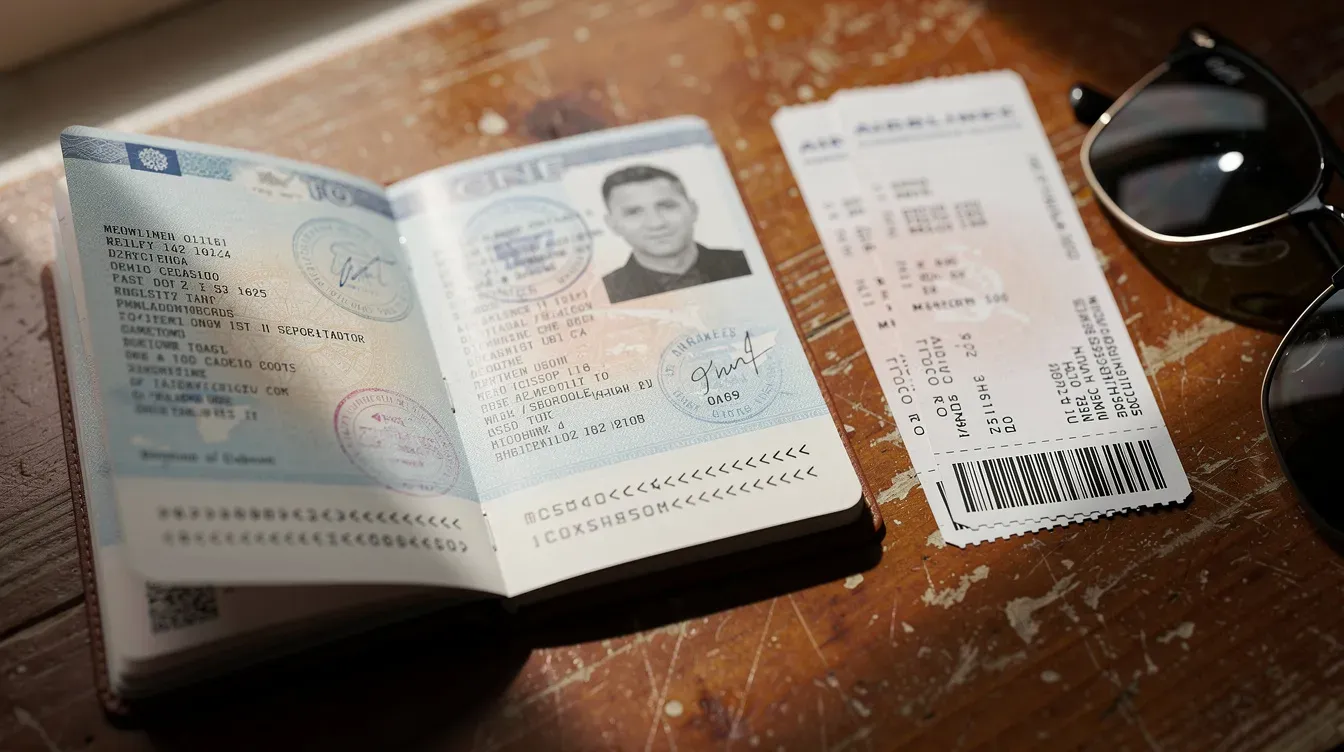
One of the most important things you can do before any trip abroad is check passport validity. Getting this wrong can end your holiday before it starts. Here's everything uk passport holders need to know.
Answer first: how to quickly check your passport is valid today
Most UK trips fall apart on two points: the passport was issued more than 10 years ago, or there isn't enough time left before the expiry date to satisfy the destination country's rules. Both are easy to check right now.
Pick up your current passport and open to the data page. Find the date of issue (DD/MM/YYYY) and the expiry date printed below it. Then compare these against your exact departure date and planned return date.
For travel to any eu country or the schengen area, run through these checks:
Your passport must be issued less than 10 years before the date you enter the Schengen area
Your passport must be valid for at least three months after the date you leave the Schengen area
Stays are limited to 90 days in any rolling 180-day period
For many non-EU destinations, different rules apply:
The safest rule of thumb is at least 6 months passport validity from the date of entry - this covers countries like Turkey, Thailand, and Singapore
The USA usually requires your passport to be valid for the length of stay, but airlines may still prefer 6 months of remaining validity
Many countries require at least 2 to 4 empty pages for visas and stamps
Check the expiry date to ensure it covers your entire trip, then verify the entry requirements on GOV.UK for your specific destination. If your passport's valid period is borderline - close to 10 years old or close to expiry - start a passport application or renewal immediately rather than gambling on tight margins.
Why passport validity matters before you travel
Being refused entry at passport control or denied boarding at a uk airport is not rare. It happens to travellers who assumed their passport was fine because the expiry date hadn't passed. Airlines check passport validity rules before you board because they face fines for carrying inadmissible passengers.
Passport validity is as critical as booking flights or travel insurance. Check it the moment you plan a trip, not the week before your departure date.
There's an important distinction most people miss: the official expiry date printed in your passport is not the same as the passport requirements set by your destination country or airline. A passport might show six months left, but if a country demands six months from your date of entry, that margin evaporates fast.
Every country sets its own rules, and airlines typically apply the strictest relevant rule along your route. Passport validity also affects related travel admin - applying for a visa, arranging an international driving permit, or booking cruises visiting more than one country.
A passport with missing pages or damage may be considered invalid for travel even if the dates are fine. And children's passports are valid for five years, not ten, so families need to double-check every family member's document, not just the adults'.
Passport validity rules for Europe and the Schengen area
Since the uk left the european union, a uk passport is treated as a third-country document at EU borders. Old assumptions about travelling on any valid passport no longer apply.
Two rules govern travel to the schengen area - covering spain, France, Italy, Greece, Germany, Portugal, the Netherlands, norway, switzerland, iceland, and Liechtenstein:
Your passport must have been issued less than 10 years before the date you enter the Schengen area
Your passport must be valid for at least 3 months after the date you leave
Passports issued after 2018 are valid for exactly 10 years, so this is straightforward. But passports issued before September 2018 can be valid for up to nine months beyond the 10-year mark - up to 10 years and 9 months total - because HM Passport Office used to carry over unused months from an old passport. For Schengen entry, those extra nine months do not count. If the passport was issued more than 10 years before your arrival date, it is treated as invalid regardless of the printed expiry date. You may be denied boarding if your passport is over 10 years old.
Here's a concrete example: if your passport was issued on 01 March 2015, it cannot be used to enter any Schengen country after 01 March 2025. And if you're leaving Spain on 15 August 2026, your passport expires no earlier than 15 November 2026 to satisfy the 3-month rule.
UK passport holders can visit Schengen countries visa-free for up to 90 days in any 180-day period, and passport stamps are used to track this.
Exceptions exist. Ireland has separate rules and normally accepts a uk passport valid for the full length of stay. An irish passport holder faces different rules again. Some micro-states like Monaco or San Marino follow Schengen rules in practice, so always check GOV.UK.
Travelling to the Schengen area for up to 90 days
The 90-day limit applies across the entire schengen area combined, not per country. Visiting more than one country on the same trip still counts as one continuous stay.
To count your days: take your planned exit date, count backwards 180 days, and total all days spent in any Schengen state during that window. If leaving France on 30 September, count back to 04 April and add up any previous time in Spain, Italy, or elsewhere in the zone. Your planned trip must not push the total past 90.
Short trips, a business meeting in Berlin, a city break in Lisbon, and cruise port stops all count. Overstaying can lead to fines, entry bans, or problems at future border crossings - even if your passport is still valid in date terms.
Changes to EU border checks and systems
The EU's Entry/Exit System (EES) went fully live across all Schengen external borders on 10 April 2026. It replaces manual stamping with biometric capture - fingerprints and a facial image - for non-eu citizen travellers including all uk travellers.
EES automatically calculates your remaining days under the 90/180-day rule, leaving less room for errors or leniency. Expect longer queues during busy times, particularly at land borders and ferry ports.
For cruises: if a cruise starts or finishes in a Schengen port, EES checks usually happen then. If visiting Schengen ports mid-cruise, checks may occur when disembarking. The ETIAS authorisation system is expected to launch in late 2026, adding another layer. Check GOV.UK for the latest on launch dates, as timelines shift.
Passport validity rules beyond Europe
Every country sets its own passport validity rules. Many popular destinations apply a stricter standard than europe:
6 months validity from date of entry (common in Asia, Africa, the Middle East)
6 months from date of exit
Valid for the duration of stay (e.g. USA for most UK visitors)
Many countries require your passport to be valid for 3 to 6 months beyond travel dates
For example, Turkey requires at least 6 months validity from the date you enter. A passport expiring on 01 December 2026 would not be accepted for a trip beginning 15 July 2026. Thailand and Singapore frequently enforce the same 6-month rule.
For multi-country itineraries, the strictest passport validity rule along the route governs whether you can travel. Check the destination entry requirements for specific passport validity rules for every country on your route, including transit stops. Passport holders of other nationalities living in the UK should consult the embassy or consulate of each country they plan to visit, as rules can differ by nationality.

How to check entry requirements and passport validity online
Online tools cannot override a border officer's decision, but they are essential for pre-travel planning. The main sources uk travellers should use:
GOV.UK "Foreign travel advice" pages - search "GOV.UK entry requirements Spain" or similar and look for the passport validity and visa sections
FCDO alerts for country-specific travel updates
Destination country embassy or consulate websites
Save a screenshot of the relevant passport validity section to your mobile phone before you travel, along with embassy contact numbers. Airlines and cruise lines may apply tighter internal rules than the legal minimum, so check airline FAQs or booking information too. Raise any doubts with your airline well before the departure date.
Re-check entry requirements a week before travelling. Rules can update at short notice due to political changes, health measures, or security concerns. For further information, GOV.UK remains the most reliable starting point.
Using a “check your passport” calculator or tool
Several online tools let you check your passport validity against current rules. You enter your country of issue, passport issue date, passport expiry date, and travel dates. The tool flags whether the 10-year rule or minimum validity rule is breached.
Use online tools to check passport validity, but treat them as guides only. They reflect current entry requirements but cannot guarantee admission at the border. You must still confirm with official government sources.
If a tool reports a problem, act immediately: start a uk passport application or renewal, or adjust your travel dates if renewal in time is unlikely.
Renewing your UK passport in time
Starting your renewal early is one of the simplest ways to avoid travel disruption. Spring and early summer see the heaviest demand, so applications submitted during busy times often take longer.
You can renew your passport in about three weeks through the standard online service. A paper application sent through certain post offices or by post may take longer. During peak periods or if additional checks are needed, allow up to 10 weeks. First-time adult passports can take up to six weeks.
For a straightforward renewal, you need:
Your existing uk passport
A suitable passport photo (digital or printed)
For some applications, a countersignature
You must send your current passport when renewing - you cannot use it once the process starts, even if the expiry date hasn't passed. Child passport renewals require parental or guardian consent. Replacing lost, stolen, or damaged passports may involve additional checks.
Fees vary for online versus paper check or paper application submissions, frequent traveller passports, and urgent services. Check the latest fee table on GOV.UK.
Urgent and fast-track passport services
If your next trip is within three weeks, HM Passport Office offers two faster options at higher cost:
The 1-week Fast Track service: suitable for adult and child passport renewals. Requires an appointment at a passport office, with completed forms, photos, and documents
The 1-day Premium service: available for some adult renewals. Book a specific time slot at your nearest passport office. Your new passport is typically ready in about 4 hours. Not available for first-time passports or complex applications
You need to apply for an urgent passport appointment in advance. Slots fill quickly before summer and school holidays, so check availability across multiple post offices and passport office locations. Be flexible with time and location.
In rare emergencies - serious illness, bereavement abroad, or urgent medical treatment - contact the Passport Adviceline or FCDO for advice, but don't rely on this to fix avoidable last-minute problems.
Other checks to do alongside passport validity
Checking your passport is just one part of your pre-travel admin. Run through these while you have your documents out.
Driving licences, IDP and car hire
Most UK photocard driving licence holders can drive in EU and Schengen countries without an international driving permit. However, an IDP may be required if you hold an older paper-only uk driving licence, a licence issued in the Channel Islands or Isle of Man, or are visiting certain non-EU countries with local IDP rules.
IDPs are available from many PayPoint outlets or selected post offices. You'll need to be 18 or over, hold a full UK driving licence, and bring a passport-style photo. Different IDP types exist (1926, 1949, 1968 conventions), and visiting multiple countries may require more than one.
When hiring a car abroad, some rental companies require a licence "check code" from GOV.UK, valid for 21 days. Check what insurance is included as standard.
Using your mobile phone and staying connected
EU roaming rules for UK mobile phone customers changed after Brexit, and charges now vary by provider. Before you travel:
Check your network's roaming policy for your specific destination
Consider a data add-on, travel bundle, or eSIM
Learn how to disable background data or set spending caps
A working phone is essential for airline updates, digital boarding passes, hotel bookings, and backup copies of your passport, driving licence, and insurance documents. Store emergency numbers - local equivalents of 112, embassy contacts, insurer helpline - in your contacts before departure.
Note that a pet passport issued in the UK is no longer valid for EU travel. Pet owners now need an animal health certificate, microchip confirmation, and rabies vaccination arranged through a vet before travelling.

Key passport validity takeaways
Every UK traveller should perform these checks before any trip abroad:
Confirm your uk passport will be less than 10 years old on the date you enter any EU or Schengen country
Confirm at least 3 months validity remains after the date you leave the Schengen area
For many non-EU destinations, aim for at least 6 months validity from your entry or departure date
Check official entry requirements for every country on your route on GOV.UK
Renew early if validity is borderline - passports issued before September 2018 may appear valid but fail the 10-year issue-date rule
Passport validity, visa rules, the 90 days in 180-day limit, and systems like EES and ETIAS all interact. Planning ahead several months before your holiday is essential.
Take your passport out now. Check the issue and expiry dates against your travel dates. If anything looks tight, start your passport application, visa, or IDP process today rather than waiting until the week of departure. Rules and fees can change, so always rely on the latest guidance from GOV.UK, destination embassies, and your airline before you travel.